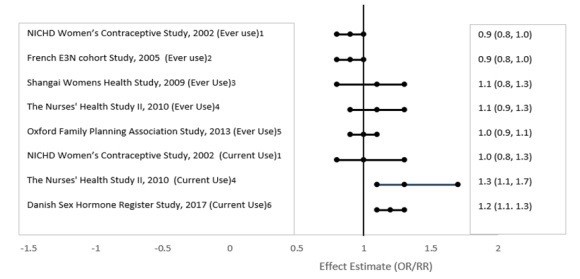
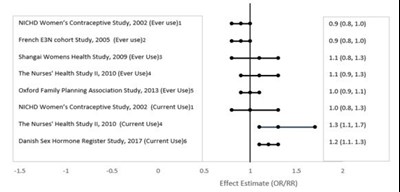
Five studies that compared breast cancer risk between ever-users (current or past use) of COCs and never-users of COCs reported no association between ever use of COCs and breast cancer risk, with effect estimates ranging from 0.90 - 1.12 (Figure 1).
Three studies compared breast cancer risk between current or recent COC users (<6 months since last use) and never users of COCs (Figure 1). One of these studies reported no association between breast cancer risk and COC use. The other two studies found an increased relative risk of 1.19 - 1.33 with current or recent use. Both of these studies found an increased risk of breast cancer with current use of longer duration, with relative risks ranging from 1.03 with less than one year of COC use to approximately 1.4 with more than 8-10 years of COC use.
Figure 1: Relevant Studies of Risk of Breast Cancer with Combined Oral Contraceptives
1 (934a273b 4e1e 4b97 972f 71cdf6be0e05 01)
RR = relative risk; OR = odds ratio; HR = hazard ratio. "ever COC" are females with current or past COC use; "never COC use" are females that never used COCs.
The following adverse reactions have been identified during post approval use of Blisovi 24 Fe. Because these reactions are reported voluntarily from a population of uncertain size, it is difficult to reliably estimate their frequency or evaluate a causal relationship to drug exposure.
Cardiovascular
Chest pain, palpitations, tachycardia, angina pectoris, myocardial infarction.
Endocrine Disorders
Hypothyroidism, hyperthyroidism.
Eye Disorders
Blurred vision, visual impairment, transient blindness, corneal thinning, change in corneal curvature (steepening).
GI Disorders
Nausea, vomiting, abdominal pain, constipation, pancreatitis.
Hepatobiliary Disorders
Cholelithiasis, cholecystitis, hepatic adenoma, hemangioma of liver.
Immune System Disorders
Anaphylactic reactions, including urticaria, angioedema, and severe reactions with respiratory and circulatory symptoms.
Infections
Vaginal infection.
Metabolism and Nutrition Disorders
Change in weight or appetite (increase or decrease). hypoglycemia, diabetes mellitus, anemia.
Musculoskeletal and Connective Tissue Disorders
Myalgia.
Skin and Subcutaneous Disorders
Alopecia, rash (generalized and allergic), pruritus, skin discoloration, night sweats, swelling face or lips, hirsutism, skin burning sensation, erythema multiforme, erythema nodosum, hemorrhagic eruption.
Nervous System Disorders
Headache, dizziness, migraine, hyperesthesia, paraesthesia, hypoaesthesia, somnolence, loss of consciousness, sensory disturbance.
Psychiatric Disorders
Mood swings, depression, insomnia, anxiety, suicidal ideation, panic attack, changes in libido, bipolar disorder, dissociation, homicidal ideation.
Renal and Urinary Disorders
Pollakiuria, dysuria, cystitis-like syndrome.
Reproductive System and Breast Disorders
Breast changes (tenderness, pain, enlargement, and secretion), premenstrual syndrome, ovarian cyst, pelvic pain, ovarian cyst ruptured, pelvic fluid collection.
Vascular Disorders
Hot flush, thrombosis/embolism (coronary artery, pulmonary, cerebral, deep vein), migraine, transient ischemic attack, ischemic stroke.