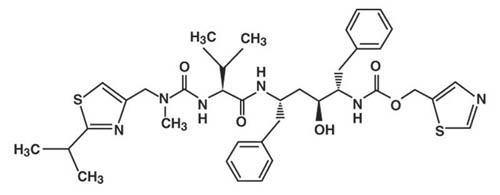
The safety profile of KALETRA in adults is primarily based on 1,964 HIV-1 infected patients in clinical trials.
The most common adverse reaction was diarrhea, which was generally of mild to moderate severity. In study 730, the incidence of diarrhea of any severity during 48 weeks of therapy was 60% in patients receiving KALETRA tablets once daily compared to 57% in patients receiving KALETRA tablets twice daily. More patients receiving KALETRA tablets once daily (14, 4.2%) had ongoing diarrhea at the time of discontinuation as compared to patients receiving KALETRA tablets twice daily (6, 1.8%). In study 730, discontinuations due to any adverse reaction were 4.8% in patients receiving KALETRA tablets once daily as compared to 3% in patients receiving KALETRA tablets twice daily. In study 802, the incidence of diarrhea of any severity during 48 weeks of therapy was 50% in patients receiving KALETRA tablets once daily compared to 39% in patients receiving KALETRA tablets twice daily. Moderate or severe drug-related diarrhea occurred in 14% of patients receiving KALETRA tablets once daily as compared to 11% in patients receiving KALETRA tablets twice daily. At the time of discontinuation, 19 (6.3%) patients receiving KALETRA tablets once daily had ongoing diarrhea, as compared to 11 (3.7%) patients receiving KALETRA tablets twice daily. Discontinuations due to any adverse reaction occurred in 4.3% of patients receiving KALETRA tablets once daily compared to 7.0% in patients receiving KALETRA tablets twice daily. In study 863, discontinuations of randomized therapy due to adverse reactions were 3.4% in KALETRA-treated and 3.7% in nelfinavir-treated patients.
Treatment-emergent clinical adverse reactions of moderate or severe intensity in ≥ 2% of patients treated with combination therapy for up to 48 weeks (Studies 863 and 730) and for up to 360 weeks (Study 720) are presented in Table 4 (treatment-naïve patients); and for up to 48 weeks (Studies 888 and 802), 84 weeks (Study 957) and 144 weeks (Study 765) in Table 5 (protease inhibitor-experienced patients).
Table 4. Percentage of Adult Patients with Selected Treatment-Emergent1 Adverse Reactions of Moderate or Severe Intensity Reported in ≥ 2% of Adult Antiretroviral-Naïve Patients| | Study 863
(48 Weeks) | Study 720
(360 Weeks) | Study 730
(48 Weeks) |
| | KALETRA 400/100 mg Twice Daily + d4T + 3TC
(N = 326) | Nelfinavir 750 mg Three Times Daily + d4T + 3TC
(N = 327) | KALETRA Twice Daily2 + d4T + 3TC
(N = 100) | KALETRA 800/200 mg Once Daily + TDF +FTC (N=333) | KALETRA 400/100 mg Twice Daily + TDF +FTC (N=331) |
| Endocrine Disorders | | | | |
| Hypogonadism | 0% | 0% | 2% | 0% | 0% |
| Gastrointestinal Disorders | | | | | |
| Diarrhea | 16% | 17% | 28% | 17% | 15% |
| Nausea | 7% | 5% | 16% | 7% | 5% |
| Vomiting | 2% | 2% | 6% | 3% | 4% |
| Abdominal Pain | 4% | 3% | 11% | 1% | 1% |
| Dyspepsia | 2% | <1% | 6% | 0% | 0% |
| Flatulence | 2% | 1% | 4% | 1% | 1% |
| General Disorders and Administration Site Conditions | | | | |
| Asthenia | 4% | 3% | 9% | <1% | <1% |
| Infections and Infestations | | | | |
| Bronchitis | 0% | 0% | 2% | 0% | <1% |
| Investigations | | | | |
| Weight Decreased | 1% | <1% | 2% | 0% | <1% |
| Metabolism and Nutrition Disorders | | | | | |
| Anorexia | 1% | <1% | 2% | <1% | 1% |
| Musculoskeletal and Connective Tissue Disorders | | | | | |
| Myalgia | 1% | 1% | 2% | 0% | 0% |
| Nervous System Disorders | | | | | |
| Headache | 2% | 2% | 6% | 2% | 2% |
| Paresthesia | 1% | 1% | 2% | 0% | 0% |
| Psychiatric Disorders | | | | |
| Insomnia | 2% | 1% | 3% | 1% | 0% |
| Depression | 1% | 2% | 0% | 0% | 0% |
| Libido Decreased | <1% | <1% | 2% | 0% | <1% |
| Skin and Subcutaneous Tissue Disorders | | | | | |
| Rash | 1% | 2% | 5% | <1% | 1% |
| Vascular Disorders | | | | | |
| Vasodilation | 0% | 0% | 3% | 0% | 0% |
1 Includes adverse reactions of possible or probable relationship to study drug.
2 Includes adverse reaction data from dose group I (200/100 mg twice daily [N = 16] and 400/100 mg twice daily [N = 16]) and dose group II (400/100 mg twice daily [N = 35] and 400/200 mg twice daily [N = 33]). Within dosing groups, moderate to severe nausea of probable/possible relationship to KALETRA occurred at a higher rate in the 400/200 mg dose arm compared to the 400/100 mg dose arm in group II.
Definitions: d4T = Stavudine; 3TC = Lamivudine; TDF = Tenofovir Disoproxil Fumarate; FTC = Emtricitabine |
Table 5. Percentage of Adult Patients with Selected Treatment-Emergent1 Adverse Reactions of Moderate or Severe Intensity Reported in ≥ 2% of Adult Protease Inhibitor-Experienced Patients| | Study 888
(48 Weeks) | Study 9572 and Study 7653
(84-144 Weeks) | Study 802
(48 Weeks) |
| | KALETRA 400/100 mg Twice Daily + NVP + NRTIs
(N = 148) | Investigator-Selected Protease Inhibitor(s) + NVP + NRTIs
(N = 140) | KALETRA Twice Daily + NNRTI + NRTIs
(N = 127) | KALETRA 800/200 mg Once Daily +NRTIs
(N=300) | KALETRA 400/100 mg Twice Daily + NRTIs
(N=299) |
| Gastrointestinal Disorders | | | | | |
| Diarrhea | 7% | 9% | 23% | 14% | 11% |
| Nausea | 7% | 16% | 5% | 3% | 7% |
| Vomiting | 4% | 12% | 2% | 2% | 3% |
| Abdominal Pain | 2% | 2% | 4% | 2% | <1% |
| Abdominal Pain Upper | N/A | N/A | N/A | 1% | 2% |
| Dyspepsia | 1% | 1% | 2% | 1% | <1% |
| Flatulence | 1% | 2% | 2% | 1% | 1% |
| Dysphasia | 2% | 1% | 0% | 0% | 0% |
| General Disorders and Administration Site Conditions | | | | | |
| Asthenia | 3% | 6% | 9% | <1% | <1% |
| Pyrexia | 2% | 1% | 2% | 0% | <1% |
| Chills | 2% | 0% | 0% | 0% | 0% |
| Investigations | | | | | |
| Weight Decreased | 0% | 1% | 3% | <1% | <1% |
| Metabolism and Nutrition Disorders | | | | | |
| Anorexia | 1% | 3% | 0% | 0% | 1% |
| Musculoskeletal and Connective Tissue Disorders | | | | | |
| Myalgia | 1% | 1% | 2% | 0% | 0% |
| Nervous System Disorders | | | | | |
| Headache | 2% | 3% | 2% | <1% | 0% |
| Paresthesia | 0% | 1% | 2% | 0% | 0% |
| Psychiatric Disorders | | | | | |
| Depression | 1% | 2% | 3% | <1% | 0% |
| Insomnia | 0% | 2% | 2% | 0% | <1% |
| Skin and Subcutaneous Tissue Disorders | | | | | |
| Rash | 2% | 1% | 2% | 0% | 0% |
| Vascular Disorders | | | | | |
| Hypertension | 0% | 0% | 2% | 0% | 0% |
1 Includes adverse reactions of possible or probable relationship to study drug.
2 Includes adverse reaction data from patients receiving 400/100 mg twice daily (n = 29) or 533/133 mg twice daily (n = 28) for 84 weeks. Patients received KALETRA in combination with NRTIs and efavirenz.
3 Includes adverse reaction data from patients receiving 400/100 mg twice daily (n = 36) or 400/200 mg twice daily (n = 34) for 144 weeks. Patients received KALETRA in combination with NRTIs and nevirapine.
Definitions: NVP = Nevirapine; NRTI = Nucleoside Reverse Transcriptase Inhibitors; NNRTI = Non-nucleoside Reverse Transcriptase Inhibitors |
Less Common Adverse Reactions
Treatment-emergent adverse reactions occurring in less than 2% of adult patients receiving KALETRA in the clinical trials supporting approval and of at least moderate intensity are listed below by system organ class.
Blood and Lymphatic System Disorders
Anemia, leukopenia, lymphadenopathy, neutropenia, and splenomegaly.
Cardiac Disorders
Angina pectoris, atrial fibrillation, atrioventricular block, myocardial infarction, palpitations, and tricuspid valve incompetence.
Ear and Labyrinth Disorders
Hyperacusis, tinnitus, and vertigo.
Endocrine Disorders
Cushing's syndrome and hypothyroidism.
Eye Disorders
Eye disorder and visual disturbance.
Gastrointestinal Disorders
Abdominal discomfort, abdominal distension, abdomen pain lower, constipation, duodenitis, dry mouth, enteritis, enterocolitis, enterocolitis hemorrhagic, eructation, esophagitis, fecal incontinence, gastric disorder, gastric ulcer, gastritis, gastroesophageal reflux disease, hemorrhoids, mouth ulceration, pancreatitis, periodontitis, rectal hemorrhage, stomach discomfort, and stomatitis.
General Disorders and Administration Site Conditions
Chest pain, cyst, drug interaction, edema, edema peripheral, face edema, fatigue, hypertrophy, and malaise.
Hepatobiliary Disorders
Cholangitis, cholecystitis, cytolytic hepatitis, hepatic steatosis, hepatitis, hepatomegaly, jaundice, and liver tenderness.
Immune System Disorders
Drug hypersensitivity, hypersensitivity, and immune reconstitution syndrome.
Infections and Infestations
Bacterial infection, bronchopneumonia, cellulitis, folliculitis, furuncle, gastroenteritis, influenza, otitis media, perineal abscess, pharyngitis, rhinitis, sialoadenitis, sinusitis, and viral infection.
Investigations
Drug level increased, glucose tolerance decreased, and weight increased.
Metabolism and Nutrition Disorders
Decreased appetite, dehydration, diabetes mellitus, hypovitaminosis, increased appetite, lactic acidosis, lipomatosis, and obesity.
Musculoskeletal and Connective Tissue Disorders
Arthralgia, arthropathy, back pain, muscular weakness, osteoarthritis, osteonecrosis, and pain in extremity.
Neoplasms Benign, Malignant and Unspecified (incl Cysts and Polyps)
Benign neoplasm of skin, lipoma, and neoplasm.
Nervous System Disorders
Ageusia, amnesia, ataxia, balance disorder, cerebral infarction, convulsion, dizziness, dysgeusia, dyskinesia, encephalopathy, extrapyramidal disorder, facial palsy, hypertonia, migraine, neuropathy, neuropathy peripheral, somnolence, and tremor.
Psychiatric Disorders
Abnormal dreams, affect lability, agitation, anxiety, apathy, confusional state, disorientation, mood swings, nervousness, and thinking abnormal.
Renal and Urinary Disorders
Hematuria, nephritis, nephrolithiasis, renal disorder, urine abnormality, and urine odor abnormal.
Reproductive System and Breast Disorders
Breast enlargement, ejaculation disorder, erectile dysfunction, gynecomastia, and menorrhagia.
Respiratory, Thoracic and Mediastinal Disorders
Asthma, cough, dyspnea, and pulmonary edema.
Skin and Subcutaneous Tissue Disorders
Acne, alopecia, dermatitis acneiform, dermatitis allergic, dermatitis exfoliative, dry skin, eczema, hyperhidrosis, idiopathic capillaritis, nail disorder, pruritis, rash generalized, rash maculo-papular, seborrhea, skin discoloration, skin hypertrophy, skin striae, skin ulcer, and swelling face.
Vascular Disorders
Deep vein thrombosis, orthostatic hypotension, thrombophlebitis, varicose vein, and vasculitis.
Laboratory Abnormalities
The percentages of adult patients treated with combination therapy with Grade 3-4 laboratory abnormalities are presented in Table 6 (treatment-naïve patients) and Table 7 (treatment-experienced patients).
Table 6. Grade 3-4 Laboratory Abnormalities Reported in ≥ 2% of Adult Antiretroviral-Naïve Patients| | | Study 863
(48 Weeks) | Study 720
(360 Weeks) | Study 730
(48 Weeks) |
| Variable | Limit1 | KALETRA
400/100 mg Twice Daily + d4T +3TC
(N = 326) | Nelfinavir
750 mg Three Times Daily + d4T + 3TC
(N = 327) | KALETRA
Twice Daily + d4T + 3TC
(N = 100) | KALETRA
Once Daily + TDF +FTC
(N=333) | KALETRA
Twice Daily + TDF +FTC
(N=331) |
| Chemistry | High | | | | |
| Glucose | > 250 mg/dL | 2% | 2% | 4% | 0% | <1% |
| Uric Acid | > 12 mg/dL | 2% | 2% | 5% | <1% | 1% |
SGOT/
AST2 | > 180 U/L | 2% | 4% | 10% | 1% | 2% |
SGPT/
ALT2 | >215 U/L | 4% | 4% | 11% | 1% | 1% |
| GGT | >300 U/L | N/A | N/A | 10% | N/A | N/A |
Total
Cholesterol | >300 mg/dL | 9% | 5% | 27% | 4% | 3% |
| Triglycerides | >750 mg/dL | 9% | 1% | 29% | 3% | 6% |
| Amylase | >2 x ULN | 3% | 2% | 4% | N/A | N/A |
| Lipase | >2 x ULN | N/A | N/A | N/A | 3% | 5% |
| Chemistry | Low | | | | | |
| Calculated Creatinine Clearance | <50 mL/min | N/A | N/A | N/A | 2% | 2% |
| Hematology | Low | | | | |
| Neutrophils | <0.75 x 10⁹/L | 1% | 3% | 5% | 2% | 1% |
1 ULN = upper limit of the normal range; N/A = Not Applicable.
2 Criterion for Study 730 was >5x ULN (AST/ALT). |
Table 7. Grade 3-4 Laboratory Abnormalities Reported in ≥ 2% of Adult Protease Inhibitor-Experienced Patients| | | Study 888
(48 Weeks) | Study 9572 and Study 7653
(84-144 Weeks) | Study 802
(48 Weeks) |
| Variable | Limit1 | KALETRA
400/100 mg Twice Daily + NVP + NRTIs
(N = 148) | Investigator-Selected Protease Inhibitor(s) + NVP + NRTIs
(N = 140) | KALETRA
Twice Daily + NNRTI + NRTIs
(N = 127) | KALETRA
800/200 mg Once Daily +NRTIs
(N=300) | KALETRA
400/100 mg Twice Daily +NRTIs
(N=299) |
| Chemistry | High | | | | | |
| Glucose | >250 mg/dL | 1% | 2% | 5% | 2% | 2% |
| Total Bilirubin | >3.48 mg/dL | 1% | 3% | 1% | 1% | 1% |
| SGOT/AST4 | >180 U/L | 5% | 11% | 8% | 3% | 2% |
| SGPT/ALT4 | >215 U/L | 6% | 13% | 10% | 2% | 2% |
| GGT | >300 U/L | N/A | N/A | 29% | N/A | N/A |
Total
Cholesterol | >300 mg/dL | 20% | 21% | 39% | 6% | 7% |
| Triglycerides | >750 mg/dL | 25% | 21% | 36% | 5% | 6% |
| Amylase | >2 x ULN | 4% | 8% | 8% | 4% | 4% |
| Lipase | >2 x ULN | N/A | N/A | N/A | 4% | 1% |
Creatine
Phosphokinase | >4 x ULN | N/A | N/A | N/A | 4% | 5% |
| Chemistry | Low | | | | | |
Calculated
Creatinine
Clearance | <50 mL/min | N/A | N/A | N/A | 3% | 3% |
Inorganic
Phosphorus | <1.5 mg/dL | 1% | 0% | 2% | 1% | <1% |
| Hematology | Low | | | | | |
| Neutrophils | <0.75 x 10⁹/L | 1% | 2% | 4% | 3% | 4% |
| Hemoglobin | <80 g/L | 1% | 1% | 1% | 1% | 2% |
1 ULN = upper limit of the normal range; N/A = Not Applicable.
2 Includes clinical laboratory data from patients receiving 400/100 mg twice daily (n = 29) or 533/133 mg twice daily (n = 28) for 84 weeks. Patients received KALETRA in combination with NRTIs and efavirenz.
3 Includes clinical laboratory data from patients receiving 400/100 mg twice daily (n = 36) or 400/200 mg twice daily (n = 34) for 144 weeks. Patients received KALETRA in combination with NRTIs and nevirapine.
4 Criterion for Study 802 was >5x ULN (AST/ALT). |