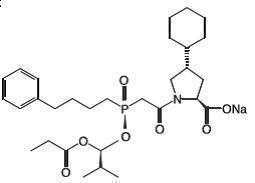
In a randomized, double-blind, placebo-controlled trial, 179 patients with heart failure, all receiving diuretics and some receiving digoxin, were administered single doses of 10 mg, 20 mg, or 40 mg of fosinopril sodium or placebo. Doses of 20 mg and 40 mg of fosinopril sodium resulted in acute decreases in pulmonary capillary wedge pressure (preload) and mean arterial blood pressure and systemic vascular resistance (afterload). One hundred fifty-five of these patients were re-randomized to once daily therapy with fosinopril sodium (10 mg, 20 mg, or 40 mg) for an additional 10 weeks. Hemodynamic measurements made 24 hours after dosing showed (relative to baseline) continued reduction in pulmonary capillary wedge pressure, mean arterial blood pressure, right atrial pressure and an increase in cardiac index and stroke volume for the 20 mg and 40 mg dose groups. No tachyphylaxis was seen.
Fosinopril sodium was studied in 3 double-blind, placebo-controlled, 12 to 24 week trials including a total of 734 patients with heart failure, with fosinopril sodium doses from 10 to 40 mg daily. Concomitant therapy in 2 of these 3 trials included diuretics and digitalis; in the third trial patients were receiving only diuretics. All 3 trials showed statistically significant benefits of fosinopril sodium therapy, compared to placebo, in one or more of the following: exercise tolerance (one study), symptoms of dyspnea, orthopnea and paroxysmal nocturnal dyspnea (2 studies), NYHA classification (2 studies), hospitalization for heart failure (2 studies), study withdrawals for worsening heart failure (2 studies), and/or need for supplemental diuretics (2 studies). Favorable effects were maintained for up to two years. Effects of fosinopril sodium on long-term mortality in heart failure have not been evaluated.
The once daily dosage for the treatment of congestive heart failure was the only dosage regimen used during clinical trial development and was determined by the measurement of hemodynamic responses.
In placebo-controlled clinical trials (361 fosinopril sodium-treated patients), the usual duration of therapy was 3 to 6 months. Discontinuations due to any clinical or laboratory adverse event, except for heart failure, were 8.0% and 7.5% in fosinopril sodium-treated and placebo-treated patients, respectively. The most frequent reason for discontinuation of fosinopril sodium was angina pectoris (1.1%). Significant hypotension after the first dose of fosinopril sodium occurred in 14/590 (2.4%) of patients; 5/590 (0.8%) patients discontinued due to first dose hypotension.
Clinical adverse events probably or possibly related or of uncertain relationship to therapy, occurring in at least 1% of patients treated with fosinopril sodium and at least as common as the placebo group, in placebo-controlled trials are shown in the table below.
Clinical Adverse Events in Placebo-Controlled Trials (Heart Failure) | Fosinopril Sodium | Placebo |
| (N=361) | (N=373) |
| Incidence (Discontinuation) | Incidence (Discontinuation) |
Dizziness | 11.9 (0.6) | 5.4 (0.3) |
Cough | 9.7 (0.8) | 5.1 (0.0) |
Hypotension | 4.4 (0.8) | 0.8 (0.0) |
Musculoskeletal Pain | 3.3 (0.0) | 2.7 (0.0) |
Nausea/Vomiting | 2.2 (0.6) | 1.6 (0.3) |
Diarrhea | 2.2 (0.0) | 1.3 (0.0) |
Chest Pain (non-cardiac) | 2.2 (0.0) | 1.6 (0.0) |
Upper Respiratory Infection | 2.2 (0.0) | 1.3 (0.0) |
Orthostatic Hypotension | 1.9 (0.0) | 0.8 (0.0) |
Subjective Cardiac | | |
Rhythm Disturbance | 1.4 (0.6) | 0.8 (0.3) |
Weakness | 1.4 (0.3) | 0.5 (0.0) |
The following events also occurred at a rate of 1% or more on fosinopril sodium but occurred on placebo more often: fatigue, dyspnea, headache, rash, abdominal pain, muscle cramp, angina pectoris, edema, and insomnia.
The incidence of adverse events in the elderly (≥ 65 years old) was similar to that seen in younger patients. Other clinical events probably or possibly related, or of uncertain relationship to therapy occurring in 0.4% to 1.0% of patients (except as noted) treated with fosinopril sodium in controlled clinical trials (N=516) and less frequent, clinically significant events include (listed by body system):
General: Fever, influenza, weight gain, hyperhidrosis, sensation of cold, fall, pain.
Cardiovascular: Sudden death, cardiorespiratory arrest, shock (0.2%), atrial rhythm disturbance, cardiac rhythm disturbances, non anginal chest pain, edema lower extremity, hypertension, syncope, conduction disorder, bradycardia, tachycardia.
Dermatologic: pruritus.
Endocrine/Metabolic: Gout, sexual dysfunction.
Gastrointestinal: Hepatomegaly, abdominal distention, decreased appetite, dry mouth, constipation,flatulence.
Immunologic: Angioedema (0.2%).
Musculoskeletal: Muscle ache, swelling of an extremity, weakness of an extremity.
Nervous/Psychiatric: Cerebral infarction, TIA, depression, numbness, paresthesia, vertigo, behavior change, tremor.
Respiratory: Abnormal vocalization, rhinitis, sinus abnormality, tracheobronchitis, abnormal breathing,pleuritic chest pain.
Special Senses: Vision disturbance, taste disturbance.
Urogenital: Abnormal urination, kidney pain.
Digitalis is not required for fosinopril sodium tablets to manifest improvements in exercise tolerance and symptoms. Most placebo-controlled clinical trial experience has been with both digitalis and diuretics present as background therapy.
The usual starting dose of fosinopril sodium tablets should be 10 mg once daily. Following the initial dose of fosinopril sodium tablets, the patient should be observed under medical supervision for at least two hours for the presence of hypotension or orthostasis, and if present, until blood pressure stabilizes. An initial dose of 5 mg is preferred in heart failure patients with moderate to severe renal failure or those who have been vigorously diuresed.
Dosage should be increased, over a several week period, to a dose that is maximal and tolerated but not exceeding 40 mg once daily. The usual effective dosage range is 20 mg to 40 mg once daily. The appearance of hypotension, orthostasis, or azotemia early in dose titration should not preclude further careful dose titration. Consideration should be given to reducing the dose of concomitant diuretic.