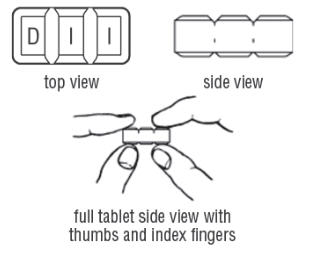
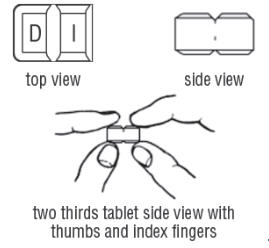
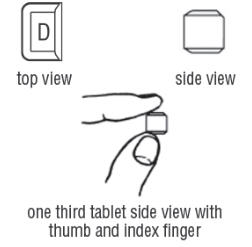
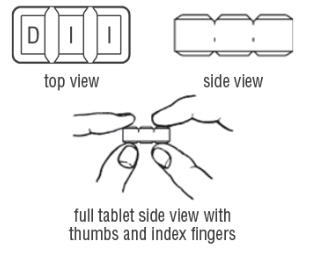
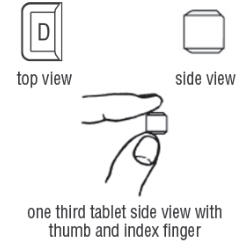
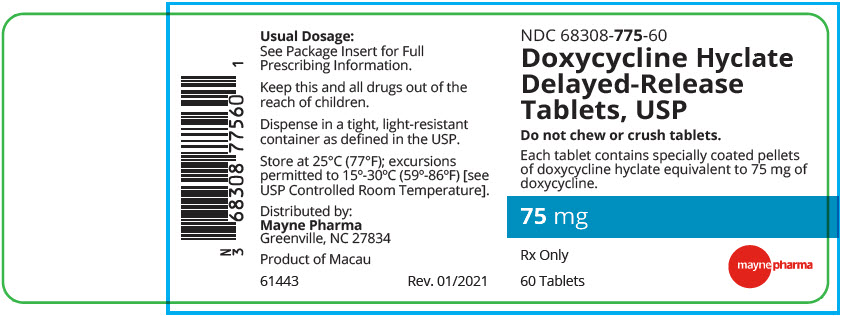
Adults: The usual dose of oral doxycycline is 200 mg on the first day of treatment (administered 100 mg every 12 hours), followed by a maintenance dose of 100 mg daily. The maintenance dose may be administered as a single dose or as 50 mg every 12 hours. In the management of more severe infections (particularly chronic infections of the urinary tract), 100 mg every 12 hours is recommended.
For pediatric patients above eight years of age: The recommended dosage schedule for children weighing 45 kg or less is 4.4 mg/kg of body weight divided into two doses on the first day of treatment, followed by 2.2 mg/kg of body weight given as a single daily dose or divided into two doses on subsequent days. For more severe infections up to 4.4 mg/kg of body weight may be used. For children over 45 kg, the usual adult dose should be used.
Administration of adequate amounts of fluid along with capsule and tablet forms of drugs in the tetracycline-class is recommended to wash down the drugs and reduce the risk of esophageal irritation and ulceration [see Adverse Reactions (6.1)].
If gastric irritation occurs, doxycycline may be given with food or milk [see Clinical Pharmacology (12)].
When used in streptococcal infections, therapy should be continued for 10 days.
Uncomplicated urethral, endocervical, or rectal infection caused by Chlamydia trachomatis: 100 mg by mouth twice a day for 7 days. As an alternate dosing regimen for uncomplicated urethral or endocervical infection caused by Chlamydia trachomatis, administer 200 mg by mouth once-a-day for 7 days.
Uncomplicated gonococcal infections in adults (except anorectal infections in men): 100 mg, by mouth, twice-a-day for 7 days. As an alternate single visit dose, administer 300 mg stat followed in one hour by a second 300 mg dose.
Nongonococcal urethritis (NGU) caused by U. urealyticum: 100 mg by mouth twice-a- day for 7 days.
Syphilis – early: Patients who are allergic to penicillin should be treated with doxycycline 100 mg by mouth twice-a-day for 2 weeks.
Syphilis of more than one year's duration: Patients who are allergic to penicillin should be treated with doxycycline 100 mg by mouth twice-a-day for 4 weeks.
Acute epididymo-orchitis caused by C. trachomatis: 100 mg, by mouth, twice-a-day for at least 10 days.
Mechanism of Action
Doxycycline inhibits bacterial protein synthesis by binding to the 30S ribosomal subunit. Doxycycline has bacteriostatic activity against a broad range of Gram-positive and Gram- negative bacteria. Cross-resistance between tetracyclines is common.
Doxycycline has been shown to be active against most isolates of the following microorganisms, both in vitro and in clinical infections as described in the INDICATIONS AND USAGE section of the package insert for doxycycline hyclate delayed-release tablets [see Indications and Usage (1)].
Gram-Negative Bacteria
Acinetobacter species
Bartonella bacilliformis
Brucella species
Campylobacter fetus
Enterobacter aerogenes
Escherichia coli
Francisella tularensis
Haemophilus ducreyi
Haemophilus influenzae
Klebsiella species
Klebsiella granulomatis
Neisseria gonorrhoeae
Shigella species
Vibrio cholerae
Yersinia pestis
Gram-Positive Bacteria
Bacillus anthracis
Streptococcus pneumoniae
Anerobic Bacteria
Clostridium species
Fusobacterium fusiforme
Propionibacterium acnes
Other Bacteria
Borrelia recurrentis
Chlamydophila psittaci
Chlamydia trachomatis
Mycoplasma pneumoniae
Norcardiae and other aerobic Actinomyces species
Rickettsiae
Treponema pallidum
Treponema pallidum subspecies pertenue
Ureaplasma urealyticum
Parasites
Balantidium coli
Entamoeba species
Plasmodium falciparum
Doxycycline has been found to be active against the asexual erythrocytic forms of Plasmodium falciparum but not against the gametocytes of P. falciparum. The precise mechanism of action of the drug is not known.
Susceptibility Test Methods
When available, the clinical microbiology laboratory should provide the results of in vitro susceptibility test results for antimicrobial drugs used in resident hospitals to the physician as periodic reports that describe the susceptibility profile of nosocomial and community-acquired pathogens. These reports should aid the physician in selecting the most effective antimicrobial.
Dilution Techniques
Quantitative methods are used to determine antimicrobial minimum inhibitory concentrations (MICs). These MICs provide estimates of the susceptibility of bacteria to antimicrobial compounds. The MICs should be determined using a standardized test method (broth and/or agar)5,6,8. The MIC values should be interpreted according to the criteria provided in Table 2.
Diffusion Techniques
Quantitative methods that require measurement of zone diameters can also provide reproducible estimates of the susceptibility of bacteria to antimicrobial compounds. Zone size provides an estimate of the susceptibility of bacteria to antimicrobial compounds. The zone size should be determined using a standard test method5,7,8. This procedure uses paper disks impregnated with 30 mcg doxycycline to test the susceptibility of bacteria to doxycycline. The disk diffusion interpretive criteria are provided in Table 2.
Anaerobic Techniques
For anaerobic bacteria, the susceptibility to doxycycline can be determined by a standardized test method9. The MIC values obtained should be interpreted according to the criteria provided in Table 2.
Table 2: Susceptibility Test Interpretive Criteria for Doxycycline and Tetracycline| Bacteria Organisms susceptible to tetracycline are also considered susceptible to doxycycline. However, some organisms that are intermediate or resistant to tetracycline may be susceptible to doxycycline. | Minimal Inhibitory Concentration
(mcg/mL) | Zone Diameter
(mm) | Agar Dilution
(mcg/mL) |
|---|
| S | I | R | S | I | R | S | I | R |
|---|
Acinetobacter spp.
Doxycycline
Tetracycline |
≤4
≤4 |
8
8 |
≥16
≥16 |
≥13
≥15 |
10-12
12-14 |
≤9
≤11 |
-
- |
-
- |
-
- |
Anaerobes
Tetracycline |
- |
- |
- |
- |
- |
- |
≤4 |
8 |
≥16 |
| Bacillus anthracis The current absence of resistance isolates precludes defining any results other than "Susceptible". If isolates yielding MIC results other than susceptible, they should be submitted to a reference laboratory for further testing.
Doxycycline
Tetracycline |
≤1
≤1 |
-
- |
-
- |
-
- |
-
- |
-
- |
-
- |
-
- |
-
- |
Brucella species
Doxycycline
Tetracycline |
≤1
≤1 |
-
- |
-
- |
-
- |
-
- |
-
- |
-
- |
-
- |
-
- |
Enterobacteriaceae
Doxycycline
Tetracycline |
≤4
≤4 |
8
8 |
≥16
≥16 |
≥14
≥15 |
11-13
12-14 |
≤10
≤11 |
-
- |
-
- |
-
- |
Francisella tularensis
Doxycycline
Tetracycline |
≤4
≤4 |
-
- |
-
- |
-
- |
-
- |
-
- |
-
- |
-
- |
-
- |
Haemophilus influenzae
Tetracycline |
≤2 |
4 |
≥8 |
≥29 |
26-28 |
≤25 |
- |
- |
- |
Mycoplasma pneumoniae
Tetracycline |
- |
- |
- |
- |
- |
- |
≤2 |
- |
- |
Nocardiae and other aerobic Actinomyces species
Doxycycline |
≤1 |
2-4 |
≥8 |
- |
- |
- | | | |
| Neisseria gonorrhoeae Gonococci with 30 mcg tetracycline disk zone diameters of less than 19 mm usually indicate a plasmid-mediated tetracycline resistant Neisseria gonorrhoeae isolate. Resistance in these strains should be confirmed by a dilution test (MIC greater than or equal to 16 mcg/mL).
Tetracycline |
- |
- |
- |
≥38 |
31-37 |
≤30 |
≤0.25 |
0.5-1 |
≥2 |
Streptococcus pneumoniae
Doxycycline
Tetracycline |
≤0.25
≤1 |
0.5
2 |
≥1
≥4 |
≥28
≥28 |
25-27
25-27 |
≤24
≤24 |
-
- |
-
- |
-
- |
Vibrio cholerae
Doxycycline
Tetracycline |
≤4
≤4 |
8
8 |
≥16
≥16 |
-
- |
-
- |
-
- |
-
- |
-
- |
-
- |
Yersinia pestis
Doxycycline
Tetracycline |
≤4
≤4 |
8
8 |
≥16
≥16 |
-
- |
-
- |
-
- |
-
- |
-
- |
-
- |
Ureaplasma urealyticum
Tetracycline |
- |
- |
- |
- |
- |
- |
≤1 | |
≥2 |
A report of Susceptible (S) indicates that the antimicrobial drug is likely to inhibit growth of the pathogen if the antimicrobial drug reaches the concentrations usually achievable at the site of infection. A report of Intermediate (I) indicates that the result should be considered equivocal, and, if the bacteria is not fully susceptible to alternative, clinically feasible drugs, the test should be repeated. This category implies possible clinical applicability in body sites where the drug is physiologically concentrated or in situations where high dosage of drug can be used. This category also provides a buffer zone that prevents small uncontrolled technical factors from causing major discrepancies in interpretation. A report of Resistant (R) indicates that the antimicrobial is not likely to inhibit growth of the pathogen if the antimicrobial drug reaches the concentrations usually achievable at the infection site; other therapy should be selected.
Quality Control
Standardized susceptibility test procedures require the use of laboratory controls to monitor and ensure the accuracy and precision of the supplies and reagents used in the assay, and the techniques of the individuals performing the test5,6,7,8,9,10,11. Standard doxycycline and tetracycline powders should provide the following range of MIC values noted in Table 3. For the diffusion technique using the 30 mcg doxycycline disk the criteria noted in Table 3 should be achieved.
Table 3: Acceptable Quality Control Ranges for Susceptiblity Testing for Doxycycline and Tetracycline| QC Strain | Minimal Inhibitory Concentration
(mcg/mL) | Zone Diameter
(mm) | Agar Dilution
(mcg/mL) |
|---|
Enterococcus faecalis ATCC 29212
Doxycycline
Tetracycline |
2 - 8
8 - 32 |
-
- |
-
- |
Escherichia coli ATCC 25922
Doxycycline
Tetracycline |
0.5 - 2
0.5 - 2 |
18 - 24
18 - 25 |
-
- |
Eubacteria lentum ATCC 43055
Doxycycline |
2-16 | | |
Haemophilus influenzae ATCC 49247
Tetracycline |
4 - 32 |
14 - 22 |
- |
Neisseria gonorrhoeae ATCC 49226
Tetracycline |
- |
30 - 42 |
0.25 - 1 |
Staphylococcus aureus ATCC 25923
Doxycycline
Tetracycline |
-
- |
23 - 29
24 - 30 |
-
- |
Staphylococcus aureus ATCC 29213
Doxycycline |
0.12 - 0.5 | |
- |
| Tetracycline | 0.12 - 1 | | - |
Staphylococcus pneumoniae ATCC 49619
Doxycycline
Tetracycline |
0.015 - 0.12
0.06 - 0.5 |
25 - 34
27 - 31 |
-
- |
Bacteroides fragilis ATCC 25285
Tetracycline |
- |
- |
0.125 - 0.5 |
Bacteroides thetaiotaomicron ATCC 29741
Doxycycline
Tetracycline |
2-8
- |
-
- |
8 - 32 |
Mycoplasma pneumoniae ATCC 29342
Tetracycline |
0.06 - 0.5 |
- |
0.06 - 0.5 |
Ureaplasma urealyticum ATCC 33175
Tetracycline |
- |
- |
≥8 |