Limitations of Use
ANNOVERA has not been adequately studied in females with a BMI >29 kg/m2.
No Hormonal Contraceptive Use in the Preceding Cycle and after Copper IUD Removal:
The woman should insert ANNOVERA between days 2 and 5 of her regular menstrual bleeding; no back-up contraception is needed. If menstrual cycles are irregular or if the start is more than 5 days from the last menstrual bleeding, the woman should use an additional barrier method during coitus, such as a male condom or spermicide, for the first 7 days of ANNOVERA use.
Switching from a CHC:
A woman who has been using her CHC method consistently and correctly, and who you are reasonably certain is not already pregnant, may switch from her previous CHC to ANNOVERA on any day of the CHC cycle (Day 1-28), without the need for back-up contraception, but no more than 7 hormone-free days should occur before starting ANNOVERA.
Switching from a Progestin-Only Method [Progestin-only pills (POP), Progestin Injection, Progestin Implant, Progestin Intrauterine System (IUS)]:
If a woman has no contraindications to the use of ethinyl estradiol (EE), she may elect to switch from a progestin-only method to ANNOVERA. If switching from progestin-only pills, she should begin ANNOVERA at the time she would have taken her next POP pill. If switching from an injection, she should begin ANNOVERA at the time of her next scheduled injection. If switching from an implant or an IUS, she should begin ANNOVERA at the time of implant or IUS removal. In all of these cases, the woman should use an additional barrier method during coitus, such as a male condom or spermicide, for the first 7 days of ANNOVERA use.
Use after Abortion or Miscarriage:
If a woman has no contraindications to the use of EE, ANNOVERA may be initiated for contraception within the first 5 days following a complete first trimester abortion or miscarriage without additional back-up contraception. If more than 5 days have elapsed from the first trimester abortion or miscarriage, then follow the instructions for "No Hormonal Contraceptive Use in the Preceding Cycle" and a barrier method should be used from the time of the first trimester abortion or miscarriage to the initiation of ANNOVERA.
ANNOVERA should not be started earlier than 4 weeks after a second trimester abortion or miscarriage due to the increased risk of thromboembolism [see Contraindications (4) and Warnings and Precautions (5.1)].
Following Childbirth:
ANNOVERA should not be started sooner than 4 weeks postpartum and only in females who choose not to breastfeed. Prior to 4 weeks postpartum there is an increased risk of thromboembolism [see Contraindications (4) and Warnings and Precautions (5.1)].
The initiation of ANNOVERA 4 weeks or more postpartum should be accompanied by an additional method of contraception during coitus, such as male condoms or spermicide, for the first 7 days if the woman has not yet had a period. Consider the possibility of ovulation and conception occurring prior to initiating ANNOVERA.
Females who are breastfeeding should not use ANNOVERA until after weaning.
Inadvertent Removal or Expulsion
ANNOVERA can be accidently expelled. Accidental expulsion could occur while removing a tampon, during coitus, or with straining during a bowel movement. If the vaginal system is accidentally expelled once during the 21 days of intravaginal use and is replaced within 2 hours, contraceptive efficacy should not be reduced and no back-up contraception is needed. If the vaginal system is accidently expelled, wash it with mild soap and warm water, rinse and pat dry with a clean cloth towel or paper towel, and replace it as soon as possible.
During the 21 days of continuous use, if ANNOVERA is out of the vagina for more than 2 continuous hours or more than 2 cumulative hours (multiple inadvertent removals or expulsions adding up to 2 hours), then back-up contraception, such as male condoms or spermicide, should be used until the vaginal system has been in the vagina for 7 consecutive days. The use of combined hormonal contraceptives (those containing an estrogen) for emergency contraception during use of ANNOVERA is not recommended.
Prolonged Vaginal System Free Interval
If the vaginal system free interval is prolonged, consider the possibility of pregnancy and have the woman use back-up contraception, such as male condoms or spermicide, during coitus until the vaginal system has been in the vagina for 7 consecutive days. The use of combined hormonal contraceptives (those containing an estrogen) for emergency contraception during use of ANNOVERA is not recommended.
Prolonged Use of ANNOVERA
If ANNOVERA is left in the vagina for more than 21 days, it should be removed for 7 days and then reinserted for 21 days to resume a 21/7 schedule.
Arterial Events
CHCs increase the risk of cardiovascular events and cerebrovascular events, such as stroke and myocardial infarction. The risk is greater among older females (>35 years of age), smokers, and females with hypertension, dyslipidemia, diabetes, or obesity.
ANNOVERA is contraindicated in females over 35 years of age who smoke [see Contraindications (4)]. Cigarette smoking increases the risk of serious cardiovascular events from CHC use. This risk increases with age, particularly in females over 35 years of age, and with the number of cigarettes smoked.
Venous Events
The use of CHCs increases the risk of VTE, such as deep vein thrombosis and pulmonary embolism. Risk factors for VTEs include smoking, obesity, and family history of VTE, in addition to other factors that contraindicate use of CHCs [see Contraindications (4)]. While the increased risk of VTE associated with use of CHCs is well established, the rates of VTE are even greater during pregnancy, and especially during the postpartum period (see Figure 1). The rate of VTE in females using CHCs has been estimated to be 3–12 cases per 10,000 woman-years.
The risk of VTE is highest during the first year of CHC use and when restarting hormonal contraception following a break of 4 weeks or longer. The risk of VTE due to CHCs gradually disappears after use is discontinued.
Figure 1 shows the risk of developing a VTE for females who are not pregnant and do not use CHCs, for females who use CHCs, for pregnant females, and for females in the postpartum period. To put the risk of developing a VTE into perspective: If 10,000 females who are not pregnant and do not use CHCs are followed for 1 year, between 1 and 5 of these women will develop a VTE.
Figure 1: Likelihood of Developing a VTE
* CHC = combination hormonal contraception
** Pregnancy data based on actual duration of pregnancy in the reference studies. Based on a model assumption that pregnancy duration is 9 months, the rate is 7 to 27 per 10,000 WY.
Impaired Liver Function
ANNOVERA is contraindicated in females with acute hepatitis or severe (decompensated) cirrhosis of the liver [see Contraindications (4)]. Discontinue ANNOVERA if jaundice develops. Acute liver test abnormalities may necessitate the discontinuation of ANNOVERA use until the liver tests return to normal and ANNOVERA causation has been excluded.
Liver Tumors
ANNOVERA is contraindicated in females with benign or malignant liver tumors [see Contraindications (4)]. Hepatic adenomas are associated with CHC use. An estimate of the attributable risk is 3.3 cases/100,000 CHC users. Rupture of hepatic adenomas may cause death through intra-abdominal hemorrhage.
Studies have shown an increased risk of developing hepatocellular carcinoma in long- term (>8 years) CHC users. The attributable risk of liver cancers in CHC users is less than one case per million users.
Hyperglycemia
ANNOVERA is contraindicated in diabetic females over age 35, or females who have diabetes with hypertension, nephropathy, retinopathy, neuropathy, other vascular disease, or females with diabetes of >20 years duration [see Contraindications (4)]. ANNOVERA may decrease glucose tolerance. Carefully monitor prediabetic and diabetic females who are taking ANNOVERA.
Dyslipidemia
Consider alternative contraception for females with uncontrolled dyslipidemia. ANNOVERA may cause adverse lipid changes.
Females with hypertriglyceridemia, or a family history thereof, may be at an increased risk of pancreatitis when using ANNOVERA.
Unscheduled and Scheduled Bleeding and Spotting
Females using ANNOVERA may experience unscheduled (breakthrough) bleeding and spotting, especially during the first month of use. If unscheduled bleeding persists or occurs after previously regular cycles on ANNOVERA, check for causes such as pregnancy or malignancy. If pathology and pregnancy are excluded, bleeding irregularities may resolve over time or with a change to a different CHC.
Based on subject diaries from the two clinical efficacy trials of ANNOVERA [see Clinical Trial Experience (6.1)], 5–10% of females experienced unscheduled bleeding per 28-day cycle. The average number of days with unscheduled bleeding and/or spotting, in Treatment Cycles 1 to 13 for those females who experienced unscheduled bleeding and/or spotting, was 1 day or less per cycle. A total of 41 subjects (1.7%) discontinued use due to menstrual disorders including metrorrhagia, menorrhagia, and abnormal withdrawal bleeding.
Amenorrhea and Oligomenorrhea
Females who are not pregnant and use ANNOVERA may experience amenorrhea. Based on subject diary data from two clinical trials for up to 13 cycles, amenorrhea occurred in 3–5% of females per cycle using ANNOVERA and in 0.9% of females in all 13 cycles.
If scheduled bleeding does not occur, consider the possibility of pregnancy. If the patient has not adhered to the prescribed dosing schedule (removed vaginal system for >2 hours during the first 21 days or does not replace after 7 days of vaginal system- free period), consider the possibility of pregnancy at the time of the first missed period and perform a pregnancy test. If the patient has adhered to the prescribed dosing schedule and misses 2 consecutive periods, perform a pregnancy test to rule out pregnancy.
Some females may experience amenorrhea or oligomenorrhea after stopping ANNOVERA, especially when such a condition was pre-existent.
Breast Cancer
Annovera is contraindicated in females who currently have or have had breast cancer because breast cancer may be hormonally sensitive [see Contraindications (4)].
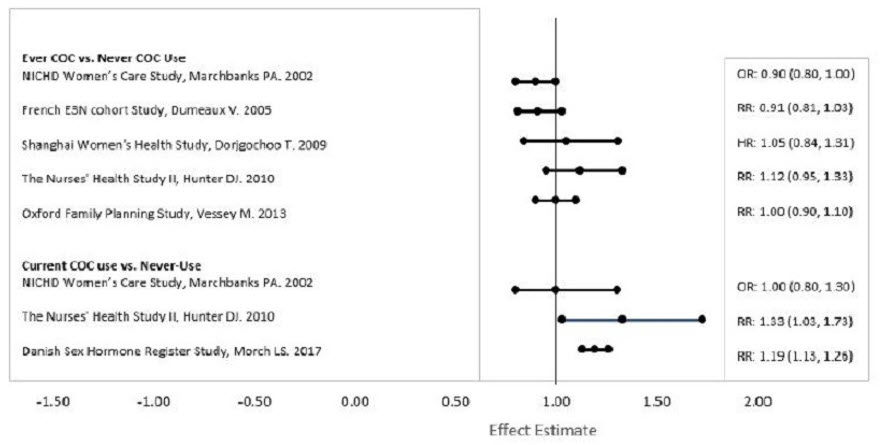
Epidemiology studies have not found a consistent association between use of combined oral contraceptives (COCs) and breast cancer risk. Studies do not show an association between ever (current or past) use of COCs and risk of breast cancer. However, some studies report a small increase in the risk of breast cancer among current or recent users (<6 months since last use) and current users with longer duration of COC use [see Postmarketing Experience (6.2)].
Cervical Cancer
Some studies suggest that CHCs are associated with an increase in the risk of cervical cancer or intraepithelial neoplasia. However, there is controversy about the extent to which these findings are due to differences in sexual behavior and other factors.
Most Common Adverse Reactions
Table 1 summarizes the most common adverse reactions reported by females using ANNOVERA. This table shows adverse reactions reported in at least 5% of subjects. In addition, 25% of subjects reported at least 1 complete expulsion during their use of ANNOVERA.
Table 1: Adverse Drug Reactions Reported by ≥ 5% of ANNOVERA-treated Subjects| Adverse Reactions | %
(N=2,308) |
|---|
| Headache, including migraine | 38.6 |
| Nausea/vomiting | 25.0 |
| Vulvovaginal mycotic infection/vaginal candidiasis | 14.5 |
| Abdominal pain/lower/upper | 13.3 |
| Dysmenorrhea | 12.5 |
| Vaginal discharge | 11.8 |
| UTI/cystitis/pyelonephritis/genitourinary tract infection | 10.0 |
| Breast pain/tenderness/discomfort | 9.5 |
| Metrorrhagia/menstrual disorder | 7.5 |
| Diarrhea | 7.2 |
| Genital pruritus | 5.5 |
Adverse Reactions Leading to Discontinuation
Among subjects using ANNOVERA for contraception, 12% discontinued from the clinical trials due to an adverse reaction. Table 2 summarizes the most common adverse reactions leading to discontinuation. In addition, 1.4% of subjects discontinued ANNOVERA use due to vaginal system expulsions.
Table 2: Adverse Reactions Leading to Discontinuation by ≥ 1% of ANNOVERA treated Subjects| Adverse Reactions | %
(N=2,308) |
|---|
| Metrorrhagia/menorrhagia | 1.7 |
| Headache, including migraine | 1.3 |
| Vaginal discharge/vulvovaginal mycotic infections | 1.3 |
| Nausea/vomiting | 1.2 |
Serious Adverse Reactions
Serious adverse reactions occurring in ≥2 subjects were: VTEs (deep venous thrombosis, cerebral vein thrombosis, pulmonary embolism); psychiatric events; drug hypersensitivity reactions; and spontaneous abortions.
Substances Decreasing the Systemic Exposure of CHCs and Potentially Diminishing the Efficacy of ANNOVERA: Table 3 includes substances that demonstrated an important drug interaction with CHCs.
Table 3: Significant Drug Interactions Involving Substances That Decrease Systemic Exposure of CHCs| Metabolic Enzyme Inducers |
| Clinical effect | - Concomitant use of CHCs with metabolic enzyme inducers may decrease the systemic concentrations of the estrogen and/or progestin component of CHCs [see Clinical Pharmacology (12.3)].
- Decreased exposure of the estrogen and/or progestin component of CHCs may potentially diminish the effectiveness of CHCs and may lead to contraceptive failure or an increase in breakthrough bleeding.
|
| Prevention or management | - Counsel females to use an alternative method of contraception or a back-up method when enzyme inducers are used with CHCs.
- Continue back-up contraception for 28 days after discontinuing the enzyme inducer to maintain contraceptive reliability.
|
| Examples | Aprepitant, barbiturates, bosentan, carbamazepine, efavirenz, felbamate, griseofulvin, oxcarbazepine, phenytoin, rifampin, rifabutin, rufinamide, topiramate, products containing St. John's wort Induction potency of St. John's wort may vary widely based on preparation. , and certain protease inhibitors (see separate section on protease inhibitors below). |
Substances Increasing the Systemic Exposure of CHCs and Potentially Increasing Exposure to Estrogen and/or Progestin in ANNOVERA: Co- administration of atorvastatin or rosuvastatin and certain CHCs containing EE increase systemic exposure of EE by approximately 20–25%. Ascorbic acid and acetaminophen may increase plasma EE concentrations, possibly by inhibition of conjugation. CYP3A4 inhibitors such as itraconazole, voriconazole, fluconazole, grapefruit juice, or ketoconazole may increase systemic exposure of the estrogen and/or progestin component of ANNOVERA.
Human Immunodeficiency Virus (HIV)/ Hepatitis C Virus (HCV) Protease Inhibitors and Non-nucleoside Reverse Transcriptase Inhibitors: Significant decreases in systemic exposure of estrogen and/or progestin have been noted when CHCs are co-administered with some HIV protease inhibitors (eg, nelfinavir, ritonavir, darunavir/ritonavir, (fos)amprenavir/ritonavir, lopinavir/ritonavir, and tipranavir/ritonavir), some HCV protease inhibitors (eg, boceprevir and telaprevir), and some non-nucleoside reverse transcriptase inhibitors (eg, nevirapine).
In contrast, significant increases in systemic exposure of estrogen and/or progestin have been noted when CHCs are co-administered with certain other HIV protease inhibitors (eg, indinavir and atazanavir/ritonavir) and with other non-nucleoside reverse transcriptase inhibitors (eg, etravirine).
Lubricants: Water-based vaginal lubricants have no effect on ANNOVERA; however, oil- based (including silicone-based) vaginal lubricants will alter the vaginal system and/or exposure to EE and SA and should not be used.
ANNOVERA use is compatible with male condoms made with natural rubber latex, polyisoprene, and polyurethane.
The effect of tampon use on the systemic exposure of SA and EE from ANNOVERA has not been studied.
Risk Summary
Epidemiologic studies and meta-analyses have not found an increased risk of genital or nongenital birth defects (including cardiac anomalies and limb-reduction defects) following exposure to CHCs before conception or during early pregnancy.
In the U.S. general population, the estimated background risk of major birth defects and miscarriage in clinically recognized pregnancies is 2–4% and 15–20%, respectively.
Discontinue ANNOVERA if pregnancy occurs, because there is no reason to use CHCs during pregnancy.
Data
Human Data
No studies have been conducted of the use of ANNOVERA in pregnant females.
Risk Summary
Contraceptive hormones and/or metabolites are present in human milk. CHCs can reduce milk production in breastfeeding females. This reduction can occur at any time but is less likely to occur once breastfeeding is well established. Advise the nursing female to use another method of contraception until she discontinues breastfeeding [see Dosage and Administration (2.2)].
Data
Human Data
No studies have been conducted of the use of ANNOVERA in breastfeeding females. Two studies have been conducted in breastfeeding females of segesterone acetate implants delivering lower levels of segesterone acetate than ANNOVERA. Maternal serum levels of up to 141 pg/mL were associated with infant exposure of up to 7 pg/mL. No safety signals in feeding, growth, and development were observed in the infants between the segesterone acetate implant group and the control group.
Cardiac Electrophysiology
The effect of SA on the QTc interval was evaluated in a Phase 1 randomized, placebo and positive controlled, double-blind, single-dose, three-period, crossover thorough QTc study in 44 healthy adult female subjects. At the single intravenous bolus dose which produces 4.5-fold the therapeutic serum concentrations of SA achieved with ANNOVERA, SA did not prolong the QTc interval to any clinically relevant extent.
Absorption
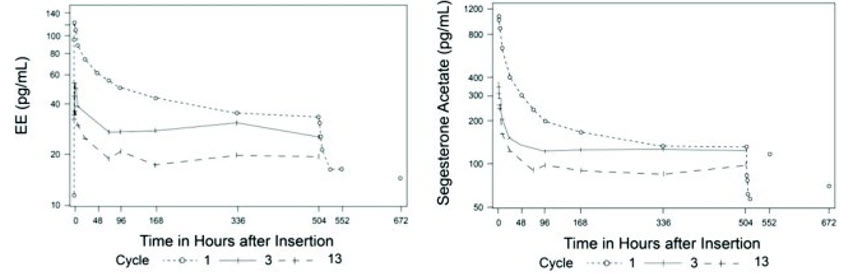
The pharmacokinetics (PK) of ANNOVERA were determined in 39 women who used ANNOVERA for up to 13 cycles. Following vaginal administration, SA and EE were absorbed into systemic circulation with median tmax of about 2 hours in Cycle 1, Cycle 3, and Cycle 13. Concentrations of both components declined after tmax and became more constant after 96 hours post-dose. Over subsequent cycles of use, the peak serum concentrations of SA and EE declined. Serum concentration-time profiles of SA and EE for Cycles 1, 3, and 13 of ANNOVERA use are provided in Figure 2 and Figure 3 with PK parameters summarized in Table 5 and Table 6.
Figure 3: Mean SA and EE Serum Concentrations Delivered by ANNOVERA Over 21 Days of Dosing for Cycles 1, 3, and 13
Figure 4: Mean SA and EE Serum Concentrations Delivered by ANNOVERA Over the First 48 Hours of Dosing for Cycles 1, 3, and 13
Table 5: Mean (SD) PK Parameters for SA following ANNOVERA Administration| Cycle | AUC0-21 day
(ng*hr/mL) | AUC0-1 day
(ng*hr/mL) | Cmax
(pg/mL) | Cavg
(pg/mL) |
|---|
| 1 | 96.2 (16.9) | 15 (3.2) | 1,147 (315) | 191 (34) |
| 3 | 65.9 (14.8) | 5 (1.6) | 363 (133) | 131 (29) |
| 13 | 47.2 (10.1) | 3.9 (1.4) | 294 (116) | 94 (20) |
Table 6: Mean (SD) PK Parameters for EE following ANNOVERA Administration| Cycle | AUC0-21 day
(ng*hr/mL) | AUC0-1 day
(ng*hr/mL) | Cmax (pg/mL) | Cavg
(pg/mL) |
|---|
| 1 | 22.2 (9.8) | 2.1 (0.7) | 129 (39) | 44 (19) |
| 3 | 14.7 (4.7) | 0.9 (0.4) | 60 (32) | 29 (9) |
| 13 | 9.6 (4.1) | 0.7 (0.3) | 39 (16) | 19 (8) |
Distribution
The volume of distribution of SA is 19.6 L/kg. SA is approximately 95% bound to human serum proteins and has negligible binding affinity for sex hormone-binding globulin (SHBG). EE is highly protein bound but not specifically bound to serum albumin (98.5%) and induces an increase in the serum concentrations of SHBG.
Metabolism
In vitro data show that both SA and EE are metabolized by the cytochrome P450 (CYP) 3A4 isoenzyme. In human serum, two oxidative metabolites (5α-dihydro- and 17α- hydroxy-5α-dihydro metabolites) constitute 50% of exposure relative to SA. Both metabolites are not considered as active metabolites with EC50 to progesterone receptor 10-fold higher than that of SA. EE is primarily metabolized by aromatic hydroxylation, but a wide variety of hydroxylated and methylated metabolites are formed. These are present as free metabolites and as sulfate and glucuronide conjugates. The hydroxylated EE metabolites have weak estrogenic activity.
Excretion
The mean (SD) half-life of SA is 4.5 (3.4) hours. EE is known to be excreted in the urine and feces as glucuronide and sulfate conjugates, and it undergoes enterohepatic recirculation. The mean (SD) half-life of EE is 15.1 (7.5) hours.
Specific Populations
Body Mass Index (BMI)
Higher body weight associates with lower systemic exposure of SA and EE. In a PK study conducted in 18 females with BMI <25 (16.89–24.34) kg/m2 and 21 females with BMI >25 (25.15–37.46) kg/m2, up to 16% and 33% decreases in the systemic exposure (AUC0- 21day) of SA and EE, respectively, were observed between the two BMI groups.
Interaction with Vaginal Medications
A clinical drug-drug interaction (DDI) study was conducted to evaluate the effect of vaginal antimycotic medication (miconazole nitrate) on the PK of SA and EE in 29 females using ANNOVERA. The results showed that a single-dose vaginal administration of 1,200 mg miconazole suppository on Day 8 of ANNOVERA use increased the systemic exposure of EE (AUCDay8-21) by approximately 67%. A similar trend was observed with SA with AUCDay8-9, AUCDay8-10, and AUCDay8-21 increasing by approximately 30%, 32%, and 19%, respectively. When 200 mg miconazole vaginal suppositories were administered on Day 8, Day 9, and Day 10 of ANNOVERA use, EE AUCDay8-11 and AUCDay8-21 were increased by 9% and 42%, respectively. SA AUCDay8-11 and AUCDay8- 21 were increased by 28% and 27%, respectively. Water-based vaginal miconazole cream had no effect on ANNOVERA [see Drug Interactions (7.3)].
The in vitro studies suggest that SA is unlikely to inhibit or induce CYP enzymes at the therapeutic dose.
Carcinogenesis
In a 2-year carcinogenicity study in rats with subdermal implants releasing 40, 100, and 200 mcg segesterone acetate per day (approximately 17–86 times the daily dose of segesterone acetate in females using ANNOVERA, based on body surface area), no drug-related increase in tumor incidence was observed. In a 2-year intravaginal carcinogenicity study in mice, segesterone acetate gel produced an increased incidence of adenocarcinoma and lobular hyperplasia in the breast at a dose of 30 mg/kg/day, approximately 10 times the systemic exposure of segesterone acetate per day in females using ANNOVERA, based on AUC. A dose of 10 mg/kg/day in the mouse, approximately 3 times the systemic exposure of segesterone acetate per day based on AUC, did not result in carcinogenic findings.
Long-term continuous administration of natural and synthetic estrogens in certain animal species increases the frequency of carcinomas of the breast, uterus, cervix, vagina, testis, and liver.
Mutagenesis
Segesterone acetate was neither mutagenic nor clastogenic in the Ames/Salmonella reverse mutation assay, the chromosomal aberration assay in Chinese hamster ovary cells, or in the in vivo mouse micronucleus test.
Impairment of Fertility
A return to fertility study was conducted with segesterone acetate in rats, using subdermal implants releasing a dose approximately 25 times the anticipated daily vaginal human dose (based on body surface area). Three months of treatment with segesterone acetate suppressed fertility, but 7 weeks after cessation of treatment, there were no adverse effects on ovulation or resulting litter parameters.
Cigarette Smoking
Cigarette smoking increases the risk of serious cardiovascular events from CHC use, and females who are over 35 years old and smoke should not use ANNOVERA [see Boxed Warning and Warnings and Precautions (5.1)].
Venous Thromboembolism
Increased risk of VTE compared to nonusers of CHCs is greatest after initially starting a CHC or restarting (following a 4-week or greater dose-free interval) the same or a different CHC [see Warnings and Precautions (5.1)].
Sexually Transmitted Infections
ANNOVERA does not protect against HIV-infection (AIDS) and other sexually transmitted infections. ANNOVERA is compatible with male condoms made with natural rubber latex, polyisoprene, and polyurethane.
Use During Pregnancy
ANNOVERA is not to be used during pregnancy; instruct the patient to remove ANNOVERA if pregnancy is confirmed during treatment [see Use in Specific Populations (8.1)].
ANNOVERA Dosing and Instructions
Advise the woman on proper use of ANNOVERA and what to do if she does not comply with the labeled timing of insertion and removal. The efficacy of ANNOVERA is greatest when ANNOVERA is kept in the vagina continuously for the scheduled 21 consecutive days. Removal of ANNOVERA even briefly during the scheduled 21 days of use can reduce efficacy.
ANNOVERA should be washed with mild soap and water and rinsed and patted dry with a clean cloth towel or paper towel prior to each insertion and at each removal. Prior to initial use, the storage case should be labeled with the discard date to avoid using the product beyond 13 cycles [see Dosage and Administration (2) and FDA-approved Patient Information].
Place the completely used ANNOVERA in the case provided and discard via a drug take- back option if one is available. If a take-back option is unavailable, then discard in the waste receptacle out of reach of children and pets. The vaginal system should NOT be flushed down the toilet. See www.fda.gov/drugdisposal for more information about disposal of medicines. [see How Supplied (16.1)].
Use with Vaginal Products
Water-based vaginal lubricants have no effect on the vaginal system; however, oil-based (including silicone-based) vaginal lubricants will alter the vaginal system and/or exposure to EE and SA and should not be used [see Drug Interactions (7.3)].
Need for Additional Contraception
Use a back-up or alternative method of contraception when:
- Enzyme inducers are used with CHCs [see Drug Interactions (7.1)].
ANNOVERA has been out for more than 2 hours cumulative during the 21 days of continuous use or the vaginal system-free interval exceeds 7 days [see Dosage and Administration (2.3)]. Postpartum females who have not yet had a period should use an additional method of contraception until ANNOVERA has been in place for 7 consecutive days [see Dosage and Administration (2.2)].
Lactation
ANNOVERA may reduce breast milk production. This is less likely to occur if breastfeeding is well established. Females who are breastfeeding should not use ANNOVERA until after weaning [see Use in Specific Populations (8.2)].
Amenorrhea and Possible Symptoms of Pregnancy
Amenorrhea may occur. Consider pregnancy in the event of amenorrhea and rule out pregnancy if amenorrhea is associated with symptoms of pregnancy, such as morning sickness or unusual breast tenderness [see Warnings and Precautions (5.9)].
Fertility Following Discontinuation of ANNOVERA
Resumption of fertility after discontinuation of ANNOVERA is expected. All women followed for return of fertility experienced a return of fertility by 6 months after discontinuing ANNOVERA [see Clinical Studies (14)].