Hemox A Solution
Product Images NDC 68400-203
View Photos of Packaging, Regulatory Labels, and Product Appearance
Product Visual Gallery
This gallery contains 3 technical images submitted to the FDA as part of the official labeling for Hemox A (NDC 68400-203). Unlike standard consumer photos, these assets often include clinical data figures, molecular chemical structures, and official manufacturer packaging layouts.
As provided by Mycone Dental Supply Co., Inc Dba Keystone Industries And Deepak Products Inc., these visuals offer a comprehensive scientific overview of the product's physical and chemical identity, aiding pharmacists and researchers in product verification and study.
Product Images & Figures Index
In.hemox A
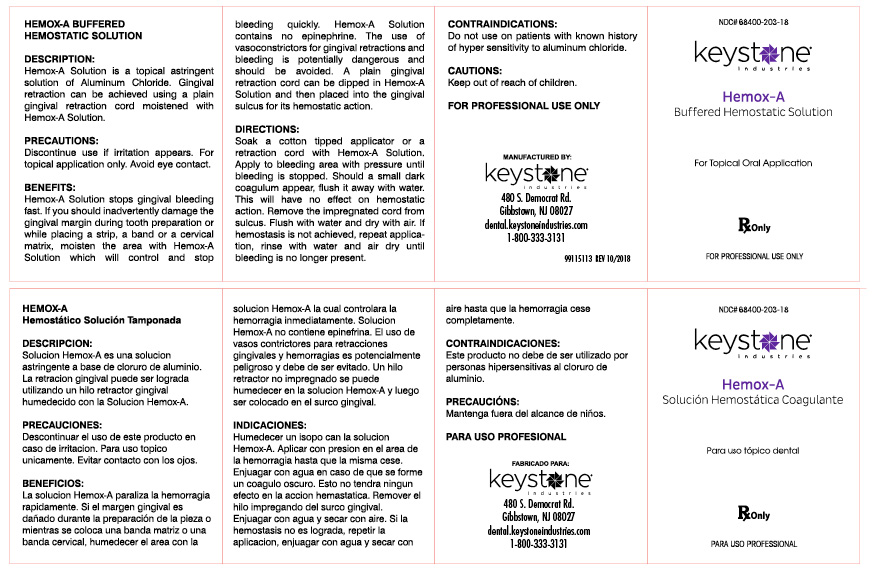
Hemox-A is a topical hemostatic solution used for gingival retraction during tooth preparation or when placing a band or strip. It contains Aluminum Chloride and is available as a solution. It quickly stops gingival bleeding and can be used with a plain gingival retraction cord. The solution should only be used for topical application and should not be allowed to come into contact with the eyes. Precautions should be taken, and if initial symptoms appear, one should discontinue use of the product. The solution contains no spin ephrine and should not be used with vasoconstrictors for gingival reactions, which can be dangerous. Hemox-A is only for professional use and should not be used on patients with a known history of hypersensitivity to Aluminum Chloride.*
Lb.hemox A R9 17
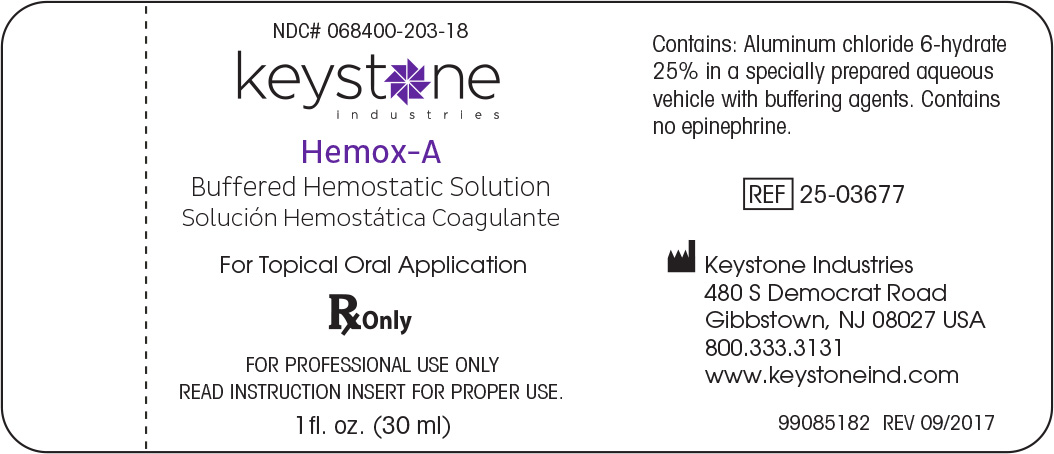
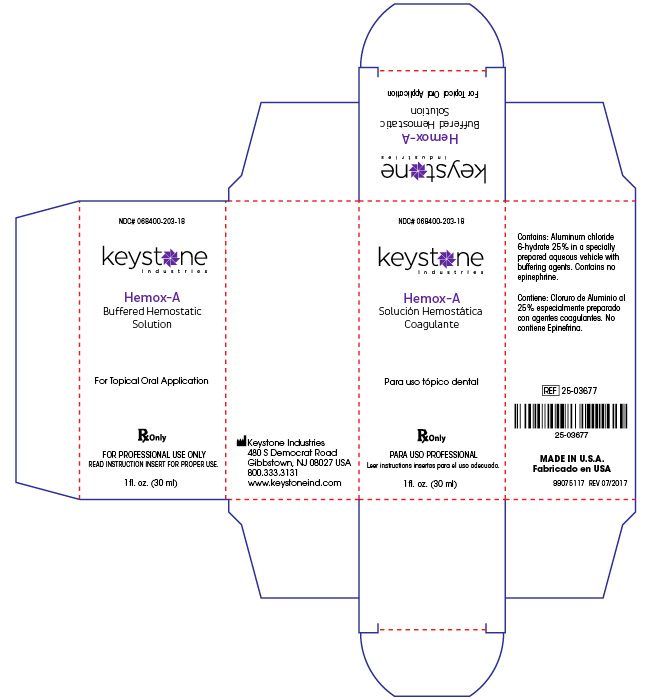
This is a description of Hemox-A, a Buffered Hemostatic Solution designed for topical oral use. The solution contains Aluminum chloride 6-hydrate at 25% concentration in a specially prepared aqueous vehicle with buffering agents. Hemox-A does not contain epinephrine and is intended for professional use only. The package contains 111 ounces (30 ml) and comes with an instructional insert for proper use. The solution is produced by Keystone Industries and the reference number is 25-03677.*
* These product label images have been analyzed using experimental machine learning. Please verify findings with the primary label text.