Description
DESCRIPTION
Naproxen USP is a proprionic acid derivative related to the arylacetic acid group of nonsteroidal anti-inflammatory drugs. The chemical names for naproxen USP and naproxen sodium USP are (S)-6-methoxy-a-methyl-2-naphthaleneacetic acid and (S)-6-methoxy-a-methyl-2-naphthaleneacetic acid, sodium salt, respectively. Naproxen USP and naproxen sodium USP have the following structures, respectively:

Naproxen Structural Formula (Naproxenstructuralformula)
Naproxen USP has a molecular weight of 230.26 and a molecular formula of C14H14O3. Naproxen sodium USP has a molecular weight of 252.23 and a molecular formula of C14H13NaO3. Naproxen USP is an odorless, white to off-white crystalline substance. It is lipid-soluble, practically insoluble in water at low pH and freely soluble in water at high pH. The octanol/water partition coefficient of naproxen USP at pH 7.4 is 1.6 to 1.8. Naproxen sodium USP is a white to creamy white, crystalline solid, freely soluble in water at neutral pH. Naproxen tablets USP are available as light orange colored tablets containing 250 mg of naproxen USP, light orange colored tablets containing 375 mg of naproxen USP and light orange colored tablets containing 500 mg of naproxen USP for oral administration. The inactive ingredients are microcrystalline cellulose, croscarmellose sodium, iron oxides, povidone and magnesium stearate. Naproxen sodium tablets USP are available as blue tablets containing 275 mg of naproxen sodium USP and as blue tablets containing 550 mg of naproxen sodium USP for oral administration. The inactive ingredients are croscarmellose sodium, colloidal silicon dioxide, povidone, magnesium stearate, microcrystalline cellulose and talc. The coating suspension for the naproxen sodium 275 mg tablet may contain Opadry blue 03F50544. The coating suspension for the naproxen sodium 550 mg tablet may contain Opadry blue 03F50544.
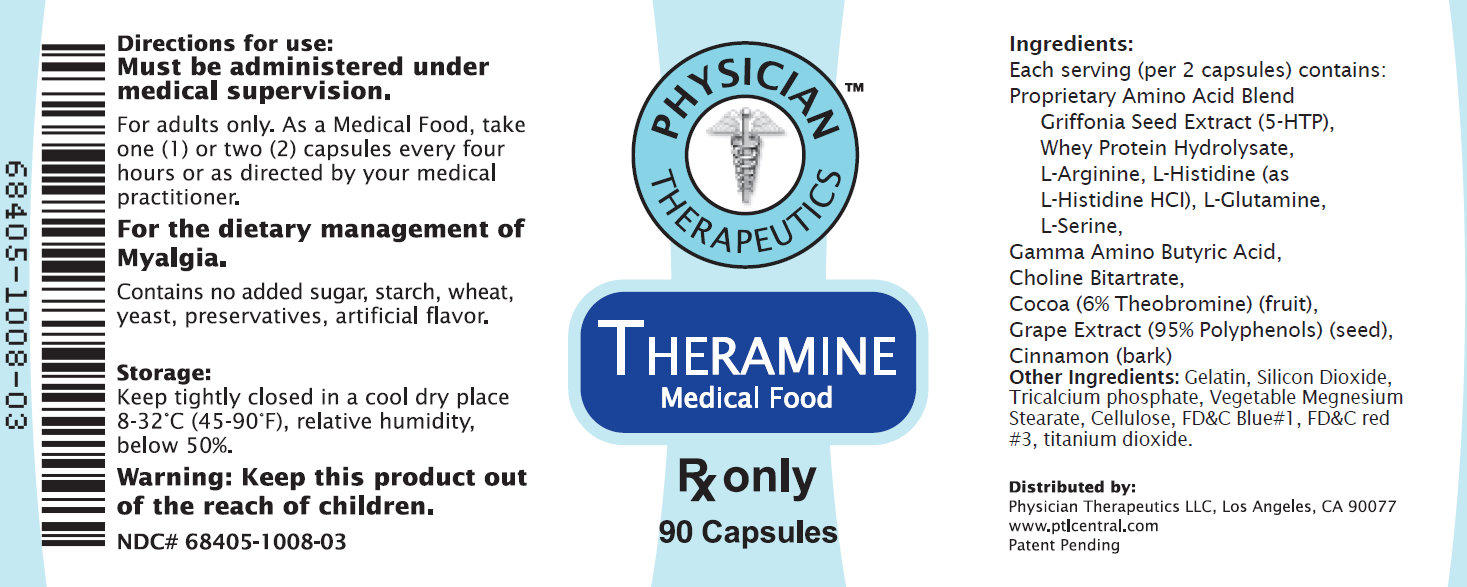
PRODUCT DESCRIPTION Primary Ingredients Theramine consists of a proprietary blend of amino acids, cocoa, caffeine, cinnamon, and flavonoids in specific proportions. These ingredients fall into the category of Generally Regarded as Safe” (GRAS) as defined by the Food and Drug Administration (FDA) (Sections 201(s) and 409 of the Federal Food, Drug, and Cosmetic Act). A GRAS substance is distinguished from a food additive on the basis of the common knowledge about the safety of the substance for its intended use. The standard for an ingredient to achieve GRAS status requires not only technical demonstration of non-toxicity and safety, but also general recognition of safety through widespread usage and agreement of that safety by experts in the field. Many ingredients have been determined by the U.S. Food and Drug Administration (FDA) to be GRAS, and are listed as such by regulation, in Volume 21 Code of Federal Regulations (CFR) Sections 182, 184, and 186. Amino Acids Amino Acids are the building blocks of protein. All amino acids are GRAS listed as they have been ingested by humans for thousands of years. The doses of the amino acids in Theramine are equivalent to those found in the usual human diet. Patients with pain disorders may require an increased amount of certain amino acids that cannot be obtained from normal diet alone. Tryptophan, for example, is an obligatory amino acid. The body cannot make tryptophan and must obtain tryptophan from the diet. Tryptophan is needed to produce serotonin. Serotonin is required to reduce pain. Patients with pain disorders and inflammatory conditions have altered serotonin metabolism. Some patients with pain disorders and inflammatory conditions have a resistance to the use of tryptophan that is similar to the mechanism found in insulin resistance. Patients with pain disorders and inflammatory conditions cannot acquire sufficient tryptophan from the diet to alter the perception of pain and the inflammatory process without ingesting a prohibitively large amount of calories, particularly calories from protein. Flavonoids Flavonoids are a group of phytochemical compounds found in all vascular plants including fruits and vegetables. They are a part of a larger class of compounds known as polyphenols. Many of the therapeutic or health benefits of colored fruits and vegetables, cocoa, red wine, and green tea are directly related to their flavonoid content. The specially formulated flavonoids found in Theramine cannot be obtained from conventional foods in the necessary proportions to elicit a therapeutic response. Other Ingredients Theramine contains the following inactive or other ingredients, as fillers, excipients, and colorings: magnesium stearate, microcrystalline cellulose, Maltodextrin NF, gelatin (as the capsule material). Physical Description Theramine is a yellow to light brown powder. Theramine contains L-Glutamine, L-Arginine, L-Histidine, and L-Serine, 5-Hydroxytryptophan as Griffonia Seed Extract, GABA, Choline Bitartrate, Cinnamon, Cocoa, Hydrolyzed Whey Protein, and Grape Seed Extract.