Diclofenac Sodium Tablet, Delayed Release
FDA Label NDC 68788-4194

55 label sections · Submitted to the FDA by Preferred Pharmaceuticals Inc. · Indications, Dosage, Usage, and Precautions

Structured Product Label

The following Structured Product Label (SPL) was submitted to the FDA by Preferred Pharmaceuticals Inc. for the product Diclofenac Sodium (NDC 68788-4194). This document serves as the official prescribing information, containing essential scientific data and clinical materials required for healthcare providers and patients.

This specific version of the label includes detailed information regarding other, description, mechanism of action, absorption, distribution, metabolism, excretion, indications and usage, and other regulatory disclosures. Use the navigation below to review specific sections of the FDA submission.

Label Section Quick Index

Other

Delayed-Release Tablets USP
Rx only
Prescribing information

Cardiovascular Thrombotic Events

  • Nonsteroidal anti-inflammatory drugs (NSAIDs) cause an increased risk of serious cardiovascular thrombotic events, including myocardial infarction and stroke, which can be fatal. This risk may occur early in treatment and may increase with duration of use (see ).
  • Diclofenac sodium delayed-release tablets are contraindicated in the setting of coronary artery bypass graft (CABG) surgery (see CONTRAINDICATIONS, ).
  • Gastrointestinal Bleeding, Ulceration, And Perforation

    • NSAIDs cause an increased risk of serious gastrointestinal (GI) adverse events including bleeding, ulceration, and perforation of the stomach or intestines, which can be fatal. These events can occur at any time during use and without warning symptoms. Elderly patients and patients with a prior history of peptic ulcer disease and/or GI bleeding are at greater risk for serious GI events (see ).
    • Pediatric:The pharmacokinetics of diclofenac has not been investigated in pediatric patients.

      Race:Pharmacokinetic differences due to race have not been identified.

      Hepatic Impairment:Hepatic metabolism accounts for almost 100% of diclofenac elimination, so patients with hepatic disease may require reduced doses of diclofenac compared to patients with normal hepatic function.

      Renal Impairment:Diclofenac pharmacokinetics has been investigated in subjects with renal insufficiency. No differences in the pharmacokinetics of diclofenac have been detected in studies of patients with renal impairment. In patients with renal impairment (inulin clearance 60-90, 30-60, and <30 mL/min; N=6 in each group), AUC values and elimination rate were comparable to those in healthy subjects.

      Voriconazole:When co-administered with voriconazole (inhibitor of CYP2C9, 2C19 and 3A4 enzyme), the C maxand AUC of diclofenac increased by 114% and 78%, respectively ( see PRECAUTIONS; Drug Interactions).

      Aspirin:When NSAIDs were administered with aspirin, the protein binding of NSAIDs were reduced, although the clearance of free NSAID was not altered. The clinical significance of this interaction is not known. See Table 2for clinically significant drug interactions of NSAIDs with aspirin ( see PRECAUTIONS; Drug Interactions).
Description

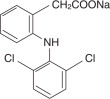
Diclofenac sodium delayed-release tablets is a benzene-acetic acid derivative. Diclofenac sodium is a white or slightly yellowish crystalline powder and is sparingly soluble in water at 25°C. The chemical name is 2-[(2,6-dichlorophenyl)amino] benzeneacetic acid, monosodium salt. The molecular weight is 318.14. Its molecular formula is C 14H 10Cl 2NNaO 2, and it has the following structural formula

Figure (Dic05 0006 01)

Figure (Dic05 0006 01)

The inactive ingredients in diclofenac sodium delayed-release tablets include: hydroxypropyl methylcellulose, lactose monohydrate, magnesium stearate, methacrylic acid copolymer, microcrystalline cellulose, polyethylene glycol, povidone, propylene glycol, sodium starch glycolate, talc, titanium dioxide, triethyl citrate and ink fine black.

Mechanism Of Action

Diclofenac has analgesic, anti-inflammatory, and antipyretic properties.

The mechanism of action of diclofenac, like that of other NSAIDs, is not completely understood but involves inhibition of cyclooxygenase (COX-1 and COX-2).

Diclofenac is a potent inhibitor of prostaglandin synthesis in vitro. Diclofenac concentrations reached during therapy have produced in vivo effects. Prostaglandins sensitize afferent nerves and potentiate the action of bradykinin in inducing pain in animal models. Prostaglandins are mediators of inflammation. Because diclofenac is an inhibitor of prostaglandin synthesis, its mode of action may be due to a decrease of prostaglandins in peripheral tissues.

Absorption

Diclofenac is 100% absorbed after oral administration compared to IV administration as measured by urine recovery. However, due to first-pass metabolism, only about 50% of the absorbed dose is systemically available (see Table 1). Food has no significant effect on the extent of diclofenac absorption. However, there is usually a delay in the onset of absorption of 1 to 4.5 hours and a reduction in peak plasma levels of <20%.

Table 1. Pharmacokinetic Parameters for Diclofenac

PK Parameter

Normal Healthy Adults (20-48 years)


Mean

Coefficient of Mean Variation (%)

Absolute
Bioavailability (%)
[N = 7]

55

40

T max(hr) [N = 56]

2.3

69

Oral Clearance (CL/F;
mL/min) [N = 56]

582

23

Renal Clearance
(% unchanged drug in
urine) [N = 7]

<1

—

Apparent Volume of
Distribution (V/F; L/kg)
[N = 56]

1.4

58

Terminal Half-life (hr)
[N = 56]

2.3

48

Distribution

The apparent volume of distribution (V/F) of diclofenac sodium is 1.4 L/kg.

Diclofenac is more than 99% bound to human serum proteins, primarily to albumin. Serum protein binding is constant over the concentration range (0.15-105 mcg/ml) achieved with recommended doses.

Diclofenac diffuses into and out of the synovial fluid. Diffusion into the joint occurs when plasma levels are higher than those in the synovial fluid, after which the process reverses and synovial fluid levels are higher than plasma levels. It is not known whether diffusion into the joint plays a role in the effectiveness of diclofenac.

Metabolism

Five diclofenac metabolites have been identified in human plasma and urine. The metabolites include 4'-hydroxy-, 5-hydroxy-, 3'-hydroxy-, 4',5-dihydroxy- and 3'-hydroxy-4'-methoxy-diclofenac. The major diclofenac metabolite, 4'-hydroxy-diclofenac, has very weak pharmacologic activity. The formation of 4'-hydroxy- diclofenac is primarily mediated by CYP2C9.

Both diclofenac and its oxidative metabolites undergo glucuronidation or sulfation followed by biliary excretion. Acylglucuronidation mediated by UGT2B7 and oxidation mediated by CYP2C8 may also play a role in diclofenac metabolism. CYP3A4 is responsible for the formation of minor metabolites, 5-hydroxy- and 3'-hydroxy-diclofenac. In patients with renal dysfunction, peak concentrations of metabolites 4'-hydroxy- and 5-hydroxydiclofenac were approximately 50% and 4% of the parent compound after single oral dosing compared to 27% and 1% in normal healthy subjects.

Excretion

Diclofenac is eliminated through metabolism and subsequent urinary and biliary excretion of the glucuronide and the sulfate conjugates of the metabolites. Little or no free unchanged diclofenac is excreted in the urine. Approximately 65% of the dose is excreted in the urine and approximately 35% in the bile as conjugates of unchanged diclofenac plus metabolites. Because renal elimination is not a significant pathway of elimination for unchanged diclofenac, dosing adjustment in patients with mild to moderate renal dysfunction is not necessary. The terminal half-life of unchanged diclofenac is approximately 2 hours.

Indications And Usage

Carefully consider the potential benefits and risks of diclofenac sodium delayed-release tablets and other treatment options before deciding to use diclofenac. Use the lowest effective dose for the shortest duration consistent with individual patient treatment goals ( see ).

Diclofenac is indicated:

  • For relief of the signs and symptoms of osteoarthritis
  • For relief of the signs and symptoms of rheumatoid arthritis
  • For acute or long-term use in the relief of signs and symptoms of ankylosing spondylitis

Contraindications

Diclofenac sodium delayed-release tablets are contraindicated in the following patients:

  • Known hypersensitivity (e.g., anaphylactic reactions and serious skin reactions) to diclofenac or any components of the drug product ( see , ).
  • History of asthma, urticaria, or other allergic-type reactions after taking aspirin or other NSAIDs. Severe, sometimes fatal, anaphylactic reactions to NSAIDs have been reported in such patients ( see , ).
  • In the setting of coronary artery bypass graft (CABG) surgery ( see ).

General

Diclofenac sodium delayed-release tablets cannot be expected to substitute for corticosteroids or to treat corticosteroid insufficiency. Abrupt discontinuation of corticosteroids may lead to disease exacerbation. Patients on prolonged corticosteroid therapy should have their therapy tapered slowly if a decision is made to discontinue corticosteroids and the patient should be observed closely for any evidence of adverse effects, including adrenal insufficiency and exacerbation of symptoms of arthritis.

The pharmacological activity of diclofenac in reducing fever and inflammation may diminish the utility of these diagnostic signs in detecting complications of presumed noninfectious, painful conditions.

Information For Patients Section

Advise the patient to read the FDA-approved patient labeling (Medication Guide) that accompanies each prescription dispensed. Inform patients, families, or their caregivers of the following information before initiating therapy with diclofenac and periodically during the course of ongoing therapy.

Cardiovascular Thrombotic Events

Advise patients to be alert for the symptoms of cardiovascular thrombotic events, including chest pain, shortness of breath, weakness, or slurring of speech, and to report any of these symptoms to their healthcare provider immediately (see ).

Serious Skin Reactions, Including Dress

Advise patients to stop taking diclofenac sodium immediately if they develop any type of rash or fever and to contact their healthcare provider as soon as possible (see ).

Fetal Toxicity

Inform pregnant women to avoid use of diclofenac sodium and other NSAIDs, starting at 30 weeks gestation because of the risk of the premature closure of the fetal ductus arteriosus. If treatment with diclofenac sodium is needed for a pregnant woman between about 20 to 30 gestation, advise her that she may need to be monitored for oligohydramnios, if treatment continues for longer than 48 hours [see WARNINGS; Fetal Toxicity; PRECAUTIONS; Pregnancy]

Avoid Concomitant Use Of Nsaids

Inform patients that the concomitant use of diclofenac with other NSAIDs or salicylates (e.g., diflunisal, salsalate) is not recommended due to the increased risk of gastrointestinal toxicity, and little or no increase in efficacy (see and Drug Interactions). Alert patients that NSAIDs may be present in “over the counter” medications for treatment of colds, fever, or insomnia.

Use Of Nsaids And Low-Dose Aspirin

Inform patients not to use low-dose aspirin concomitantly with diclofenac until they talk to their healthcare provider (see PRECAUTIONS; Drug Interactions).

Masking Of Inflammation And Fever

The pharmacological activity of diclofenac in reducing inflammation, and possibly fever, may diminish the utility of diagnostic signs in detecting infections.

Laboratory Monitoring

Because serious GI bleeding, hepatotoxicity, and renal injury can occur without warning symptoms or signs, consider monitoring patients on long term NSAID treatment with a CBC and a chemistry profile periodically (see , and ).

Drug Interactions

See Table 2for clinically significant drug interactions with diclofenac.

Table 2: Clinically Significant Drug Interactions with Diclofenac

Drugs That Interfere with Hemostasis

Clinical Impact:

  • Diclofenac and anticoagulants such as warfarin have a synergistic effect on bleeding. The concomitant use of diclofenac and anticoagulants have an increased risk of serious bleeding compared to the use of either drug alone.
  • Serotonin release by platelets plays an important role in hemostasis. Case-control and cohort epidemiological studies showed that concomitant use of drugs that interfere with serotonin reuptake and an NSAID may potentiate the risk of bleeding more than an NSAID alone.

Intervention:

Monitor patients with concomitant use of diclofenac with anticoagulants (e.g., warfarin), antiplatelet agents
(e.g., aspirin), selective serotonin reuptake inhibitors (SSRIs), and serotonin norepinephrine reuptake inhibitors (SNRIs) for signs of bleeding ( see PRECAUTIONS; ).

Aspirin

Clinical Impact:

Controlled clinical studies showed that the concomitant use of NSAIDs and analgesic doses of aspirin does not produce any greater therapeutic effect than the use of NSAIDs alone. In a clinical study, the concomitant use of an NSAID and aspirin was associated with a significantly increased incidence of GI adverse reactions as compared to use of the NSAID alone (see
WARNINGS; Gastrointestinal Bleeding, Ulceration, and ) .

Intervention:

Concomitant use of diclofenac and analgesic doses of aspirin is not generally recommended because of the increased risk of bleeding ( see PRECAUTIONS: Hematological Toxicity).
Diclofenac is not a substitute for low dose aspirin for cardiovascular protection.

ACE Inhibitors, Angiotensin Receptor Blockers, and Beta-Blockers

Clinical Impact:

  • NSAIDs may diminish the antihypertensive effect of angiotensin converting enzyme (ACE) inhibitors, angiotensin receptor blockers (ARBs), or beta-blockers (including propranolol).
  • In patients who are elderly, volume-depleted (including those on diuretic therapy), or have renal impairment, co-administration of an NSAID with ACE inhibitors or ARBs may result in deterioration of renal function, including possible acute renal failure. These effects are usually reversible

Intervention:

  • During concomitant use of diclofenac and
  • ACE-inhibitors, ARBs, or betablockers, monitor blood pressure to ensure that the desired blood pressure is obtained.
  • During concomitant use of diclofenac and ACE-inhibitors or ARBs in patients who are elderly, volume-depleted, or have impaired renal function, monitor for signs of worsening renal function ( see ).
  • When these drugs are administered concomitantly, patients should be adequately hydrated. Assess renal function at the beginning of the concomitant treatment and periodically thereafter.

Diuretics

Clinical Impact:

Clinical studies, as well as post-marketing observations, showed that NSAIDs reduced the natriuretic effect of loop diuretics (e.g., furosemide) and thiazide diuretics in some patients. This effect has been attributed to the NSAID inhibition of renal prostaglandin synthesis.

Intervention:

During concomitant use of diclofenac with diuretics, observe patients for signs of worsening renal function, in addition to assuring diuretic efficacy including antihypertensive effects ( see ).

Digoxin

Clinical Impact:

The concomitant use of diclofenac with digoxin has been reported to increase the serum concentration and prolong the half-life of digoxin.

Intervention:

During concomitant use of diclofenac and digoxin, monitor serum digoxin levels.

Lithium

Clinical Impact:

NSAIDs have produced elevations in plasma lithium levels and reductions in renal lithium clearance. The mean minimum lithium concentration increased 15%, and the renal clearance decreased by approximately 20%. This effect has been attributed to NSAID inhibition of renal prostaglandin synthesis.

Intervention:

During concomitant use of diclofenac and lithium, monitor patients for signs of lithium toxicity.

Methotrexate

Clinical Impact:

Concomitant use of NSAIDs and methotrexate may increase the risk for methotrexate toxicity (e.g., neutropenia, thrombocytopenia, renal dysfunction).

Intervention:

During concomitant use of diclofenac and methotrexate, monitor patients for methotrexate toxicity.

Cyclosporine

Clinical Impact:

Concomitant use of diclofenac and cyclosporine may increase cyclosporine's nephrotoxicity.

Intervention:

During concomitant use of diclofenac and cyclosporine, monitor patients for signs of worsening renal function.

NSAIDs and Salicylates

Clinical Impact:

Concomitant use of diclofenac with other NSAIDs or salicylates (e.g., diflunisal, salsalate) increases the risk of GI toxicity, with little or no increase in efficacy ( see ).

Intervention:

The concomitant use of diclofenac with other NSAIDs or salicylates is not recommended.

Pemetrexed

Clinical Impact:

Concomitant use of diclofenac and pemetrexed may increase the risk of pemetrexedassociated myelosuppression, renal, and GI toxicity (see the pemetrexed prescribing information).

Intervention:

During concomitant use of diclofenac and pemetrexed, in patients with renal impairment whose creatinine clearance ranges from 45 to 79 mL/min, monitor for myelosuppression, renal and GI toxicity.
NSAIDs with short elimination half-lives (e.g., diclofenac, indomethacin) should be avoided for a period of two days before, the day of, and two days following administration of pemetrexed.
In the absence of data regarding potential interaction between pemetrexed and NSAIDs with longer half-lives (e.g., meloxicam, nabumetone), patients taking these NSAIDs should interrupt dosing for at least five days before, the day of, and two days following pemetrexed administration.

CYP2C9 Inhibitors or Inducers:

Clinical Impact:

Diclofenac is metabolized by cytochrome P450 enzymes, predominantly by CYP2C9. Co-administration of diclofenac with CYP2C9 inhibitors (e.g. voriconazole) may enhance the exposure and toxicity of diclofenac whereas co-administration with CYP2C9 inducers (e.g. rifampin) may lead to compromised efficacy of diclofenac.

Intervention:

A dosage adjustment may be warranted when diclofenac is administered with CYP2C9 inhibitors or inducers ( see CLINICAL PHARMACOLOGY; Pharmacokinetics).

Carcinogenesis

Long-term carcinogenicity studies in rats given diclofenac sodium up to 2 mg/kg/day (approximately 0.1 times maximum recommended human dose (MRHD) of diclofenac, 200 mg/day, based on body surface area (BSA) comparison ) have revealed no significant increases in tumor incidence. A 2-year carcinogenicity study conducted in mice employing diclofenac sodium at doses up to 0.3 mg/kg/day (approximately 0.007 times the MRHD based on BSA comparison) in males and 1 mg/kg/day (approximately 0.02 times the MRHD based on BSA comparison) in females did not reveal any oncogenic potential.

Mutagenesis

Diclofenac sodium did not show mutagenic activity in in vitropoint mutation assays in mammalian (mouse lymphoma) and microbial (yeast, Ames) test systems and was nonmutagenic in several mammalian in vitroand in vivotests, including dominant lethal and male germinal epithelial chromosomal studies in mice, and nucleus anomaly and chromosomal aberration studies in Chinese hamsters.

Impairment Of Fertility

Diclofenac sodium administered to male and female rats at 4 mg/kg/day (approximately 0.2 times the MRHD based on BSA comparison) did not affect fertility.

Based on the mechanism of action, the use of prostaglandin-mediated NSAIDs, including diclofenac, may delay or prevent rupture of ovarian follicles, which has been associated with reversible infertility in some women. Published animal studies have shown that administration of prostaglandin synthesis inhibitors has the potential to disrupt prostaglandin mediated follicular rupture required for ovulation. Small studies in women treated with NSAIDs have also shown a reversible delay in ovulation. Consider withdrawal of NSAIDs, including diclofenac, in women who have difficulties conceiving or who are undergoing investigation of infertility.

Risk Summary

Use of NSAIDs, including diclofenac, can cause premature closure of the fetal ductus arteriosusand fetal renal dysfunction leading to oligohydramnios and, in some cases, neonatal renal impairment. Because of these risks, limit dose and duration of Diclofenac Sodium use between about 20 and 30 weeks of gestation, and avoid Diclofenac Sodium use at about 30 weeks of gestation and later in pregnancy.


Premature Closure of Fetal Ductus Arteriosus
Use of NSAIDs, including Diclofenac Sodium, at about 30 weeks gestation or later in pregnancy increases the risk of premature closure of the fetal ductus arteriosus.


Oligohydramnios/Neonatal Renal Impairment
Use of NSAIDs at about 20 weeks gestation or later in pregnancy has been associated with cases of fetal renal dysfunction leading to oligohydramnios, and in some cases, neonatal renal impairment.


Data from observational studies regarding other potential embryofetal risks of NSAID use in women in the first or second trimesters of pregnancy are inconclusive. In animal reproduction studies, no evidence of teratogenicity was observed in mice, rats or rabbits given diclofenac during the period of organogenesis at doses up to approximately 0.5 and 1 times, respectively, the maximum recommended human dose (MRHD) of diclofenac sodium delayedrelease, 200mg/day, despite the presence of maternal and fetal toxicity at these doses (see ).


The estimated background risk of major birth defects and miscarriage for the indicated population(s) is unknown. All pregnancies have a background risk of birth defect, loss, or other adverse outcomes. In the U.S. general population, the estimated background risk of major birth defects and miscarriage in clinically recognized pregnancies is 2-4% and 15-20%, respectively. [see WARNINGS; Fetal Toxicity].

Data: Animal Data

Reproductive and developmental studies in animals demonstrated that diclofenac sodium administration during organogenesis did not produce teratogenicity despite the induction of maternal toxicity and fetal toxicity in mice at oral doses up to 20 mg/kg/day (approximately 0.5 times the maximum recommended human dose [MRHD] of diclofenac, 200 mg/day, based on body surface area (BSA) comparison), and in rats and rabbits at oral doses up to 10 mg/kg/day (approximately 0.5 and 1 times, respectively, the MRHD based on BSA comparison). In a study in which pregnant rats were orally administered 2 or 4 mg/kg diclofenac (0.1 and 0.2 times the MRHD based on BSA) from Gestation Day 15 through Lactation Day 21, significant maternal toxicity (peritonitis, mortality) was noted. These maternally toxic doses were associated with dystocia, prolonged gestation, reduced fetal weights and growth, and reduced fetal survival. Diclofenac has been shown to cross the placental barrier in mice, rats, and humans.

Labor Or Delivery

There are no studies on the effects of diclofenac during labor or delivery. In animal studies, NSAIDS, including diclofenac, inhibit prostaglandin synthesis, cause delayed parturition, and increase the incidence of stillbirth.

Nursing Mothers

Risk Summary
Based on available data, diclofenac may be present in human milk.The developmental and health benefits of breastfeeding should be considered along with the mother’s clinical need for diclofenac and any potential adverse effects on the breastfed infant from the diclofenac or from the underlying maternal condition.


Data
One woman treated orally with a diclofenac salt, 150 mg/day, had a milk diclofenac level of 100 mcg/L, equivalent to an infant dose of about 0.03 mg/kg/ day. Diclofenac was not detectable in breast milk in 12 women using diclofenac (after either 100 mg/day orally for 7 days or a single 50 mg intramuscular dose administered in the immediate postpartum period).

Pediatric Use

Safety and effectiveness in pediatric patients have not been established.

Geriatric Use

Elderly patients, compared to younger patients, are at greater risk for NSAID-associated serious cardiovascular, gastrointestinal, and/or renal adverse reactions. If the anticipated benefit for the elderly patient outweighs these potential risks, start dosing at the low end of the dosing range, and monitor patients for adverse effects (see , , , , PRECAUTIONS; Laboratory Monitoring) .

Diclofenac is known to be substantially excreted by the kidney, and the risk of adverse reactions to this drug may be greater in patients with impaired renal function. Because elderly patients are more likely to have decreased renal function, care should be taken in dose selection, and it may be useful to monitor renal function (See CLINICAL PHARMACOLOGY, ).

Overdosage

Symptoms following acute NSAID overdosages have been typically limited to lethargy, drowsiness, nausea, vomiting, and epigastric pain, which have been generally reversible with supportive care. Gastrointestinal bleeding has occurred. Hypertension, acute renal failure, respiratory depression and coma have occurred, but were rare. (see WARNINGS; Cardiovascular Thrombotic Events, , , ) .

Manage patients with symptomatic and supportive care following an NSAID overdosage. There are no specific antidotes. Consider emesis and/or activated charcoal (60 to 100 grams in adults, 1 to 2 grams per kg of body weight in pediatric patients) and/or osmotic cathartic in symptomatic patients seen within four hours of ingestion or in patients with a large overdose (5 to 10 times the recommended dosage). Forced diuresis, alkalinization of urine, hemodialysis, or hemoperfusion may not be useful due to high protein binding.

For additional information about overdosage treatment contact a poison control center (1-800-222-1222).

Dosage And Administration

Carefully consider the potential benefits and risks of diclofenac sodium delayed-release tablets and other treatment options before deciding to use diclofenac. Use the lowest effective dose for the shortest duration consistent with individual patient treatment goals (see ) .

After observing the response to initial therapy with diclofenac, the dose and frequency should be adjusted to suit an individual patient's needs.

For the relief of osteoarthritis, the recommended dosage is 100-150 mg/day in divided doses (50 mg twice a day or three times a day, or 75 mg twice a day).

For the relief of rheumatoid arthritis, the recommended dosage is 150-200 mg/day in divided doses (50 mg three times a day. or four times a day, or 75 mg twice a day.).

For the relief of ankylosing spondylitis, the recommended dosage is 100-125 mg/day, administered as 25 mg four times a day, with an extra 25-mg dose at bedtime if necessary.

* Please review the disclaimer below.