- Severe Renal Impairment — Avoid use in patients with severe renal impairment, GFR <30 mL/min. Increased plasma concentration of duloxetine, and especially of its metabolites, occur in patients with end-stage renal disease (requiring dialysis) [see Dosage and Administration (2.6) and Use in Specific Populations (8.10)].
Glycemic Control in Patients with Diabetes — As observed in DPNP trials, Duloxetine delayed-release capsules treatment worsens glycemic control in some patients with diabetes. In three clinical trials of Duloxetine delayed-release capsules for the management of neuropathic pain associated with diabetic peripheral neuropathy, the mean duration of diabetes was approximately 12 years, the mean baseline fasting blood glucose was 176 mg/dL, and the mean baseline hemoglobin A1c (HbA1c) was 7.8%. In the 12-week acute treatment phase of these studies, Duloxetine delayed-release capsules was associated with a small increase in mean fasting blood glucose as compared to placebo. In the extension phase of these studies, which lasted up to 52 weeks, mean fasting blood glucose increased by 12 mg/dL in the Duloxetine delayed-release capsules group and decreased by 11.5 mg/dL in the routine care group. HbA1c increased by 0.5% in the Duloxetine delayed-release capsules and by 0.2% in the routine care groups.
Adults — The data described below reflect exposure to duloxetine in placebo-controlled trials for MDD (N=3779), GAD (N=1018), OA (N=503), CLBP (N=600), DPNP (N=906), and another indication (N=1294). The population studied was 17 to 89 years of age; 65.7%, 60.8%, 60.6%, 42.9%, and 94.4% female; and 81.8%, 72.6%, 85.3%, 74.0%, and 85.7% Caucasian for MDD, GAD, OA and CLBP, DPNP, and another indication, respectively. Most patients received doses of a total of 60 to 120 mg per day [see Clinical Studies (14)]. The data below do not include results of the trial examining the efficacy of Duloxetine delayed-release capsules in patients ≥ 65 years old for the treatment of generalized anxiety disorder; however, the adverse reactions observed in this geriatric sample were generally similar to adverse reactions in the overall adult population.
Children and Adolescents — The data described below reflect exposure to Duloxetine delayed-release capsules in pediatric, 10-week, placebo-controlled trials for MDD (N=341) and GAD (N=135). The population studied (N=476) was 7 to 17 years of age with 42.4% children age 7 to 11 years of age, 50.6% female, and 68.6% white. Patients received 30-120 mg per day during placebo-controlled acute treatment studies. Additional data come from the overall total of 822 pediatric patients (age 7 to 17 years of age) with 41.7% children age 7 to 11 years of age and 51.8% female exposed to Duloxetine delayed-release capsules in MDD and GAD clinical trials up to 36-weeks in length, in which most patients received 30-120 mg per day.
Major Depressive Disorder — Approximately 8.4% (319/3779) of the patients who received duloxetine in placebo-controlled trials for MDD discontinued treatment due to an adverse reaction, compared with 4.6% (117/2536) of the patients receiving placebo. Nausea (duloxetine 1.1%, placebo 0.4%) was the only common adverse reaction reported as a reason for discontinuation and considered to be drug-related (i.e., discontinuation occurring in at least 1% of the duloxetine-treated patients and at a rate of at least twice that of placebo).
Generalized Anxiety Disorder — Approximately 13.7% (139/1018) of the patients who received duloxetine in placebo-controlled trials for GAD discontinued treatment due to an adverse reaction, compared with 5.0% (38/767) for placebo. Common adverse reactions reported as a reason for discontinuation and considered to be drug-related (as defined above) included nausea (duloxetine 3.3%, placebo 0.4%), and dizziness (duloxetine 1.3%, placebo 0.4%).
Diabetic Peripheral Neuropathic Pain — Approximately 12.9% (117/906) of the patients who received duloxetine in placebo-controlled trials for DPNP discontinued treatment due to an adverse reaction, compared with 5.1% (23/448) for placebo. Common adverse reactions reported as a reason for discontinuation and considered to be drug-related (as defined above) included nausea (duloxetine 3.5%, placebo 0.7%), dizziness (duloxetine 1.2%, placebo 0.4%), and somnolence (duloxetine 1.1%, placebo 0.0%).
Chronic Pain due to Osteoarthritis — Approximately 15.7% (79/503) of the patients who received duloxetine in 13-week, placebo-controlled trials for chronic pain due to OA discontinued treatment due to an adverse reaction, compared with 7.3% (37/508) for placebo. Common adverse reactions reported as a reason for discontinuation and considered to be drug-related (as defined above) included nausea (duloxetine 2.2%, placebo 1.0%).
Chronic Low Back Pain — Approximately 16.5% (99/600) of the patients who received duloxetine in 13-week, placebo-controlled trials for CLBP discontinued treatment due to an adverse reaction, compared with 6.3% (28/441) for placebo. Common adverse reactions reported as a reason for discontinuation and considered to be drug-related (as defined above) included nausea (duloxetine 3.0%, placebo 0.7%), and somnolence (duloxetine 1.0%, placebo 0.0%).
Pooled Trials for all Approved Indications — The most commonly observed adverse reactions in Duloxetine delayed-release capsules-treated patients (incidence of at least 5% and at least twice the incidence in placebo patients) were nausea, dry mouth, somnolence, constipation, decreased appetite, and hyperhidrosis.
Diabetic Peripheral Neuropathic Pain — The most commonly observed adverse reactions in Duloxetine delayed-release capsules-treated patients (as defined above) were nausea, somnolence, decreased appetite, constipation, hyperhidrosis, and dry mouth.
Chronic Pain due to Osteoarthritis — The most commonly observed adverse reactions in Duloxetine delayed-release capsules-treated patients (as defined above) were nausea, fatigue, constipation, dry mouth, insomnia, somnolence, and dizziness.
Chronic Low Back Pain — The most commonly observed adverse reactions in Duloxetine delayed-release capsules-treated patients (as defined above) were nausea, dry mouth, insomnia, somnolence, constipation, dizziness, and fatigue.
Pooled MDD and GAD Trials — Table 3 gives the incidence of treatment-emergent adverse reactions in MDD and GAD placebo-controlled trials for approved indications that occurred in 2% or more of patients treated with duloxetine and with an incidence greater than placebo.
Table 3: Treatment-Emergent Adverse Reactions: Incidence of 2% or More and Greater than Placebo in MDD and GAD Placebo-Controlled TrialsThe inclusion of an event in the table is determined based on the percentages before rounding; however, the percentages displayed in the table are rounded to the nearest integer.
,For GAD, there were no adverse events that were significantly different between treatments in adults ≥65 years that were also not significant in the adults <65 years.
| System Organ Class / Adverse Reaction | Percentage of Patients Reporting Reaction |
|---|
| Duloxetine delayed-release capsules (N=4797) | Placebo (N=3303) |
|---|
Cardiac Disorders | | |
Palpitations | 2 | 1 |
Eye Disorders | | |
Vision blurred | 3 | 1 |
Gastrointestinal Disorders | | |
Nausea Events for which there was a significant dose-dependent relationship in fixed-dose studies, excluding three MDD studies which did not have a placebo lead-in period or dose titration. | 23 | 8 |
Dry mouth | 14 | 6 |
Constipation | 9 | 4 |
Diarrhea | 9 | 6 |
Abdominal pain Also includes abdominal pain upper, abdominal pain lower, abdominal tenderness, abdominal discomfort, and gastrointestinal pain | 5 | 4 |
Vomiting | 4 | 2 |
General Disorders and Administration Site Conditions | | |
Fatigue Also includes asthenia | 9 | 5 |
Metabolism and Nutrition Disorders | | |
Decreased appetite | 6 | 2 |
Nervous System Disorders | | |
Headache | 14 | 14 |
Dizziness | 9 | 5 |
Somnolence Also includes hypersomnia and sedation | 9 | 3 |
Tremor | 3 | 1 |
Psychiatric Disorders | | |
Insomnia Also includes initial insomnia, middle insomnia, and early morning awakening | 9 | 5 |
Agitation Also includes feeling jittery, nervousness, restlessness, tension and psychomotor hyperactivity | 4 | 2 |
Anxiety | 3 | 2 |
Reproductive System and Breast Disorders | | |
Erectile dysfunction | 4 | 1 |
Ejaculation delayed | 2 | 1 |
Libido decreased Also includes loss of libido | 3 | 1 |
Orgasm abnormal Also includes anorgasmia | 2 | <1 |
Respiratory, Thoracic, and Mediastinal Disorders | | |
Yawning | 2 | <1 |
Skin and Subcutaneous Tissue Disorders | | |
Hyperhidrosis | 6 | 2 |
DPNP, another indication, OA, and CLBP — Table 4 gives the incidence of treatment-emergent adverse events that occurred in 2% or more of patients treated with Duloxetine delayed-release capsules (determined prior to rounding) in the premarketing acute phase of DPNP, another indication, OA, and CLBP placebo-controlled trials and with an incidence greater than placebo.
Table 4: Treatment-Emergent Adverse Reactions: Incidence of 2% or More and Greater than Placebo in DPNP, another indication, OA, and CLBP Placebo-Controlled TrialsThe inclusion of an event in the table is determined based on the percentages before rounding; however, the percentages displayed in the table are rounded to the nearest integer.
| System Organ Class / Adverse Reaction | Percentage of Patients Reporting Reaction |
|---|
| Duloxetine delayed-release capsules (N=3303) | Placebo (N=2352) |
|---|
Gastrointestinal Disorders | | |
Nausea | 23 | 7 |
Dry Mouth Incidence of 120 mg/day is significantly greater than the incidence for 60 mg/day. | 11 | 3 |
Constipation | 10 | 3 |
Diarrhea | 9 | 5 |
Abdominal Pain Also includes abdominal discomfort, abdominal pain lower, abdominal pain upper, abdominal tenderness and gastrointestinal pain | 5 | 4 |
Vomiting | 3 | 2 |
Dyspepsia | 2 | 1 |
General Disorders and Administration Site Conditions | | |
Fatigue Also includes asthenia | 11 | 5 |
Infections and Infestations | | |
Nasopharyngitis | 4 | 4 |
Upper Respiratory Tract Infection | 3 | 3 |
Influenza | 2 | 2 |
Metabolism and Nutrition Disorders | | |
Decreased Appetite | 8 | 1 |
Musculoskeletal and Connective Tissue | | |
Musculoskeletal Pain Also includes myalgia and neck pain | 3 | 3 |
Muscle Spasms | 2 | 2 |
Nervous System Disorders | | |
Headache | 13 | 8 |
Somnolence, Also includes hypersomnia and sedation | 11 | 3 |
Dizziness | 9 | 5 |
Paraesthesia Also includes hypoaesthesia, hypoaesthesia facial, genital hypoaesthesia and paraesthesia oral | 2 | 2 |
Tremor | 2 | <1 |
Psychiatric Disorders | | |
Insomnia, Also includes initial insomnia, middle insomnia, and early morning awakening. | 10 | 5 |
Agitation Also includes feeling jittery, nervousness, restlessness, tension and psychomotor hyperactivity | 3 | 1 |
Reproductive System and Breast Disorders | | |
Erectile Dysfunction | 4 | <1 |
Ejaculation Disorder Also includes ejaculation failure | 2 | <1 |
Respiratory, Thoracic, and Mediastinal Disorders | | |
Cough | 2 | 2 |
Skin and Subcutaneous Tissue Disorders | | |
Hyperhidrosis | 6 | 1 |
Vascular Disorders | | |
Flushing Also includes hot flush | 3 | 1 |
Blood pressure increased Also includes blood pressure diastolic increased, blood pressure systolic increased, diastolic hypertension, essential hypertension, hypertension, hypertensive crisis, labile hypertension, orthostatic hypertension, secondary hypertension, and systolic hypertension | 2 | 1 |
Growth (Height and Weight) — Decreased appetite and weight loss have been observed in association with the use of SSRIs and SNRIs. Pediatric patients treated with Duloxetine delayed-release capsules in clinical trials experienced a 0.1kg mean decrease in weight at 10 weeks, compared with a mean weight gain of approximately 0.9 kg in placebo-treated patients. The proportion of patients who experienced a clinically significant decrease in weight (≥3.5%) was greater in the Duloxetine delayed-release capsules group than in the placebo group (14% and 6%, respectively). Subsequently, over the 4- to 6-month uncontrolled extension periods, Duloxetine delayed-release capsules -treated patients on average trended toward recovery to their expected baseline weight percentile based on population data from age- and sex-matched peers. In studies up to 9 months, Duloxetine delayed-release capsules-treated pediatric patients experienced an increase in height of 1.7 cm on average (2.2 cm increase in children [7 to 11 years of age] and 1.3 cm increase in adolescents [12 to 17 years of age]). While height increase was observed during these studies, a mean decrease of 1% in height percentile was observed (decrease of 2% in children [7 to 11 years of age] and increase of 0.3% in adolescents [12 to 17 years of age]). Weight and height should be monitored regularly in children and adolescents treated with Duloxetine delayed-release capsules.
Pregnancy Category C
Risk Summary — There are no adequate and well-controlled studies of duloxetine administration in pregnant women. In animal studies with duloxetine, fetal weights were decreased but there was no evidence of teratogenicity in pregnant rats and rabbits at oral doses administered during the period of organogenesis up to 4 and 7 times the maximum recommended human dose (MRHD) of 120 mg/day, respectively. When duloxetine was administered orally to pregnant rats throughout gestation and lactation, pup weights at birth and pup survival to 1 day postpartum were decreased at a dose 2 times the MRHD. At this dose, pup behaviors consistent with increased reactivity, such as increased startle response to noise and decreased habituation of locomotor activity were observed. Post-weaning growth was not adversely affected. Duloxetine should be used in pregnancy only if the potential benefit justifies the potential risk to the fetus.
Clinical Considerations
Fetal/Neonatal Adverse Reaction — Neonates exposed during pregnancy to serotonin - norepinephrine reuptake inhibitors (SNRIs) or selective serotonin reuptake inhibitors (SSRIs) have developed complications requiring prolonged hospitalization, respiratory support, and tube feeding which can arise immediately upon delivery. Reported clinical findings have included respiratory distress, cyanosis, apnea, seizures, temperature instability, feeding difficulty, vomiting, hypoglycemia, hypotonia, hypertonia, hyperreflexia, tremor, jitteriness, irritability, and constant crying. These features are consistent with either a direct toxic effect of the SNRIs or SSRIs, or possibly, a drug discontinuation syndrome. It should be noted that, in some cases, the clinical picture is consistent with serotonin syndrome [see Warnings and Precautions (5.4)].
Data
Animal Data — In animal reproduction studies, duloxetine has been shown to have adverse effects on embryo/fetal and postnatal development.
When duloxetine was administered orally to pregnant rats and rabbits during the period of organogenesis, there was no evidence of teratogenicity at doses up to 45 mg/kg/day (4 times the maximum recommended human dose (MRHD) of 120 mg/day on a mg/m2 basis, in rat; 7 times the MRHD in rabbit). However, fetal weights were decreased at this dose, with a no-effect dose of 10 mg/kg/day approximately equal to the MRHD in rats; 2 times the MRHD in rabbits).
When duloxetine was administered orally to pregnant rats throughout gestation and lactation, the survival of pups to 1 day postpartum and pup body weights at birth and during the lactation period were decreased at a dose of 30 mg/kg/day (2 times the MRHD); the no-effect dose was 10 mg/kg/day. Furthermore, behaviors consistent with increased reactivity, such as increased startle response to noise and decreased habituation of locomotor activity, were observed in pups following maternal exposure to 30 mg/kg/day. Post-weaning growth and reproductive performance of the progeny were not affected adversely by maternal duloxetine treatment.
Risk Summary
Duloxetine is present in human milk. In a published study, lactating women who were weaning their infants were given duloxetine. At steady state, the concentration of duloxetine in breast milk was approximately 25% that of maternal plasma. The estimated daily infant dose was approximately 0.14% of the maternal dose. The developmental and health benefits of human milk feeding should be considered along with the mother's clinical need for duloxetine and any potential adverse effects on the milk-fed child from the drug or from the underlying maternal condition. Exercise caution when Duloxetine delayed-release capsules are administered to a nursing woman.
Data
The disposition of duloxetine was studied in 6 lactating women who were at least 12 weeks postpartum and had elected to wean their infants. The women were given 40 mg of duloxetine twice daily for 3.5 days. The peak concentration measured in breast milk occurred at a median of 3 hours after the dose. The amount of duloxetine in breast milk was approximately 7 mcg/day while on that dose; the estimated daily infant dose was approximately 2 mcg/kg/day. The presence of duloxetine metabolites in breast milk was not examined.
Generalized Anxiety Disorder — In pediatric patients aged 7 to 17 years, efficacy was demonstrated in one 10 week, placebo-controlled trial. The study included 272 pediatric patients with GAD of which 47% were 7 to 11 years of age. Duloxetine delayed-release capsules demonstrated superiority over placebo as measured by greater improvement in the Pediatric Anxiety Rating Scale (PARS) for GAD severity score [see Clinical Studies (14.2)]. The safety and effectiveness in pediatric patients less than 7 years of age have not been established.
Major Depressive Disorder — Efficacy was not demonstrated in two 10-week, placebo-controlled trials with 800 pediatric patients with MDD, age 7 to 17. Neither Duloxetine delayed-release capsules nor an active control (indicated for treatment of pediatric depression) was superior to placebo. The safety and effectiveness in pediatric patients less than 7 years of age have not been established.
The most frequently observed adverse reactions in the clinical trials included nausea, headache, decreased weight, and abdominal pain. Decreased appetite and weight loss have been observed in association with the use of SSRIs and SNRIs. Perform regular monitoring of weight and growth in children and adolescents treated with an SNRI such as Duloxetine delayed-release capsules [see Adverse Reactions (6.11)].
Use of Duloxetine delayed-release capsules in a child or adolescent must balance the potential risks with the clinical need [see Boxed Warning and Warnings and Precautions (5.1)].
Animal Data - Duloxetine administration to young rats from post-natal day 21 (weaning) through post-natal day 90 (adult) resulted in decreased body weights that persisted into adulthood, but recovered when drug treatment was discontinued; slightly delayed (~1.5 days) sexual maturation in females, without any effect on fertility; and a delay in learning a complex task in adulthood, which was not observed after drug treatment was discontinued. These effects were observed at the high dose of 45 mg/kg/day (2 times the MRHD, for a child); the no-effect-level was 20 mg/kg/day (≈1 times the MRHD, for a child).
Absorption and Distribution — Orally administered duloxetine hydrochloride is well absorbed. There is a median 2 hour lag until absorption begins (Tlag), with maximal plasma concentrations (Cmax) of duloxetine occurring 6 hours post dose. Food does not affect the Cmax of duloxetine, but delays the time to reach peak concentration from 6 to 10 hours and it marginally decreases the extent of absorption (AUC) by about 10%. There is a 3 hour delay in absorption and a one-third increase in apparent clearance of duloxetine after an evening dose as compared to a morning dose.
The apparent volume of distribution averages about 1640 L. Duloxetine is highly bound (>90%) to proteins in human plasma, binding primarily to albumin and α1-acid glycoprotein. The interaction between duloxetine and other highly protein bound drugs has not been fully evaluated. Plasma protein binding of duloxetine is not affected by renal or hepatic impairment.
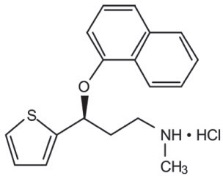
Metabolism and Elimination — Biotransformation and disposition of duloxetine in humans have been determined following oral administration of 14C-labeled duloxetine. Duloxetine comprises about 3% of the total radiolabeled material in the plasma, indicating that it undergoes extensive metabolism to numerous metabolites. The major biotransformation pathways for duloxetine involve oxidation of the naphthyl ring followed by conjugation and further oxidation. Both CYP1A2 and CYP2D6 catalyze the oxidation of the naphthyl ring in vitro.
Metabolites found in plasma include 4-hydroxy duloxetine glucuronide and 5-hydroxy, 6-methoxy duloxetine sulfate. Many additional metabolites have been identified in urine, some representing only minor pathways of elimination. Only trace (<1% of the dose) amounts of unchanged duloxetine are present in the urine. Most (about 70%) of the duloxetine dose appears in the urine as metabolites of duloxetine; about 20% is excreted in the feces. Duloxetine undergoes extensive metabolism, but the major circulating metabolites have not been shown to contribute significantly to the pharmacologic activity of duloxetine.
Children and Adolescents (ages 7 to 17 years) — Duloxetine steady-state plasma concentration was comparable in children (7 to 12 years of age), adolescents (13 to 17 years of age) and adults. The average steady-state duloxetine concentration was approximately 30% lower in the pediatric population (children and adolescents) relative to the adults. The model-predicted duloxetine steady state plasma concentrations in children and adolescents were mostly within the concentration range observed in adult patients and did not exceed the concentration range in adults.
Carcinogenesis — Duloxetine was administered in the diet to mice and rats for 2 years.
In female mice receiving duloxetine at 140 mg/kg/day (6 times the maximum recommended human dose (MRHD) of 120 mg/day on a mg/m2 basis), there was an increased incidence of hepatocellular adenomas and carcinomas. The no-effect dose was 50 mg/kg/day (2 times the MRHD). Tumor incidence was not increased in male mice receiving duloxetine at doses up to 100 mg/kg/day (4 times the MRHD).
In rats, dietary doses of duloxetine up to 27 mg/kg/day in females (2 times the MRHD) and up to 36 mg/kg/day in males (3 times the MRHD) did not increase the incidence of tumors.
Mutagenesis — Duloxetine was not mutagenic in the in vitro bacterial reverse mutation assay (Ames test) and was not clastogenic in an in vivo chromosomal aberration test in mouse bone marrow cells. Additionally, duloxetine was not genotoxic in an in vitro mammalian forward gene mutation assay in mouse lymphoma cells or in an in vitro unscheduled DNA synthesis (UDS) assay in primary rat hepatocytes, and did not induce sister chromatid exchange in Chinese hamster bone marrow in vivo.
Impairment of Fertility — Duloxetine administered orally to either male or female rats prior to and throughout mating at doses up to 45 mg/kg/day (4 times the MRHD) did not alter mating or fertility.
Studies in Chronic Low Back Pain
The efficacy of Duloxetine delayed-release capsules in chronic low back pain (CLBP) was assessed in two double-blind, placebo-controlled, randomized clinical trials of 13-weeks duration (Study CLBP-1 and Study CLBP-2), and one of 12-weeks duration (CLBP-3). CLBP-1 and CLBP-3 demonstrated efficacy of Duloxetine delayed-release capsules in the treatment of chronic low back pain. Patients in all studies had no signs of radiculopathy or spinal stenosis.
Study CLBP-1: Two hundred thirty-six adult patients (N=115 on Duloxetine delayed-release capsules, N=121 on placebo) enrolled and 182 (77%) completed 13-week treatment phase. After 7 weeks of treatment, Duloxetine delayed-release capsules patients with less than 30% reduction in average daily pain and who were able to tolerate duloxetine 60 mg once daily had their dose of Duloxetine delayed-release capsules, in a double-blinded fashion, increased to 120 mg once daily for the remainder of the study. Patients had a mean baseline pain rating of 6 on a numerical rating scale ranging from 0 (no pain) to 10 (worst possible pain). After 13 weeks of treatment, patients taking Duloxetine delayed-release capsules 60-120 mg daily had a significantly greater pain reduction compared to placebo. Randomization was stratified by the patients' baseline NSAIDs-use status. Subgroup analyses did not indicate that there were differences in treatment outcomes as a function of NSAIDs use.
Study CLBP-2: Four hundred and four patients were randomized to receive fixed doses of Duloxetine delayed-release capsules daily or a matching placebo (N=59 on Duloxetine delayed-release capsules 20 mg, N=116 on Duloxetine delayed-release capsules 60 mg, N=112 on Duloxetine delayed-release capsules 120 mg, N=117 on placebo) and 267 (66%) completed the entire 13-week study. After 13 weeks of treatment, none of the three Duloxetine delayed-release capsules doses showed a statistically significant difference in pain reduction compared to placebo.
Study CLBP-3: Four hundred and one patients were randomized to receive fixed doses of Duloxetine delayed-release capsules 60 mg daily or placebo (N=198 on Duloxetine delayed-release capsules, N=203 on placebo), and 303 (76%) completed the study. Patients had a mean baseline pain rating of 6 on a numerical rating scale ranging from 0 (no pain) to 10 (worst possible pain). After 12 weeks of treatment, patients taking Duloxetine delayed-release capsules 60 mg daily had significantly greater pain reduction compared to placebo.
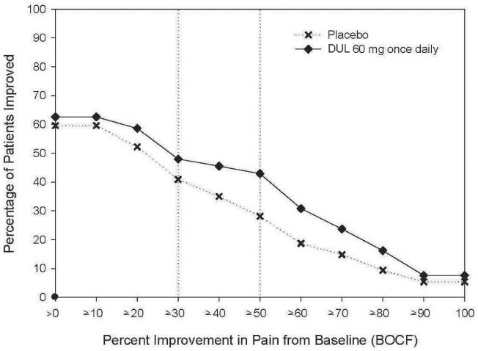
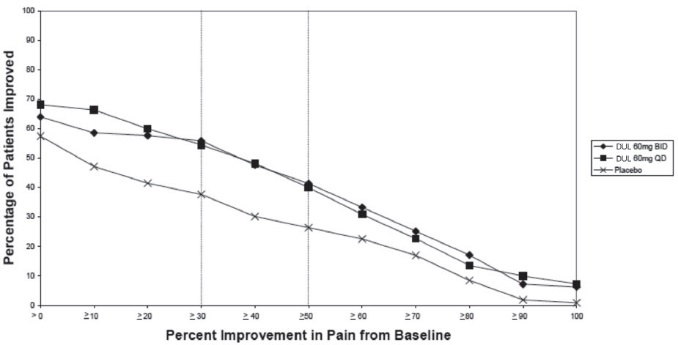
For various degrees of improvement in pain from baseline to study endpoint, Figures 7 and 8 show the fraction of patients in CLBP-1 and CLBP-3 achieving that degree of improvement. The figures are cumulative, so that patients whose change from baseline is, for example, 50%, are also included at every level of improvement below 50%. Patients who did not complete the study were assigned the value of 0% improvement.
Figure 7: Percentage of Patients Achieving Various Levels of Pain Relief as Measured by 24-Hour Average Pain Severity- CLBP-1
Figure 8: Percentage of Patients Achieving Various Levels of Pain Relief as Measured by 24-Hour Average Pain Severity- CLBP-3
Studies in Chronic Pain Due to Osteoarthritis
The efficacy of Duloxetine delayed-release capsules in chronic pain due to osteoarthritis was assessed in 2 double-blind, placebo-controlled, randomized clinical trials of 13-weeks duration (Study OA-1 and Study OA-2). All patients in both studies fulfilled the ACR clinical and radiographic criteria for classification of idiopathic osteoarthritis of the knee. Randomization was stratified by the patients' baseline NSAIDs-use status. Patients assigned to Duloxetine delayed-release capsules started treatment in both studies at a dose of 30 mg once daily for one week. After the first week, the dose of Duloxetine delayed-release capsules was increased to 60 mg once daily. After 7 weeks of treatment with Duloxetine delayed-release capsules 60 mg once daily, in OA-1 patients with sub-optimal response to treatment (<30% pain reduction) and tolerated duloxetine 60 mg once daily had their dose increased to 120 mg. However, in OA-2, all patients, regardless of their response to treatment after 7 weeks, were re-randomized to either continue receiving Duloxetine delayed-release capsules 60 mg once daily or have their dose increased to 120 mg once daily for the remainder of the study. Patients in the placebo treatment groups in both studies received a matching placebo for the entire duration of studies. For both studies, efficacy analyses were conducted using 13-week data from the combined Duloxetine delayed-release capsules 60 mg and 120 mg once daily treatment groups compared to the placebo group.
Study OA-1: Two hundred fifty-six patients (N=128 on Duloxetine delayed-release capsules, N=128 on placebo) enrolled and 204 (80%) completed the study. Patients had a mean baseline pain rating of 6 on a numerical rating scale ranging from 0 (no pain) to 10 (worst possible pain). After 13 weeks of treatment, patients taking Duloxetine delayed-release capsules had significantly greater pain reduction. Subgroup analyses did not indicate that there were differences in treatment outcomes as a function of NSAIDs use.
Study OA-2: Two hundred thirty-one patients (N=111 on Duloxetine delayed-release capsules, N=120 on placebo) enrolled and 173 (75%) completed the study. Patients had a mean baseline pain of 6 on a numerical rating scale ranging from 0 (no pain) to 10 (worst possible pain). After 13 weeks of treatment, patients taking Duloxetine delayed-release capsules did not show a significantly greater pain reduction.
In Study OA-1, for various degrees of improvement in pain from baseline to study endpoint, Figure 9 shows the fraction of patients achieving that degree of improvement. The figure is cumulative, so that patients whose change from baseline is, for example, 50%, are also included at every level of improvement below 50%. Patients who did not complete the study were assigned the value of 0% improvement.
Figure 9: Percentage of Patients Achieving Various Levels of Pain Relief as Measured by 24-Hour Average Pain Severity- OA-1
Manufactured for:
Breckenridge Pharmaceutical, Inc.,
Berlin, CT 06037
Manufactured by:
Esteve Pharmaceuticals, S.A.
Martorelles (Barcelona), Spain
710872-02
Repackaged By: Preferred Pharmaceuticals Inc.
MEDICATION GUIDE
Duloxetine (doo-LOX-e-teen)
Delayed-Release Capsules, USP
Rx Only
Read this Medication Guide before you start taking Duloxetine delayed-release capsules and each time you get a refill. There may be new information. This information does not take the place of talking to your healthcare provider about your medical condition or treatment.
Talk to your healthcare provider about:
- all risks and benefits of treatment with antidepressant medicines
- all treatment choices for depression or other serious mental illness
What is the most important information I should know about antidepressant medicines, depression, other serious mental illnesses, and suicidal thoughts or actions?
- 1.Duloxetine delayed-release capsules and other antidepressant medicines may increase suicidal thoughts or actions in some children, teenagers, or young adults within the first few months of treatment or when the dose is changed.
- 2.Depression and other serious mental illnesses are the most important causes of suicidal thoughts or actions.
Some people may have a particularly high risk of having suicidal thoughts or actions. These include people who have (or have a family history of) bipolar illness (also called manic-depressive illness). - 3.How can I watch for and try to prevent suicidal thoughts and actions?
- Pay close attention to any changes in mood, behavior, actions, thoughts, or feelings, especially sudden changes. This is very important when an antidepressant medicine is started or when the dose is changed.
- Call your healthcare provider right away to report new or sudden changes in mood, behavior, thoughts, or feelings.
- Keep all follow-up visits with your healthcare provider as scheduled. Call your healthcare provider between visits as needed, especially if you have concerns about symptoms.
Call your healthcare provider right away if you have any of the following symptoms or feelings, especially if they are new, worse, or worry you. In an emergency, call 911.
- attempts to commit suicide
- acting aggressive, being angry, or violent
- new or worse depression
- panic attacks
- new or worse irritability
- an extreme increase in activity or talking (mania)
| - acting on dangerous impulses
- thoughts about suicide or dying
- new or worse anxiety
- feeling very agitated or restless
- trouble sleeping
- other unusual changes in behavior or mood
|
What else do I need to know about antidepressant medicines?
- Never stop an antidepressant medicine without first talking to a healthcare provider. Stopping an antidepressant medicine suddenly can cause other symptoms.
- Antidepressants are medicines used to treat depression and other illnesses. It is important to discuss all the risks of treating depression and also the risks of not treating it. Patients should discuss all treatment choices with your healthcare provider, not just the use of antidepressants.
- Antidepressant medicines have other side effects. Talk to your healthcare provider about the side effects of the medicine prescribed for you or your family member.
- Antidepressant medicines can interact with other medicines. Know all of the medicines that you or your family member takes. Keep a list of all medicines to show your healthcare provider. Do not start new medicines without first checking with your healthcare provider.
What are Duloxetine delayed-release capsules?
Duloxetine delayed-release capsules are a prescription medicine used to treat a certain type of depression called Major Depressive Disorder (MDD). Duloxetine delayed-release capsules belong to a class of medicines known as SNRIs (or serotonin-norepinephrine reuptake inhibitors).
Duloxetine delayed-release capsules are also used to treat or manage:
- Generalized Anxiety Disorder (GAD)
| - Diabetic Peripheral Neuropathic Pain (DPNP)
| - Chronic Musculoskeletal Pain
|
Who should not take Duloxetine delayed-release capsules?
Do Not take Duloxetine delayed-release capsules if you:
- 1.take a Monoamine Oxidase Inhibitor (MAOI). Ask your healthcare provider or pharmacist if you are not sure if you take an MAOI, including the antibiotic linezolid or intravenous methylene blue.
- Do not take an MAOI within 5 days of stopping Duloxetine delayed-release capsules unless directed to do so by your healthcare provider.
- Do not start Duloxetine delayed-release capsules if you stopped taking an MAOI in the last 14 days unless directed to do so by your healthcare provider.
People who take Duloxetine delayed-release capsules close in time to an MAOI may have a serious problem called Serotonin Syndrome (see "What are the possible side effects of Duloxetine delayed-release capsules?").
What should I tell my healthcare provider before taking Duloxetine delayed-release capsules?
Before starting Duloxetine delayed-release capsules, tell your healthcare provider if you:
- have heart problems or high blood pressure
|
- have liver problems
- have kidney problems
- have or had seizures or convulsions
- have low sodium levels in your blood
- have or had bleeding problems
| - have diabetes (Duloxetine delayed-release capsules treatment makes it harder for some people with diabetes to control their blood sugar)
- have glaucoma
- have bipolar disorder or mania
- have delayed stomach emptying
|
- are pregnant or plan to become pregnant. It is not known if Duloxetine delayed-release capsules will harm your unborn baby. Talk to your healthcare provider about the benefits and risks of treating depression or other conditions with Duloxetine delayed-release capsules during pregnancy.
- are breastfeeding or plan to breastfeed. Duloxetine can pass into your breast milk. Talk to your healthcare provider about the best way to feed your baby while taking Duloxetine delayed-release capsules.
Tell your healthcare provider about all the medicines that you take, including prescription and over-the-counter medicines, vitamins, and herbal supplements. Duloxetine delayed-release capsules and some medicines may interact with each other, may not work as well, or may cause serious side effects.
Especially tell your healthcare provider if you take:
- triptans used to treat migraine headache
- tramadol and fentanyl
- amphetamines
- the antibiotics ciprofloxacin, enoxacin
- theophylline
| - medicines used to treat mood, anxiety, psychotic or thought disorders, including tricyclics, lithium, buspirone, SSRIs, SNRIs or MAOIs
- cimetidine
- medicine to treat irregular heart rate (like propafenone, flecainide, quinidine)
- the blood thinner warfarin (Coumadin, Jantoven)
|
- non-steroidal anti-inflammatory drug (NSAID) (like ibuprofen, naproxen or aspirin).
- over-the-counter supplements such as tryptophan or St. John's Wort
- thioridazine (Mellaril). Mellaril together with duloxetine can cause serious heart rhythm problems or sudden death.
|
Ask your healthcare provider for a list of these medicines if you are not sure.
Do not take Duloxetine delayed-release capsules with any other medicine that contains duloxetine.
How should I take Duloxetine delayed-release capsules?
- Take Duloxetine delayed-release capsules exactly as your healthcare provider tells you to take them. Your healthcare provider may need to change the dose of Duloxetine delayed-release capsules until it is the right dose for you.
- Swallow Duloxetine delayed-release capsules whole. Do not chew or crush Duloxetine delayed-release capsules.
- Do not open the capsule and sprinkle on food or mix with liquids. Opening the capsule may affect how well duloxetine works.
- Duloxetine delayed-release capsules may be taken with or without food.
- If you miss a dose of Duloxetine delayed-release capsules, take the missed dose as soon as you remember. If it is almost time for the next dose, skip the missed dose and take your next dose at the regular time. Do not take two doses of Duloxetine delayed-release capsules at the same time.
- If you take too many Duloxetine delayed-release capsules, call your healthcare provider or poison control center at 1-800-222-1222 right away, or get emergency treatment.
- When switching from another antidepressant to Duloxetine delayed-release capsules your healthcare provider may want to lower the dose of the initial antidepressant first to potentially avoid side effects.
What should I avoid while taking Duloxetine delayed-release capsules?
- Duloxetine delayed-release capsules can cause sleepiness or may affect your ability to make decisions, think clearly, or react quickly. You should not drive, operate heavy machinery, or do other dangerous activities until you know how Duloxetine delayed-release capsules affects you.
- Use of Duloxetine delayed-release capsules concomitantly with heavy alcohol intake may be associated with severe liver injury. Avoid heavy alcohol use while taking Duloxetine delayed-release capsules.
What are the possible side effects of Duloxetine delayed-release capsules?
Duloxetine delayed-release capsules may cause serious side effects, including: See "What is the most important information I should know about Duloxetine delayed-release capsules?"
Common possible side effects in people who take Duloxetine delayed-release capsules include:
- liver damage. Symptoms may include:
| - itching
- yellow skin or eyes
| - right upper abdominal pain
- enlarged liver
| - dark urine
- increased liver enzymes
|
- changes in blood pressure and falls. Monitor your blood pressure before starting and throughout treatment. Duloxetine delayed-release capsules may:
- increase your blood pressure.
- decrease your blood pressure when standing and cause dizziness or fainting, mostly when first starting Duloxetine delayed-release capsules or when increasing the dose.
- increase risk of falls, especially in elderly.
- Serotonin Syndrome: This condition can be life-threatening and symptoms may include:
- agitation, hallucinations, coma or other changes in mental status
- coordination problems or muscle twitching (overactive reflexes)
| - racing heartbeat, high or low blood pressure
- nausea, vomiting, or diarrhea
- flushing
| | - sweating or fever
- dizziness
- seizures
|
- abnormal bleeding: Duloxetine delayed-release capsules and other antidepressant medicines may increase your risk of bleeding or bruising, especially if you take the blood thinner warfarin (Coumadin, Jantoven), a non-steroidal anti-inflammatory drug (NSAIDs, like ibuprofen or naproxen), or aspirin.
- severe skin reactions: Duloxetine delayed-release capsules may cause serious skin reactions that may require stopping its use. This may need to be treated in a hospital and may be life-threatening. Call your healthcare provider right away or get emergency help if you have skin blisters, peeling rash, sores in the mouth, hives or any other allergic reactions.
- discontinuation symptoms: Do not stop Duloxetine delayed-release capsules without first talking to your healthcare provider. Stopping Duloxetine delayed-release capsules too quickly or changing from another antidepressant too quickly may result in serious symptoms including:
| - anxiety
- headache
- electric shock-like sensations
| - irritability
- sweating
- vomiting or nausea
| - feeling tired or problems sleeping
- dizziness
- diarrhea
|