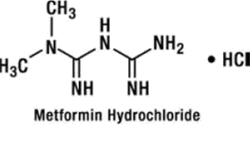
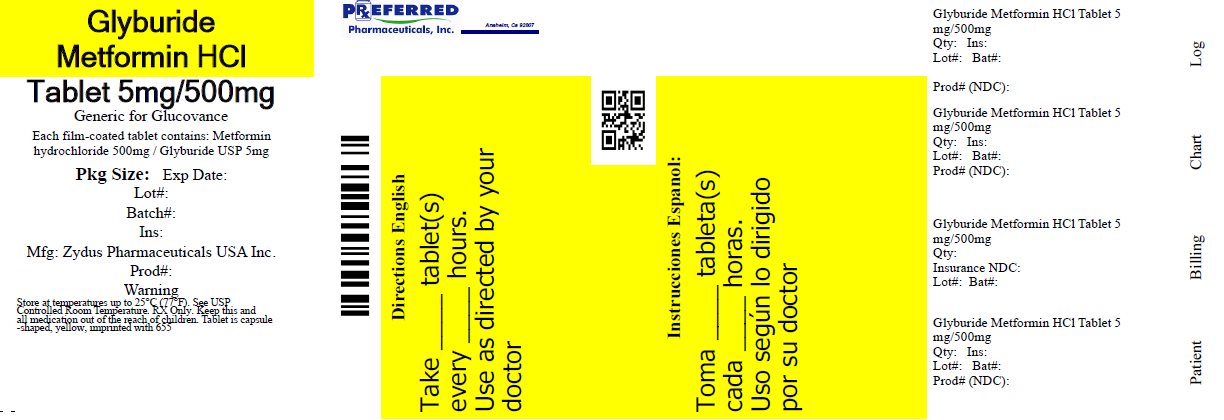
The risk of metformin accumulation and metformin-associated lactic acidosis increases with the severity of renal impairment because metformin is substantially excreted by the kidney. Clinical recommendations based upon the patient's renal function include (see DOSAGE AND ADMINISTRATION, CLINICAL PHARMACOLOGY):
○ Before initiating glyburide and metformin hydrochloride, obtain an estimated glomerular filtration rate (eGFR).
○ Glyburide and metformin hydrochloride is contraindicated in patients with an eGFR less than 30 mL/min/1.73 m2 (see CONTRAINDICATIONS).
○ Initiation of glyburide and metformin hydrochloride is not recommended in patients with eGFR between 30-45 mL/min/1.73 m2.
○ Obtain an eGFR at least annually in all patient taking glyburide and metformin hydrochloride. In patients at risk for the development of renal impairment (e.g., the elderly), renal function should be assessed more frequently.
○ In patients taking glyburide and metformin hydrochloride whose eGFR falls below 45 mL/min/1.73 m2, assess the benefit and risk of continuing therapy.
- Drug interactions— The concomitant use of glyburide and metformin hydrochloride with specific drugs may increase the risk of metformin-associated lactic acidosis: those that impair renal function, result in significant hemodynamic change, interfere with acid-base balance, or increase metformin accumulation. Consider more frequent monitoring of patients.
- Age 65 or Greater— The risk of metformin-associated lactic acidosis increases with the patient's age because elderly patients have a greater likelihood of having hepatic, renal, or cardiac impairment than younger patients. Assess renal function more frequently in elderly patients.
- Radiologic studies with contrast— Administration of intravascular iodinated contrast agents in metformin-treated patients has led to an acute decrease in renal function and the occurrence of lactic acidosis. Stop glyburide and metformin hydrochloride at the time of, or prior to, an iodinated contrast imaging procedure in patients with an eGFR between 30 and 60 mL/min/1.73 m2; in patients with a history of hepatic impairment, alcoholism or heart failure, or in patients who will be administered intra-arterial iodinated contrast. Reevaluate eGFR 48 hours after the imaging procedure, and restart glyburide and metformin hydrochloride if renal function is stable.
- Surgery and other procedures— Withholding of food and fluids during surgical or other procedures may increase the risk for volume depletion, hypotension, and renal impairment. Glyburide and metformin hydrochloride should be temporarily discontinued while patients have restricted food and fluid intake.
- Hypoxic states— Several of the postmarketing cases of metformin-associated lactic acidosis occurred in the setting of acute congestive heart failure (particularly when accompanied by hypoperfusion and hypoxemia). Cardiovascular collapse (shock), acute myocardial infarction, sepsis, and other conditions associated with hypoxemia have been associated with lactic acidosis and may cause prerenal azotemia. When such an event occurs, discontinue glyburide and metformin hydrochloride.
- Excessive Alcohol intake— Alcohol is known to potentiate the effect of metformin on lactate metabolism. Patients, therefore, should be warned against excessive alcohol intake, acute or chronic, while receiving glyburide and metformin hydrochloride.
- Hepatic impairment— Patients with hepatic impairment have developed cases of metformin-associated lactic acidosis. This may be due to impaired lactate clearance resulting in higher lactate blood levels. Therefore, avoid use of glyburide and metformin hydrochloride in patients with clinical or laboratory evidence of hepatic disease.
Hypoglycemia
Glyburide and metformin hydrochloride is capable of producing hypoglycemia or hypoglycemic symptoms, therefore, proper patient selection, dosing, and instructions are important to avoid potential hypoglycemic episodes. The risk of hypoglycemia is increased when caloric intake is deficient, when strenuous exercise is not compensated by caloric supplementation, or during concomitant use with other glucose-lowering agents or ethanol. Renal or hepatic insufficiency may cause elevated drug levels of both glyburide and metformin hydrochloride, and the hepatic insufficiency may also diminish gluconeogenic capacity, both of which increase the risk of hypoglycemic reactions. Elderly, debilitated, or malnourished patients and those with adrenal or pituitary insufficiency or alcohol intoxication are particularly susceptible to hypoglycemic effects. Hypoglycemia may be difficult to recognize in the elderly and people who are taking beta-adrenergic blocking drugs.
Glyburide
Hemolytic anemia
Treatment of patients with glucose-6-phosphate dehydrogenase (G6PD) deficiency with sulfonylurea agents can lead to hemolytic anemia. Because glyburide and metformin hydrochloride belongs to the class of sulfonylurea agents, caution should be used in patients with G6PD deficiency and a non-sulfonylurea alternative should be considered. In postmarketing reports, hemolytic anemia has also been reported in patients who did not have known G6PD deficiency.
Metformin Hydrochloride
Vitamin B12 levels
In controlled clinical trials with metformin of 29 weeks duration, a decrease to subnormal levels of previously normal serum vitamin B12, without clinical manifestations, was observed in approximately 7% of patients.
Such decrease, possibly due to interference with B12 absorption from the B12-intrinsic factor complex is, however, very rarely associated with anemia and appears to be rapidly reversible with discontinuation of metformin or vitamin B12 supplementation. Measurement of hematologic parameters on an annual basis is advised in patients on metformin and any apparent abnormalities should be appropriately investigated and managed (see PRECAUTIONS: Laboratory Tests).
Certain individuals (those with inadequate vitamin B12 or calcium intake or absorption) appear to be predisposed to developing subnormal vitamin B12 levels. In these patients, routine serum vitamin B12 measurements at 2- to 3-year intervals may be useful.
Macrovascular Outcomes
There have been no clinical studies establishing conclusive evidence of macrovascular risk reduction with glyburide and metformin hydrochloride or any other antidiabetic drug.
Addition of Thiazolidinediones to Glyburide and Metformin Hydrochloride Therapy
Hypoglycemia
Patients receiving glyburide and metformin hydrochloride in combination with a thiazolidinedione may be at risk for hypoglycemia.
Weight gain
Weight gain was seen with the addition of rosiglitazone to glyburide and metformin hydrochloride, similar to that reported for thiazolidinedione therapy alone.
Hepatic effects
When a thiazolidinedione is used in combination with glyburide and metformin hydrochloride, periodic monitoring of liver function tests should be performed in compliance with the labeled recommendations for the thiazolidinedione.
Information for Patients
Glyburide and Metformin Hydrochloride
Patients should be informed of the potential risks and benefits of glyburide and metformin hydrochloride and alternative modes of therapy. They should also be informed about the importance of adherence to dietary instructions; a regular exercise program; and regular testing of blood glucose, glycosylated hemoglobin, renal function, and hematologic parameters.
The risks of lactic acidosis associated with metformin therapy, its symptoms, and conditions that predispose to its development, as noted in the WARNINGS and PRECAUTIONS sections, should be explained to patients. Patients should be advised to discontinue glyburide and metformin hydrochloride immediately and promptly notify their health practitioner if unexplained hyperventilation, myalgia, malaise, unusual somnolence, or other nonspecific symptoms occur. Once a patient is stabilized on any dose level of glyburide and metformin hydrochloride, gastrointestinal symptoms, which are common during initiation of metformin therapy, are unlikely to be drug related. Later occurrence of gastrointestinal symptoms could be due to lactic acidosis or other serious disease.
The risks of hypoglycemia, its symptoms and treatment, and conditions that predispose to its development should be explained to patients and responsible family members.
Patients should be counseled against excessive alcohol intake, either acute or chronic, while receiving glyburide and metformin hydrochloride. (See Patient Information printed below.)
Laboratory Tests
Periodic fasting blood glucose (FBG) and HbA1c measurements should be performed to monitor therapeutic response.
Initial and periodic monitoring of hematologic parameters (e.g., hemoglobin/hematocrit and red blood cell indices) and renal function (serum creatinine) should be performed, at least on an annual basis. While megaloblastic anemia has rarely been seen with metformin therapy, if this is suspected, vitamin B12 deficiency should be excluded.
Instruct patients to inform their doctor that they are taking glyburide and metformin hydrochloride prior to any surgical or radiological procedure, as temporary discontinuation of glyburide and metformin hydrochloride may be required until renal function has been confirmed to be normal (see PRECAUTIONS).
Drug Interactions
Glyburide and Metformin Hydrochloride
Certain drugs tend to produce hyperglycemia and may lead to loss of blood glucose control.
These drugs include thiazides and other diuretics, corticosteroids, phenothiazines, thyroid products, estrogens, oral contraceptives, phenytoin, nicotinic acid, sympathomimetics, calcium channel blocking drugs, and isoniazid. When such drugs are administered to a patient receiving glyburide and metformin hydrochloride, the patient should be closely observed for loss of blood glucose control. When such drugs are withdrawn from a patient receiving glyburide and metformin hydrochloride, the patient should be observed closely for hypoglycemia. Metformin is negligibly bound to plasma proteins and is, therefore, less likely to interact with highly protein-bound drugs such as salicylates, sulfonamides, chloramphenicol, and probenecid as compared to sulfonylureas, which are extensively bound to serum proteins.
Glyburide
The hypoglycemic action of sulfonylureas may be potentiated by certain drugs, including nonsteroidal anti-inflammatory agents and other drugs that are highly protein bound, salicylates, sulfonamides, chloramphenicol, probenecid, coumarins, monoamine oxidase inhibitors, and beta-adrenergic blocking agents. When such drugs are administered to a patient receiving glyburide and metformin hydrochloride, the patient should be observed closely for hypoglycemia. When such drugs are withdrawn from a patient receiving glyburide and metformin hydrochloride, the patient should be observed closely for loss of blood glucose control.
An increased risk of liver enzyme elevations was observed in patients receiving glyburide concomitantly with bosentan. Therefore concomitant administration of glyburide and metformin hydrochloride and bosentan is contraindicated.
A possible interaction between glyburide and ciprofloxacin, a fluoroquinolone antibiotic, has been reported, resulting in a potentiation of the hypoglycemic action of glyburide. The mechanism for this interaction is not known.
A potential interaction between oral miconazole and oral hypoglycemic agents leading to severe hypoglycemia has been reported. Whether this interaction also occurs with the intravenous, topical, or vaginal preparations of miconazole is not known.
Colesevelam: Concomitant administration of colesevelam and glyburide resulted in reductions in glyburide AUC and Cmax of 32% and 47%, respectively. The reductions in glyburide AUC and Cmax were 20% and 15%, respectively, when administered 1 hour before, and not significantly changed (−7% and 4%, respectively) when administered 4 hours before colesevelam.
Metformin Hydrochloride
Furosemide
A single-dose, metformin-furosemide drug interaction study in healthy subjects demonstrated that pharmacokinetic parameters of both compounds were affected by coadministration. Furosemide increased the metformin plasma and blood Cmax by 22% and blood AUC by 15%, without any significant change in metformin renal clearance. When administered with metformin, the Cmax and AUC of furosemide were 31% and 12% smaller, respectively, than when administered alone, and the terminal half-life was decreased by 32%, without any significant change in furosemide renal clearance. No information is available about the interaction of metformin and furosemide when coadministered chronically.
Nifedipine
A single-dose, metformin-nifedipine drug interaction study in normal healthy volunteers demonstrated that coadministration of nifedipine increased plasma metformin Cmax and AUC by 20% and 9%, respectively, and increased the amount excreted in the urine. Tmax and half-life were unaffected. Nifedipine appears to enhance the absorption of metformin. Metformin had minimal effects on nifedipine.
Drugs that reduce metformin clearance
Concomitant use of drugs that interfere with common renal tubular transport systems involved in the renal elimination of metformin (e.g., organic cationic transport-2 [OCT2] / multidrug and toxin extrusion [MATE] inhibitors such as ranolazine, vandetanib, dolutegravir, and cimetidine) could increase systemic exposure to metformin and may increase the accumulation of metformin and the risk for lactic acidosis. Consider the benefits and risks of concomitant use. Such interaction between metformin and oral cimetidine has been observed in normal healthy volunteers in both single-and multiple-dose, metformin-cimetidine drug interaction studies, with a 60% increase in peak metformin plasma and whole blood concentrations and a 40% increase in plasma and whole blood metformin AUC. There was no change in elimination half-life in the single-dose study. Metformin had no effect on cimetidine pharmacokinetics.
In healthy volunteers, the pharmacokinetics of metformin and propranolol, and metformin and ibuprofen were not affected when coadministered in single-dose interaction studies.
Metformin is negligibly bound to plasma proteins and is, therefore, less likely to interact with highly protein-bound drugs such as salicylates, sulfonamides, chloramphenicol, and probenecid, as compared to the sulfonylureas, which are extensively bound to serum proteins.
Carbonic Anhydrase Inhibitors
Topiramate or other carbonic anhydrase inhibitors (e.g., zonisamide, acetazolamide or dichlorphenamide) frequently causes a decrease in serum bicarbonate and induce non-anion gap, hyperchloremic metabolic acidosis. Concomitant use of these drugs with glyburide and metformin hydrochloride may increase the risk for lactic acidosis. Consider more frequent monitoring of these patients.
Alcohol
Alcohol is known to potentiate the effects of metformin on lactate metabolism. Warn patients against excessive alcohol intake while receiving glyburide and metformin hydrochloride.
Carcinogenesis, Mutagenesis, Impairment of Fertility
No animal studies have been conducted with the combined products in glyburide and metformin hydrochloride. The following data are based on findings in studies performed with the individual products.
Glyburide
Studies in rats with glyburide alone at doses up to 300 mg/kg/day (approximately 145 times the maximum recommended human daily [MRHD] dose of 20 mg for the glyburide component of glyburide and metformin hydrochloride based on body surface area comparisons) for 18 months revealed no carcinogenic effects. In a 2-year oncogenicity study of glyburide in mice, there was no evidence of treatment-related tumors.
There was no evidence of mutagenic potential of glyburide alone in the following in vitro tests: Salmonella microsome test (Ames test) and in the DNA damage/alkaline elution assay.
Metformin Hydrochloride
Long-term carcinogenicity studies were performed with metformin alone in rats (dosing duration of 104 weeks) and mice (dosing duration of 91 weeks) at doses up to and including 900 mg/kg/day and 1500 mg/kg/day, respectively. These doses are both approximately 4 times the MRHD dose of 2000 mg of the metformin component of glyburide and metformin hydrochloride based on body surface area comparisons. No evidence of carcinogenicity with metformin alone was found in either male or female mice. Similarly, there was no tumorigenic potential observed with metformin alone in male rats. There was, however, an increased incidence of benign stromal uterine polyps in female rats treated with 900 mg/kg/day of metformin alone.
There was no evidence of a mutagenic potential of metformin alone in the following in vitro tests: Ames test (S. typhimurium), gene mutation test (mouse lymphoma cells), or chromosomal aberrations test (human lymphocytes). Results in the in vivo mouse micronucleus test were also negative.
Fertility of male or female rats was unaffected by metformin alone when administered at doses as high as 600 mg/kg/day, which is approximately 3 times the MRHD dose of the metformin component of glyburide and metformin hydrochloride based on body surface area comparisons.
Pregnancy
Teratogenic Effects: Pregnancy Category B
Recent information strongly suggests that abnormal blood glucose levels during pregnancy are associated with a higher incidence of congenital abnormalities. Most experts recommend that insulin be used during pregnancy to maintain blood glucose as close to normal as possible. Because animal reproduction studies are not always predictive of human response, glyburide and metformin hydrochloride should not be used during pregnancy unless clearly needed. (See below.)
There are no adequate and well-controlled studies in pregnant women with glyburide and metformin hydrochloride or its individual components. No animal studies have been conducted with the combined products in glyburide and metformin hydrochloride. The following data are based on findings in studies performed with the individual products.
Glyburide
Reproduction studies were performed in rats and rabbits at doses up to 500 times the MRHD dose of 20 mg of the glyburide component of glyburide and metformin hydrochloride based on body surface area comparisons and revealed no evidence of impaired fertility or harm to the fetus due to glyburide.
Metformin Hydrochloride
Metformin alone was not teratogenic in rats or rabbits at doses up to 600 mg/kg/day. This represents an exposure of about 2 and 6 times the MRHD dose of 2000 mg of the metformin component of glyburide and metformin hydrochloride based on body surface area comparisons for rats and rabbits, respectively. Determination of fetal concentrations demonstrated a partial placental barrier to metformin.
Nonteratogenic Effects
Prolonged severe hypoglycemia (4 to 10 days) has been reported in neonates born to mothers who were receiving a sulfonylurea drug at the time of delivery. This has been reported more frequently with the use of agents with prolonged half-lives. It is not recommended that glyburide and metformin hydrochloride be used during pregnancy. However, if it is used, glyburide and metformin hydrochloride should be discontinued at least 2 weeks before the expected delivery date. (See Pregnancy: Teratogenic Effects: Pregnancy Category B.)
Nursing Mothers
Although it is not known whether glyburide is excreted in human milk, some sulfonylurea drugs are known to be excreted in human milk. Studies in lactating rats show that metformin is excreted into milk and reaches levels comparable to those in plasma. Similar studies have not been conducted in nursing mothers. Because the potential for hypoglycemia in nursing infants may exist, a decision should be made whether to discontinue nursing or to discontinue glyburide and metformin hydrochloride, taking into account the importance of the drug to the mother. If glyburide and metformin hydrochloride is discontinued, and if diet alone is inadequate for controlling blood glucose, insulin therapy should be considered.
Pediatric Use
The safety and efficacy of glyburide and metformin hydrochloride were evaluated in an active-controlled, double-blind, 26-week randomized trial involving a total of 167 pediatric patients (ranging from 9 to 16 years of age) with type 2 diabetes. Glyburide and metformin hydrochloride was not shown statistically to be superior to either metformin or glyburide with respect to reducing HbA1c from baseline (see Table 5). No unexpected safety findings were associated with glyburide and metformin hydrochloride in this trial.
Table 5: HbA1c (Percent) Change From Baseline at 26 Weeks: Pediatric Study | Glyburide
2.5 mg
tablets
| Metformin 500 mg
tablets
| Glyburide and Metformin Hydrochloride
1.25 mg/250 mg tablets
|
Mean Final Dose
| 6.5 mg
| 1500 mg
| 3.1 mg/623 mg
|
Hemoglobin A1c
| N=49
| N=54
| N=57
|
Baseline Mean (%)
| 7.70
| 7.99
| 7.85
|
Mean Change from Baseline
| −0.96
| −0.48
| −0.80
|
Difference from Metformin
| | | −0.32
|
Difference from Glyburide
| | | +0.16
|
Geriatric Use
Of the 642 patients who received glyburide and metformin hydrochloride in double-blind clinical studies, 23.8% were 65 and older while 2.8% were 75 and older. Of the 1302 patients who received glyburide and metformin hydrochloride in open-label clinical studies, 20.7% were 65 and older while 2.5% were 75 and older. No overall differences in effectiveness or safety were observed between these patients and younger patients, and other reported clinical experience has not identified differences in response between the elderly and younger patients, but greater sensitivity of some older individuals cannot be ruled out.
In general, dose selection for an elderly patient should be cautious, usually starting at the low end of the dosing range, reflecting the greater frequency of decreased hepatic, renal, or cardiac function, and of concomitant disease or other drug therapy and the higher risk of lactic acidosis. Assess renal function more frequently in elderly patients (see also WARNINGS, PRECAUTIONS, and DOSAGE AND ADMINISTRATION).