Breast Cancer
Women who currently have or have had breast cancer should not use hormone contraceptives, including Medroxyprogesterone Acetate Injectable Suspension, USP, because breast cancer may be hormonally sensitive. Women with a strong family history of breast cancer or who have breast nodules should be monitored with particular care.
A pooled analysis from two case-control studies, the World Health Organization Study and the New Zealand Study, reported the relative risk (RR) of breast cancer for women who had ever used Medroxyprogesterone Acetate Injectable Suspension, USP as 1.1 (95% confidence interval [CI] 0.97 to 1.4). Overall, there was no increase in risk with increasing duration of use of Medroxyprogesterone Acetate Injectable Suspension, USP. The RR of breast cancer for women of all ages who had initiated use of Medroxyprogesterone Acetate Injectable Suspension, USP within the previous 5 years was estimated to be 2.0 (95% CI 1.5 to 2.8).
The World Health Organization Study, a component of the pooled analysis described above, showed an increased RR of 2.19 (95% CI 1.23 to 3.89) of breast cancer associated with use of Medroxyprogesterone Acetate Injectable Suspension, USP in women whose first exposure to drug was within the previous 4 years and who were under 35 years of age. However, the overall RR for ever-users of Medroxyprogesterone Acetate Injectable Suspension, USP was 1.2 (95% CI 0.96 to 1.52).
The National Cancer Institute reports an average annual incidence rate for breast cancer for US women, all races, age 15 to 34 years of 8.7 per 100,000. A RR of 2.19, thus, increases the possible risk from 8.7 to 19.0 cases per 100,000 women. The attributable risk, thus, is 31.8 per 100,000 women per year.
Cervical Cancer
A statistically nonsignificant increase in RR estimates of invasive squamous-cell cervical cancer has been associated with the use of Medroxyprogesterone Acetate Injectable Suspension, USP in women who were first exposed before the age of 35 years (RR 1.22 to 1.28 and 95% CI 0.93 to 1.70). The overall, nonsignificant relative rate of invasive squamous-cell cervical cancer in women who ever used Medroxyprogesterone Acetate Injectable Suspension, USP was estimated to be 1.11 (95% CI 0.96 to 1.29). No trends in risk with duration of use or times since initial or most recent exposure were observed.
Other Cancers
Long-term case-controlled surveillance of users of Medroxyprogesterone Acetate Injectable Suspension, USP found no overall increased risk of ovarian or liver cancer.
HIV protease inhibitors and non-nucleoside reverse transcriptase inhibitors: Significant changes (increase or decrease) in the plasma levels of progestin have been noted in some cases of co-administration of HIV protease inhibitors. Significant changes (increase or decrease) in the plasma levels of the progestin have been noted in some cases of co-administration with non-nucleoside reverse transcriptase inhibitors.
Antibiotics: There have been reports of pregnancy while taking hormonal contraceptives and antibiotics, but clinical pharmacokinetic studies have not shown consistent effects of antibiotics on plasma concentrations of synthetic steroids.
Consult the labeling of all concurrently-used drugs to obtain further information about interactions with hormonal contraceptives or the potential for enzyme alterations.
Absorption
Following a single 150 mg IM dose of Medroxyprogesterone Acetate Injectable Suspension, USP in eight women between the ages of 28 and 36 years old, medroxyprogesterone acetate concentrations, measured by an extracted radioimmunoassay procedure, increase for approximately 3 weeks to reach peak plasma concentrations of 1 to 7 ng/mL.
Distribution
Plasma protein binding of MPA averages 86%. MPA binding occurs primarily to serum albumin. No binding of MPA occurs with sex-hormone-binding globulin (SHBG).
Metabolism
MPA is extensively metabolized in the liver by P450 enzymes. Its metabolism primarily involves ring A and/or side-chain reduction, loss of the acetyl group, hydroxylation in the 2-, 6-, and 21-positions or a combination of these positions, resulting in more than 10 metabolites.
Excretion
The concentrations of medroxyprogesterone acetate decrease exponentially until they become undetectable (<100 pg/mL) between 120 to 200 days following injection. Using an unextracted radioimmunoassay procedure for the assay of medroxyprogesterone acetate in serum, the apparent half-life for medroxyprogesterone acetate following IM administration of Medroxyprogesterone Acetate Injectable Suspension, USP is approximately 50 days. Most medroxyprogesterone acetate metabolites are excreted in the urine as glucuronide conjugates with only minor amounts excreted as sulfates.
Specific Populations
The effect of hepatic and/or renal impairment on the pharmacokinetics of Medroxyprogesterone Acetate Injectable Suspension, USP is unknown.
BMD recovery post-treatment in adolescent women
Longer duration of treatment and smoking were associated with less recovery of BMD following the last injection of Medroxyprogesterone Acetate Injectable Suspension, USP. Table 6 shows the extent of recovery of BMD up to 60 months post-treatment for adolescent women who received Medroxyprogesterone Acetate Injectable Suspension, USP for two years or less compared to more than two years. Post-treatment follow-up showed that, in women treated for more than two years, only lumbar spine BMD recovered to baseline levels after treatment was discontinued. Subjects treated with Medroxyprogesterone Acetate Injectable Suspension, USP for more than two years did not recover to their baseline BMD level at femoral neck and total hip even up to 60 months post-treatment. Adolescent women in the untreated cohort gained BMD throughout the trial period (data not shown).
Table 6: Extent of BMD Recovery (Months Post-Treatment) in Adolescents by Years of Medroxyprogesterone Acetate Injectable Suspension, USP Use (2 Years or Less vs. More than 2 Years)| Duration of Treatment | 2 years or less | More than 2 years |
|---|
| N | Mean % Change from baseline | N | Mean % Change from baseline |
|---|
| Total Hip BMD |
| End of Treatment | 49 | -1.5% | 49 | -6.2% |
| 12 M post-treatment | 33 | -1.4% | 24 | -4.6% |
| 24 M post-treatment | 18 | 0.3% | 17 | -3.6% |
| 36 M post-treatment | 12 | 2.1% | 11 | -4.6% |
| 48 M post-treatment | 10 | 1.3% | 9 | -2.5% |
| 60 M post-treatment | 3 | 0.2% | 2 | -1.0% |
| Femoral Neck BMD |
End of Treatment
12 M post-treatment
24 M post-treatment
36 M post-treatment
48 M post-treatment
60 M post-treatment | 49
33
18
12
10
3 | -1.6%
-1.4%
0.5%
1.2%
2.0%
1.0% | 49
24
17
11
9
2 | -5.8%
-4.3%
-3.8%
-3.8%
-1.7%
-1.9% |
| | | | |
| | | | |
| | | | |
| | | | |
| | | | |
| Lumbar Spine BMD |
| End of Treatment | 49 | -0.9% | 49 | -3.5% |
| 12 M post-treatment | 33 | 0.4% | 23 | -1.1% |
| 24 M post-treatment | 18 | 2.6% | 17 | 1.9% |
| 36 M post-treatment | 12 | 2.4% | 11 | 0.6% |
| 48 M post-treatment | 10 | 6.5% | 9 | 3.5% |
| 60 M post-treatment | 3 | 6.2% | 2 | 5.7% |

Logo (Medroxyprogesterone 02)
LAB-0150-7.0
September 2011
Medroxyprogesterone Acetate Injectable Suspension, USP is intended to prevent pregnancy. Medroxyprogesterone Acetate Injectable Suspension, USP does not protect against HIV infection (AIDS) and other sexually transmitted diseases (STDs).
What is Medroxyprogesterone Acetate Injectable Suspension, USP?
Medroxyprogesterone Acetate Injectable Suspension, USP is a progestin hormone birth control method that is given by injection (a shot) to prevent pregnancy.
How well does Medroxyprogesterone Acetate Injectable Suspension, USP work?
Your chance of getting pregnant depends on how well you follow the directions for taking your Medroxyprogesterone Acetate Injectable Suspension, USP. The more carefully you follow the directions (such as returning every 3 months for your next injection), the less chance you have of getting pregnant.
In clinical studies, about 1 out of 100 women got pregnant during the first year that they used Medroxyprogesterone Acetate Injectable Suspension, USP.
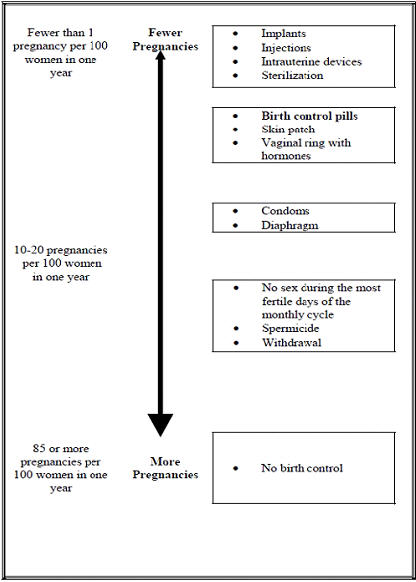
The following chart shows the chance of getting pregnant for women who use different methods of birth control. Each box on the chart contains a list of birth control methods that are similar in effectiveness. The most effective methods are at the top of the chart. The box on the bottom of the chart shows the chance of getting pregnant for women who do not use birth control and are trying to get pregnant.
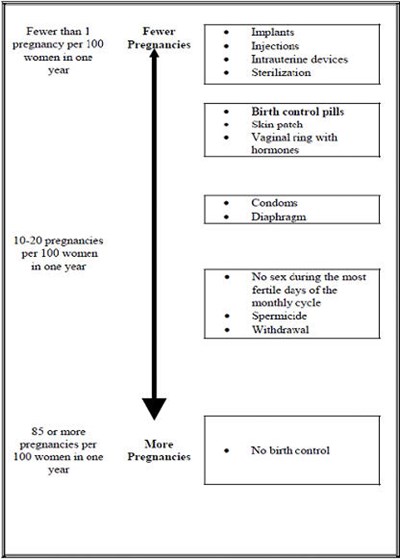
Chart (Medroxyprogesterone 03)
How should I take Medroxyprogesterone Acetate Injectable Suspension, USP?
- Medroxyprogesterone Acetate Injectable Suspension, USP is given by your healthcare provider as a shot into your muscle (intramuscular injection). The shot is given in your buttock or upper arm 1 time every 3 months. At the end of the 3 months, you will need to return to your healthcare provider for your next injection in order to continue your protection against pregnancy.
- To make sure that you are not pregnant before you take Medroxyprogesterone Acetate Injectable Suspension, USP, the first injection should be given only:
-
during the first 5 days of a normal menstrual period, or
-
within the first 5 days after giving birth,
if you are not breastfeeding, or
- at the 6th week after giving birth, if you are feeding your baby only breastmilk.
-
Medroxyprogesterone Acetate Injectable Suspension, USP may be given at other times than those listed above, but you will likely need to have a pregnancy test first to show that you are not pregnant.
- During treatment with Medroxyprogesterone Acetate Injectable Suspension, USP, you should see your healthcare provider every year for a blood pressure check and other healthcare needs.
Who Should Not Use Medroxyprogesterone Acetate Injectable Suspension, USP?
Do not use Medroxyprogesterone Acetate Injectable Suspension, USP if you:
- are pregnant or think you might be pregnant
- have bleeding from your vagina that has not been explained
- have breast cancer now or in the past, or think you have breast cancer
- have had a stroke
- ever had blood clots in your arms, legs or lungs
- have problems with your liver or liver disease
- are allergic to Medroxyprogesterone Acetate Injectable Suspension, USP medroxyprogesterone acetate or any of the other ingredients. See the end of this leaflet for a complete list of ingredients in Medroxyprogesterone Acetate Injectable Suspension, USP.
What should I tell my healthcare provider before taking Medroxyprogesterone Acetate Injectable Suspension, USP?
Before taking Medroxyprogesterone Acetate Injectable Suspension, USP, tell your healthcare provider if you have:
- risk factors for weak bones (osteoporosis) such as bone disease, use alcohol or smoke regularly, anorexia nervosa, or a strong family history of osteoporosis
- irregular or lighter than usual menstrual periods
- breast cancer now or in the past, or think you have breast cancer
- a family history of breast cancer
- an abnormal mammogram (breast X-ray), fibrocystic breast disease, breast nodules or lumps, or bleeding from your nipples
- kidney problems
- high blood pressure
- had a stroke
- had blood clots in your arms, legs or lungs
- migraine headaches
- asthma
- epilepsy (convulsions or seizures)
- diabetes
- depression or a history of depression
- any other medical conditions
If you are breastfeeding or plan to breastfeed, Medroxyprogesterone Acetate Injectable Suspension, USP can pass into your breast milk. Talk to your healthcare provider about the best way to feed your baby if you take Medroxyprogesterone Acetate Injectable Suspension, USP.
Tell your healthcare provider about all of the medicines you take, including prescription and nonprescription medicines, vitamins, and herbal supplements.
Medroxyprogesterone Acetate Injectable Suspension, USP and certain other medicines may affect each other, causing serious side effects.
Sometimes the doses of other medicines may need to be changed while you are taking Medroxyprogesterone Acetate Injectable Suspension, USP.
Some medicines may make Medroxyprogesterone Acetate Injectable Suspension, USP less effective at preventing pregnancy, including those listed below.
Especially tell your healthcare provider if you take:
- medicine to help you sleep
- bosentan
- medicine for seizures
- griseofulvin
- an antibiotic
- medicine for HIV (AIDS)
- St. John's wort
Know the medicines you take. Keep a list of your medicines with you to show your healthcare provider or pharmacist before you first start taking Medroxyprogesterone Acetate Injectable Suspension, USP or when you get a new medicine.
Follow your healthcare provider's instructions about using a back-up method of birth control if you are taking medicines that may make Medroxyprogesterone Acetate Injectable Suspension, USP less effective.
What are the possible side effects of Medroxyprogesterone Acetate Injectable Suspension, USP?
Medroxyprogesterone Acetate Injectable Suspension, USP can cause serious side effects, including:
- Effect on the bones: See "What is the most important information I should know about Medroxyprogesterone Acetate Injectable Suspension, USP?".
Teenage years are the most important years to gain bone strength. The decrease in calcium in your bones is of most concern if you are a teenager or have the following problems:- bone disease
- an eating disorder (anorexia nervosa)
- a strong family history of osteoporosis
-
you take a drug that can lower the amount of calcium in your bones (drugs for epilepsy or steroid drugs)
-
you drink a lot of alcohol (more than 2 drinks a day)
-
you smoke
If you need a birth control method for more than 2 years, your healthcare provider may switch you to another birth control method instead of using Medroxyprogesterone Acetate Injectable Suspension, USP. If you continue using Medroxyprogesterone Acetate Injectable Suspension, USP, your healthcare provider may ask you to have a bone test, especially if you have other risks for weak bones.
When Medroxyprogesterone Acetate Injectable Suspension, USP is stopped, your bones may start to regain calcium. However, in a study of teenage girls who used Medroxyprogesterone Acetate Injectable Suspension, USP for more than 2 years, their hip bones did not completely recover by 5 years after they stopped using Medroxyprogesterone Acetate Injectable Suspension, USP. Taking calcium and Vitamin D and exercising daily may lessen the loss of calcium from your bones.
-
increased risk of breast cancer. Studies of women who have used different forms of contraception found that women under 35 years of age who first used Medroxyprogesterone Acetate Injectable Suspension, USP within the previous 4 to 5 years may have a slightly increased risk of developing breast cancer.
- blood clots in your arms, legs, lungs, and eyes
- stroke
- a pregnancy outside of your uterus (ectopic pregnancy). Ectopic pregnancy is a medical emergency that often requires surgery. Ectopic pregnancy can cause internal bleeding, infertility, and even death.
-
allergic reactions. Severe allergic reactions have been reported in some women using Medroxyprogesterone Acetate Injectable Suspension, USP.
-
loss of vision or other eye problems
- migraine headaches
- depression
- convulsions or seizures
- liver problems
Call your healthcare provider right away if you have:
-
sharp chest pain, coughing up blood, or sudden shortness of breath (indicating a possible clot in the lung)
-
sudden severe headache or vomiting, dizziness or fainting, problems with your eyesight or speech, weakness, or numbness in an arm or leg (indicating a possible stroke)
-
severe pain or swelling in the calf (indicating a possible clot in the leg)
-
sudden blindness, partial or complete (indicating a possible clot in the blood vessels of the eye)
-
unusually heavy vaginal bleeding
-
severe pain or tenderness in the lower abdominal area
-
persistent pain, pus, or bleeding at the injection site
-
yellowing of the eyes or skin
-
hives or difficulty breathing
The most common side effects of Medroxyprogesterone Acetate Injectable Suspension, USP include:
-
irregular vaginal bleeding, such as lighter or heavier menstrual bleeding, or continued spotting
-
weight gain. You may experience weight gain while you are using Medroxyprogesterone Acetate Injectable Suspension, USP. About two-thirds of the women who used Medroxyprogesterone Acetate Injectable Suspension, USP in the clinical trials reported a weight gain of about 5 pounds during the first year of use. You may continue to gain weight after the first year. Women who used Medroxyprogesterone Acetate Injectable Suspension, USP for 2 years gained an average of 8 pounds over those 2 years.
- abdominal pain
- headache
- weakness
- tiredness
- nervousness
- dizziness
Tell your healthcare provider if you have any side effect that bothers you or does not go away.
These are not all the possible side effects of Medroxyprogesterone Acetate Injectable Suspension, USP. For more information, ask your healthcare provider or pharmacist.
Call your doctor for medical advice about side effects. You may report side effects to FDA at 1- 800-FDA-1088.
What other information should I know before choosing Medroxyprogesterone Acetate Injectable Suspension, USP?
- Pregnancy. When you take Medroxyprogesterone Acetate Injectable Suspension, USP every 3 months, your chance of getting pregnant is very low. You could miss a period or have a light period and not be pregnant. If you miss 1 or 2 periods and think you might be pregnant, see your healthcare provider as soon as possible. You should not use Medroxyprogesterone Acetate Injectable Suspension, USP if you are pregnant. However, Medroxyprogesterone Acetate Injectable Suspension, USP taken by accident during pregnancy does not seem to cause birth defects.
- Nursing Mothers. Although Medroxyprogesterone Acetate Injectable Suspension, USP can be passed to the nursing baby in the breast milk, no harmful effects on babies have been found. Medroxyprogesterone Acetate Injectable Suspension, USP does not stop the breasts from producing milk, so it can be used by nursing mothers. However, to minimize the amount of Medroxyprogesterone Acetate Injectable Suspension, USP that is passed to the baby in the first weeks after birth, you should wait until your baby is 6 weeks old before you start using Medroxyprogesterone Acetate Injectable Suspension, USP for birth control.
How will Medroxyprogesterone Acetate Injectable Suspension, USP change my periods?
-
Change in normal menstrual cycle.
The side effect reported most frequently by women who use Medroxyprogesterone Acetate Injectable Suspension, USP for birth controls is a change in their normal menstrual cycle. During the first year of using Medroxyprogesterone Acetate Injectable Suspension, USP, you might have one or more of the following changes:
- irregular or unpredictable bleeding or spotting
- an increase or decrease in menstrual bleeding
- no bleeding at all. In clinical studies of Medroxyprogesterone Acetate Injectable Suspension, USP, 55% of women reported no menstrual bleeding (amenorrhea) after one year of use and 68% of women reported no menstrual bleeding after two years of use.
- Missed period.
During the time you are using Medroxyprogesterone Acetate Injectable Suspension, USP for birth controls, you may skip a period, or your periods may stop completely. If you have been receiving your shot of Medroxyprogesterone Acetate Injectable Suspension, USP regularly every 3 months, then you are probably not pregnant. However, if you think that you may be pregnant, see your healthcare provider.
Unusually heavy or continuous bleeding is not a usual effect of Medroxyprogesterone Acetate Injectable Suspension, USP and if this happens you should see your healthcare provider right away.
With continued use of Medroxyprogesterone Acetate Injectable Suspension, USP, bleeding usually decreases and many women stop having periods completely. When you stop using Medroxyprogesterone Acetate Injectable Suspension, USP your menstrual period will usually, in time, return to its normal cycle.
What if I want to become pregnant?
Because Medroxyprogesterone Acetate Injectable Suspension, USP is a long-acting birth control method, it takes some time after your last shot for its effect to wear off. Most women who try to get pregnant after using Medroxyprogesterone Acetate Injectable Suspension, USP get pregnant within 18 months after their last shot. The length of time you use Medroxyprogesterone Acetate Injectable Suspension, USP has no effect on how long it takes you to become pregnant after you stop using it.
General Information about Medroxyprogesterone Acetate Injectable Suspension, USP
Medicines are sometimes prescribed for conditions that are not mentioned in patient information leaflets. This leaflet summarizes the most important information about Medroxyprogesterone Acetate Injectable Suspension, USP. If you would like more information, talk with your healthcare provider. You can ask your healthcare provider for information about Medroxyprogesterone Acetate Injectable Suspension, USP that is written for healthcare providers.
What are the ingredients in Medroxyprogesterone Acetate Injectable Suspension, USP?
Active ingredient: medroxyprogesterone acetate
Inactive ingredients: polyethylene glycol 3350, polysorbate 80, sodium chloride, methylparaben, propylparaben, and water for injection. When necessary, pH is adjusted with sodium hydroxide or hydrochloric acid, or both.
Logo (Medroxyprogesterone 02)
LAB-0152-7.0
September 2011