Dapagliflozin Tablet, Film Coated
Product Images NDC 69097-389

View Photos of Packaging, Regulatory Labels, and Product Appearance

Product Visual Gallery

This gallery contains 8 technical images submitted to the FDA as part of the official labeling for Dapagliflozin (NDC 69097-389). Unlike standard consumer photos, these assets often include clinical data figures, molecular chemical structures, and official manufacturer packaging layouts.

As provided by Cipla Usa Inc., these visuals offer a comprehensive scientific overview of the product's physical and chemical identity, aiding pharmacists and researchers in product verification and study.

FDA Label Image

Api-structure (Api Structure)
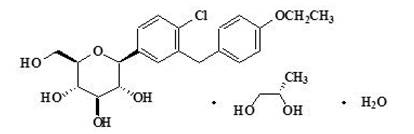
Api-structure (Api Structure)
Chemical structure of dapagliflozin, a drug substance represented with detailed molecular components including hydroxyl groups, chlorine substitution, and an ethoxy group, depicted alongside a water molecule (H2O).*
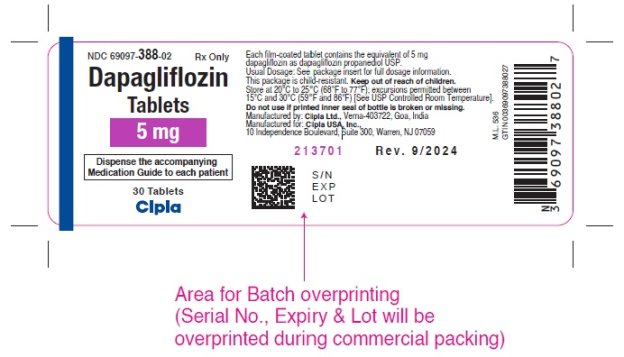
FDA Label Image

Container Label 5mg (Container Label 5mg)

Container Label 5mg (Container Label 5mg)
Label for Dapagliflozin 5 mg film-coated tablets by Cipla USA Inc. The label indicates oral route, prescription-only status, and packaging of 30 tablets. It includes usage instructions, storage conditions, manufacturer details in India and the USA, and a designated area for batch overprinting with serial number, expiry, and lot information.*
FDA Label Image

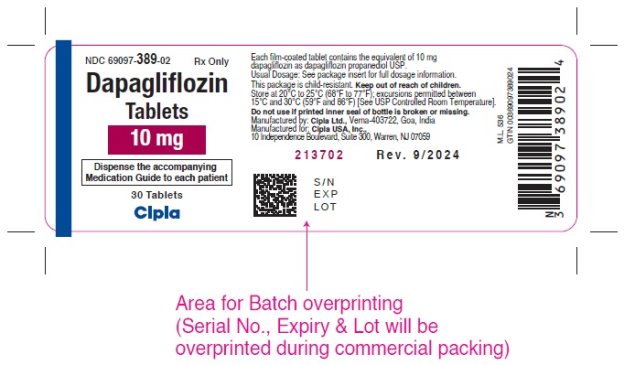
Container Label 10mg (Contanier Label 10mg)

Container Label 10mg (Contanier Label 10mg)
Dapagliflozin 10 mg film-coated tablets label showing the product name, strength, dosage form, and 30 tablet count. The label includes directions to dispense a medication guide, manufacturer Cipla USA Inc., storage instructions, and batch overprinting area for serial number, expiry, and lot. It features a barcode and revision date 9/2024.*
FDA Label Image

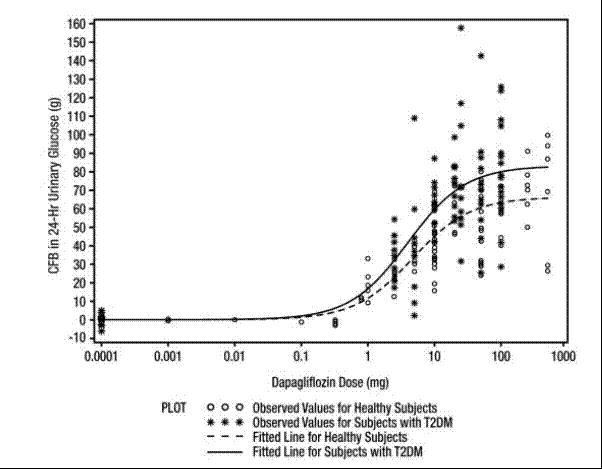
Figure-01 (Figure 01)

Figure-01 (Figure 01)
A scatter plot with fitted lines illustrating the relationship between dapagliflozin dose (mg) on the x-axis (log scale) and CFB in 24-hour urinary glucose (g) on the y-axis. The plot compares observed and fitted values for healthy subjects and subjects with type 2 diabetes mellitus (T2DM), showing distinct patterns and dose responses for each group.*
FDA Label Image

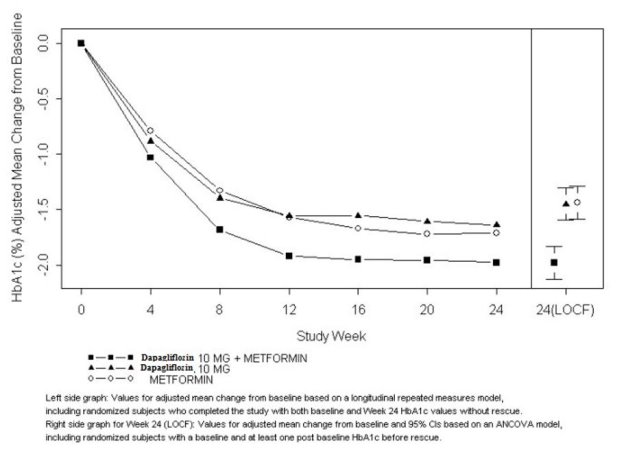
Figure-02 (Figure 02)

Figure-02 (Figure 02)
A line graph showing adjusted mean percentage change from baseline in HbA1c over 24 study weeks for three treatment groups: Dapagliflozin 10 mg plus Metformin, Dapagliflozin 10 mg alone, and Metformin alone. The x-axis represents study weeks from 0 to 24; the y-axis shows HbA1c percentage change. A separate right-side plot displays Week 24 values with error bars for 95% confidence intervals.*
FDA Label Image

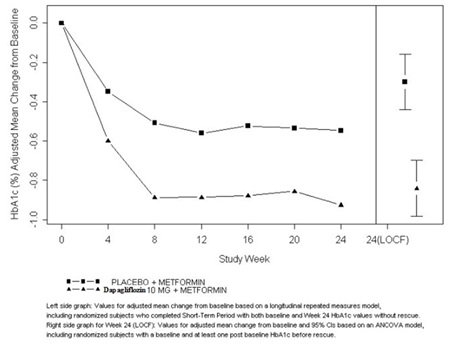
Figure-03 (Figure 03)

Figure-03 (Figure 03)
A line graph depicting changes in HbA1c (%) adjusted mean change from baseline over 24 weeks. The graph compares two groups: Placebo + Metformin and Dapagliflozin 10 mg + Metformin, showing a greater reduction in HbA1c with Dapagliflozin over the study period, with error bars representing 95% confidence intervals at Week 24.*
FDA Label Image

Figure-04 (Figure 04)

Figure-04 (Figure 04)
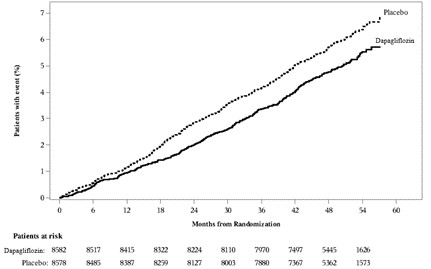
A line graph comparing the percentage of patients with a certain event over 60 months from randomization between Dapagliflozin and placebo groups. The vertical axis represents the percentage of patients, and the horizontal axis shows months. A table below lists the number of patients at risk for both groups at various time points.*
FDA Label Image

Figure-05 (Figure 05)

Figure-05 (Figure 05)
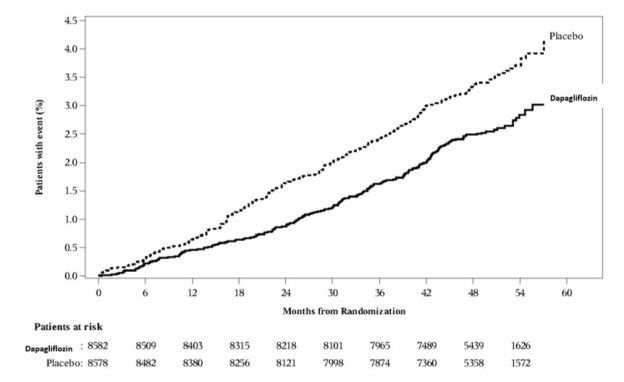
A line graph comparing the percentage of patients with events over 60 months from randomization for Dapagliflozin and placebo groups. The vertical axis shows the percentage of patients with events, and the horizontal axis shows months from randomization. A table below the graph lists the number of patients at risk at various time points for each group.*

* About these descriptions: Image descriptions on this page are generated by automated AI analysis of the product label images from the manufacturer's FDA label submission (SPL). They are provided for reference only and may contain errors or omissions. Always rely on the printed label itself and the official FDA labeling, and consult a pharmacist or healthcare professional with any questions about this product.