Bupropion Hydrochloride (sr) Tablet, Extended Release
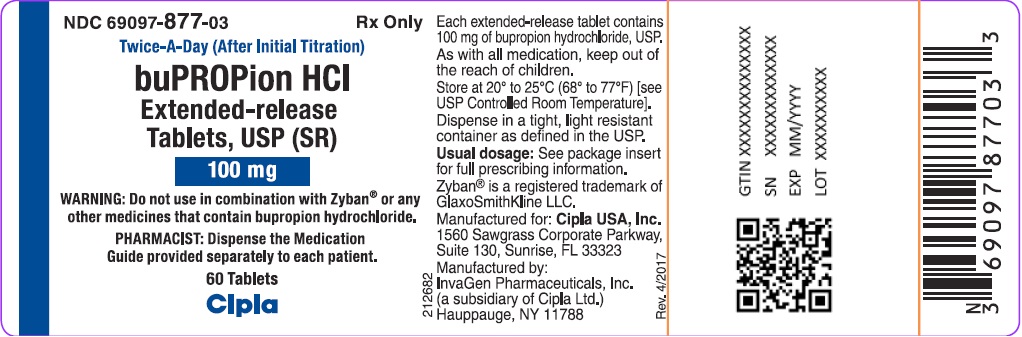
Product Images NDC 69097-877
View Photos of Packaging, Regulatory Labels, and Product Appearance
Product Visual Gallery
This gallery contains 4 technical images submitted to the FDA as part of the official labeling for Bupropion Hydrochloride (sr) (NDC 69097-877). Unlike standard consumer photos, these assets often include clinical data figures, molecular chemical structures, and official manufacturer packaging layouts.
As provided by Cipla Usa Inc.,, these visuals offer a comprehensive scientific overview of the product's physical and chemical identity, aiding pharmacists and researchers in product verification and study.
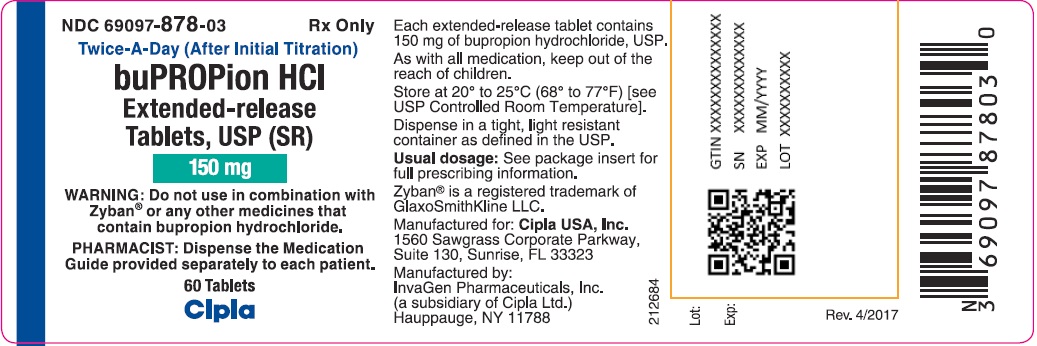
Bupropion-150mg (Bupropion 150mg)
This is a prescription medication called Bach Extended Release, containing 150 mg of bupropion hydrochloride, used twice daily. It is important to keep the medication out of reach of children and store it at room temperature. The medication is not to be used with other medicines that contain bupropion hydrochloride. The usual dosage instructions are provided in the package insert, and the medication guide must be dispensed separately to each patient by the pharmacist. The manufacturer is InvaGen Pharmaceuticals, a subsidiary of Cipla Ltd.*
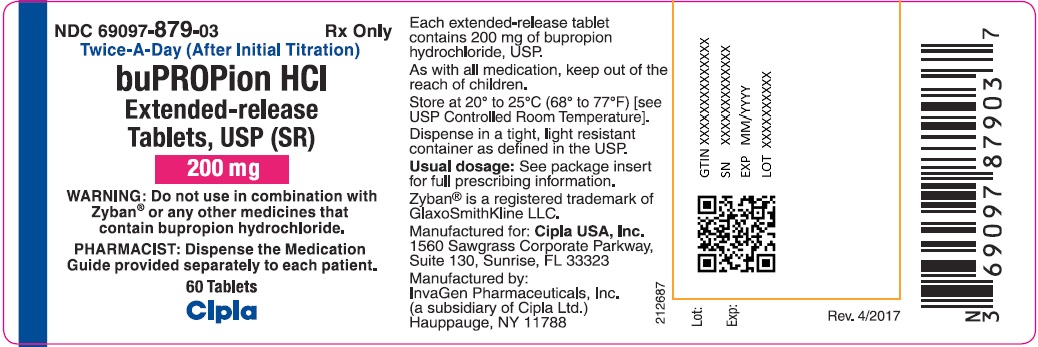
Bupropion-200mg (Bupropion 200mg)
This is a description of a prescription medicine with the active ingredient bupropion HCI, released gradually over time. The medication guide should be provided to each patient by the pharmacist. It comes in a light-resistant container with 60 tablets, where each tablet contains 200 mg of bupropion hydrochloride. The normal dose is indicated in the package insert. The description also mentions some warnings about the medication use, including not using it in combination with Zyban or other medications containing bupropion hydrochloride. The medicine is manufactured by InvaGen Pharmaceuticals, a subsidiary of Cipla Ltd. The text also includes some lot and expiration information.*
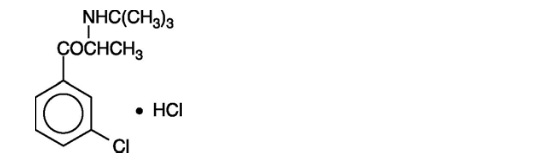
Chemical Structure (Bupropion Str)
* These product label images have been analyzed using experimental machine learning. Please verify findings with the primary label text.