Bone Mineral Density
In clinical trials in HIV-1-infected adults, tenofovir DF (a component of STRIBILD) was associated with slightly greater decreases in bone mineral density (BMD) and increases in biochemical markers of bone metabolism, suggesting increased bone turnover relative to comparators. Serum parathyroid hormone levels and 1,25 Vitamin D levels were also higher in subjects receiving tenofovir DF. For additional information, [see Adverse Reactions (6.1)] and consult the tenofovir DF prescribing information.
Clinical trials evaluating tenofovir DF in pediatric and adolescent subjects were conducted. Under normal circumstances, BMD increases rapidly in pediatric patients. In HIV-1-infected subjects aged 2 years to less than 18 years, bone effects were similar to those observed in adult subjects and suggest increased bone turnover. Total body BMD gain was less in the tenofovir DF-treated HIV-1-infected pediatric subjects as compared to the control groups. In all pediatric trials, skeletal growth (height) appeared to be unaffected. For more information, please consult the tenofovir DF prescribing information.
The effects of tenofovir DF-associated changes in BMD and biochemical markers on long-term bone health and future fracture risk are unknown. Assessment of BMD should be considered for HIV-1-infected adult and pediatric patients who have a history of pathologic bone fracture or other risk factors for osteoporosis or bone loss. Although the effect of supplementation with calcium and vitamin D was not studied, such supplementation may be beneficial in all patients. If bone abnormalities are suspected, then appropriate consultation should be obtained.
Mineralization Defects
Cases of osteomalacia associated with proximal renal tubulopathy, manifested as bone pain or pain in extremities and which may contribute to fractures, have been reported in association with the use of tenofovir DF [see Adverse Reactions (6.2)]. Arthralgias and muscle pain or weakness have also been reported in cases of proximal renal tubulopathy. Hypophosphatemia and osteomalacia secondary to proximal renal tubulopathy should be considered in patients at risk of renal dysfunction who present with persistent or worsening bone or muscle symptoms while receiving products containing tenofovir DF [see Warnings and Precautions (5.3)].
Clinical Trials in HIV-1-Infected Adult Subjects with No Antiretroviral Treatment History
The safety assessment of STRIBILD is based on the Week-144 pooled data from 1408 subjects in two randomized, double-blind, active-controlled clinical trials, Study 102 and Study 103, in antiretroviral treatment-naïve HIV-1-infected adult subjects [see Clinical Studies (14)]. A total of 701 subjects received STRIBILD once daily in these two studies.
The proportion of subjects who discontinued treatment with STRIBILD, ATRIPLA, or ATV+RTV+TRUVADA due to adverse events, regardless of severity, was 6.0%, 7.4%, and 8.5%, respectively. Table 2 displays the frequency of adverse reactions greater than or equal to 5% of subjects in any treatment arm.
Table 2 Adverse ReactionsFrequencies of adverse reactions are based on all treatment-emergent adverse events attributed to study drugs.
(All Grades) Reported in ≥5% of Adult Subjects in Any Treatment Arm in Studies 102 and 103 (Week-144 Analysis) | STRIBILD
N=701 | ATRIPLA
N=352 | ATV+RTV+TRUVADA
N=355 |
|---|
| EYE DISORDERS | | | |
| Ocular icterus | <1% | 0% | 13% |
| GASTROINTESTINAL DISORDERS | | | |
| Diarrhea | 12% | 11% | 17% |
| Flatulence | 2% | <1% | 8% |
| Nausea | 16% | 9% | 14% |
| GENERAL DISORDERS AND ADMINISTRATION SITE CONDITIONS | | | |
| Fatigue | 4% | 8% | 6% |
| HEPATOBILIARY DISORDERS | | | |
| Jaundice | 0% | <1% | 9% |
| NERVOUS SYSTEM DISORDERS | | | |
| Somnolence | 1% | 7% | 1% |
| Headache | 7% | 4% | 6% |
| Dizziness | 3% | 21% | 5% |
| PSYCHIATRIC DISORDERS | | | |
| Insomnia | 3% | 9% | 1% |
| Abnormal dreams | 9% | 27% | 4% |
| SKIN AND SUBCUTANEOUS TISSUE DISORDERS | | | |
| Rash Rash event includes dermatitis, drug eruption, eczema, pruritus, pruritus generalized, rash, rash erythematous, rash generalized, rash macular, rash maculo-papular, rash morbilliform, rash papular, rash pruritic, and urticaria. | 4% | 15% | 6% |
See Warnings and Precautions (5.3) for a discussion of renal adverse reactions from clinical trials experience with STRIBILD.
Additional adverse reactions observed with STRIBILD included suicidal ideation and suicide attempt (0.3%), all in subjects with a preexisting history of depression or psychiatric illness.
Clinical Trials in Virologically Suppressed HIV-1-Infected Adult Subjects
No new adverse reactions to STRIBILD through Week 48 were identified in 584 virologically stably suppressed adult subjects switching to STRIBILD from a regimen containing a RTV-boosted protease inhibitor (PI) or a non-nucleoside reverse transcriptase inhibitor (NNRTI). In a combined analysis of studies 115 and 121, the frequency of adverse reactions (all grades) was 24% in subjects switching to STRIBILD compared to 6% of subjects in either group who stayed on their baseline antiretroviral regimen, RTV-boosted PI+TRUVADA or NNRTI+TRUVADA. Common adverse reactions that occurred in greater than or equal to 2% of subjects switching to STRIBILD were nausea (4%), flatulence (2%), and headache (2%). The proportion of subjects who discontinued treatment with STRIBILD, the RTV-boosted PI, or the NNRTI due to adverse events was 2%, 3%, and 1%, respectively.
Clinical Trials of the Components of STRIBILD in Adult Subjects
Emtricitabine and Tenofovir Disoproxil Fumarate: In addition to the adverse reactions observed with STRIBILD, the following adverse reactions occurred in at least 5% of treatment-experienced or treatment-naïve subjects receiving emtricitabine or tenofovir DF with other antiretroviral agents in other clinical trials: depression, abdominal pain, dyspepsia, vomiting, fever, pain, nasopharyngitis, pneumonia, sinusitis, upper respiratory tract infection, arthralgia, back pain, myalgia, paresthesia, peripheral neuropathy (including peripheral neuritis and neuropathy), anxiety, increased cough, and rhinitis.
Skin discoloration has been reported with higher frequency among emtricitabine-treated subjects; it was manifested by hyperpigmentation on the palms and/or soles and was generally mild and asymptomatic. The mechanism and clinical significance are unknown.
Laboratory Abnormalities:
The frequency of laboratory abnormalities (Grades 3–4) occurring in at least 2% of subjects receiving STRIBILD in studies 102 and 103 are presented in Table 3.
Table 3 Laboratory Abnormalities (Grades 3–4) Reported in ≥2% of Adult Subjects Receiving STRIBILD in Studies 102 and 103 (Week-144 Analysis)| Laboratory Parameter Abnormality Frequencies are based on treatment-emergent laboratory abnormalities. ,For subjects with serum amylase >1.5 × upper limit of normal (ULN), lipase test was also performed. The frequency of increased lipase (Grades 3–4) occurring in STRIBILD (N=69), ATRIPLA (N=40), and ATV+RTV+TRUVADA (N=38) was 17%, 15%, and 24%, respectively. | STRIBILD
N=701 | ATRIPLA
N=352 | ATV+RTV+TRUVADA
N=355 |
|---|
| AST (>5.0 × ULN) | 3% | 6% | 6% |
| ALT (>3.0 × ULN) | 2% | 5% | 4% |
| Amylase (>2.0 × ULN) | 3% | 3% | 5% |
| Creatine Kinase (≥10.0 × ULN) | 8% | 15% | 11% |
| Urine RBC (Hematuria) (>75 RBC/HPF) | 4% | 2% | 4% |
In Study 103, BMD was assessed by DEXA in a nonrandom subset of 120 subjects (STRIBILD group, N=54; ATV+RTV+TRUVADA group, N=66). Mean percentage decreases in BMD from baseline to Week 144 in the STRIBILD group were comparable to that in the ATV+RTV+TRUVADA group at the lumbar spine (–1.43% versus –3.68%, respectively) and at the hip (–2.83% versus –3.77%, respectively). In studies 102 and 103, bone fractures occurred in 27 subjects (3.9%) in the STRIBILD group, 8 subjects (2.3%) in the ATRIPLA group, and 19 subjects (5.4%) in the ATV+RTV+TRUVADA group. These findings were consistent with data from an earlier 144-week trial of treatment-naïve subjects receiving tenofovir DF + lamivudine + efavirenz.
Proteinuria (all grades) occurred in 52% of subjects receiving STRIBILD, 41% of subjects receiving ATRIPLA, and 42% of subjects receiving ATV+RTV+TRUVADA.
The cobicistat component of STRIBILD has been shown to increase serum creatinine and decrease estimated creatinine clearance due to inhibition of tubular secretion of creatinine without affecting renal glomerular function. In studies 102 and 103, increases in serum creatinine and decreases in estimated creatinine clearance occurred early in treatment with STRIBILD, after which levels stabilized. Table 4 displays the mean changes in serum creatinine and eGFR levels at Week 144 and the percentage of subjects with elevations in serum creatinine (all grades).
Table 4 Change from Baseline in Serum Creatinine and eGFR and Incidence of Elevated Serum Creatinine (All Grades) in Studies 102 and 103 at Week 144 | STRIBILD
N=701 | ATRIPLA
N=352 | ATV+RTV+TRUVADA
N=355 |
|---|
| Serum Creatinine (mg/dL) Mean change ± standard deviation | 0.14 (±0.14) | 0.01 (±0.12) | 0.09 (±0.15) |
| eGFR by Cockcroft-Gault (mL/minute) | −14.0 (±16.6) | −1.9 (±17.9) | −9.8 (±19.4) |
| Subjects with Elevations in Serum Creatinine (All Grades) (%) | 12 | 2 | 6 |
Emtricitabine or Tenofovir Disoproxil Fumarate: In addition to the laboratory abnormalities observed with STRIBILD, the following laboratory abnormalities have been previously reported in subjects treated with emtricitabine or tenofovir DF with other antiretroviral agents in other clinical trials: Grade 3 or 4 laboratory abnormalities of ALT (M: greater than 215 U per L; F: greater than 170 U per L), alkaline phosphatase (greater than 550 U per L), bilirubin (greater than 2.5 × ULN), serum glucose (less than 40 or greater than 250 mg per dL), glycosuria (greater than or equal to 3+), neutrophils (less than 750 per mm3), fasting cholesterol (greater than 240 mg per dL), and fasting triglycerides (greater than 750 mg per dL).
Serum Lipids: In the clinical trials of STRIBILD, a similar percentage of subjects receiving STRIBILD, ATRIPLA, and ATV+RTV+TRUVADA were on lipid-lowering agents at baseline (12%, 12%, and 13%, respectively). While receiving study drug through Week 144, an additional 11% of STRIBILD subjects were started on lipid-lowering agents, compared to 13% of ATRIPLA and 12% of ATV+RTV+TRUVADA subjects.
Changes from baseline in total cholesterol, HDL-cholesterol, LDL-cholesterol, and triglycerides are presented in Table 5.
Table 5 Lipid Values, Mean Change from Baseline at Week 144 in Adult Subjects Receiving STRIBILD or Comparator in Studies 102 and 103 | STRIBILD
N=701 | ATRIPLA
N=352 | ATV+RTV+TRUVADA
N=355 |
|---|
| Baseline | Week 144 | Baseline | Week 144 | Baseline | Week 144 |
|---|
| mg/dL | Change The change from baseline is the mean of within-patient changes from baseline for patients with both baseline and Week 144 values. | mg/dL | Change | mg/dL | Change |
|---|
| Total Cholesterol (fasted) | 166
[N=675] | +17
[N=535] | 161
[N=343] | +22
[N=262] | 168
[N=337] | +16
[N=243] |
| HDL-cholesterol (fasted) | 43
[N=675] | +7
[N=535] | 43
[N=343] | +9
[N=262] | 42
[N=335] | +7
[N=242] |
| LDL-cholesterol (fasted) | 100
[N=675] | +15
[N=535] | 97
[N=343] | +19
[N=262] | 101
[N=337] | +18
[N=242] |
| Triglycerides (fasted) | 122
[N=675] | +12
[N=535] | 121
[N=343] | +5
[N=262] | 132
[N=337] | +22
[N=242] |
Clinical Trials in Pediatric Subjects
The safety of STRIBILD in 50 HIV-1-infected, treatment-naïve pediatric subjects aged 12 to less than 18 years and weighing at least 35 kg (77 lbs) was evaluated through 48 weeks in an open-label clinical trial (Study 112) [see Clinical Studies (14.4)]. In this study, the safety profile of STRIBILD was similar to that in adults. Twenty-two subjects (44%) had treatment-emergent proteinuria (Grades 1–2). One subject met laboratory criteria for proximal renal tubulopathy, evidenced by sustained proteinuria and normoglycemic glycosuria beginning at Week 32. The subject continued to receive STRIBILD and was ultimately lost to follow-up.
Among the 50 pediatric subjects receiving STRIBILD for 48 weeks, mean BMD increased from baseline to Week 48, +0.68% at the lumbar spine and +0.77% for total body less head. Mean changes from baseline BMD Z-scores (height-age adjusted) to Week 48 were –0.09 for lumbar spine and –0.12 for total body less head. At Week 48, 7 STRIBILD subjects had significant (greater than or equal to 4%) lumbar spine BMD loss and 2 had significant total body less head BMD loss.
Pregnancy Exposure Registry
There is a pregnancy exposure registry that monitors pregnancy outcomes in women exposed to STRIBILD during pregnancy. Healthcare providers are encouraged to register patients by calling the Antiretroviral Pregnancy Registry (APR) at 1-800-258-4263.
Risk Summary
Prospective pregnancy data from the Antiviral Pregnancy Registry (APR) are not sufficient to adequately assess the risk of birth defects of miscarriage. However, elvitegravir, cobicistat, emtricitabine, and tenofovir DF use during pregnancy has been evaluated in a limited number of women as reported to the APR. Available data from the APR through January 2016 show no birth defects reported for elvitegravir or cobicistat, and no difference in the overall risk of major birth defects for emtricitabine or tenofovir DF compared with the background rate for major birth defects of 2.7% in a U.S. reference population of the Metropolitan Atlanta Congenital Defects Program (MACDP) [see Data].
In animal studies, no adverse developmental effects were observed when the components of STRIBILD were administered separately during the period of organogenesis at exposures up to 23 and 0.2 times (rats and rabbits, respectively, elvitegravir), 1.8 and 4.3 times (rats and rabbits, respectively, cobicistat), and 60 and 120 times (mice and rabbits, respectively, emtricitabine) the exposure at the recommended daily dose of these components in STRIBILD, and at 14 and 19 times (rats and rabbits, respectively, tenofovir DF) the human dose based on body surface area comparisons [see Data]. Likewise, no adverse developmental effects were seen when elvitegravir or cobicistat was administered to rats through lactation at exposures up to 18 times or 1.2 times, respectively, the exposure at the recommended daily therapeutic dose, and when emtricitabine was administered to mice through lactation at exposures up to approximately 60 times the exposure at the recommended daily therapeutic dose. No adverse effects were observed in the offspring of rats when tenofovir DF was administered through lactation at tenofovir exposures of approximately 2.7 times the exposure at the recommended daily dosage of STRIBILD.
The background risk of major birth defects and miscarriage for the indicated population is unknown. All pregnancies have a background risk of birth defects, loss, or other adverse outcomes. The rate of miscarriage is not reported in the APR. In the U.S. general population, the estimated background risk of major birth defects and miscarriage in clinically recognized pregnancies is 2–4% and 15–20%, respectively.
Data
Human Data
Elvitegravir: Based on prospective reports from the APR through January 2016 of 73 exposures to elvitegravir-containing regimens during pregnancy resulting in live births (including 51 exposed in the first trimester), there have been no birth defects reported.
Cobicistat: Based on prospective reports from the APR through January 2016 of 77 exposures to cobicistat-containing regimens during pregnancy resulting in live births (including 54 exposed in the first trimester), there have been no birth defects reported.
Emtricitabine: Based on prospective reports to the APR through January 2016 of 3155 exposures to emtricitabine-containing regimens during pregnancy resulting in live births (including 2145 exposed in the first trimester and 1010 exposed in the second/third trimester), there was no difference between emtricitabine and overall birth defects compared with the background birth defect rate of 2.7% in the U.S. reference population of the MACDP. The prevalence of birth defects in live births was 2.2% (95% CI: 1.6% to 3.0%) with first trimester exposure to emtricitabine-containing regimens and 2.1% (95% CI: 1.3% to 3.2%) with the second/third trimester exposure to emtricitabine-containing regimens.
Tenofovir DF: Based on prospective reports from the APR through January 2016 of 4100 exposures to tenofovir DF-containing regimens during pregnancy resulting in live births (including 2779 exposed in the first trimester and 1321 exposed in the second/third trimester), there was no difference between tenofovir DF and overall birth defects compared with the background birth defect rate of 2.7% in the U.S. reference population of the MACDP. The prevalence of birth defects in live births was 2.2% (95% CI: 1.7% to 2.8%) with first trimester exposure, and 2.0% (95% CI: 1.3% to 3.0%) with the second/third trimester exposure to tenofovir DF-containing regimens.
Animal Data
Elvitegravir: Elvitegravir was administered orally to pregnant rats (at 0, 300, 1000, and 2000 mg/kg/day), and rabbits (at 0, 50, 150, and 450 mg/kg/day) through organogenesis (on gestation days 7 through 17 and days 7 through 19, respectively). No significant toxicological effects were observed in embryo-fetal toxicity studies performed with elvitegravir in rats at exposures (AUC) approximately 23 times higher and in rabbits at approximately 0.2 times higher than human exposures at the recommended daily dose. In a pre- and postnatal developmental study in rats, elvitegravir was administered orally at doses of 0, 300, 1000, and 2000 mg/kg from gestation day 7 to day 20 of lactation. At doses of 2000 mg/kg/day of elvitegravir, neither maternal nor developmental toxicity was noted. Systemic exposures (AUC) at this dose were 18 times the human exposures at the recommended daily dose.
Cobicistat: Cobicistat was administered orally to pregnant rats at doses of 0, 25, 50, and 125 mg/kg/day on gestation day 6 to 17. Increases in post-implantation loss and decreased fetal weights were observed at a maternal toxic dose of 125 mg/kg/day. No malformations were noted at doses up to 125 mg/kg/day. Systemic exposures (AUC) at 50 mg/kg/day in pregnant females were 1.8 times higher than human exposures at the recommended daily dose.
In pregnant rabbits, cobicistat was administered orally at doses of 0, 20, 50, and 100 mg/kg/day during the gestation days 7 to 20. No maternal or embryo/fetal effects were noted at the highest dose of 100 mg/kg/day. Systemic exposures (AUC) at 100 mg/kg/day were 4.3 times higher than human exposures at the recommended daily dose. In a pre- and postnatal developmental study in rats, cobicistat was administered orally at doses of 0, 10, 30, and 75 mg/kg from gestation day 6 to postnatal day 20, 21, or 22. At doses of 75 mg/kg/day of cobicistat, neither maternal nor developmental toxicity was noted. Systemic exposures (AUC) at this dose were 1.2 times the human exposures at the recommended daily dose.
Emtricitabine: Emtricitabine was administered orally to pregnant mice (at 0, 250, 500, or 1000 mg/kg/day), and rabbits (at 0, 100, 300, or 1000 mg/kg/day) through organogenesis (on gestation days 6 through 15, and 7 through 19, respectively). No significant toxicological effects were observed in embryo-fetal toxicity studies performed with emtricitabine in mice at exposures (AUC) approximately 60 times higher and in rabbits at approximately 120 times higher than human exposures at the recommended daily dose. In a pre/postnatal development study in mice, emtricitabine was administered orally at doses up to 1000 mg/kg/day; no significant adverse effects directly related to drug were observed in the offspring exposed daily from before birth (in utero) through sexual maturity at daily exposures (AUC) of approximately 60 times higher than human exposures at the recommended daily dose.
Tenofovir DF: Tenofovir DF was administered orally to pregnant rats (at 0, 50, 150, or 450 mg/kg/day) and rabbits (at 0, 30, 100, or 300 mg/kg/day) through organogenesis (on gestation days 7 through 17, and 6 through 18, respectively). No significant toxicological effects were observed in embryo-fetal toxicity studies performed with tenofovir DF in rats at doses up to 14 times the human dose based on body surface area comparisons and in rabbits at doses up to 19 times the human dose based on body surface area comparisons. In a pre/postnatal development study in rats, tenofovir DF was administered orally through lactation at doses up to 600 mg/kg/day; no adverse effects were observed in the offspring at tenofovir exposures of approximately 2.7 times higher than human exposures at the recommended daily dose of STRIBILD.
Risk Summary
The Centers for Disease Control and Prevention recommend that HIV-infected mothers not breastfeed their infants to avoid risking postnatal transmission of HIV.
Based on limited published data, emtricitabine and tenofovir have been shown to be present in human breast milk. It is not known whether elvitegravir or cobicistat are present in human breast milk, while elvitegravir and cobicistat have been shown to be present in rat milk [see Data].
It is not known if the components of STRIBILD affect milk production or have effects on the breastfed child. Because of the potential for: (1) HIV transmission (in HIV-negative infants); (2) developing viral resistance (in HIV-positive infants); and (3) adverse reactions in a breastfed infant similar to those seen in adults, instruct mothers not to breastfeed if they are receiving STRIBILD [see Data].
Animal Data
Elvitegravir: During the prenatal and postnatal developmental toxicology study at doses up to 2000 mg/kg/day mean elvitegravir milk to plasma ratio of 0.1 was measured 30 minutes after administration to rats on lactation day 14.
Cobicistat: During the prenatal and postnatal developmental toxicology study at doses up to 75 mg/kg/day mean cobicistat milk to plasma ratio of up to 1.9 was measured 2 hours after administration to rats on lactation day 10.
Clinical Trials in Adult Subjects with Mild to Moderate Renal Impairment
In Study 118, 33 HIV-1-infected treatment-naïve subjects with mild to moderate renal impairment (eGFR by Cockcroft-Gault method between 50 and 89 mL/minute) were studied in an open-label clinical trial evaluating the safety of 48 weeks of treatment with STRIBILD. After 48 weeks of treatment, the mean change in serum creatinine was 0.17 ± 0.14 mg/dL and the mean change in eGFR by Cockcroft-Gault method was –6.9 ± 9.0 mL/minute for subjects treated with STRIBILD.
Twelve of the 33 subjects studied had baseline eGFR between 50 and 70 mL/minute. Three subjects, all with baseline eGFR between 50–60 mL/minute, discontinued STRIBILD due to a renal adverse event. The safety of STRIBILD among 21 of the 33 subjects with baseline eGFR greater than or equal to 70 mL/minute was consistent with the safety profile in studies 102 and 103.
Elvitegravir: Limited clinical experience is available at doses higher than the therapeutic dose of elvitegravir. In one study, boosted elvitegravir equivalent to 2 times the therapeutic dose of 150 mg once daily for 10 days was administered to 42 healthy subjects. No severe adverse reactions were reported. The effects of higher doses are not known. As elvitegravir is highly bound to plasma proteins, it is unlikely that it will be significantly removed by hemodialysis or peritoneal dialysis.
Cobicistat: Limited clinical experience is available at doses higher than the therapeutic dose of cobicistat. In two studies, a single dose of cobicistat 400 mg (2.7 times the dose in STRIBILD) was administered to a total of 60 healthy subjects. No severe adverse reactions were reported. The effects of higher doses are not known. As cobicistat is highly bound to plasma proteins, it is unlikely that it will be significantly removed by hemodialysis or peritoneal dialysis.
Emtricitabine: Limited clinical experience is available at doses higher than the therapeutic dose of EMTRIVA. In one clinical pharmacology study, single doses of emtricitabine 1200 mg (6 times the dose in STRIBILD) were administered to 11 subjects. No severe adverse reactions were reported. The effects of higher doses are not known.
Hemodialysis treatment removes approximately 30% of the emtricitabine dose over a 3-hour dialysis period starting within 1.5 hours of emtricitabine dosing (blood flow rate of 400 mL per minute and a dialysate flow rate of 600 mL per minute). It is not known whether emtricitabine can be removed by peritoneal dialysis.
Tenofovir Disoproxil Fumarate: Limited clinical experience at doses higher than the therapeutic dose of VIREAD 300 mg is available. In one study, 600 mg tenofovir DF (2 times the dosage in STRIBILD) was administered to 8 subjects orally for 28 days and no severe adverse reactions were reported. The effects of higher doses are not known. Tenofovir is efficiently removed by hemodialysis with an extraction coefficient of approximately 54%. Following a single 300 mg dose of VIREAD, a 4-hour hemodialysis session removed approximately 10% of the administered tenofovir dose.
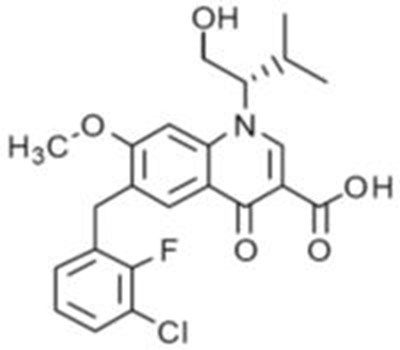
Elvitegravir: The chemical name of elvitegravir is 6-(3-Chloro-2-fluorobenzyl)-1-[(2S)-1-hydroxy-3-methylbutan-2-yl]-7-methoxy-4-oxo-1,4-dihydroquinoline-3-carboxylic acid.
It has a molecular formula of C23H23ClFNO5 and a molecular weight of 447.9. It has the following structural formula:
Chemical Structure (Stribild 02)
Elvitegravir is a white to pale-yellow powder with a solubility of less than 0.3 micrograms per mL in water at 20 °C.
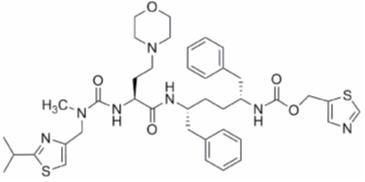
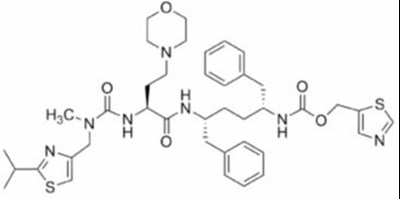
Cobicistat: The chemical name for cobicistat is 1,3-thiazol-5-ylmethyl [(2R,5R)-5-{[(2S)-2-[(methyl{[2-(propan-2-yl)-1,3-thiazol-4-yl]methyl}carbamoyl)amino]-4-(morpholin-4-yl)butanoyl]amino}-1,6-diphenylhexan-2-yl]carbamate.
It has a molecular formula of C40H53N7O5S2 and a molecular weight of 776.0. It has the following structural formula:
Chemical Structure (Stribild 03)
Cobicistat is adsorbed onto silicon dioxide. Cobicistat on silicon dioxide is a white to pale-yellow solid with a solubility of 0.1 mg per mL in water at 20 °C.
Emtricitabine: The chemical name of emtricitabine is 5-fluoro-1-[(2R,5S)-2-(hydroxymethyl)-1,3-oxathiolan-5-yl]cytosine. Emtricitabine is the (-)enantiomer of a thio analog of cytidine, which differs from other cytidine analogs in that it has a fluorine in the 5-position.
It has a molecular formula of C8H10FN3O3S and a molecular weight of 247.25. It has the following structural formula:
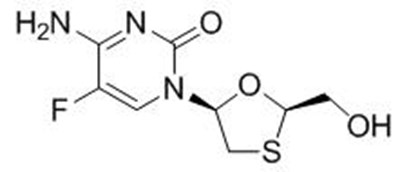
Chemical Structure (Stribild 04)
Emtricitabine is a white to off-white crystalline powder with a solubility of approximately 112 mg per mL in water at 25 °C.
Tenofovir Disoproxil Fumarate: Tenofovir DF is a fumaric acid salt of the bis-isopropoxycarbonyloxymethyl ester derivative of tenofovir. The chemical name of tenofovir DF is 9-[(R)-2-[[bis[[(isopropoxycarbonyl)oxy]-methoxy]phosphinyl]methoxy]propyl]adenine fumarate (1:1). It has a molecular formula of C19H30N5O10P ∙ C4H4O4 and a molecular weight of 635.51. It has the following structural formula:
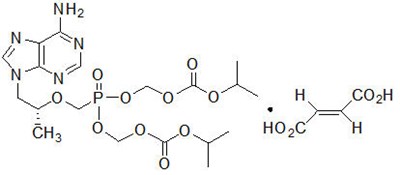
Chemical Structure (Stribild 05)
Tenofovir DF is a white to off-white crystalline powder with a solubility of 13.4 mg per mL in water at 25 °C. All dosages are expressed in terms of tenofovir DF except where otherwise noted.
Effects on Electrocardiogram
Thorough QT studies have been conducted for elvitegravir and cobicistat. The effect of the other two components, tenofovir and emtricitabine, or the combination regimen STRIBILD on the QT interval is not known.
Elvitegravir: In a thorough QT/QTc study in 126 healthy subjects, elvitegravir (coadministered with 100 mg ritonavir) 125 mg and 250 mg (0.83 and 1.67 times the dose in STRIBILD) did not affect the QT/QTc interval and did not prolong the PR interval.
Cobicistat: In a thorough QT/QTc study in 48 healthy subjects, a single dose of cobicistat 250 mg and 400 mg (1.67 and 2.67 times the dose in STRIBILD) did not affect the QT/QTc interval. Prolongation of the PR interval was noted in subjects receiving cobicistat. The maximum mean (95% upper confidence bound) difference in PR from placebo after baseline-correction was 9.5 (12.1) msec for the 250 mg cobicistat dose and 20.2 (22.8) for the 400 mg cobicistat dose. Because the 150 mg cobicistat dose used in the STRIBILD fixed-dose combination tablet is lower than the lowest dose studied in the thorough QT study, it is unlikely that treatment with STRIBILD will result in clinically relevant PR prolongation.
Effects on Serum Creatinine
The effect of cobicistat on serum creatinine was investigated in a Phase 1 study in subjects with an eGFR of at least 80 mL per minute (N=18) and with an eGFR of 50 to 79 mL per minute (N=12). A statistically significant change of eGFRCG from baseline was observed after 7 days of treatment with cobicistat 150 mg among subjects with an eGFR of at least 80 mL per minute (-9.9 ± 13.1 mL/min) and subjects with an eGFR of 50 to 79 mL per minute (-11.9 ± 7.0 mL per minute). These decreases in eGFRCG were reversible after cobicistat was discontinued. The actual glomerular filtration rate, as determined by the clearance of probe drug iohexol, was not altered from baseline following treatment of cobicistat among subjects with an eGFR of at least 50 mL per minute, indicating cobicistat inhibits tubular secretion of creatinine, reflected as a reduction in eGFRCG, without affecting the actual glomerular filtration rate.
Specific Populations
Patients with Renal Impairment
Elvitegravir and Cobicistat: A study of the pharmacokinetics of cobicistat+elvitegravir was performed in healthy subjects and subjects with severe renal impairment (estimated creatinine clearance less than 30 mL per minute). No clinically relevant differences in elvitegravir or cobicistat pharmacokinetics were observed between healthy subjects and subjects with severe renal impairment.
Emtricitabine and Tenofovir Disoproxil Fumarate: The pharmacokinetics of emtricitabine and tenofovir are altered in subjects with estimated creatinine clearance below 50 mL per minute or with end-stage renal disease requiring dialysis [see Warnings and Precautions (5.3) and Use in Specific Populations (8.6)].
Patients with Hepatic Impairment
Elvitegravir and Cobicistat: A study of the pharmacokinetics of cobicistat+elvitegravir was performed in healthy subjects and subjects with moderate hepatic impairment. No clinically relevant differences in elvitegravir or cobicistat pharmacokinetics were observed between subjects with moderate hepatic impairment (Child-Pugh Class B) and healthy subjects. The effect of severe hepatic impairment (Child-Pugh Class C) on the pharmacokinetics of elvitegravir or cobicistat has not been studied [see Use in Specific Populations (8.7)].
Emtricitabine: The pharmacokinetics of emtricitabine have not been studied in subjects with hepatic impairment; however, emtricitabine is not significantly metabolized by liver enzymes, so the impact of liver impairment should be limited.
Tenofovir Disoproxil Fumarate: The pharmacokinetics of tenofovir following a 300 mg dose of VIREAD have been studied in healthy subjects with moderate to severe hepatic impairment. No clinically relevant differences in tenofovir pharmacokinetics were observed between subjects with hepatic impairment and healthy subjects.
Hepatitis B and/or Hepatitis C Virus Coinfection
Elvitegravir: Limited data from population pharmacokinetic analysis (N=24) indicated that hepatitis B and/or C virus infection had no clinically relevant effect on the exposure of cobicistat-boosted elvitegravir.
Cobicistat: There were insufficient pharmacokinetic data in the clinical trials to determine the effect of hepatitis B and/or C virus infection on the pharmacokinetics of cobicistat.
Emtricitabine and Tenofovir Disoproxil Fumarate: The pharmacokinetics of emtricitabine and tenofovir DF have not been fully evaluated in subjects coinfected with hepatitis B and/or C virus.
Race
Elvitegravir: Population pharmacokinetic analysis of elvitegravir in HIV-1-infected subjects indicated that race had no clinically relevant effect on the exposure of cobicistat-boosted elvitegravir.
Cobicistat: Population pharmacokinetics analysis of cobicistat in HIV-1-infected subjects indicated that race had no clinically relevant effect on the exposure of cobicistat.
Emtricitabine: No pharmacokinetic differences due to race have been identified following the administration of EMTRIVA.
Tenofovir Disoproxil Fumarate: There were insufficient numbers from racial and ethnic groups other than Caucasian to adequately determine potential pharmacokinetic differences among these populations following the administration of VIREAD.
Gender
No clinically relevant pharmacokinetic differences have been observed between men and women for cobicistat-boosted elvitegravir, emtricitabine, and tenofovir DF.
Pediatric Patients
Exposures (AUC) of elvitegravir and tenofovir in 14 pediatric subjects aged 12 to less than 18 years who received STRIBILD in Study 112 were increased by 30% and 37%, respectively, compared with exposures achieved in adults following administration of STRIBILD, but were deemed acceptable based on the overall safety profile of these agents and exposure-safety assessments. The other components of STRIBILD had similar exposures in adolescents compared with adults [see Use in Specific Populations (8.4)].
Emtricitabine has been studied in pediatric subjects from 3 months to 17 years of age. Tenofovir DF has been studied in pediatric subjects from 2 years to less than 18 years of age. The pharmacokinetics of elvitegravir or cobicistat in pediatric subjects less than 12 years of age have not been established [see Use in Specific Populations (8.4)].
Geriatric Patients
The pharmacokinetics of elvitegravir, cobicistat, emtricitabine, and tenofovir have not been fully evaluated in elderly (65 years of age and older) patients [see Use in Specific Populations (8.5)].
Assessment of Drug Interactions
[see Contraindications (4) and Drug Interactions (7)]
The drug-drug interaction studies described in Tables 9 and 10 were conducted with STRIBILD, elvitegravir (coadministered with cobicistat or RTV), or cobicistat administered alone.
As STRIBILD is indicated for use as a complete regimen for the treatment of HIV-1 infection and should not be administered with other antiretroviral medications, information regarding drug-drug interactions with other antiretroviral agents is not provided.
The effects of coadministered drugs on the exposure of elvitegravir are shown in Table 9. The effects of elvitegravir or cobicistat on the exposure of coadministered drugs are shown in Table 10. For information regarding clinical recommendations, [see Drug Interactions (7)].
Table 9 Drug Interactions: Changes in Pharmacokinetic Parameters for Elvitegravir in the Presence of the Coadministered DrugAll interaction studies conducted in healthy volunteers.
| Coadministered Drug | Dose of Coadministered Drug | Elvitegravir Dose (mg) | Cobicistat or RTV Booster Dose (mg) | N | Mean Ratio of Elvitegravir Pharmacokinetic Parameters (90% CI);
No Effect=1.00 |
|---|
| Cmax | AUC | Cmin |
|---|
| Antacids | 20 mL single dose given 4 hours before elvitegravir | 50 single dose | RTV 100 single dose | 8 | 0.95
(0.84, 1.07) | 0.96
(0.88, 1.04) | 1.04
(0.93, 1.17) |
| 20 mL single dose given 4 hours after elvitegravir | 10 | 0.98
(0.88, 1.10) | 0.98
(0.91, 1.06) | 1.00
(0.90, 1.11) |
| 20 mL single dose given 2 hours before elvitegravir | 11 | 0.82
(0.74, 0.91) | 0.85
(0.79, 0.91) | 0.90
(0.82, 0.99) |
| 20 mL single dose given 2 hours after elvitegravir | 10 | 0.79
(0.71, 0.88) | 0.80
(0.75, 0.86) | 0.80
(0.73, 0.89) |
| Carbamazepine | 200 mg twice daily | 150 once daily | Cobicistat 150 once daily | 12 | 0.55
(0.49, 0.61) | 0.31
(0.28, 0.33) | 0.03
(0.02, 0.04) |
| Famotidine | 40 mg once daily given 12 hours after elvitegravir | 150 once daily | Cobicistat 150 once daily | 10 | 1.02
(0.89, 1.17) | 1.03
(0.95, 1.13) | 1.18
(1.05, 1.32) |
| 40 mg once daily given simultaneously with elvitegravir | 16 | 1.00
(0.92, 1.10) | 1.03
(0.98, 1.08) | 1.07
(0.98, 1.17) |
| Ketoconazole | 200 mg twice daily | 150 once daily | RTV 100 once daily | 18 | 1.17
(1.04, 1.33) | 1.48
(1.36, 1.62) | 1.67
(1.48, 1.88) |
| Ledipasvir/Sofosbuvir | 90/400 mg once daily | 150 once daily | Cobicistat 150 once daily Percent change of cobicistat PK parameters (90% CI) was 1.25 (1.18 to 1.32) for Cmax, 1.59 (1.49 to 1.70) for AUC, and 4.25 (3.47 to 5.22) for Cmin. | 29 | 0.88
(0.82, 0.95) | 1.02
(0.95, 1.09) | 1.36
(1.23, 1.49) |
| Omeprazole | 40 mg once daily given 2 hours before elvitegravir | 50 once daily | RTV 100 once daily | 9 | 0.93
(0.83, 1.04) | 0.99
(0.91, 1.07) | 0.94
(0.85, 1.04) |
| 20 mg once daily given 2 hours before elvitegravir | 150 once daily | Cobicistat 150 once daily | 11 | 1.16
(1.04, 1.30) | 1.10
(1.02, 1.19) | 1.13
(0.96, 1.34) |
| 20 mg once daily given 12 hours after elvitegravir | 11 | 1.03
(0.92, 1.15) | 1.05
(0.93, 1.18) | 1.10
(0.92, 1.32) |
| Rifabutin | 150 mg once every other day | 150 once daily | Cobicistat 150 once daily | 12 | 0.91
(0.84, 0.99) | 0.79
(0.74, 0.85) | 0.33
(0.27, 0.40) |
| Rosuvastatin | 10 mg single dose | 150 once daily | Cobicistat 150 once daily | 10 | 0.94
(0.83, 1.07) | 1.02
(0.91, 1.14) | 0.98
(0.83, 1.16) |
Table 10 Drug Interactions: Changes in Pharmacokinetic Parameters for Coadministered Drug in the Presence of Elvitegravir plus Cobicistat, Cobicistat, or STRIBILDAll interaction studies conducted in healthy volunteers.
| Coadministered Drug | Dose of Coadministered Drug (mg) | Elvitegravir Dose NA=Not Applicable (mg) | Cobicistat Booster Dose (mg) | N | Mean Ratio of Coadministered Drug Pharmacokinetic Parameters NC=Not Calculated (90% CI);
No Effect=1.00 |
|---|
| Cmax | AUC | Cmin |
|---|
| Buprenorphine | 16–24 once daily | 150 once daily | 150 once daily | 17 | 1.12
(0.98, 1.27) | 1.35
(1.18, 1.55) | 1.66
(1.43, 1.93) |
| Norbuprenorphine | 1.24
(1.03, 1.49) | 1.42
(1.22, 1.67) | 1.57
(1.31, 1.88) |
| Carbamazepine | 200 twice daily | 150 once daily | 150 once daily | 12 | 1.40
(1.32, 1.49) | 1.43
(1.36, 1.52) | 1.51
(1.41, 1.62) |
| Carbamazepine-10,11-epoxide | 0.73
(0.70, 0.78) | 0.65
(0.63, 0.66) | 0.59
(0.57, 0.61) |
| Desipramine | 50 single dose | NA | 150 once daily | 8 | 1.24
(1.08, 1.44) | 1.65
(1.36, 2.02) | NC |
| Digoxin | 0.5 single dose | NA | 150 once daily | 22 | 1.41
(1.29, 1.55) | 1.08
(1.00, 1.17) | NC |
| Ledipasvir | 90/400 once daily | 150 once daily | Cobicistat 150 once daily | 29 | 1.63
(1.51, 1.75) | 1.78
(1.64, 1.94) | 1.91
(1.76, 2.08) |
| Sofosbuvir | 1.33
(1.14, 1.56) | 1.36
(1.21, 1.52) | NA |
| GS-331007 The predominant circulating nucleoside metabolite of sofosbuvir. | 1.33
(1.22, 1.44) | 1.44
(1.41, 1.48) | 1.53
(1.47, 1.59) |
| Naloxone | 4–6 once daily | 150 once daily | 150 once daily | 17 | 0.72
(0.61, 0.85) | 0.72
(0.59, 0.87) | NA |
| Norgestimate/ethinyl estradiol | 0.180/0.215/0.250 norgestimate once daily | 150 once daily Study conducted with STRIBILD. | 150 once daily | 13 | 2.08
(2.00, 2.17) | 2.26
(2.15, 2.37) | 2.67
(2.43, 2.92) |
| 0.025 ethinyl estradiol once daily | 0.94
(0.86, 1.04) | 0.75
(0.69, 0.81) | 0.56
(0.52, 0.61) |
| R-Methadone | 80−120 daily | 150 once daily | 150 once daily | 11 | 1.01
(0.91, 1.13) | 1.07
(0.96, 1.19) | 1.10
(0.95, 1.28) |
| S-Methadone | 0.96
(0.87, 1.06) | 1.00
(0.89, 1.12) | 1.02
(0.89, 1.17) |
| Rifabutin | 150 once every other day | 150 once daily | 150 once daily | 12 | 1.09
(0.98, 1.20)Comparison based on rifabutin 300 mg once daily. | 0.92
(0.83, 1.03) | 0.94
(0.85, 1.04) |
| 25-O-desacetyl-rifabutin | 12 | 4.84
(4.09, 5.74) | 6.25
(5.08, 7.69) | 4.94
(4.04, 6.04) |
| Rosuvastatin | 10 single dose | 150 once daily | 150 single dose | 10 | 1.89
(1.48, 2.42) | 1.38
(1.14, 1.67) | NC |
Mechanism of Action
Elvitegravir: Elvitegravir inhibits the strand transfer activity of HIV-1 integrase (integrase strand transfer inhibitor; INSTI), an HIV-1 encoded enzyme that is required for viral replication. Inhibition of integrase prevents the integration of HIV-1 DNA into host genomic DNA, blocking the formation of the HIV-1 provirus and propagation of the viral infection. Elvitegravir does not inhibit human topoisomerases I or II.
Cobicistat: Cobicistat is a selective, mechanism-based inhibitor of cytochromes P450 of the CYP3A subfamily. Inhibition of CYP3A-mediated metabolism by cobicistat enhances the systemic exposure of CYP3A substrates, such as elvitegravir, where bioavailability is limited and half-life is shortened by CYP3A-dependent metabolism.
Emtricitabine: Emtricitabine, a synthetic nucleoside analog of cytidine, is phosphorylated by cellular enzymes to form emtricitabine 5'-triphosphate. Emtricitabine 5'-triphosphate inhibits the activity of the HIV-1 RT by competing with the natural substrate deoxycytidine 5'-triphosphate and by being incorporated into nascent viral DNA, which results in chain termination. Emtricitabine 5'-triphosphate is a weak inhibitor of mammalian DNA polymerases α, β, ε, and mitochondrial DNA polymerase γ.
Tenofovir Disoproxil Fumarate: Tenofovir DF is an acyclic nucleoside phosphonate diester analog of adenosine monophosphate. Tenofovir DF requires initial diester hydrolysis for conversion to tenofovir and subsequent phosphorylations by cellular enzymes to form tenofovir diphosphate. Tenofovir diphosphate inhibits the activity of HIV-1 RT by competing with the natural substrate deoxyadenosine 5′-triphosphate and, after incorporation into DNA, by DNA chain termination. Tenofovir diphosphate is a weak inhibitor of mammalian DNA polymerases α, β, and mitochondrial DNA polymerase γ.
Antiviral Activity in Cell Culture
Elvitegravir, Cobicistat, Emtricitabine, and Tenofovir Disoproxil Fumarate: The triple combination of elvitegravir, emtricitabine, and tenofovir was not antagonistic in cell culture combination antiviral activity assays and was not affected by the addition of cobicistat.
Elvitegravir: The antiviral activity of elvitegravir against laboratory and clinical isolates of HIV-1 was assessed in T lymphoblastoid cell lines, monocyte/macrophage cells, and primary peripheral blood lymphocytes. The 50% effective concentrations (EC50) ranged from 0.02 to 1.7 nM. Elvitegravir displayed antiviral activity in cell culture against HIV-1 clades A, B, C, D, E, F, G, and O (EC50 values ranged from 0.1 to 1.3 nM) and activity against HIV-2 (EC50 value of 0.53 nM). Elvitegravir did not show inhibition of replication of HBV or HCV in cell culture.
Cobicistat: Cobicistat has no detectable antiviral activity in cell culture against HIV-1, HBV, or HCV and does not antagonize the antiviral activity of elvitegravir, emtricitabine, or tenofovir.
Emtricitabine: The antiviral activity of emtricitabine against laboratory and clinical isolates of HIV-1 was assessed in T lymphoblastoid cell lines, the MAGI-CCR5 cell line, and primary peripheral blood mononuclear cells. The EC50 values for emtricitabine were in the range of 0.0013–0.64 micromolar. Emtricitabine displayed antiviral activity in cell culture against HIV-1 clades A, B, C, D, E, F, and G (EC50 values ranged from 0.007–0.075 micromolar) and showed strain-specific activity against HIV-2 (EC50 values ranged from 0.007–1.5 micromolar).
Tenofovir Disoproxil Fumarate: The antiviral activity of tenofovir against laboratory and clinical isolates of HIV-1 was assessed in T lymphoblastoid cell lines, primary monocyte/macrophage cells and peripheral blood lymphocytes. The EC50 values for tenofovir were in the range of 0.04–8.5 micromolar. Tenofovir displayed antiviral activity in cell culture against HIV-1 clades A, B, C, D, E, F, G, and O (EC50 values ranged from 0.5–2.2 micromolar) and showed strain-specific activity against HIV-2 (EC50 values ranged from 1.6–5.5 micromolar).
Resistance
In Cell Culture
Elvitegravir: HIV-1 isolates with reduced susceptibility to elvitegravir have been selected in cell culture. Reduced susceptibility to elvitegravir was associated with the primary integrase substitutions T66A/I, E92G/Q, S147G, and Q148R. Additional integrase substitutions observed in cell-culture selection included D10E, S17N, H51Y, F121Y, S153F/Y, E157Q, D232N, R263K, and V281M.
Emtricitabine and Tenofovir Disoproxil Fumarate: HIV-1 isolates with reduced susceptibility to emtricitabine or tenofovir have been selected in cell culture. Reduced susceptibility to emtricitabine was associated with M184V/I substitutions in HIV-1 RT. HIV-1 isolates selected by tenofovir expressed a K65R substitution in HIV-1 RT and showed a 2–4 fold reduction in susceptibility to tenofovir.
In Clinical Studies
Elvitegravir: Development of substitutions T66A/I/K, E92G/Q, T97A, S147G, Q148H/K/R, and N155H in the HIV-1 integrase protein was primarily associated with resistance to elvitegravir. In addition to these primary elvitegravir resistance-associated substitutions, E92A, F121C/Y, P145S, Q146I/L/R, and N155S were also occasionally observed and were shown to confer reduced susceptibility to elvitegravir. In virus isolates harboring the observed primary elvitegravir resistance-associated substitutions, additional substitutions in integrase were detected including H51Y, L68I/V, G70R, V72A/N, I73V, Q95K/R, S119R, E138A/K, G140A/C/S, E157Q, K160N, E170A, S230R, and D232N.
Emtricitabine and Tenofovir Disoproxil Fumarate: HIV-1 isolates with reduced susceptibility to emtricitabine or tenofovir have been selected in subjects experiencing virologic failure in clinical trials. Genotypic analysis of these isolates identified the M184V/I and K65R amino acid substitutions in the viral RT, respectively.
Elvitegravir, Cobicistat, Emtricitabine, and Tenofovir Disoproxil Fumarate: In clinical trials of HIV-1-infected subjects with no antiretroviral treatment history, Studies 102 and 103 [see Clinical Studies (14)], by Week 144, the development of one or more primary substitutions associated with resistance to elvitegravir, emtricitabine, and/or tenofovir was observed in viruses from 51% (18/35) of the STRIBILD-treatment failure subjects with evaluable genotypic resistance data who received at least 8 weeks of STRIBILD and had HIV-1 RNA greater than or equal to 400 copies per mL at confirmed virologic failure, the end of each study year, or the time of early study drug discontinuation. The most common substitutions that emerged were M184V/I (N=17) in HIV-1 RT and the primary elvitegravir resistance-associated substitutions, E92Q (N=9), N155H (N=5), Q148R (N=3), T66I (N=2), and T97A (N=1) in integrase; K65R in RT was also detected (N=5). In virus isolates harboring the observed primary elvitegravir resistance substitutions, additional substitutions in integrase were detected including H51Y, L68I/V, G70R, I73V, G140C, S153A, E157Q, and G163R. The virus in all subjects with evaluable data for RT and IN and whose virus developed integrase substitutions associated with elvitegravir resistance (N=14) also developed the M184I/V RT substitutions, and had reduced susceptibility to both elvitegravir and emtricitabine. In phenotypic analyses, HIV-1 isolates expressing M184V/I RT substitutions showed reduced susceptibility to emtricitabine (42- to greater than 152-fold); those expressing the primary elvitegravir resistance-associated integrase substitutions showed reduced susceptibility to elvitegravir (4- to greater than 198-fold); and those expressing the K65R RT substitution showed reduced susceptibility to tenofovir (0.8- to 1.6-fold), compared to wild-type reference HIV-1.
There was an insufficient number of virologic failures with evaluable data (N=1) in clinical trials of virologically suppressed HIV-1-infected subjects with no history of virologic failure, studies 115 and 121, [see Clinical Studies (14)] to draw conclusions about the development of resistance.
Cross-Resistance
STRIBILD-treatment failure subject isolates exhibited varying degrees of cross-resistance within the INSTI and NRTI drug classes depending on the specific substitutions observed. These isolates remained susceptible to all NNRTIs and protease inhibitors.
Elvitegravir: Cross-resistance has been observed among INSTIs. Elvitegravir-resistant viruses showed varying degrees of cross-resistance in cell culture to raltegravir depending on the type and number of substitutions in HIV-1 integrase. Of the primary elvitegravir resistance-associated substitutions tested (T66A/I/K, E92G/Q, T97A, S147G, Q148H/K/R, and N155H), all but three (T66I, E92G, and S147G) conferred greater than 1.5-fold reduced susceptibility to raltegravir (above the biological cutoff for raltegravir) when introduced individually into a wild-type virus by site-directed mutagenesis. Of the primary raltegravir resistance-associated substitutions (Y143C/H/R, Q148H/K/R, and N155H), all but Y143C/H conferred greater than 2.5-fold reductions in susceptibility to elvitegravir (above the biological cutoff for elvitegravir).
Emtricitabine: Cross-resistance has been observed among NRTIs. Emtricitabine-resistant isolates harboring an M184V/I substitution in HIV-1 RT were cross-resistant to lamivudine. HIV-1 isolates containing the K65R RT substitution, selected in vivo by abacavir, didanosine, and tenofovir, demonstrated reduced susceptibility to inhibition by emtricitabine.
Tenofovir Disoproxil Fumarate: Cross-resistance has been observed among NRTIs. The K65R substitution in HIV-1 RT selected by tenofovir is also selected in some HIV-1-infected patients treated with abacavir or didanosine. HIV-1 isolates with the K65R substitution also showed reduced susceptibility to emtricitabine and lamivudine. Therefore, cross-resistance among these NRTIs may occur in patients whose virus harbors the K65R substitution. The K70E substitution selected clinically by tenofovir DF results in reduced susceptibility to abacavir, didanosine, emtricitabine, lamivudine, and tenofovir. HIV-1 isolates from patients (N=20) whose HIV-1 expressed a mean of 3 zidovudine-associated RT amino acid substitutions (M41L, D67N, K70R, L210W, T215Y/F, or K219Q/E/N) showed a 3.1-fold decrease in the susceptibility to tenofovir. Subjects whose virus expressed an L74V RT substitution without zidovudine resistance-associated substitutions (N=8) had reduced response to tenofovir DF. Limited data are available for patients whose virus expressed a Y115F substitution (N=3), Q151M substitution (N=2), or T69 insertion (N=4) in HIV-1 RT, all of whom had a reduced response in clinical trials.
Elvitegravir: Long-term carcinogenicity studies of elvitegravir were carried out in mice (104 weeks) and in rats for up to 88 weeks (males) and 90 weeks (females). No drug-related increases in tumor incidence were found in mice at doses up to 2000 mg per kg per day alone or in combination with 25 mg per kg per day RTV at exposures 3- and 14-fold, respectively, the human systemic exposure at the recommended daily dose of 150 mg. No drug-related increases in tumor incidence were found in rats at doses up to 2000 mg per kg per day at exposures 12- to 27-fold, respectively in male and female, the human systemic exposure.
Elvitegravir was not genotoxic in the reverse mutation bacterial test (Ames test) and the rat micronucleus assay. In an in vitro chromosomal aberration test, elvitegravir was negative with metabolic activation; however, an equivocal response was observed without activation.
Elvitegravir did not affect fertility in male and female rats at approximately 16- and 30-fold higher exposures (AUC), respectively, than in humans at the therapeutic 150 mg daily dose.
Fertility was normal in the offspring of rats exposed daily from before birth (in utero) through sexual maturity at daily exposures (AUC) of approximately 18-fold higher than human exposures at the recommended 150 mg daily dose.
Cobicistat: In a long-term carcinogenicity study in mice, no drug-related increases in tumor incidence were observed at doses up to 50 and 100 mg/kg/day (males and females, respectively). Cobicistat exposures at these doses were approximately 7 (male) and 16 (females) times, respectively, the human systemic exposure at the therapeutic daily dose. In a long-term carcinogenicity study of cobicistat in rats, an increased incidence of follicular cell adenomas and/or carcinomas in the thyroid gland was observed at doses of 25 and 50 mg/kg/day in males, and at 30 mg/kg/day in females. The follicular cell findings are considered to be rat-specific, secondary to hepatic microsomal enzyme induction and thyroid hormone imbalance, and are not relevant for humans. At the highest doses tested in the rat carcinogenicity study, systemic exposures were approximately 2 times the human systemic exposure at the therapeutic daily dose.
Cobicistat was not genotoxic in the reverse mutation bacterial test (Ames test), or the mouse lymphoma or rat micronucleus assays.
Cobicistat did not affect fertility in male or female rats at daily exposures (AUC) approximately 4-fold higher than human exposures at the recommended 150 mg daily dose.
Fertility was normal in the offspring of rats exposed daily from before birth (in utero) through sexual maturity at daily exposures (AUC) of approximately 1.2-fold higher than human exposures at the recommended 150 mg daily dose.
Emtricitabine: In long-term carcinogenicity studies of emtricitabine, no drug-related increases in tumor incidence were found in mice at doses up to 750 mg per kg per day (23 times the human systemic exposure at the therapeutic dose of 200 mg per day) or in rats at doses up to 600 mg per kg per day (28 times the human systemic exposure at the therapeutic dose).
Emtricitabine was not genotoxic in the reverse mutation bacterial test (Ames test), or the mouse lymphoma or mouse micronucleus assays.
Emtricitabine did not affect fertility in male rats at approximately 140-fold or in male and female mice at approximately 60-fold higher exposures (AUC) than in humans given the recommended 200 mg daily dose. Fertility was normal in the offspring of mice exposed daily from before birth (in utero) through sexual maturity at daily exposures (AUC) of approximately 60-fold higher than human exposures at the recommended 200 mg daily dose.
Tenofovir Disoproxil Fumarate: Long-term oral carcinogenicity studies of tenofovir DF in mice and rats were carried out at exposures up to approximately 10 times (mice) and 4 times (rats) those observed in humans at the therapeutic dose for HIV-1 infection. At the high dose in female mice, liver adenomas were increased at exposures 10 times of that in humans. In rats, the study was negative for carcinogenic findings at exposures up to 4 times that observed in humans at the therapeutic dose.
Tenofovir DF was mutagenic in the in vitro mouse lymphoma assay and negative in an in vitro bacterial mutagenicity test (Ames test). In an in vivo mouse micronucleus assay, tenofovir DF was negative when administered to male mice.
There were no effects on fertility, mating performance or early embryonic development when tenofovir DF was administered to male rats at a dose equivalent to 10 times the human dose based on body-surface-area comparisons for 28 days prior to mating and to female rats for 15 days prior to mating through day seven of gestation. There was, however, an alteration of the estrous cycle in female rats.
Drug Interactions
Advise patients that STRIBILD may interact with many drugs; therefore, advise patients to report to their healthcare provider the use of any other prescription or nonprescription medication or herbal products, including St. John's wort [see Contraindications (4), Warnings and Precautions (5.4) and Drug Interactions (7)].
Lactic Acidosis/Severe Hepatomegaly with Steatosis
Inform patients that lactic acidosis and severe hepatomegaly with steatosis, including fatal cases, have been reported. Advise patients that treatment with STRIBILD should be suspended if they develop clinical symptoms suggestive of lactic acidosis or pronounced hepatotoxicity (including nausea, vomiting, unusual or unexpected stomach discomfort, and weakness) [see Warnings and Precautions (5.1)].
Severe Acute Exacerbation of Hepatitis B in Patients Coinfected with HIV-1 and HBV
Inform patients that hepatitis B testing is recommended prior to initiating antiretroviral therapy. Severe acute exacerbations of hepatitis B have been reported in patients who are coinfected with HBV and HIV-1 and have discontinued emtricitabine or tenofovir DF [see Warnings and Precautions (5.2)].
New Onset or Worsening Renal Impairment
Inform patients that renal impairment, including cases of acute renal failure and Fanconi syndrome, has been reported in association with the use of STRIBILD. Advise patients to avoid STRIBILD with concurrent or recent use of a nephrotoxic agent (e.g., high-dose or multiple NSAIDs) [see Warnings and Precautions (5.3)].
Bone Loss and Mineralization Defects
Inform patients that decreases in bone mineral density have been observed with the use of STRIBILD. Assessment of bone mineral density (BMD) should be considered in patients who have a history of pathologic bone fracture or other risk factors for osteoporosis or bone loss [see Warnings and Precautions (5.5)].
Fat Redistribution
Inform patients that redistribution or accumulation of body fat may occur in patients receiving antiretroviral therapy, and that the cause and long-term health effects of these conditions are not known [see Warnings and Precautions (5.6)].
Immune Reconstitution Syndrome
Inform patients that in some patients with advanced HIV infection (AIDS), signs and symptoms of inflammation from previous infections may occur soon after anti-HIV treatment is started. It is believed that these symptoms are due to an improvement in the body's immune response, enabling the body to fight infections that may have been present with no obvious symptoms. Advise patients to inform their healthcare provider immediately of any symptoms of infection [see Warnings and Precautions (5.7)].
Missed Dosage
Inform patients that it is important to take STRIBILD on a regular dosing schedule with food and to avoid missing doses as it can result in development of resistance [see Dosage and Administration (2.2)].
Pregnancy Registry
Inform patients that there is an antiretroviral pregnancy registry to monitor fetal outcomes of pregnant women exposed to STRIBILD [see Use in Specific Populations (8.1)].
Lactation
Instruct women with HIV-1 infection not to breastfeed because HIV-1 can be passed to the baby in breast milk [see Use in Specific Populations (8.2)].
© 2017 Gilead Sciences, Inc. All rights reserved.
COMPLERA, EMTRIVA, GSI, STRIBILD, TRUVADA, VITEKTA, and VIREAD are trademarks of Gilead Sciences, Inc., or its related companies. ATRIPLA is a trademark of Bristol-Myers Squibb & Gilead Sciences, LLC. All other trademarks referenced herein are the property of their respective owners.