Quip Anticavity Paste, Dentifrice
Product Images NDC 69261-007

View Photos of Packaging, Regulatory Labels, and Product Appearance

Product Visual Gallery

This gallery contains 2 technical images submitted to the FDA as part of the official labeling for Quip Anticavity (NDC 69261-007). Unlike standard consumer photos, these assets often include clinical data figures, molecular chemical structures, and official manufacturer packaging layouts.

As provided by Quip Nyc Inc., these visuals offer a comprehensive scientific overview of the product's physical and chemical identity, aiding pharmacists and researchers in product verification and study.

FDA Label Image

201218 Quip Watermelon (201218 Quip Watermelon)
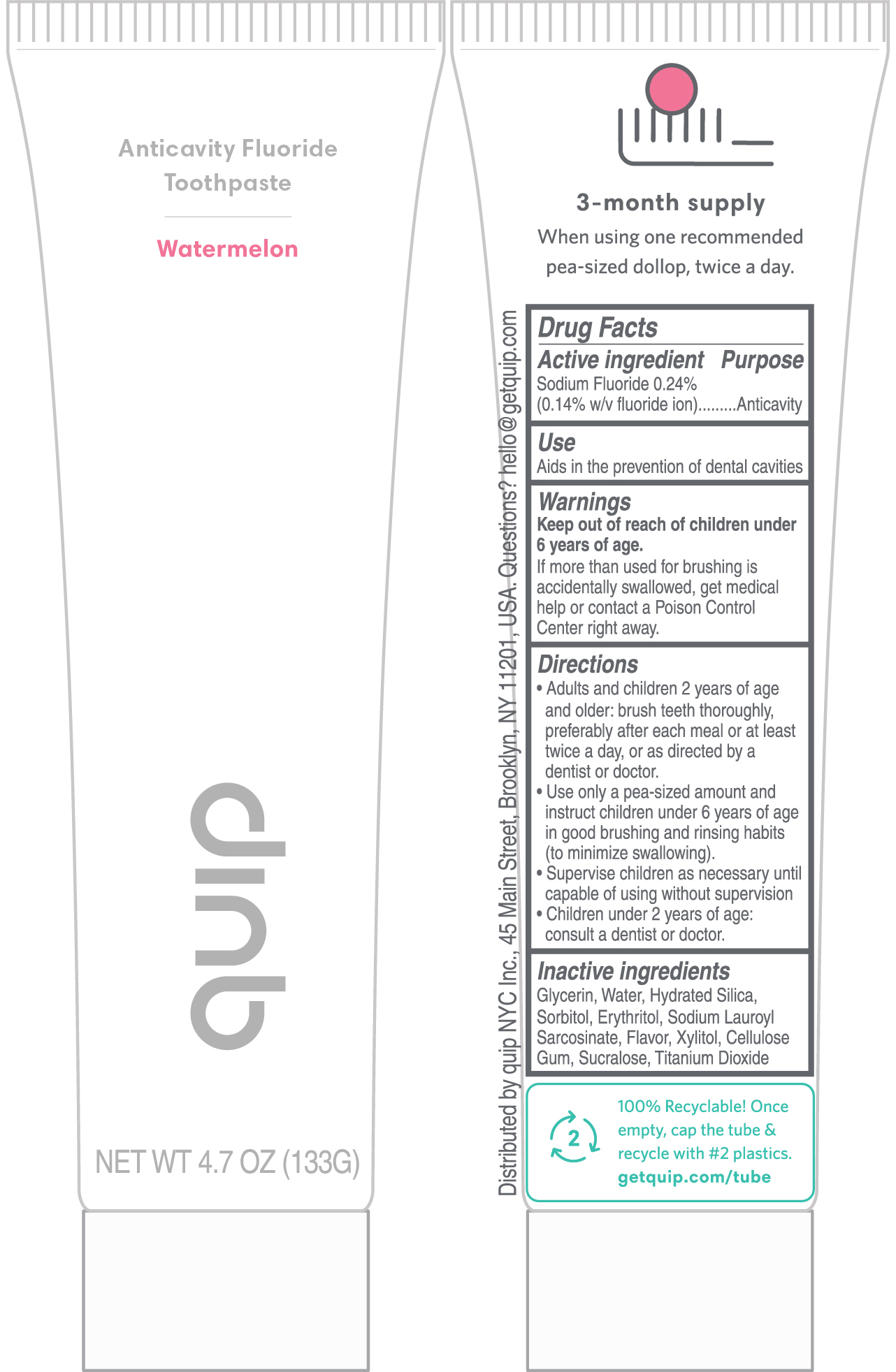
201218 Quip Watermelon (201218 Quip Watermelon)
This is a description of a toothpaste that aids in the prevention of dental cavities, with a 3-month supply. The toothpaste contains 0.24% sodium fluoride and is only recommended for adults and children aged two years and above. Children under the age of six years require supervision when using the toothpaste. The toothpaste is watermelon-flavored, and its inactive ingredients are glycerin, water, hydrated silica, sorbitol, erythritol, sodium lauroyl sarcosinate, flavor, xylitol, cellulose gum, sucralose, and titanium dioxide. The product is 100% recyclable, and once empty, the tube can be recycled with #2 plastics. Contact information for the distributor is also provided.*
FDA Label Image

Quip Watermelon 12-2020 (Quip Watermelon 12 2020)

Quip Watermelon 12-2020 (Quip Watermelon 12 2020)
This is a description of Quip toothpaste which contains sodium fluoride to strengthen teeth, Xylitol to reduce oral bacteria and is a vegan, SLS-free formula. It is distributed by quip NYC Inc. and is helpful in preventing cavities. It comes in a 4.7 oz tube and is recommended for adults and children 2 years of age or older. The tube is 100% recyclable. Contains drug facts, usage directions, and a list of inactive ingredients.*

* These product label images have been analyzed using experimental machine learning. Please verify findings with the primary label text.