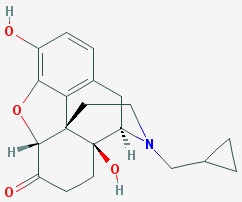
A naltrexone treatment study by Anton et al., released by the National Institutes of Health in February 2008 and published in the Archives of General Psychiatry, has shown that alcoholics having a certain variant of the opioid receptor gene (G polymorphism of SNP Rs1799971 in the gene OPRM1), known as Asp40, demonstrated strong response to naltrexone and were far more likely to experience success at cutting back or discontinuing their alcohol intake altogether, while for those lacking the gene variant, naltrexone appeared to be no different from placebo. The G allele of OPRM1 is most common in individuals of Asian descent, with 60% to 70% of people of Chinese, Japanese, and Indian ancestry having at least one copy, as opposed to 30% of Europeans and few Africans.
Because of the characteristics of the patient group in the US, the first study was done on white patients and the next without regard for ethnicity. Anton et al. found that patients of African descent did not have much success with naltrexone in treatment for alcohol dependence because of lacking the relevant gene.
As white patients with the gene had a five times greater rate of success in reducing drinking when given naltrexone than did patients without the gene, when used in a protocol of Medical Management (MM), Anton et al. concluded,
"Because almost 25% of the treatment-seeking population carries the Asp40 allele, genetic testing of individuals before naltrexone treatment might be worth the cost and effort, especially if structured behavioral treatment were not being considered."[30] This would enable treatment to be targeted by genetics to patients for whom it would be most effective. They noted, "Naltrexone is relatively easy to administer and free of serious adverse effects and, as we observed in the Asp40 carriers we studied, it appears to be highly effective."
Studies have found naltrexone to be more efficacious among certain white subjects, because of the genetic basis, than among black subjects, who generally do not carry the relevant gene variant. A 2009 study of naltrexone as an alcohol dependence treatment among African Americans failed to find any statistically significant differences between naltrexone and a placebo. Studies have suggested that carriers of the G allele may experience higher levels of craving and stronger "high" upon alcohol consumption, compared to carriers of the dominant allele, and naltrexone somewhat blunts these responses, leading to a reduction in alcohol use in some studies.