Adverse Reactions Leading to Discontinuation in Patients with MDD, PD, SAD, and PMDD
In pooled studies in patients with MDD, PD and SAD, the most common adverse reactions leading to study withdrawal were: nausea (up to 4% of patients), asthenia, headache, depression, insomnia, and abnormal liver function tests (each occurring in up to 2% of patients), and dizziness, somnolence, and diarrhea (each occurring in up to 1% of patients).
In pooled studies for PMDD, the most common adverse reactions leading to study withdrawal were: nausea (occurring in up to 6% of patients), asthenia (occurring in up to 5% of patients), somnolence (occurring in up to 4% of patients), insomnia (occurring in approximately 2% of patients); and impaired concentration, dry mouth, dizziness, decreased appetite, sweating, tremor, yawn and diarrhea (occurring in less than or equal to 2% of patients).
Adverse Reactions in MDD, PD, and SAD
Table 3 presents the most common adverse reactions in paroxetine extended-release tablets-treated patients (incidence ≥ 5% and greater than placebo within at least 1 of the indications) in controlled trials in patients with MDD, PD, and SAD.
Table 3. Adverse Reactions (≥ 5% of Patients Treated with Paroxetine Extended-Release Tablets and Greater than Placebo) in 10 to 12 Week Studies of MDD, PD, and SAD | MDD
18 to 65 year olds | MDD
≥ 60 years old | Panic Disorder | Social Anxiety Disorder |
|---|
| Body System/ Adverse Reaction | Paroxetine Extended-Release Tablets
(N = 212)
% | Placebo
(N = 211)
% | Paroxetine Extended-Release Tablets
(N = 104)
% | Placebo
(N = 109)
% | Paroxetine Extended-Release Tablets
(N = 444)
% | Placebo
(N = 445)
% | Paroxetine Extended-Release Tablets
(N = 186)
% | Placebo
(N = 184)
% |
|---|
Hyphen = the reaction listed occurred in < 5% of patients treated with paroxetine extended-release tablets
NA = the adverse reaction listed did not occur in this group of patients |
| Body as a Whole | | | | | | | | |
| Headache | 27 | 20 | 17 | 13 | NA | NA | 23 | 17 |
| Asthenia | 14 | 9 | 15 | 14 | 15 | 10 | 18 | 7 |
| Abdominal Pain | 7 | 4 | - | - | 6 | 4 | 5 | 4 |
| Back Pain | 5 | 3 | - | - | NA | NA | 4 | 1 |
| Digestive System | | | | | | | | |
| Nausea | 22 | 10 | - | - | 23 | 17 | 22 | 6 |
| Diarrhea | 18 | 7 | 15 | 9 | 12 | 9 | 9 | 8 |
| Dry Mouth | 15 | 8 | 18 | 7 | 13 | 9 | 3 | 2 |
| Constipation | 10 | 4 | 13 | 5 | 9 | 6 | 5 | 2 |
| Flatulence | 6 | 4 | - | - | NA | NA | NA | NA |
| Decreased Appetite | | 2 | 12 | 5 | 8 | 6 | 1 | < 1 |
| Dyspepsia | NA | NA | 13 | 10 | NA | NA | 2 | < 1 |
| Musculoskeletal System | | | | | | | | |
| Myalgia | NA | NA | - | - | 5 | 3 | NA | NA |
| Nervous System | | | | | | | | |
| Somnolence | 22 | 8 | 21 | 12 | 20 | 9 | 9 | 4 |
| Insomnia | 17 | 9 | 10 | 8 | 20 | 11 | 9 | 4 |
| Dizziness | 14 | 4 | 9 | 5 | NA | NA | 7 | 4 |
| Libido Decreased | 7 | 3 | 8 | < 1 | 9 | 4 | | 1 |
| Nervousness | NA | NA | - | - | 8 | 7 | NA | NA |
| Tremor | 7 | 1 | 7 | 0 | 8 | 2 | 4 | 2 |
| Anxiety | NA | NA | - | - | 5 | 4 | 2 | 1 |
| Respiratory System | | | | | | | | |
| Sinusitis | NA | NA | - | - | 8 | 5 | NA | NA |
| Yawn | | 0 | - | - | 3 | 0 | 2 | 0 |
| Skin and Appendages | | | | | | | | |
| Sweating | 6 | 2 | 10 | < 1 | 7 | 2 | 14 | 3 |
| Special Senses | | | | | | | | |
| Abnormal Vision Mostly blurred vision | 5 | 1 | - | - | 3 | < 1 | 2 | 0 |
| Urogenital System | | | | | | | | |
| Abnormal Ejaculation Based on the number of males or females ,Mostly anorgasmia or delayed ejaculation | 26 | 1 | 17 | 3 | 27 | 3 | 15 | 1 |
| Female Genital Disorder, Mostly anorgasmia or delayed orgasm | 10 | < 1 | - | - | 7 | 1 | 3 | 0 |
| Impotence | 5 | 3 | 9 | 3 | 10 | 1 | 9 | 0 |
Other Adverse Reactions Observed During the Premarketing Evaluation of Paroxetine Extended-Release Tablets
Adverse reactions from studies in MDD (not including Study 3 in elderly patients), PD, and SAD that occurred between 1% and 5% of patients treated with paroxetine extended-release tablets and at a rate greater than in placebo-treated patients include: allergic reaction, tachycardia, vasodilatation, hypertension, migraine, vomiting, weight loss, weight gain, hypertonia, paresthesia, agitation, confusion, myoclonus, concentration impaired, depression, rhinitis, cough increased, bronchitis, photosensitivity, eczema, taste perversion, UTI, menstrual disorder, urinary frequency, urination impaired, and vaginitis.
Adverse Reactions in Patients with PMDD
Table 4 displays adverse reactions that occurred (incidence of 5% or more and greater than placebo within at least 1 of the studies) in patients treated with paroxetine extended-release tablets in Studies 8, 9, 10, and 11.
Table 4. Adverse Reactions (≥ 5% of Patients Treated with Paroxetine Extended-Release Tablets and Greater than Placebo) in Pooled Studies PMDD (Studies 8, 9, 11), and in Study 10< 1% means greater than zero and less than 1%.
,The luteal phase and continuous dosing PMDD trials were not designed for making direct comparisons between the 2 dosing regimens.
,Mostly anorgasmia or difficulty achieving orgasm.
| Body System/Adverse Reaction | % Reporting Adverse Reaction |
|---|
Continuous Dosing
Studies 8, 9, and 10 | Luteal Phase Dosing
Study 11 |
|---|
Paroxetine Extended-Release Tablets
(n = 681)
% | Placebo
(n = 349)
% | Paroxetine Extended-Release Tablets
(n = 246)
% | Placebo
(n = 120)
% |
|---|
| NA = the adverse reaction information is not available in this population. |
| Body as a Whole | | | | |
| Asthenia | 17 | 6 | 15 | 4 |
| Headache | 15 | 12 | NA | NA |
| Infection | 6 | 4 | NA | NA |
| Digestive System | | | | |
| Nausea | 17 | 7 | 18 | 2 |
| Diarrhea | 6 | 2 | 6 | 0 |
| Constipation | 5 | 1 | 2 | <1 |
| Nervous System | | | | |
| Libido Decreased | 12 | 5 | 9 | 6 |
| Somnolence | 9 | 2 | 3 | <1 |
| Insomnia | 8 | 2 | 7 | 3 |
| Dizziness | 7 | 3 | 6 | 3 |
| Tremor | 4 | < 1 | 5 | 0 |
| Skin and Appendages | | | | |
| Sweating | 7 | < 1 | 6 | <1 |
| Urogenital System | | | | |
| Female Genital Disorders | 8 | 1 | 2 | 0 |
Dose Dependent Adverse Reactions
Comparison of the incidence of adverse reactions (placebo vs. 12.5 mg paroxetine extended-release tablets vs. 25 mg paroxetine extended-release tablets) from studies 8, 9, 10 showed the following adverse reactions to be dose-related: Nausea, somnolence, sweating, dry mouth, dizziness, decreased appetite, tremor, impaired concentration, yawn, paresthesia, hyperkinesia, and vaginitis.
Male and Female Sexual Dysfunction
Although changes in sexual desire, sexual performance, and sexual satisfaction often occur as manifestations of a psychiatric disorder, they may also be a consequence of SSRI treatment. However, reliable estimates of the incidence and severity of untoward experiences involving sexual desire, performance, and satisfaction are difficult to obtain, in part because patients and healthcare providers may be reluctant to discuss them. Accordingly, estimates of the incidence of untoward sexual experience and performance cited in labeling may underestimate their actual incidence.
The percentage of patients reporting symptoms of sexual dysfunction in the Studies 1 and 2 (nonelderly patients with MDD), 4, 5, 6, 7, 8, 9, 10, and 11 are presented in Table 5:
Table 5. Adverse Reactions Related To Sexual Dysfunction In Patients Treated With Paroxetine Extended-Release Tablets in Pooled 10 to 12 Week Studies of MDD, PD, SAD, and PMDD | Studies 1 and 2
% | Studies 4, 5, and 6
% | Study 7 % | Studies 8, 9, and 11 (Continuous Dosing)
% | Study 10 (Luteal Phase Dosing)
% |
|---|
| Paroxetine Extended-Release Tablets | Placebo | Paroxetine Extended-Release Tablets | Placebo | Paroxetine Extended-Release Tablets | Placebo | Paroxetine Extended-Release Tablets | Placebo | Paroxetine Extended-Release Tablets | Placebo |
|---|
NA = the adverse reaction listed did not occur in this group of patients.
Paroxetine treatment has been associated with several cases of priapism. In those cases with a known outcome, patients recovered without sequelae. |
| n (males) | 78 | 78 | 162 | 194 | 88 | 97 | NA | NA | NA | NA |
| Decreased Libido | 10 | 5 | 9 | 6 | 13 | 1 | NA | NA | NA | NA |
| Abnormal Ejaculation | 26 | 1 | 27 | 3 | 15 | 1 | NA | NA | NA | NA |
| Impotence | 5 | 3 | 10 | 1% | 9 | 0 | NA | NA | NA | NA |
| n (females) | 134 | 133 | 282 | 251 | 98 | 87 | 681 | 349 | 246 | 120 |
| Decreased Libido | 4 | 2 | 8 | 2 | 4 | 1 | 12 | 5 | 9 | 6 |
| Orgasmic Disturbance | 10 | < 1 | 7 | 1 | 3 | 0 | 8 | 1 | 2 | 0 |
Less Common Adverse Reactions
The following adverse reactions occurred during the clinical studies of paroxetine extended-release tablets and are not included elsewhere in the labeling.
Reactions are categorized by body system and listed in order of decreasing frequency according to the following definitions: Frequent adverse reactions are those occurring on 1 or more occasions in at least 1/100 patients; infrequent adverse reactions are those occurring in 1/100 to 1/1,000 patients; rare reactions are those occurring in fewer than 1/1,000 patients.
Cardiovascular System: Infrequent was postural hypotension.
Hemic and Lymphatic System: Rare was thrombocytopenia.
Metabolic and Nutritional Disorders: Infrequent were generalized edema and hypercholesteremia.
Nervous System: Infrequent were convulsion, akathisia, and manic reaction.
Psychiatric: Infrequent were hallucinations.
Skin and Appendages: Frequent was rash; infrequent was urticaria; rare was angioedema and erythema multiforme.
Urogenital System: Infrequent was urinary retention; rare was urinary incontinence.
Pregnancy Category D [see Warnings and Precautions (5.14)]
Epidemiological studies have shown that infants exposed to paroxetine in the first trimester of pregnancy have an increased risk of congenital malformations, particularly cardiovascular malformations. If paroxetine is used during pregnancy, or if the patient becomes pregnant while taking paroxetine, advise the patient of the potential hazard to the fetus.
- A study based on Swedish national registry data demonstrated that infants exposed to paroxetine during pregnancy (n = 815) had an increased risk of cardiovascular malformations (2% risk in paroxetine-exposed infants) compared to the entire registry population (1% risk), for an odds ratio (OR) of 1.8 (95% confidence interval 1.1 to 2.8). No increase in the risk of overall congenital malformations was seen in the paroxetine-exposed infants. The cardiac malformations in the paroxetine-exposed infants were primarily ventricular septal defects (VSDs) and atrial septal defects (ASDs). Septal defects range in severity from those that resolve spontaneously to those which require surgery.
- A separate retrospective cohort study from the United States (United Healthcare data) evaluated 5,956 infants of mothers dispensed antidepressants during the first trimester (n = 815 for paroxetine). This study showed a trend towards an increased risk for cardiovascular malformations for paroxetine (risk of 1.5%) compared to other antidepressants (risk of 1%), for an OR of 1.5 (95% confidence interval 0.8 to 2.9). Of the 12 paroxetine-exposed infants with cardiovascular malformations, 9 had VSDs. This study also suggested an increased risk of overall major congenital malformations including cardiovascular defects for paroxetine (4% risk) compared to other (2% risk) antidepressants (OR 1.8; 95% confidence interval 1.2 to 2.8).
- Two large case-control studies using separate databases, each with > 9,000 birth defect cases and > 4,000 controls, found that maternal use of paroxetine during the first trimester of pregnancy was associated with a 2- to 3-fold increased risk of right ventricular outflow tract obstructions. In one study the OR was 2.5 (95% confidence interval, 1.0 to 6.0, 7 exposed infants) and in the other study the OR was 3.3 (95% confidence interval, 1.3 to 8.8, 6 exposed infants).
Other studies have found varying results as to whether there was an increased risk of overall, cardiovascular, or specific congenital malformations. A meta-analysis of epidemiological data over a 16-year period (1,992 to 2,008) on first trimester paroxetine use in pregnancy and congenital malformations included the above-noted studies in addition to others (n = 17 studies that included overall malformations and n = 14 studies that included cardiovascular malformations; n = 20 distinct studies). While subject to limitations, this meta-analysis suggested an increased occurrence of cardiovascular malformations (prevalence odds ratio [POR] 1.5; 95% confidence interval 1.2 to 1.9) and overall malformations (POR 1.2; 95% confidence interval 1.1 to 1.4) with paroxetine use during the first trimester. It was not possible in this meta-analysis to determine the extent to which the observed prevalence of cardiovascular malformations might have contributed to that of overall malformations, nor was it possible to determine whether any specific types of cardiovascular malformations might have contributed to the observed prevalence of all cardiovascular malformations. Unless the benefits of paroxetine to the mother justify continuing treatment, consideration should be given to either discontinuing paroxetine therapy or switching to another antidepressant [see Warnings and Precautions (5.7)]. For women who intend to become pregnant or are in their first trimester of pregnancy, paroxetine should only be initiated after consideration of the other available treatment options [see Warnings and Precautions (5.4)].
Treatment of Pregnant Women During Their Third Trimester: Neonates exposed to SSRIs or serotonin and norepinephrine reuptake inhibitors (SNRIs), including paroxetine extended-release tablets, late in the third trimester have developed complications requiring prolonged hospitalization, respiratory support, and tube feeding. Such complications can arise immediately upon delivery. Reported clinical findings have included respiratory distress, cyanosis, apnea, seizures, temperature instability, feeding difficulty, vomiting, hypoglycemia, hypotonia, hypertonia, hyperreflexia, tremor, jitteriness, irritability, and constant crying. These features are consistent with either a direct toxic effect of SSRIs and SNRIs or, possibly, a drug discontinuation syndrome. It should be noted that, in some cases, the clinical picture is consistent with serotonin syndrome [see Warnings and Precautions (5.2)].
Exposure to SSRIs in late pregnancy may have an increased risk for persistent pulmonary hypertension of the newborn (PPHN). PPHN occurs in 1 to 2 per 1,000 live births in the general population and is associated with substantial neonatal morbidity and mortality. In a retrospective case-control study of 377 women whose infants were born with PPHN and 836 women whose infants were born healthy, the risk for developing PPHN was approximately six-fold higher for infants exposed to SSRIs after the 20th week of gestation compared to infants who had not been exposed to antidepressants during pregnancy.
There have also been postmarketing reports of premature births in pregnant women exposed to paroxetine or other SSRIs.
When treating a pregnant woman with paroxetine during the third trimester, the physician should carefully consider both the potential risks and benefits of treatment [see Dosage and Administration (2.5)]. A prospective longitudinal study of 201 women with a history of major depression who were euthymic at the beginning of pregnancy. The women who discontinued antidepressant medication during pregnancy were more likely to experience a relapse of major depression than women who continued antidepressant medication.
Animal Findings: Reproduction studies were performed at doses up to 50 mg/kg/day in rats and 6 mg/kg/day in rabbits administered during organogenesis. These doses are approximately 6 (rat) and less than 2 (rabbit) times the maximum recommended human dose (MRHD - 75 mg) on an mg/m2 basis. These studies have revealed no evidence of malformations. However, in rats, there was an increase in pup deaths during the first 4 days of lactation when dosing occurred during the last trimester of gestation and continued throughout lactation. This effect occurred at a dose of 1 mg/kg/day or approximately one-thirteens of the MRHD on an mg/m2 basis. The no-effect dose for rat pup mortality was not determined. The cause of these deaths is not known.
Human Experience
Since the introduction of immediate-release paroxetine hydrochloride in the United States, spontaneous cases of deliberate or accidental overdosage during paroxetine treatment have been reported worldwide. These include overdoses with paroxetine alone and in combination with other substances. There are reports of fatalities that appear to involve paroxetine alone.
Commonly reported adverse reactions associated with paroxetine overdosage include somnolence, coma, nausea, tremor, tachycardia, confusion, vomiting, and dizziness. Other notable signs and symptoms observed with overdoses involving paroxetine (alone or with other substances) include mydriasis, convulsions (including status epilepticus), ventricular dysrhythmias (including torsade de pointes), hypertension, aggressive reactions, syncope, hypotension, stupor, bradycardia, dystonia, rhabdomyolysis, symptoms of hepatic dysfunction (including hepatic failure, hepatic necrosis, jaundice, hepatitis, and hepatic steatosis), serotonin syndrome, manic reactions, myoclonus, acute renal failure, and urinary retention.
Overdose Management
No specific antidotes for paroxetine are known. If over-exposure occurs, call your poison control center at 1-800-222-1222 for latest recommendations.
Absorption
Paroxetine extended-release tablets contain a degradable polymeric matrix designed to control the dissolution rate of paroxetine over a period of approximately 4 to 5 hours. In addition to controlling the rate of drug release in vivo, an enteric coat delays the start of drug release until paroxetine extended-release tablets have left the stomach.
Paroxetine extended-release tablets are completely absorbed after oral dosing of a solution of the hydrochloride salt. In a study in which normal male and female subjects (n = 23) received single oral doses of paroxetine extended-release tablets at 4 dosage strengths (12.5 mg, 25 mg, 37.5 mg, and 50 mg), paroxetine Cmax and AUC0-inf increased disproportionately with dose (as seen also with immediate-release formulations). Mean Cmax and AUC0-inf values at these doses were 2.0, 5.5, 9.0, and 12.5 ng/mL, and 121, 261, 338, and 540 ng∙hr./mL, respectively. Tmax was observed typically between 6 and 10 hours post-dose, reflecting a reduction in absorption rate compared with immediate-release formulations. The bioavailability of 25 mg paroxetine extended-release tablets is not affected by food.
Distribution
Paroxetine distributes throughout the body, including the CNS, with only 1% remaining in the plasma.
Approximately 95% and 93% of paroxetine is bound to plasma protein at 100 ng/mL and 400 ng/mL, respectively. Under clinical conditions, paroxetine concentrations would normally be less than 400 ng/mL. Paroxetine does not alter the in vitro protein binding of phenytoin or warfarin.
Elimination
Metabolism
The mean elimination half-life of paroxetine was 15 to 20 hours throughout a range of single doses of paroxetine extended-release tablets (12.5 mg, 25 mg, 37.5 mg, and 50 mg). During repeated administration of paroxetine extended-release tablets (25 mg once daily), steady state was reached within 2 weeks (i.e., comparable to immediate-release formulations). In a repeat-dose study in which normal male and female subjects (n = 23) received paroxetine extended-release tablets (25 mg daily), mean steady state Cmax, Cmin, and AUC0-24 values were 30 ng/mL, 20 ng/mL, and 550 ng∙hr./mL, respectively.
Based on studies using immediate-release formulations, steady-state drug exposure based on AUC0-24 was several-fold greater than would have been predicted from single-dose data. The excess accumulation is a consequence of the fact that 1 of the enzymes that metabolizes paroxetine is readily saturable.
In steady-state dose proportionality studies involving elderly and nonelderly patients, at doses of the immediate-release formulation of 20 mg to 40 mg daily for the elderly and 20 mg to 50 mg daily for the nonelderly, some nonlinearity was observed in both populations, again reflecting a saturable metabolic pathway (Figure 3).
Paroxetine is extensively metabolized after oral administration. The principal metabolites are polar and conjugated products of oxidation and methylation, which are readily cleared. Conjugates with glucuronic acid and sulfate predominate, and major metabolites have been isolated and identified. Data indicate that the metabolites have no more than 1/50 the potency of the parent compound at inhibiting serotonin uptake. The metabolism of paroxetine is accomplished in part by CYP2D6. Saturation of this enzyme at clinical doses appears to account for the nonlinearity of paroxetine kinetics with increasing dose and increasing duration of treatment. The role of this enzyme in paroxetine metabolism also suggests potential drug-drug interactions [see Drug Interactions (7.3)].
Excretion
Approximately 64% of a 30-mg oral solution dose of paroxetine was excreted in the urine with 2% as the parent compound and 62% as metabolites over a 10-day post-dosing period. About 36% was excreted in the feces (probably via the bile), mostly as metabolites and less than 1% as the parent compound over the 10-day post-dosing period.
The elimination half-life is approximately 15 to 20 hours after a single dose of paroxetine extended-release tablets. Paroxetine metabolism is mediated in part by CYP2D6, and the metabolites are primarily excreted in the urine and to some extent in the feces. Pharmacokinetic behavior of paroxetine has not been evaluated in subjects who are deficient in CYP2D6 (poor metabolizers).
Drug Interaction Studies
There are clinically significant, known drug interactions between paroxetine and other drugs [see Drug Interactions (7)].
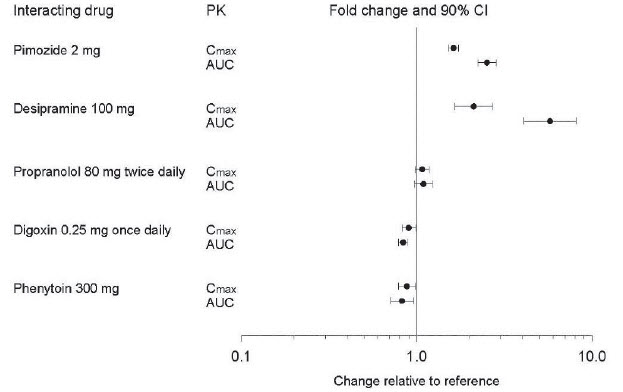
Figure 1. Impact of Paroxetine on the Pharmacokinetics of Co-Administered Drugs (log scale) |
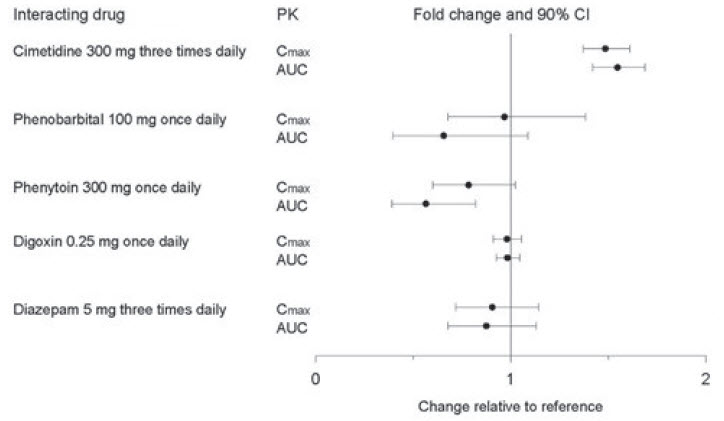
Figure 2. Impact of Co-Administered Drugs on the Pharmacokinetics of Paroxetine |
Theophylline: Reports of elevated theophylline levels associated with immediate-release paroxetine treatment have been reported. While this interaction has not been formally studied, it is recommended that theophylline levels be monitored when these drugs are concurrently administered.
Drugs Metabolized by Cytochrome CYP3A4
An in vivo interaction study involving the coadministration under steady-state conditions of paroxetine and terfenadine, a substrate for CYP3A4, revealed no effect of paroxetine on terfenadine pharmacokinetics. In addition, in vitro studies have shown ketoconazole, a potent inhibitor of CYP3A4 activity, to be at least 100 times more potent than paroxetine as an inhibitor of the metabolism of several substrates for this enzyme, including terfenadine, astemizole, cisapride, triazolam, and cyclosporine. Paroxetine's extent of inhibition of CYP3A4 activity is not expected to be of clinical significance.
Specific Populations
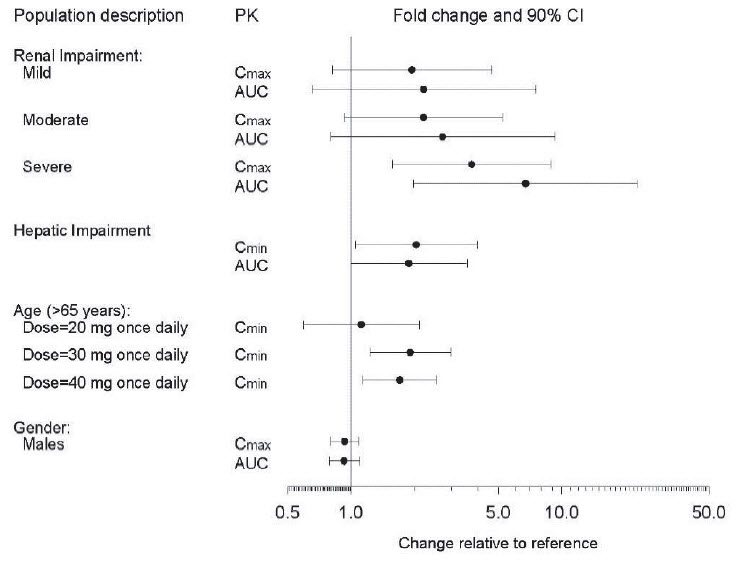
The impact of specific populations on the pharmacokinetics of paroxetine are shown in Figure 3.
Figure 3. Impact of Specific Population on the Pharmacokinetics of Paroxetine (log scale) |
Carcinogenesis
Two-year carcinogenicity studies were conducted in rodents given paroxetine in the diet at 1, 5, and 25 mg/kg/day (mice) and 1, 5, and 20 mg/kg/day (rats). These doses are up to approximately 1.6 (mouse) and 2.5 (rat) times the MRHD on an mg/m2 basis. There was a significantly greater number of male rats in the high-dose group with reticulum cell sarcomas (1/100, 0/50, 0/50, and 4/50 for control, low-, middle-, and high-dose groups, respectively) and a significantly increased linear trend across dose groups for the occurrence of lymphoreticular tumors in male rats. Female rats were not affected. Although there was a dose-related increase in the number of tumors in mice, there was no drug-related increase in the number of mice with tumors. The relevance of these findings to humans is unknown.
Mutagenesis
Paroxetine produced no genotoxic effects in a battery of 5 in vitro and 2 in vivo assays that included the following: Bacterial mutation assay, mouse lymphoma mutation assay, unscheduled DNA synthesis assay, and tests for cytogenetic aberrations in vivo in mouse bone marrow and in vitro in human lymphocytes and in a dominant lethal test in rats.
Impairment of Fertility
Some clinical studies have shown that SSRIs (including paroxetine) may affect sperm quality during SSRI treatment, which may affect fertility in some men.
A reduced pregnancy rate was found in reproduction studies in rats at a dose of paroxetine of 15 mg/kg/day, which is approximately twice the MRHD on an mg/m2 basis. Irreversible lesions occurred in the reproductive tract of male rats after dosing in toxicity studies for 2 to 52 weeks. These lesions consisted of vacuolation of epididymal tubular epithelium at 50 mg/kg/day and atrophic changes in the seminiferous tubules of the testes with arrested spermatogenesis at 25 mg/kg/day (approximately 6 and 3 times the MRHD on an mg/m2 basis).
Suicidal Thoughts and Behaviors
Advise patients and caregivers to look for the emergence of suicidality, especially early during treatment and when the dosage is adjusted up or down, and instruct them to report such symptoms to the healthcare provider [see Boxed Warning and Warnings and Precautions (5.1)].
Important Administration Instructions
Instruct patients to swallow paroxetine extended-release tablets whole and to not chew or crush the tablets [see Dosage and Administration (2.1)].
Serotonin Syndrome
Caution patients about the risk of serotonin syndrome, particularly with the concomitant use of paroxetine extended-release tablets with other serotonergic drugs including triptans, tricyclic antidepressants, fentanyl, lithium, tramadol, tryptophan, buspirone, amphetamines, St. John's Wort, and with drugs that impair metabolism of serotonin (in particular, MAOIs, both those intended to treat psychiatric disorders and also others, such as linezolid). Instruct patients to contact their health care provider or report to the emergency room if they experience signs or symptoms of serotonin syndrome [see Warnings and Precautions (5.2), Drug Interactions (7.1)].
Concomitant Medications
Advise patients to inform their physician if they are taking, or plan to take, any prescription or over-the-counter drugs, since there is a potential for drug-drug interactions [see Warning and Precautions (5.3), Drug Interactions (7)].
Increased Risk of Bleeding
Inform patients about the concomitant use of paroxetine extended-release tablets with aspirin, NSAIDs, other antiplatelet drugs, warfarin, or other anticoagulants because the combined use has been associated with an increased risk of bleeding. Advise patients to inform their health care providers if they are taking or planning to take any prescription or over-the counter medications that increase the risk of bleeding [see Warnings and Precautions (5.5)].
Activation of Mania/Hypomania
Advise patients and their caregivers to observe for signs of activation of mania/hypomania and instruct them to report such symptoms to the healthcare provider [see Warnings and Precautions (5.6)].
Discontinuation Syndrome
Advise patients not to abruptly discontinue paroxetine extended-release tablets and to discuss any tapering regimen with their healthcare provider. Inform patients that adverse reactions can occur when paroxetine extended-release tablets are discontinued [See Warnings and Precautions (5.7)].
Allergic Reactions
Advise patients to notify their healthcare provider if they develop an allergic reaction such as rash, hives, swelling, or difficulty breathing [see Adverse Reactions (6.1, 6.2)].
Embryo-Fetal Toxicity
Advise women of the potential risk to the fetus [see Warnings and Precautions (5.4), Use in Specific Populations (8.1)]. Advise patients to notify their healthcare provider if they become pregnant or intend to become pregnant during therapy because of the risk to the fetus.
Nursing
Advise women to notify their healthcare provider if they are breastfeeding an infant [see Use in Specific Populations (8.3)].
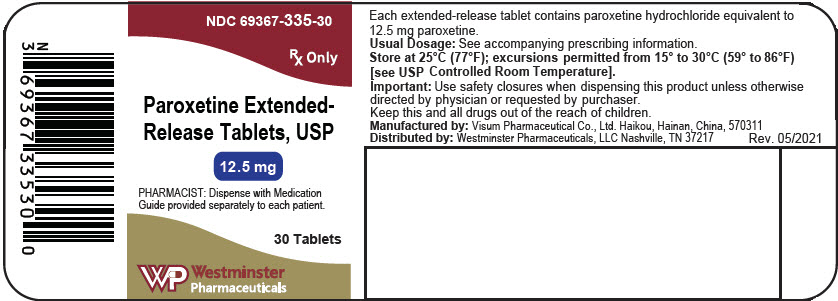
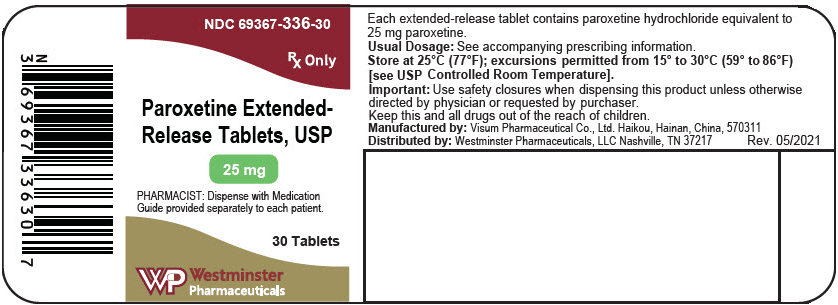
Manufactured by:
Visum Pharmaceutical Co., Ltd.
Haikou, Hainan, China, 570311
Distributed by:
Westminster Pharmaceuticals, LLC
Nashville, TN 37217