Oxcarbazepine Suspension
Product Images NDC 69452-125

View Photos of Packaging, Regulatory Labels, and Product Appearance

Product Visual Gallery

This gallery contains 17 technical images submitted to the FDA as part of the official labeling for Oxcarbazepine (NDC 69452-125). Unlike standard consumer photos, these assets often include clinical data figures, molecular chemical structures, and official manufacturer packaging layouts.

As provided by Bionpharma Inc., these visuals offer a comprehensive scientific overview of the product's physical and chemical identity, aiding pharmacists and researchers in product verification and study.

FDA Label Image

Carton (Carton)

Carton (Carton)
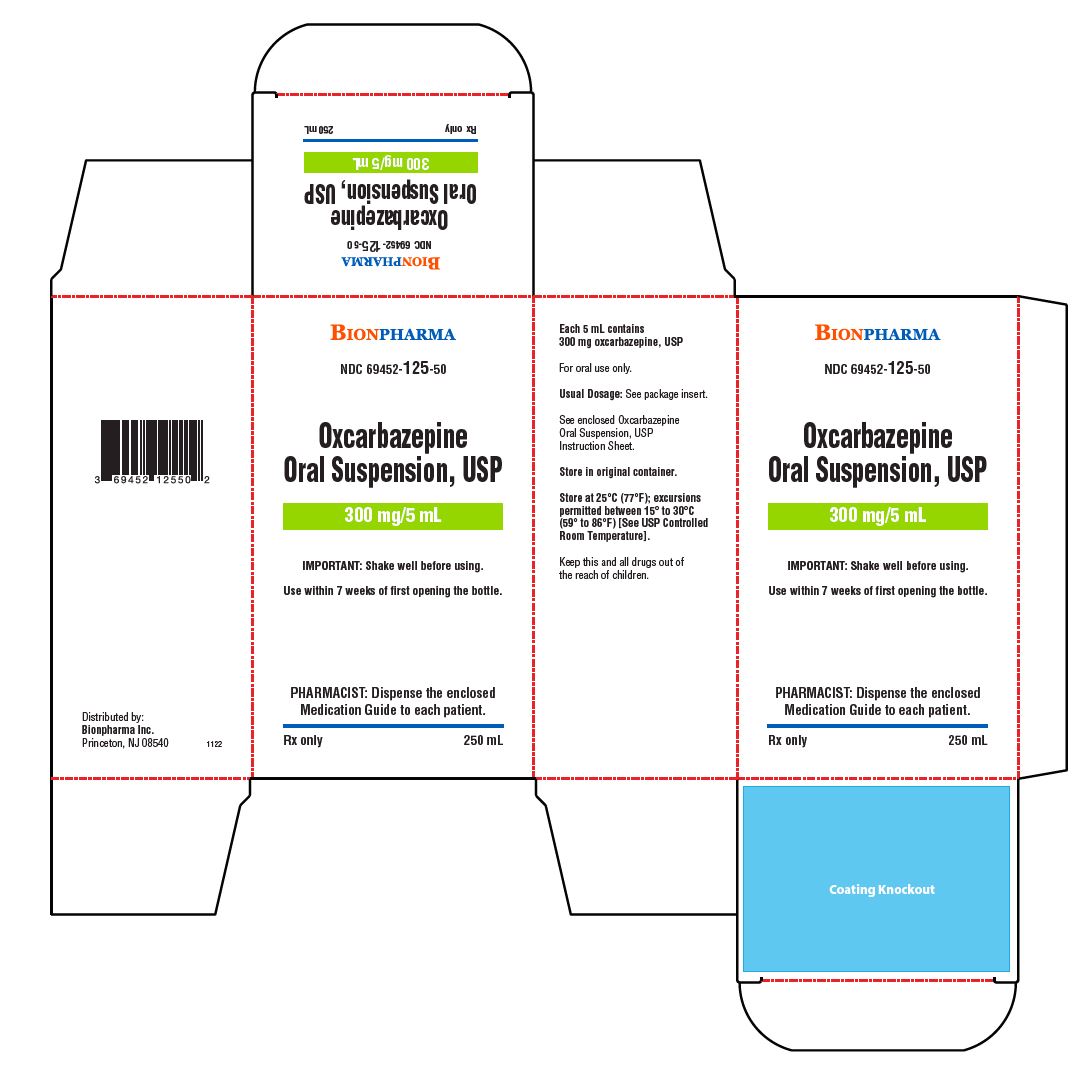
Box label for Oxcarbazepine Oral Suspension, USP 300 mg/5 mL by Bionpharma Inc. The Rx-only oral suspension comes in a 250 mL bottle. Label includes dosing strength, storage instructions, pharmacist dispensing instructions, a barcode, and warnings to shake well before use and use within 7 weeks of opening.*
FDA Label Image

Structural Formula (Image01)

Structural Formula (Image01)
Chemical structure of oxcarbazepine, showing its molecular arrangement with characteristic rings and functional groups made up of carbon, oxygen, nitrogen, and hydrogen atoms.*
FDA Label Image

Image 5 (Image010)

Image 5 (Image010)
A black and white line illustration depicting a hand holding a bottle, shaking it side to side, with curved motion lines on each side of the bottle, indicating to shake the bottle.*
FDA Label Image

Image 6 (Image011v2)

Image 6 (Image011v2)
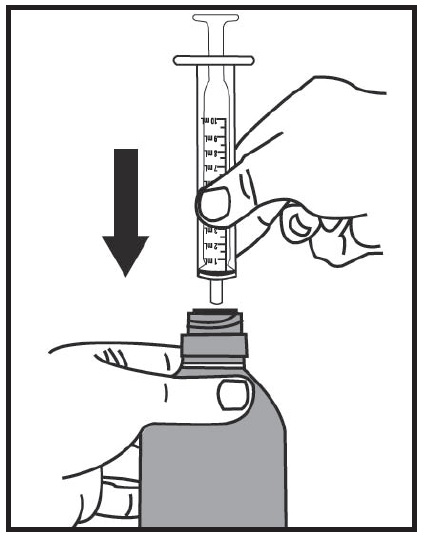
An instructional illustration showing a hand holding an oral suspension bottle and another hand inserting a syringe into the bottle's opening for drawing medication, indicated by a downward arrow. This diagram likely demonstrates how to use the dosing syringe with Oxcarbazepine oral suspension.*
FDA Label Image

Image 7 (Image012v2)

Image 7 (Image012v2)
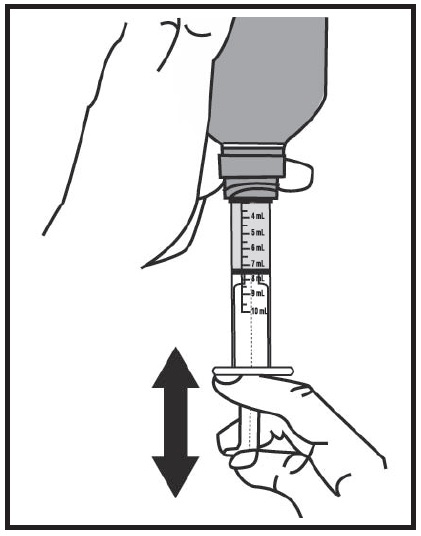
An instructional illustration showing a person using a syringe to draw liquid medication from a bottle. The syringe is marked with volume measurements from 4 mL to 10 mL. Arrows indicate the motion of drawing liquid upwards and downwards in the syringe.*
FDA Label Image

Image 8 (Image013v2)

Image 8 (Image013v2)
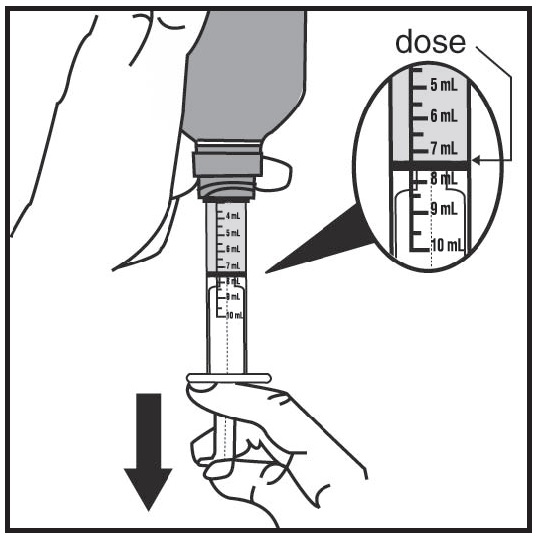
An instructional illustration showing a hand holding an oral dosing syringe filled from a bottle, with a zoomed-in view of the syringe's dose markings ranging from 5 mL to 10 mL for accurate liquid measurement.*
FDA Label Image

Image 9 (Image014v2)

Image 9 (Image014v2)
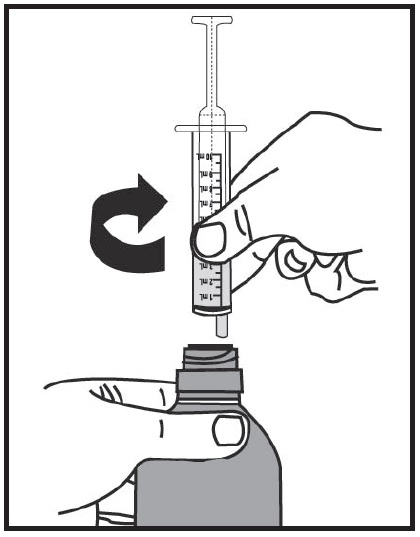
An instructional illustration showing two hands using a syringe-based dosing device to measure oral suspension from a bottle. The top hand rotates the syringe downward into the bottle opening held by the bottom hand, indicating how to properly draw the medication from the container.*
FDA Label Image

Image 10 (Image015v2)

Image 10 (Image015v2)
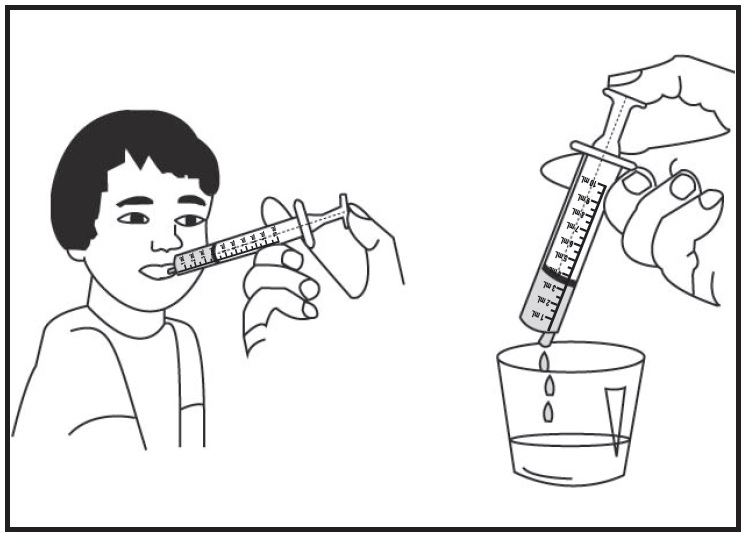
An instructional illustration depicting oral administration of medication using a dosing syringe. The image shows a person receiving medicine orally from a syringe and another hand dispensing liquid medication from a syringe into a small cup.*
FDA Label Image

Figure 1 (Image02)

Figure 1 (Image02)
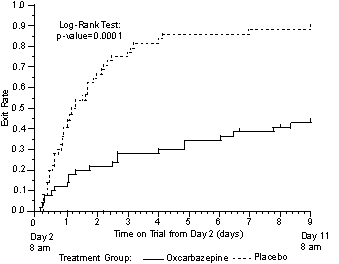
A Kaplan-Meier survival curve comparing exit rates over time on trial from day 2 to day 11 between two treatment groups: Oxcarbazepine and placebo. The graph shows a higher exit rate for the placebo group as indicated by the dotted line, with statistical significance noted by a log-rank test p-value of 0.0001.*
FDA Label Image

Figure 2 (Image03)

Figure 2 (Image03)
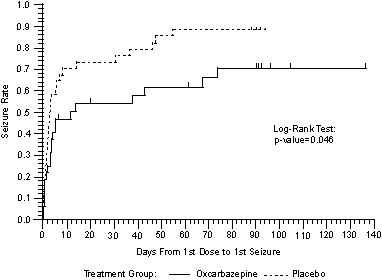
A Kaplan-Meier curve comparing seizure rates over time between Oxcarbazepine oral suspension and placebo groups. The x-axis represents days from first dose to first seizure, while the y-axis shows seizure rate. The chart includes a log-rank test p-value of 0.046 indicating statistical analysis between treatments.*
FDA Label Image

Figure 3 (Image04)

Figure 3 (Image04)
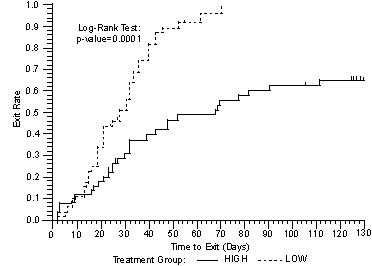
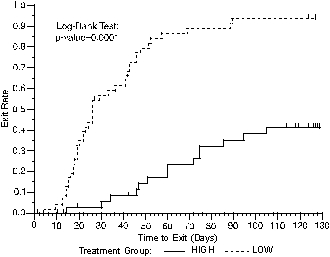
A Kaplan-Meier plot showing exit rates over time (days) for two treatment groups labeled HIGH and LOW. The chart includes a log-rank test result with a p-value of 0.0001, illustrating differences in exit rates between groups across approximately 130 days of observation.*
FDA Label Image

Figure 4 (Image05)

Figure 4 (Image05)
A Kaplan-Meier survival curve chart depicting the exit rate over time (days) for two treatment groups labeled High and Low. The x-axis represents time to exit in days, and the y-axis shows the exit rate. The graph compares the two groups with distinct curve patterns and includes a log-rank test p-value indicating statistical significance.*
FDA Label Image

Image 1 (Image06)

Image 1 (Image06)
Illustration of a pharmaceutical bottle topped with a child-resistant safety cap, featuring a closed container filled with liquid medication. The image emphasizes the bottle's closure system and liquid content visualization, typical for oral suspension packaging.*
FDA Label Image

Image 2 (Image07v2)

Image 2 (Image07v2)
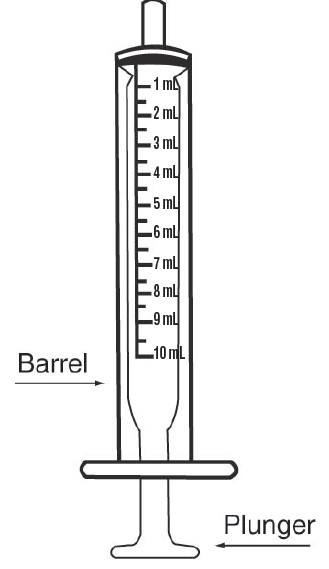
An instructional illustration of an oral syringe for measuring liquid medication, labelled with volume markings from 1 mL to 10 mL. The diagram highlights two parts: the barrel and the plunger. This syringe is used for administering Oxcarbazepine suspension oral medication.*
FDA Label Image

Image 3 (Image08)

Image 3 (Image08)
An illustration showing a hand holding a bottle with arrows indicating the bottle should be shaken. This likely depicts proper shaking of an oral suspension medication bottle, consistent with the product Oxcarbazepine oral suspension.*
FDA Label Image

Image 4 (Image09)

Image 4 (Image09)
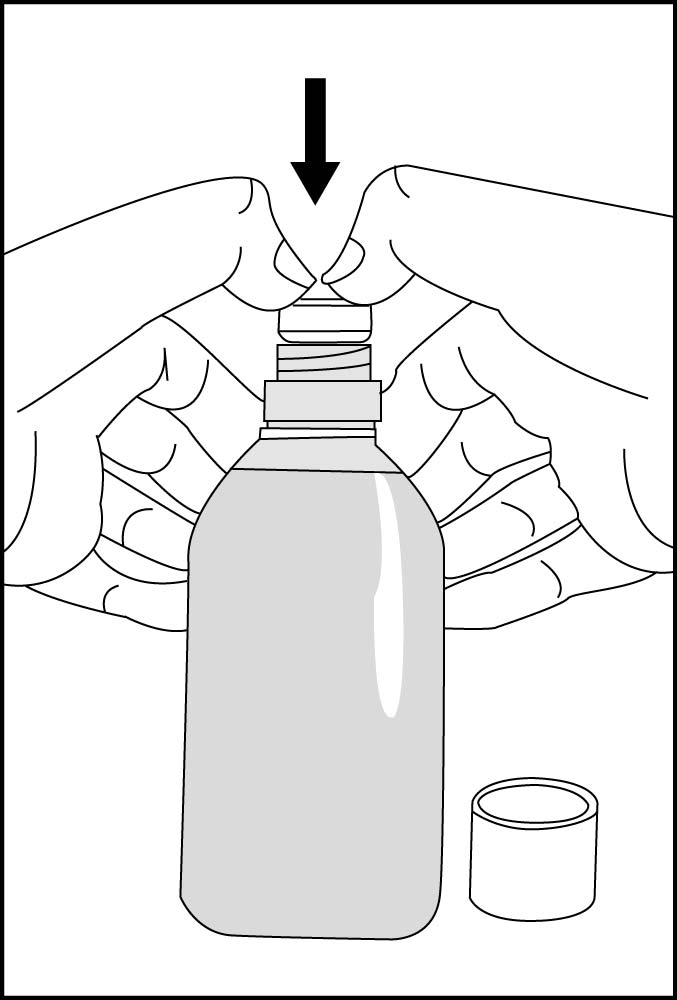
An instructional illustration showing hands opening the cap of a medicine bottle with an arrow indicating the direction to remove the cap. The bottle is round with a child-resistant cap, and an empty cap is placed beside the bottle. This image is relevant to oral suspension medication.*
FDA Label Image

Image Description (Revisedimage016)

Image Description (Revisedimage016)
Label for Oxcarbazepine Oral Suspension, USP 300 mg/5 mL, an oral suspension in a 250 mL bottle distributed by Bionpharma Inc. The label includes storage instructions, a barcode, and highlights the importance of shaking well before use and dispensing a medication guide.*

* About these descriptions: Image descriptions on this page are generated by automated AI analysis of the product label images from the manufacturer's FDA label submission (SPL). They are provided for reference only and may contain errors or omissions. Always rely on the printed label itself and the official FDA labeling, and consult a pharmacist or healthcare professional with any questions about this product.