Aripiprazole Tablet, Orally Disintegrating
Product Images NDC 69452-339

11 FDA label images from Bionpharma Inc. · Packaging, Regulatory Labels, and Product Appearance

Product Visual Gallery

This gallery contains 11 technical images submitted to the FDA as part of the official labeling for Aripiprazole (NDC 69452-339). Unlike standard consumer photos, these assets often include clinical data figures, molecular chemical structures, and official manufacturer packaging layouts.

As provided by Bionpharma Inc., these visuals offer a comprehensive scientific overview of the product's physical and chemical identity, aiding pharmacists and researchers in product verification and study.

FDA Label Image

Figure 1 (Figure 1)

Figure 1 (Figure 1)
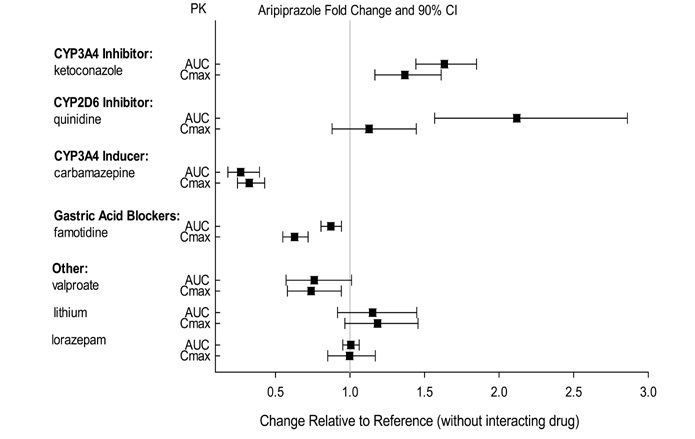
A pharmacokinetic chart titled 'Aripiprazole Fold Change and 90% CI' showing the change in AUC and Cmax for Aripiprazole when co-administered with various interacting drugs. The x-axis measures change relative to the reference without interacting drug, ranging approximately from 0.0 to 3.0. The y-axis lists drug categories and specific inhibitors or blockers such as CYP3A4 Inhibitor (ketoconazole), CYP2D6 Inhibitor (quinidine), CYP3A4 Inducer (carbamazepine), Gastric Acid Blockers (famotidine), and others like valproate, lithium, and lorazepam. Data points with error bars represent fold changes and their 90% confidence intervals for both AUC and Cmax values.*
FDA Label Image

Figure 2 (Figure 2)

Figure 2 (Figure 2)
A pharmacokinetic chart titled "Dehydro-Aripiprazole Fold Change and 90% CI," showing changes in AUC and Cmax relative to reference without interacting drug. It compares various inhibitors and inducers such as CYP3A4 inhibitor (ketoconazole), CYP2D6 inhibitor (quinidine), CYP3A4 inducer (carbamazepine), gastric acid blocker (famotidine), and others (valproate, lithium, lorazepam). The horizontal axis represents change relative to reference (0.5 to 3.0). Error bars indicate 90% confidence intervals for each drug interaction.*
FDA Label Image

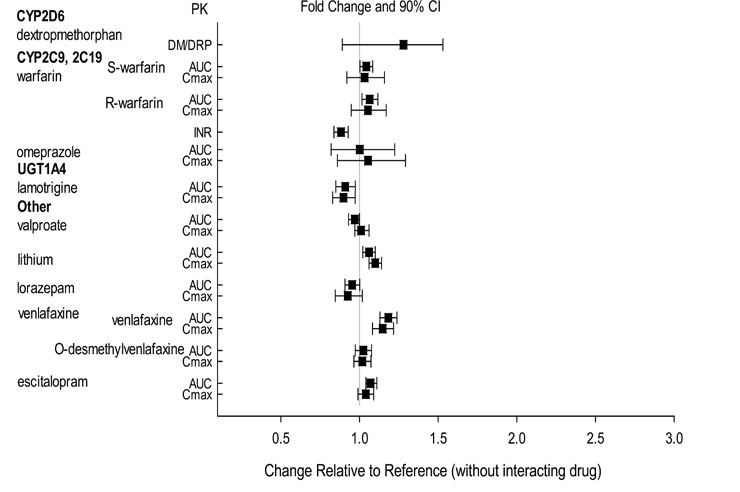
Figure 3 (Figure 3)

Figure 3 (Figure 3)
A chart showing fold change and 90% confidence intervals in pharmacokinetic parameters (AUC, Cmax, INR) for various drugs and enzymes when interacting with Aripiprazole. The x-axis represents change relative to reference without interacting drug, ranging from 0.5 to 3.0. Data points for multiple drugs including dextramethorphan, warfarin, omeprazole, lamotrigine, valproate, lithium, lorazepam, venlafaxine, and escitalopram are plotted with confidence intervals.*
FDA Label Image

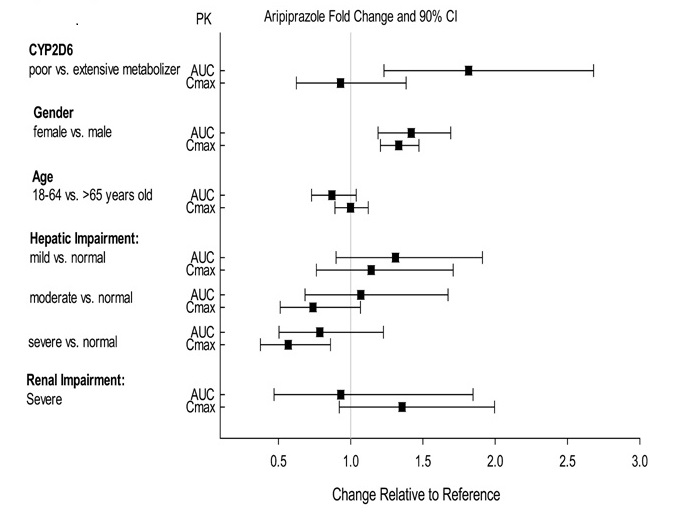
Figure 4 (Figure 4)

Figure 4 (Figure 4)
A forest plot chart titled 'Aripiprazole Fold Change and 90% CI' depicting pharmacokinetic (PK) changes in AUC and Cmax across different factors such as CYP2D6 metabolizer status, gender, age groups, hepatic impairment severity levels, and severe renal impairment. The x-axis represents the change relative to reference, ranging from 0.5 to 3.0, with point estimates and 90% confidence intervals shown for each comparison.*
FDA Label Image

Figure 5 (Figure 5)

Figure 5 (Figure 5)
A forest plot titled 'Dehydro-Aripiprazole Fold Change and 90% CI' showing pharmacokinetic (PK) comparisons of AUC and Cmax for various factors affecting Aripiprazole. The factors include CYP2D6 metabolizer status, gender, age, hepatic impairment levels, and severe renal impairment. The x-axis represents change relative to reference, with data points and confidence intervals for each comparison.*
FDA Label Image

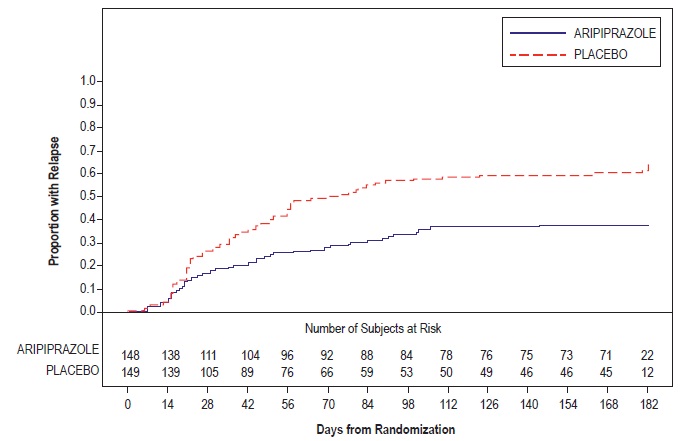
Figure 6 (Figure 6)

Figure 6 (Figure 6)
A Kaplan-Meier survival curve showing the proportion of subjects with relapse over time (days from randomization) comparing Aripiprazole and placebo groups. The graph includes a legend identifying Aripiprazole with a solid line and placebo with a dashed line. Below the x-axis, the number of subjects at risk is listed for both Aripiprazole and placebo at multiple time points up to 182 days.*
FDA Label Image

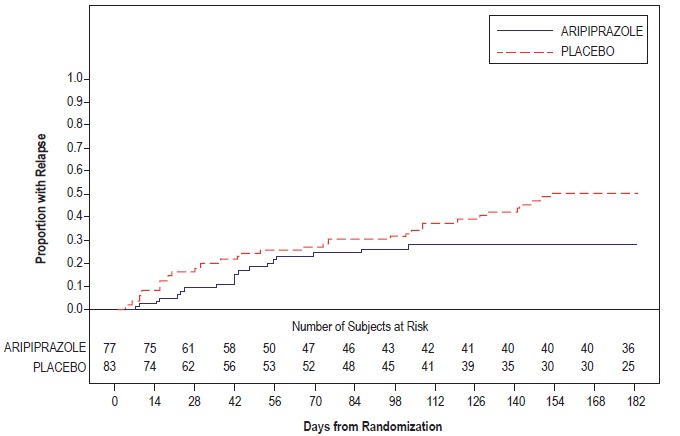
Figure 7 (Figure 7)

Figure 7 (Figure 7)
A Kaplan-Meier survival curve showing the proportion of subjects with relapse over 182 days from randomization for Aripiprazole versus placebo. The graph includes a risk table below indicating the number of subjects at risk in each group at various time points. The curve for Aripiprazole shows a lower proportion of relapse compared to placebo over time.*
FDA Label Image

Figure 8 (Figure 8)

Figure 8 (Figure 8)
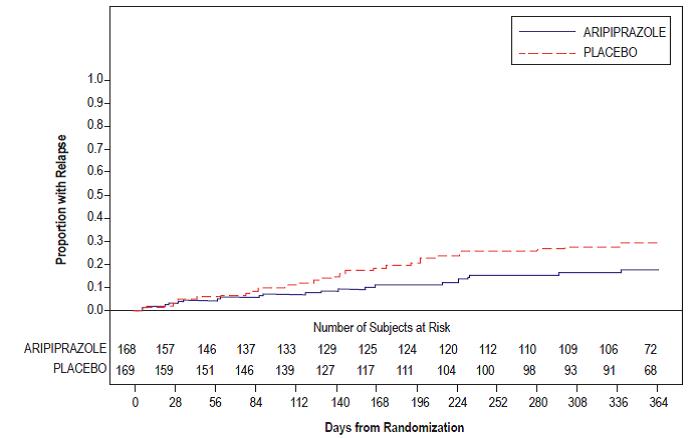
A survival curve graph comparing the proportion of subjects experiencing relapse over 364 days from randomization between Aripiprazole and placebo groups. The vertical axis represents the proportion with relapse, and the horizontal axis shows days. The graph includes the number of subjects at risk at various time points for both groups.*
FDA Label Image

Label10 (Label 10)

Label10 (Label 10)
Label for Aripiprazole Orally Disintegrating Tablets, USP, 10 mg strength, containing 30 tablets per bottle. The label indicates the product is distributed by Bionpharma Inc. and includes storage instructions, dosage directions to see accompanying literature, and a warning about phenylalanine content. The tablets are for oral administration and come in a child-resistant container, made in India.*
FDA Label Image

Label15 (Label 15)

Label15 (Label 15)
Label for Aripiprazole Orally Disintegrating Tablets, USP 15 mg. The label shows the strength as 15 mg and the package contains 30 orally disintegrating tablets. It includes a pharmacist note to dispense the Medication Guide separately. The product is distributed by Bionpharma Inc., Princeton, NJ, and manufactured in India. Storage instructions and caution statements are also visible.*
FDA Label Image

Molecular Structure (Molecular Structure)

Molecular Structure (Molecular Structure)
Chemical structure of aripiprazole, depicting its molecular configuration with chlorine atoms, piperazine ring, and other characteristic components as shown in the diagram.*

* About these descriptions: Image descriptions on this page are generated by automated AI analysis of the product label images from the manufacturer's FDA label submission (SPL). They are provided for reference only and may contain errors or omissions. Always rely on the printed label itself and the official FDA labeling, and consult a pharmacist or healthcare professional with any questions about this product.