Lynavoy Tablet, Film Coated
FDA Label NDC 69516-140

Full FDA labeling including Indications, Dosage, Usage, and Precautions

Structured Product Label

The following Structured Product Label (SPL) was submitted to the FDA by Intercept Pharmaceuticals Inc for the product Lynavoy (NDC 69516-140). This document serves as the official prescribing information, containing essential scientific data and clinical materials required for healthcare providers and patients.

This specific version of the label includes detailed information regarding 1 indications and usage, 2.1 recommended dosage, 2.2 administration modification for concomitant use with bile acid binding resins, 3 dosage forms and strengths, 4 contraindications, 5.1 liver test elevations, 5.2 diarrhea, 5.3 fat-soluble vitamin deficiency, and other regulatory disclosures. Use the navigation below to review specific sections of the FDA submission.

1 Indications And Usage

LYNAVOY is indicated for the treatment of cholestatic pruritus associated with primary biliary cholangitis (PBC) in adult patients.

Limitations of Use

Avoid use of LYNAVOY in patients with decompensated cirrhosis or those with prior or active hepatic decompensation events (e.g. variceal hemorrhage, ascites, hepatic encephalopathy) [see Use in Specific Populations (8.7), Clinical Pharmacology (12.3)].

2.1 Recommended Dosage

The recommended dosage of LYNAVOY is 40 mg orally twice daily. Swallow tablets whole at least 30 minutes before any food or beverage (other than water) [see Clinical Pharmacology (12.3)].

If a dose is missed, take the missed dose as soon as possible and at least 30 minutes before your next meal, then resume the original dosing schedule. If a dose is missed by more than 6 hours, skip the dose and resume the original dosing schedule. Do not take a double dose to make up for a missed dose.

3 Dosage Forms And Strengths

Tablets: 40 mg of linerixibat, purple, biconvex, round, film-coated tablets debossed with "GS 3JG" on one side.

4 Contraindications

None.

5.1 Liver Test Elevations

In Study 1, liver test elevations were observed more commonly in LYNAVOY-treated patients compared to placebo-treated patients [see Adverse Reactions (6.1)]. Obtain baseline liver tests (alanine aminotransferase [ALT], aspartate aminotransferase [AST], total bilirubin [TB], direct bilirubin [DB], alkaline phosphatase [ALP]) prior to initiating treatment with LYNAVOY and monitor the levels per standard clinical practice for PBC patients during treatment with LYNAVOY. If new liver test elevations occur, monitor ALT, AST, TB, DB, and ALP more frequently. If liver test elevations persist, discontinue LYNAVOY.

5.2 Diarrhea

Diarrhea was reported as the most common adverse reaction in patients treated with LYNAVOY [see Adverse Reactions (6.1)].

If diarrhea occurs, advise patients to monitor for dehydration. Consider interrupting or discontinuing LYNAVOY treatment if diarrhea persists.

5.3 Fat-Soluble Vitamin Deficiency

LYNAVOY may adversely affect absorption of fat-soluble vitamins (FSV). FSV include vitamins A, D, E, and K [see Adverse Reactions (6.1)].

Obtain serum FSV levels (vitamins A, D, and E) and INR prior to initiation of LYNAVOY and monitor the levels periodically during treatment, along with any clinical manifestations of FSV deficiency. Supplement with FSV if FSV deficiency is diagnosed. Consider discontinuing LYNAVOY if FSV deficiency persists or worsens despite adequate FSV supplementation.

Bleeding

Bleeding was observed more frequently in LYNAVOY-treated patients compared to placebo-treated patients [see Adverse Reactions (6.1)]. If bleeding occurs, interrupt LYNAVOY treatment and evaluate for potential FSV deficiency. LYNAVOY can be restarted if FSV deficiency is corrected, levels are maintained, and bleeding has resolved.

Bone Fracture

IBAT inhibitors have been associated with bone fractures. Monitor bone health and ensure adequate FSV levels.

6.1 Clinical Trials Experience

Because clinical trials are conducted under widely varying conditions, adverse reaction rates observed in the clinical trials of a drug cannot be directly compared with rates in the clinical trials of another drug and may not reflect the rates observed in practice.

The safety of LYNAVOY is based on Study 1, a randomized, double-blind, placebo-controlled, 24-week study of LYNAVOY 40 mg administered orally twice daily [see Clinical Studies (14)].

Drug discontinuation due to adverse reactions was seen more frequently in LYNAVOY-treated patients (14%) than in placebo-treated patients (5%). Diarrhea, abdominal pain, ALT increase, and AST increase were the most common causes of treatment discontinuation.

Common Adverse Reactions

Table 1 displays the most common adverse reactions that occurred in at least 5% of LYNAVOY-treated patients in Study 1.

Table 1. Adverse Reactions Occurring in ≥5% of Adult Patients with PBC Treated with LYNAVOY in Study 1 (24 weeks), Safety Dataset

Adverse reactions were only included in table above if they occurred more frequently in patients treated with LYNAVOY compared to placebo-treated patients.

Adverse ReactionLYNAVOY
(n = 119)
n (%)
Placebo
(n = 118)
n (%)
Diarrhea

Diarrhea includes diarrhea and frequent bowel movements.

74 (62)21 (18)
Abdominal pain

Abdominal pain includes abdominal pain, abdominal pain upper, abdominal pain lower, abdominal discomfort.

31 (26)12 (10)
Nausea12 (10)11 (9)
Increased alanine aminotransferase (ALT)11 (9)4 (3)
Hemorrhage

Hemorrhage includes contusion, ecchymosis, epistaxis, gastric hemorrhage, hematochezia, hemorrhagic disorder, intermenstrual bleeding, melena, petechiae, skin hemorrhage, vaginal hemorrhage, hematocrit decreased, and diarrhea hemorrhagic.

11 (9)3 (3)
Increased aspartate aminotransferase (AST)10 (8)1 (<1)
Headache10 (8)4 (3)
Dyspepsia9 (8)1 (<1)
Gastroesophageal reflux disease8 (7)5 (4)
Abdominal distension8 (7)6 (5)
Dizziness7 (6)4 (3)
Arthralgia7 (6)6 (5)

Less Common Adverse Reactions

Additional adverse reactions that occurred more frequently in the LYNAVOY group compared to placebo group, in less than <5% of patients, included hyperbilirubinemia, hypertriglyceridemia, urinary tract infections, and dry mouth.

Specific Adverse Reactions

Liver Test Elevations

In Study 1, liver test elevations (ALT, AST, TB, or ALP) were observed more commonly in LYNAVOY-treated patients 17 (14%) compared to placebo-treated patients 7 (6%). Six (5%) of LYNAVOY-treated patients discontinued treatment due to liver test elevations during the study, compared to 2 (2%) of placebo-treated patients. Elevations in ALT to more than 3 times baseline levels occurred in 8 (7%) of LYNAVOY-treated patients compared to 4 (3%) of placebo-treated patients. Elevations in TB to more than 2 times baseline levels occurred in 9 (8%) of LYNAVOY-treated patients compared to 3 (3%) of placebo-treated patients.

Diarrhea

In Study 1, diarrhea was observed in 74 (62%) of patients in the LYNAVOY-treated group compared to 21 (18%) in the placebo-treated group. Most diarrhea events occurred within the first 20 days of initiating treatment. Of those who experienced diarrhea, 56/74 (76%) of LYNAVOY-treated patients and 10/21 (48%) of placebo-treated patients, did so within the first 20 days. Of the patients who experienced diarrhea, most were mild (46/74, 62%) or moderate (25/74, 34%) with 4% (3/74) of cases being severe in the LYNAVOY-treated group compared to 62% (13/21) mild, 38% (8/21) moderate, and 0% severe cases in the placebo-treated group. Discontinuation of treatment due to diarrhea occurred in 4% of patients in the LYNAVOY-treated group compared to <1% in the placebo group.

Fat-Soluble Vitamin Deficiency

In Study 1, FSV deficiency was reported in 2 (2%) of LYNAVOY-treated patients compared to 1 (<1%) of placebo-treated patients during the 24 weeks of treatment.

7.1 Effects Of Bile Acid Binding Resins On Lynavoy

Instruct patients to take LYNAVOY at least 4 hours before or 4 hours after taking a bile acid binding resin [see Dosage and Administration (2.2)]. Based on in vitro data, bile acid resins may bind linerixibat in the gut [see Clinical Pharmacology (12.3)]. Concomitant use of bile acid binding resins with LYNAVOY can potentially inhibit the effects of LYNAVOY on the ileal bile acid transporter (IBAT).

8.1 Pregnancy

Risk Summary

There are no data on the use of LYNAVOY in pregnant women to inform a drug-associated risk of major birth defects, miscarriage, or other adverse maternal or fetal outcomes. Use of LYNAVOY during pregnancy is expected to result in minimal fetal exposure because systemic absorption following oral administration is low [see Clinical Pharmacology (12.3)]. Linerixibat may inhibit the absorption of fat-soluble vitamins [see Warnings and Precautions (5.3), Clinical Considerations]. In animal reproduction studies, in which linerixibat was administered orally to pregnant rabbits and rats during the period of organogenesis, no malformations or effects on embryo-fetal survival were reported at exposures 470 and 1,100 times the recommended human dose, respectively (see Data).

The background risk of birth defects and miscarriage for the indicated population is unknown. In the U.S. general population, the estimated background risk of major birth defects and miscarriage in clinically recognized pregnancies is 2% to 4% and 15% to 20%, respectively.

There is a pregnancy safety study that monitors pregnancy exposures and outcomes in women who have taken LYNAVOY during pregnancy. Pregnant women exposed to LYNAVOY, or their healthcare providers, should report LYNAVOY exposure by contacting Intercept Pharmaceuticals at 1-844-782-4278.

Clinical Considerations

Fetal/Neonatal Adverse Reactions

Linerixibat may inhibit the absorption of fat-soluble vitamins (FSV). FSV are essential for normal fetal growth and development. Monitor pregnant patients for FSV deficiency and supplement as needed. Increased supplementation of FSVs may be needed during pregnancy [see Warnings and Precautions (5.3)].

Data

Animal Data

No effects on embryo-fetal development were observed in pregnant rats treated orally with linerixibat up to 1,000 mg/kg/day (approximately 1,100 times the recommended dose based on AUC [area under the plasma concentration-time curve]) or in pregnant rabbits treated orally with linerixibat up to 125 mg/kg/day (approximately 470 times the recommended dose based on AUC) during the period of organogenesis. No effects on postnatal development were observed in a pre- and postnatal development study, in which female rats were treated orally with linerixibat up to 1,000 mg/kg/day during organogenesis through lactation. Maternal systemic exposure to linerixibat at the maximum dose tested was approximately 1,100 times the recommended human dose based on AUC.

8.2 Lactation

Risk Summary

Linerixibat has low absorption following oral administration, and exposure of the infant to linerixibat through breast milk is not expected at the recommended dosage [see Clinical Pharmacology (12.3)]. There are no data on the presence of linerixibat in human milk, effects on the breastfed infant, or effects on milk production. LYNAVOY may reduce absorption of fat-soluble vitamins [see Warning and Precautions (5.3)]. Monitor maternal FSV levels and increase FSV intake if FSV deficiency is observed during lactation.

The developmental and health benefits of breastfeeding should be considered along with the mother's clinical need for LYNAVOY and any potential adverse effects on the breastfed child from LYNAVOY or from the underlying maternal condition.

8.4 Pediatric Use

The safety and efficacy of LYNAVOY have not been established in pediatric patients.

8.5 Geriatric Use

Of the 119 patients that received LYNAVOY in Study 1, 25 (21%) were aged 65 years and older and 3 (3%) were aged 75 years and older [see Clinical Studies (14)]. No overall differences in safety or effectiveness were observed between patients 65 to less than 75 years of age and younger adult patients, but greater sensitivity of some older individuals cannot be ruled out [see Clinical Pharmacology (12.3)].

Clinical studies of LYNAVOY did not include sufficient numbers of patients aged 75 and older to determine whether they respond differently from younger adult patients.

8.6 Renal Impairment

The recommended dosage in patients with renal impairment is the same as in patients with normal renal function because systemic absorption of linerixibat is minimal and has negligible recovery in urine [see Clinical Pharmacology (12.3)]. The safety and effectiveness of LYNAVOY have not been studied in patients with severe renal impairment (estimated glomerular filtration rate [eGFR] <30 mL/min/1.73 m2), including those on hemodialysis.

8.7 Hepatic Impairment

The recommended dosage in patients with mild hepatic impairment (Child-Pugh A) is the same as in patients with normal hepatic function. The efficacy and safety of LYNAVOY have not been evaluated in patients with moderate and severe hepatic impairment (Child-Pugh B and C) with decompensated cirrhosis or those with decompensation events [see Clinical Pharmacology (12.3), Clinical Studies (14)]. Avoid use of LYNAVOY in patients with decompensated cirrhosis or those with prior or active decompensation events (e.g. variceal hemorrhage, ascites, hepatic encephalopathy).

10 Overdosage

Dose-dependent increases in the incidence of gastrointestinal adverse reactions have been observed with LYNAVOY dosages 4.5-fold higher than the recommended dosage.

There is no specific antidote for LYNAVOY. If an overdose occurs, discontinue LYNAVOY, monitor the patient for any signs and symptoms and institute general supportive measures as needed. Consider contacting the Poison Help line (1-800-222-1222) or a medical toxicologist for additional overdose management recommendations.

11 Description

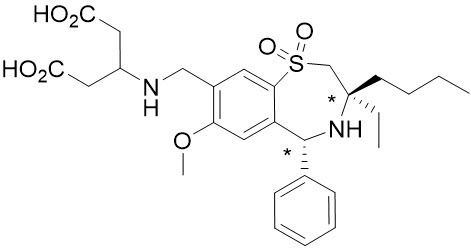
Linerixibat is an orally administered IBAT inhibitor. Linerixibat has the chemical name 3-((((3R,5R)-3-butyl-3-ethyl-7-methyloxy-1,1-dioxido-5-phenyl-2,3,4,5-tetrahydrobenzo[f][1,4]thiazepin-8-yl)methyl)amino)pentanedioic acid. The molecular formula of linerixibat is C28H38N2O7S with a molecular weight of 546.68 g/mol. Linerixibat has the following chemical structure:

"*" represent chiral centers.
Chemical Structure (Lynavoy 01)

Chemical Structure (Lynavoy 01)

Linerixibat is a white to off-white solid. Its solubility in aqueous solutions is pH-dependent and varies from very slightly to slightly soluble. LYNAVOY is available for oral administration as tablets containing 40 mg linerixibat and the following excipients: croscarmellose sodium, magnesium stearate and microcrystalline cellulose.

The tablet film-coating contains black iron oxide, hypromellose, polyethylene glycol, red iron oxide, and titanium dioxide.

12.1 Mechanism Of Action

Linerixibat is a reversible inhibitor of the ileal bile acid transporter (IBAT). It decreases the reabsorption of bile acids in the terminal ileum leading to their increased fecal elimination.

Cholestatic pruritus is a common symptom in patients with PBC, and the pathophysiology of pruritus in patients with PBC is not completely understood. Although the complete mechanism by which linerixibat improves pruritus in PBC patients is unknown, it may involve inhibition of the IBAT as observed by a decrease in mediators of pruritus including serum bile acids [see Clinical Pharmacology (12.2)].

12.2 Pharmacodynamics

Linerixibat reduces total serum bile acids in healthy volunteers and PBC patients with cholestatic pruritus. In healthy volunteers, serum bile acids were reduced within 1 day of LYNAVOY treatment compared to placebo treatment. In Study 1, total serum bile acids were reduced from baseline over the 24-week treatment period in the LYNAVOY group when compared to the placebo group.

12.3 Pharmacokinetics

Due to the low systemic absorption of linerixibat, pharmacokinetic parameters cannot be reliably calculated at the recommended doses. Following a single dose administration of 40 mg of linerixibat, concentrations of linerixibat in healthy volunteers were below the limit of quantification (10 pg/mL) in the majority of plasma samples. Following multiple doses of linerixibat ranging from 3 mg (0.08 times the approved recommended dose) twice daily to 90 mg (2.25 times the approved recommended dose) twice daily in healthy volunteers, the majority of plasma samples were below the limit of quantification (1,000 pg/mL).

Absorption

Linerixibat is minimally absorbed following oral administration and the absolute oral bioavailability of linerixibat is 0.05%. Following a single oral administration of linerixibat 40 mg in healthy adults under fasted conditions, median Tmax was 4.5 hours and mean linerixibat (%CV) Cmax and AUC0-t were 31.1 pg/mL (173) and 105 h∙pg/mL (419), respectively. Following multiple doses of LYNAVOY 40 mg twice daily in PBC patients with cholestatic pruritus, the mean linerixibat Cmax (95% CI) was 922 pg/mL (347, 1,500).

Effect of Food

Concomitant administration of a high-fat meal with a single dose of linerixibat 40 mg oral tablets delayed median Tmax from 4.5 hours to 8.0 hours and resulted in decreases of 21.9% and 33.7% in AUC0-t and Cmax, respectively, compared to administration under fasted conditions in healthy adults. Pharmacokinetic parameters in the food effect study were highly variable. The effect of food on the changes of systemic exposures to linerixibat is not clinically significant. Despite the lack of clinically important pharmacokinetic effects with food, LYNAVOY should be administered at least 30 minutes prior to food or beverage (other than water) to allow linerixibat to enter the gastrointestinal lumen prior to release of bile acids upon eating [see Dosage and Administration (2.1)].

Distribution

The in vitro plasma protein binding range of linerixibat was 71.0-76.4%.

Elimination

Following a single oral dose of linerixibat 90 mg (2.25 times the approved recommended dose) in healthy adults, the mean half-life (t1/2) was 6.76 hours.

Metabolism: Following administration of oral radiolabeled linerixibat, no linerixibat metabolites were detected in plasma. Three minor oxidative metabolites were detected in feces, and each accounted for negligible radioactivity (<1%), demonstrating that linerixibat is minimally metabolized in humans.

Excretion: Following administration of oral radiolabeled linerixibat, approximately 97% of the dose was excreted in feces; approximately 0.04% of the dose was excreted in urine. More than 99% of fecal radioactivity was determined to be unchanged and unabsorbed linerixibat. Following intravenous administration of radiolabeled linerixibat, systemic linerixibat elimination was approximately 20% renal and 80% fecal.

Specific Populations

No clinically significant differences in changes of total serum bile acid concentrations were observed with linerixibat based on body weight, age, sex, or race (White, Black, or Asian).

Patients with Hepatic Impairment: Of 238 patients enrolled in Study 1, 25 (11%) patients were diagnosed with cirrhosis (F4, Child-Pugh A), out of which 13 (5%) patients received linerixibat treatment. A general trend of higher exposure of linerixibat was observed in patients with cirrhosis compared to patients without cirrhosis, although the number of patients was very small. In a pharmacokinetic study in patients with moderate hepatic impairment (Child-Pugh B), the mean AUC(0-∞) and Cmax values were approximately 13-fold and 9.4-fold higher than matched healthy patients. The clinical significance of this increase is unknown. Pharmacokinetics of linerixibat have not been evaluated in patients with severe hepatic impairment (Child-Pugh C).

Drug Interaction Studies

Effect of Bile Acid Binding Resins on Linerixibat: Approximately 78% to 95% of linerixibat was bound to cholestyramine and colesevelam in in vitro studies. Cholestyramine and colesevelam can potentially inhibit the effects of linerixibat on IBAT [see Drug Interactions (7.1)].

Effect of Linerixibat on Ursodeoxycholic Acid (UDCA): In a dose-ranging study, adult PBC patients received placebo or linerixibat dosages ranging from 20 mg once a day (0.25 times the recommended dosage) to 90 mg twice a day (2.25 times the recommended dosage) for 12 weeks. In this clinical trial, concomitant administration of UDCA and linerixibat had no effect on UDCA plasma concentrations but reduced concentrations of UDCA conjugates, glyco-UDCA and tauro-UDCA, at 12 weeks of therapy. The concentrations of UDCA conjugates, glyco-UDCA and tauro-UDCA, were reduced by 69% and 90%, respectively, in patients receiving concomitant administration of UDCA with linerixibat versus with placebo. However, concomitant administration of UDCA with linerixibat resulted in no clinically significant increases in ALP over 12 weeks of treatment.

In in vitro studies, linerixibat did not inhibit cytochrome P450 (CYP)s 1A2, 2A6, 2B6, 2C8, 2C9, 2C19, 2D6, and 2E1, but was an inhibitor of CYP3A4. Due to the low fraction absorbed, an interaction is not likely. Linerixibat did not induce CYPs 1A2, 2B6, and 3A4.

In in vitro studies, linerixibat did not inhibit the transporters, P-glycoprotein (P-gp), breast cancer resistance protein (BCRP), organic anion transporters (OAT) 1 and 3, organic cation transporter (OCT) 2, and multidrug and toxin extrusion protein (MATE) 1 and 2K. In vitro studies suggest that there is a potential for linerixibat to inhibit organic anion transporter polypeptide 1B1 and 1B3 (OATP1B1 and OATP1B3). However, due to the low fraction absorbed, an interaction is not likely.
13.1 Carcinogenesis, Mutagenesis, Impairment Of Fertility

Carcinogenesis

Linerixibat was not tumorigenic in a 2-year oral carcinogenicity study in rats with oral administration of up to 1,000 mg/kg/day (approximately 3,900 times the recommended dose based on AUC). In a 26-week oral carcinogenicity study in TgRasH2 mice, no drug-related tumors were observed following administration of linerixibat up to 160 mg/kg/day.

Mutagenesis

Linerixibat was negative in in vitro (bacterial reverse mutation, chromosomal aberration in mammalian cells) and in vivo (rat bone marrow micronucleus) assays.

Impairment of Fertility

No effects on fertility or early embryonic development were observed in male and female rats treated orally with linerixibat up to 1,000 mg/kg/day.

14 Clinical Studies

The efficacy of LYNAVOY was evaluated in Study 1 (GLISTEN, NCT04950127), a 24-week, randomized, double-blind, placebo-controlled trial. The study included 238 adult patients, aged 30 to 80 years, with a confirmed diagnosis of PBC and presence of pruritus at baseline. Patients were randomized to LYNAVOY 40 mg orally twice daily (N = 119) or placebo (N = 119) for 24 weeks. At baseline, 97% of patients were receiving UDCA, and 47% of patients were receiving concomitant antipruritic drugs. Thirteen (11%) of LYNAVOY-treated and 12 (10%) of placebo-treated patients had compensated liver cirrhosis (F4, Child-Pugh A).

Baseline Demographics and Characteristics

The mean age of patients in Study 1 was 55.8 years (range 30 to 80); 95% were female, 62% were White, 30% were Asian, 3% were American Indian or Alaska Native, and <1% were Black. Twenty-three percent of patients were Hispanic or Latino.

Patients were excluded from the study if they had hepatic decompensation, chronic viral hepatitis, symptomatic cholelithiasis, active cholecystitis, primary sclerosing cholangitis, alcoholic liver disease, bariatric surgery with ileal bypass, clinically significant diarrhea, or severe renal impairment (eGFR <30 mL/min/1.73 m2).

Baseline liver tests are presented in Table 2.

Table 2: Baseline Liver Tests in Adults with PBC in Study 1
CharacteristicsOverall (N=238)
ALP (IU/L

IU/L = International Unit per Liter

)
   Mean (range)234 (46.5 to 1,102)
   ≤ 1 times ULN24%
   > 1 times ULN and <1.67 times ULN29%
   ≥1.67 times ULN48%
TB (mg/dL)
   Mean (range)0.69 (0.15 to 2.76)
   ≤ 1 times ULN87%
   > 1 times ULN13%

Efficacy Assessments

Itch Severity

Patients rated their worst itch severity twice daily (in the morning and evening) using the 11-point Worst Itch Numeric Rating Scale (NRS), with possible scores ranging from 0 (no itching) to 10 (worst imaginable itching).

  • The Worst Daily Itch Score was computed as the worst (highest) of the two scores recorded in a day.
  • The Weekly Itch Score was computed as the average of the Worst Daily Itch Scores across the 7 days in a week.
  • The Monthly Itch Score was computed as the worst (highest) Weekly Itch Score within a 4-week period.
  • Patients were included in Study 1 if their Monthly Itch Score in the 4 weeks preceding randomization was 4 or greater. The mean (SD) Monthly Itch Score at baseline was 7.3 (1.5).

    Sleep Interference

    Sleep interference due to pruritus was assessed each morning using the 11-point Sleep Interference NRS, with possible scores ranging from 0 (did not interfere) to 10 (completely interfered).

    • The Weekly Sleep Score was computed as the average of the daily sleep scores recorded over the 7 days in a week.
    • The Monthly Sleep Score was computed as the worst (highest) Weekly Sleep Score within a 4-week period.
    • The mean (SD) Monthly Sleep Score at baseline was 6.3 (2.4).

      Efficacy Results

      Worst Itch Severity

      Table 3 presents the efficacy results for LYNAVOY and placebo treatment groups, based on the primary endpoint of change from baseline in Monthly Itch Score over 24 weeks. Patients who received LYNAVOY demonstrated a greater improvement from baseline in pruritus compared with placebo over 24 weeks of treatment.

      Table 3. Efficacy Results for Monthly Itch Score

      The Monthly Itch Score was computed as the worst (highest) Weekly Itch Score within a 4-week period.

      in Adults with PBC Over 24 Weeks in Study 1
       LYNAVOY
      (n = 119)
      Placebo
      (n = 118)
      SD=Standard Deviation, LS = Least Squares; SE=Standard Error; CI=Confidence Interval.
      Baseline Monthly Itch Score7.337.36
      Mean (SD) (1.63)(1.45)
      Change from Baseline in Monthly Itch Score Over 24 Weeks

      Based on least squares means from a mixed-effect model for repeated measures with terms for treatment, visit, treatment by visit interaction, baseline itch, baseline itch by visit interaction, and use of baseline concomitant itch medication.

      Change from Baseline LS Mean (SE)-2.86-2.15
      (0.19)(0.18)
      LS Mean Difference vs. Placebo-0.72 (-1.15, -0.28)
      (95% CI)p-value = 0.001

      There was greater improvement from baseline in pruritus measured by weekly itch score at Week 2 for patients who received LYNAVOY compared with placebo (LS mean difference -0.71 [-1.07, -0.34], p-value<0.001).

      Pruritus-Related Sleep Interference

      Table 4 presents the efficacy results for LYNAVOY and placebo treatment groups based on the secondary endpoint, change from baseline in Monthly Sleep Score over 24 weeks. Patients who received LYNAVOY demonstrated greater improvement in pruritus-related sleep interference compared with placebo over 24 weeks of treatment.

      Table 4. Efficacy Results for Monthly Sleep Score in Adults with PBC Over 24 Weeks in Study 1
      LYNAVOY
      (n = 119)
      Placebo
      (n = 118)
      SD=Standard Deviation; LS = Least Squares; SE=Standard Error; CI=Confidence Interval
      Baseline Monthly Sleep Score6.296.33
      Mean (SD) (2.69)(2.10)
      Change from Baseline in Monthly Sleep Score Over 24 Weeks

      Based on least squares mean from a mixed-effects model for repeated measures for change from baseline in Monthly Sleep Score over the 24-week period with terms for treatment, visit, treatment by visit interaction, baseline itch, baseline itch by visit interaction, and use of baseline concomitant itch medication.

      Change from Baseline LS Mean-2.77-2.24
      (SE)(0.20)(0.19)
      Mean Difference vs. Placebo-0.53
      (95% CI)(-0.98, -0.07)
      p-value = 0.024

16 How Supplied/Storage And Handling

How Supplied

LYNAVOY (linerixibat) tablets, 40 mg, are purple, biconvex, round, film-coated tablets debossed with "GS 3JG" on one side and are supplied in bottles of 60 tablets (NDC 69516-140-60).

LYNAVOY is packaged in white high density polyethylene (HDPE) bottles with polypropylene child-resistant closures and a polyethylene faced induction heat seal liner containing a HDPE canister with silica gel desiccant.

Storage And Handling

Storage and Handling

Store at 20°C to 25°C (68°F to 77°F); excursions are permitted between 15°C to 30°C (59°F to 86°F) [see USP Controlled Room Temperature].

Store in the original package to protect from moisture. Keep the bottle tightly closed.

17 Patient Counseling Information

Advise the patient to read the FDA-approved patient labeling (Patient Information).

Administration Instructions

  • Instruct patients to take LYNAVOY at least 30 minutes before any food or beverage (other than water) [see Dosage and Administration (2.1)].
  • Instruct patients that if they miss a dose of LYNAVOY to take it as soon as possible and at least 30 minutes before their next meal, then resume the original dosing schedule. If a dose is missed by more than 6 hours, skip the dose and resume the original dosing schedule. Advise patients to not take a double dose to make up for a missed dose [see Dosage and Administration (2.1)].
  • Instruct patients to take LYNAVOY at least 4 hours before or 4 hours after taking a bile acid binding resin [see Drug Interactions (7.1)].
  • Liver Test Abnormalities

    Advise patients that their healthcare provider will obtain liver tests before starting LYNAVOY and periodically during treatment with LYNAVOY [see Warnings and Precautions (5.1)].

    Diarrhea

    Advise patients to monitor for dehydration. Consider interrupting or discontinuing LYNAVOY treatment if diarrhea persists. [see Warnings and Precautions (5.2)].

    Fat-Soluble Vitamin (FSV) Deficiency

    Advise patients that INR (for vitamin K) and serum levels of vitamins A, D, E will be obtained before starting treatment and periodically during treatment to assess for FSV deficiency [see Warnings and Precautions (5.3)]. Inform patients that they may bleed more easily or may bleed longer, and could develop bone fractures. Advise patients to call their healthcare provider for any signs or symptoms of bleeding, or if they have a bone fracture.

    Pregnancy

    Inform patients that there is a pregnancy safety study tracking pregnancy exposures and outcomes with LYNAVOY. Ask pregnant women to report LYNAVOY exposure by contacting Intercept Pharmaceuticals at 1-844-782-4278.

    LYNAVOY is a trademark of GSK Group of Companies licensed to Intercept Pharmaceuticals, Inc.

Other

Manufactured for

Intercept Pharmaceuticals, Inc., a wholly owned subsidiary of Alfasigma S.p.A. Morristown, NJ 07960

©2026 GSK group of companies or its licensor.

LYN:1PI

Spl Patient Package Insert

PATIENT INFORMATION
LYNAVOY [LIN-ah-voy]
(linerixibat)
tablets, for oral use
This Patient Information has been approved by the U.S. Food and Drug Administration Issued: March 2026
What is LYNAVOY?
  • LYNAVOY is a prescription medicine used to treat itching (pruritus) in adults with primary biliary cholangitis (PBC).
  • LYNAVOY is not for use in people with severe liver disease (decompensated cirrhosis), or people who have or have had certain liver-related problems including bleeding of enlarged blood vessels in the stomach-area (variceal hemorrhage), fluid in the stomach-area (ascites), or nervous system problems (such as confusion, slurred speech, sluggish movements) caused by severe liver disease (hepatic encephalopathy).
  • It is not known if LYNAVOY is safe and effective in children.
Before using LYNAVOY, tell your healthcare provider about all of your medical conditions, including if you:
  • are pregnant or plan to become pregnant. It is not known if LYNAVOY will harm your unborn baby.
    • Pregnancy Safety Study: Pregnancy outcomes in women who become pregnant while using LYNAVOY is being collected. The purpose of this is to collect information about your health and your baby's health. You or your healthcare provider should report your pregnancy by calling1-844-782-4278.
    • are breastfeeding or plan to breastfeed. It is not known if LYNAVOY passes into your breast milk. Talk to your healthcare provider about the best way to feed your baby while using LYNAVOY.
    • Tell your healthcare provider about all the medicines you take, including prescription and over-the-counter medicines, vitamins, and herbal supplements. LYNAVOY and certain other medicines may interact with each other. Especially tell your healthcare provider if you take:
      • bile acid binding resins (used to reduce absorption of bile acids from the intestine), such as cholestyramine or colesevelam. These may reduce the effects of LYNAVOY. If you take any of these medicines, take LYNAVOY at least 4 hours before or 4 hours after taking a bile acid binding resin.
      • Know the medicines you take. Keep a list of them to show your healthcare provider and pharmacist when you get a new medicine.
How should I use LYNAVOY?
  • Always take LYNAVOY exactly as your healthcare provider has told you to. Check with your healthcare provider if you are not sure.
  • Take 1 LYNAVOY tablet by mouth 2 times each day (1 tablet in the morning and 1 tablet in the evening).
  • Swallow the tablet whole with some water.
  • Take LYNAVOY at least 30 minutes before you have any food or drink (except water).
  • If you take a bile acid binding resin such as cholestyramine or colesevelam, take it at least 4 hours before or 4 hours after taking LYNAVOY.
  • If you miss a dose of LYNAVOY, take it as soon as possible and at least 30 minutes before your next meal. If more than 6 hours have passed, skip the missed dose and take the next dose at the regular time. Don't take a double dose to make up for a missed dose.
  • If you take too much LYNAVOY, call your healthcare provider, Poison Help line at 1-800-222-1222, or go to the nearest hospital emergency room right away.
 What are the possible side effects of LYNAVOY?
LYNAVOY may cause serious side effects, including:
  • Increased liver enzymes. An increase in liver enzymes (liver-related blood tests) can happen in people who use LYNAVOY and can be serious. Your healthcare provider will do blood tests to check your liver before starting treatment and as needed during treatment with LYNAVOY. Your healthcare provider may need to stop your treatment with LYNAVOY because of an increase in liver enzymes.
  • Diarrhea. Diarrhea can happen in people who use LYNAVOY and can be serious. Diarrhea can cause a loss of body fluid (dehydration). Check for signs of dehydration including thirst, dry mouth, urinating less often, or headache. Call your healthcare provider if you have diarrhea that does not go away.
  • Fat-Soluble Vitamin (FSV) Deficiency. A condition called FSV deficiency caused by low levels of certain vitamins (vitamin A, D, E, and K) stored in body fat, can happen with LYNAVOY. Your healthcare provider will do blood tests for FSV deficiency before starting and during treatment with LYNAVOY. People with FSV deficiency can bleed more easily or bleed longer or may develop bone fractures. Call your healthcare provider if you have bleeding problems or a bone fracture while using LYNAVOY.
  • The most common side effects of LYNAVOY include:
  
  • diarrhea
  • stomach pain
  • nausea
  • bleeding
  • increased liver enzymes (ALT, AST)
  • headache
  • upset stomach
  • gastroesophageal reflux disease
  • stomach bloating
  • dizziness
  • joint pain
 These are not all the possible side effects of LYNAVOY.
Call your doctor for medical advice about side effects. You may report side effects to FDA at 1-800-FDA-1088.
How should I store LYNAVOY?
 
  • Store LYNAVOY at room temperature between 20° to 25°C (68° to 77°F), in the original package to protect from moisture.
  • Keep the bottle tightly closed.
  • LYNAVOY bottles contain a desiccant canister (drying agent) to help keep the medicine dry. Do not remove or swallow the desiccant canister.
Keep LYNAVOY and all medicines out of the reach of children.
General information about the safe and effective use of LYNAVOY.
Medicines are sometimes prescribed for purposes other than those listed in a Patient Information leaflet. Do not use LYNAVOY for a condition for which it was not prescribed. Do not give LYNAVOY to other people, even if they have the same symptoms that you have. It may harm them. You can ask your healthcare provider or pharmacist for information about LYNAVOY that is written for health professionals.
What are the ingredients in LYNAVOY?
Active ingredients: linerixibat 40 mg
Inactive ingredients: croscarmellose sodium, magnesium stearate and microcrystalline cellulose.
Tablet film-coating: black iron oxide, hypromellose, polyethylene glycol, red iron oxide, and titanium dioxide.
For more information about LYNAVOY, call 1-844-782-4278 or visit our website at www.lynavoy.com.
LYNAVOY is a trademark of GSK Group of Companies licensed to Intercept Pharmaceuticals, Inc.
Manufactured for:
Intercept Pharmaceuticals, Inc., a wholly owned subsidiary of Alfasigma S.p.A. Morristown, NJ 07960
©2026 GSK group of companies or its licensor.
LYN:1PIL

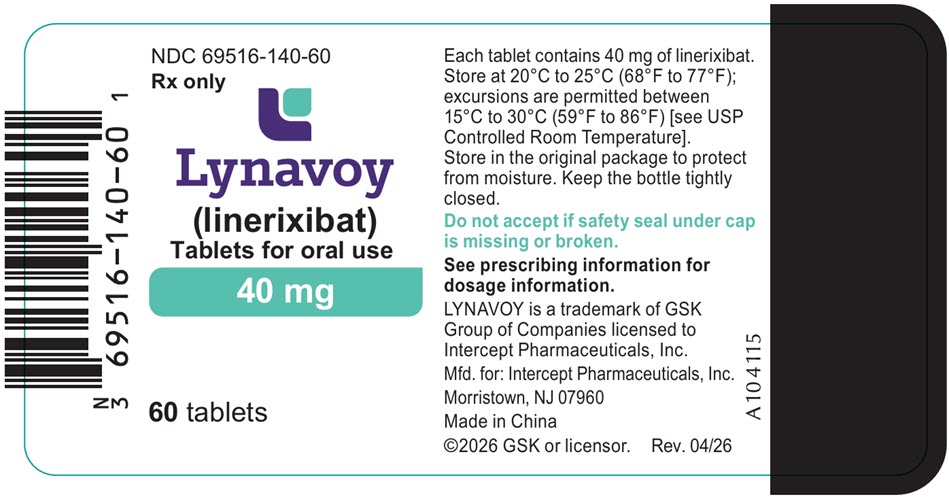
Principal Display Panel - 40 Mg Tablet Bottle Label

NDC 69516-140-60
Rx only

Lynavoy
(linerixibat)

Tablets for oral use

40 mg

60 tablets

Principal Display Panel (40 mg Tablet Bottle Label)

Principal Display Panel (40 mg Tablet Bottle Label)

* Please review the disclaimer below.