Paroxetine Hydrochloride Tablet, Film Coated
Product Images NDC 69584-673

View Photos of Packaging, Regulatory Labels, and Product Appearance

Product Visual Gallery

This gallery contains 8 technical images submitted to the FDA as part of the official labeling for Paroxetine Hydrochloride (NDC 69584-673). Unlike standard consumer photos, these assets often include clinical data figures, molecular chemical structures, and official manufacturer packaging layouts.

As provided by Oxford Pharmaceuticals, Llc, these visuals offer a comprehensive scientific overview of the product's physical and chemical identity, aiding pharmacists and researchers in product verification and study.

FDA Label Image

10mg Label (10mg Label)
10mg Label (10mg Label)
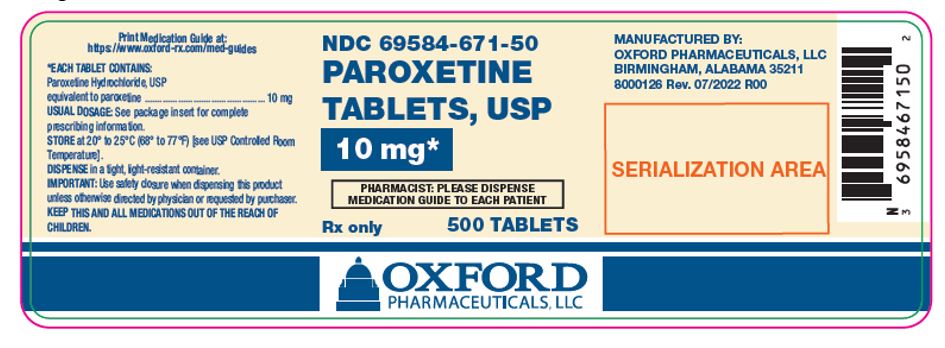
Label for paroxetine hydrochloride tablets USP 10 mg, film coated, oral dosage form. The label indicates a package size of 500 tablets and is manufactured by Oxford Pharmaceuticals, LLC in Birmingham, Alabama. It includes storage instructions, a note to dispense a medication guide to each patient, and a serialization area with a barcode on the right.*
FDA Label Image

20mg Label (20mg Label)

20mg Label (20mg Label)
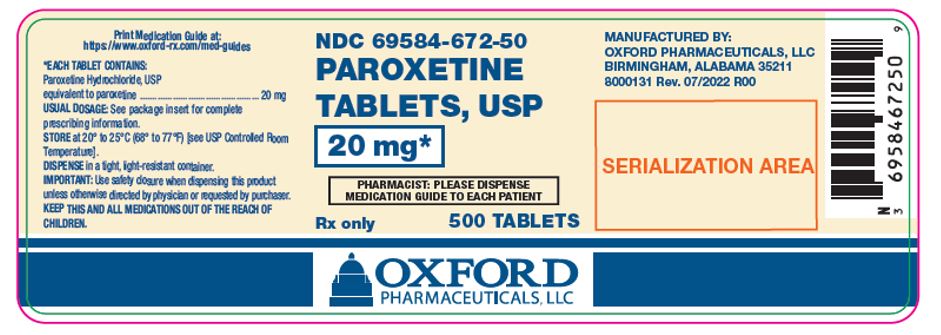
This packaging label is for paroxetine hydrochloride tablets, USP, 20 mg strength, film-coated, oral dosage form. The label indicates a bottle containing 500 tablets, manufactured by Oxford Pharmaceuticals, LLC in Birmingham, Alabama. It includes the NDC 69584-672-50, a barcode, and instructions for safe medication dispensing and storage.*
FDA Label Image

30mg Label (30mg Label)

30mg Label (30mg Label)
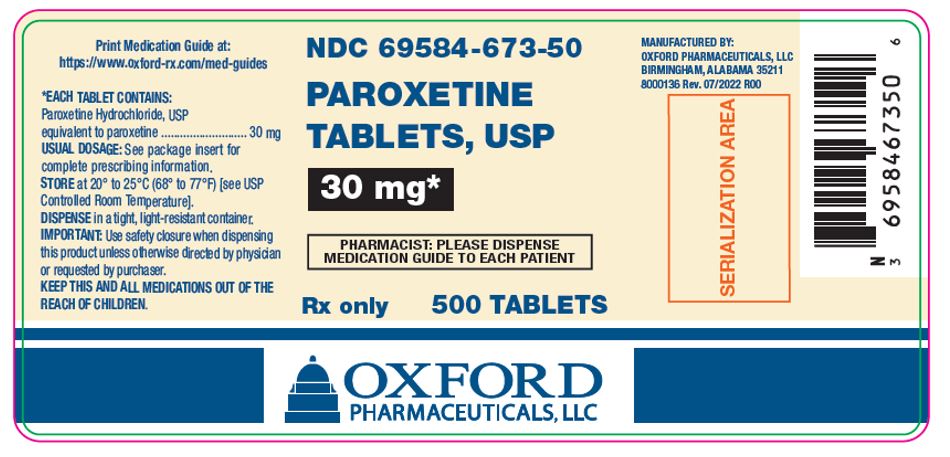
Paroxetine tablets USP 30 mg, film-coated oral tablets in a 500-tablet bottle label from Oxford Pharmaceuticals, LLC. The label includes the NDC 69584-673-50, dispensing instructions, storage conditions, and manufacturer details in Birmingham, Alabama. It emphasizes dispensing a medication guide to each patient and safekeeping out of children’s reach.*
FDA Label Image

40mg Label (40mg Label)

40mg Label (40mg Label)
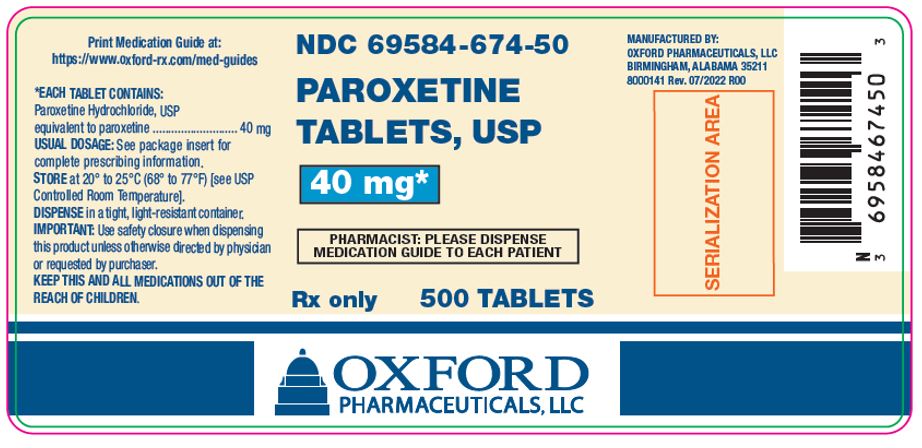
Label for Paroxetine Tablets, USP 40 mg manufactured by Oxford Pharmaceuticals, LLC. The label states the NDC 69584-674-50 and contains 500 film-coated oral tablets. It instructs pharmacists to dispense a medication guide with each patient and includes storage and safety information.*
FDA Label Image

Figure1 (Figure1)

Figure1 (Figure1)
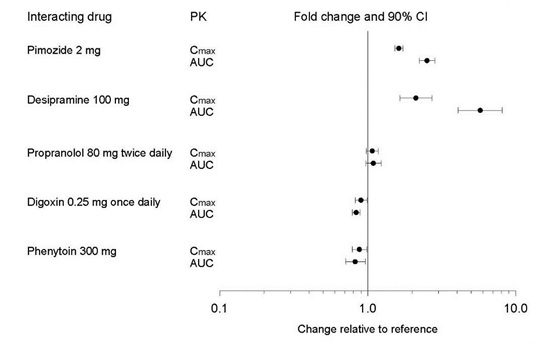
A pharmacokinetic chart showing fold change and 90% confidence intervals for Cmax and AUC values of paroxetine hydrochloride when co-administered with interacting drugs: Pimozide 2 mg, Desipramine 100 mg, Propranolol 80 mg twice daily, Digoxin 0.25 mg once daily, and Phenytoin 300 mg. The x-axis represents change relative to reference on a logarithmic scale from 0.1 to 10.*
FDA Label Image

Figure2 (Figure2)

Figure2 (Figure2)
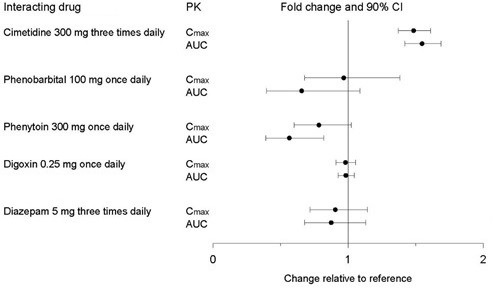
A pharmacokinetic chart showing fold change and 90% confidence intervals in Cmax and AUC for various interacting drugs, including Cimetidine, Phenobarbital, Phenytoin, Digoxin, and Diazepam, each administered at specific dosages and frequencies. The x-axis represents change relative to reference, ranging from 0 to 2.*
FDA Label Image

Figure3 (Figure3)

Figure3 (Figure3)
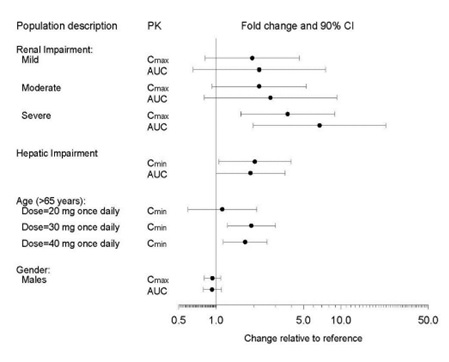
A forest plot showing fold change and 90% confidence intervals for pharmacokinetic parameters (Cmax, AUC, Cmin) across different population subgroups for paroxetine hydrochloride. Populations include varying degrees of renal impairment, hepatic impairment, age groups over 65 years at different dosages, and gender (males). The x-axis represents change relative to reference on a logarithmic scale from 0.5 to 50.*
FDA Label Image

Structure (Structure)

Structure (Structure)
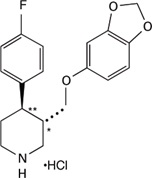
Chemical structure of paroxetine hydrochloride displayed, showing its molecular arrangement with distinct chemical bonds and elements, including a fluorophenyl group and a piperidine ring.*

* About these descriptions: Image descriptions on this page are generated by automated AI analysis of the product label images from the manufacturer's FDA label submission (SPL). They are provided for reference only and may contain errors or omissions. Always rely on the printed label itself and the official FDA labeling, and consult a pharmacist or healthcare professional with any questions about this product.