Cvs Iodine Liquid
Product Images NDC 69842-213

View Photos of Packaging, Regulatory Labels, and Product Appearance

Product Visual Gallery

This gallery contains 2 technical images submitted to the FDA as part of the official labeling for Cvs Iodine (NDC 69842-213). Unlike standard consumer photos, these assets often include clinical data figures, molecular chemical structures, and official manufacturer packaging layouts.

As provided by Cvs Pharmacy, these visuals offer a comprehensive scientific overview of the product's physical and chemical identity, aiding pharmacists and researchers in product verification and study.

Product Images & Figures Index

FDA Label Image

Cvs Iodine

Cvs Iodine
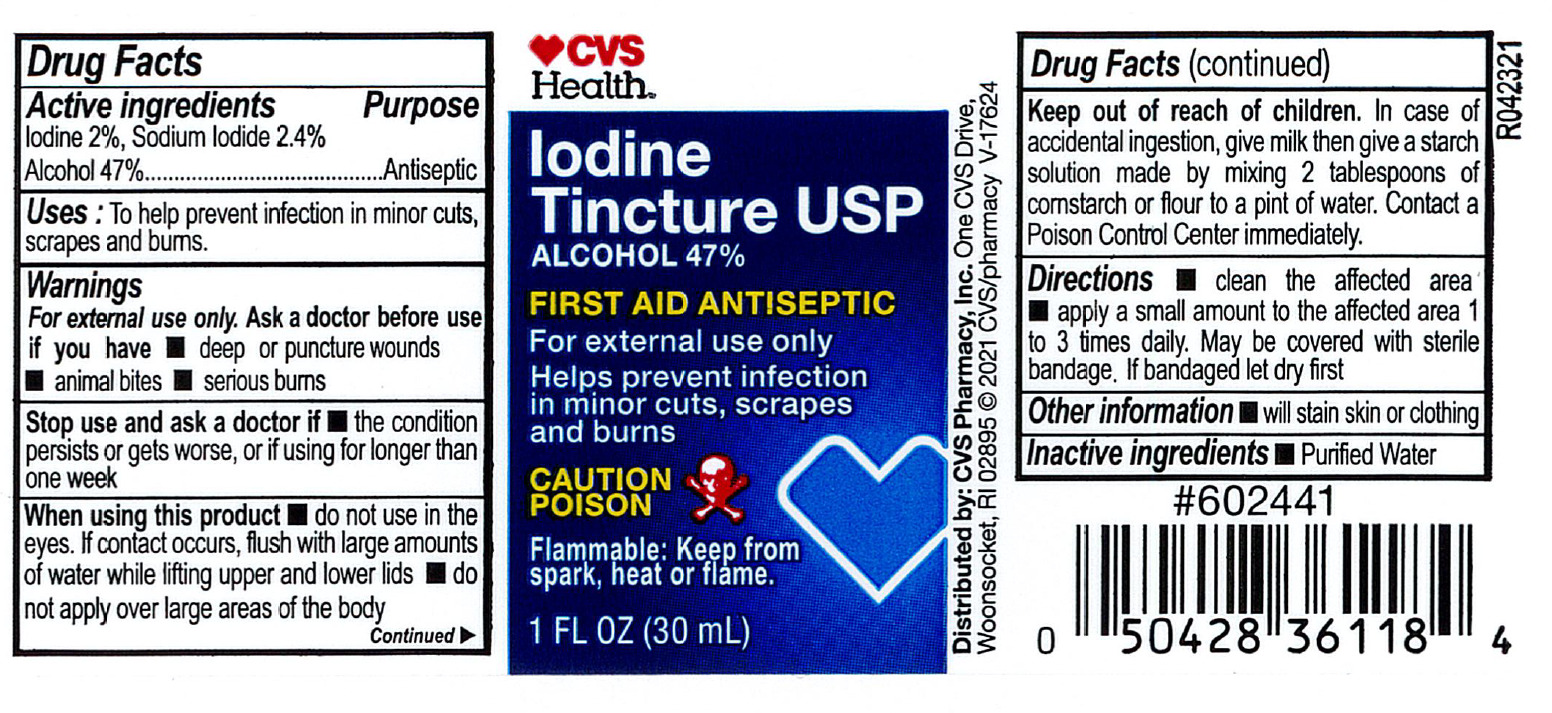
This is a Drug Facts label for an antiseptic solution containing 2% Iodine and 2.4% Sodium Iodide. The solution can be used to prevent infection in minor cuts, scrapes, and burns. It is for external use only and should not be used in the eyes. In case of accidental ingestion, give milk followed by a starch solution and contact a Poison Control Center immediately. It comes with specific directions to clean the affected area and apply it 1 to 3 times daily, after which it can be covered with a sterile bandage. It is distributed by CVS Pharmacy, Inc. and comes in a 1FL oz (30 mL) container.*
FDA Label Image

Capture

Capture
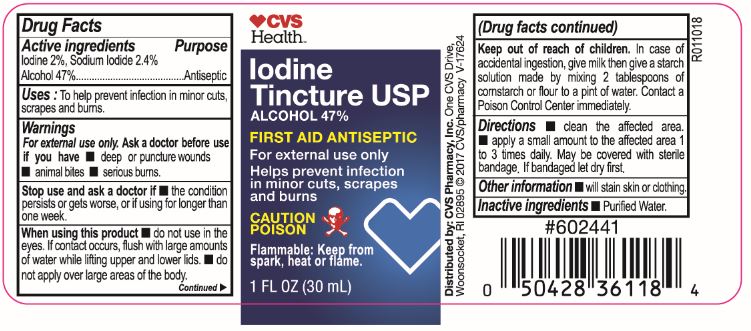
This appears to be the drug facts label for an antiseptic solution containing alcohol as the active ingredient. It is designed for external use only to help prevent infection in minor cuts, scrapes and burns. The label offers warnings, such as avoiding use on deep or puncture wounds, animal bites, or serious burns. In case of accidental ingestion, the user is advised to contact a Poison Control Center immediately. This antiseptic solution should not be applied to the eyes and should not be used over large areas of the body. The label recommends cleaning the affected area before applying the solution one to three times daily and covering with a sterile bandage.*

* These product label images have been analyzed using experimental machine learning. Please verify findings with the primary label text.