A guide for dosing AFSTYLA during surgery (perioperative management of bleeding) is provided in Table 2. Consideration should be given to maintaining a Factor VIII activity at or above the target range.
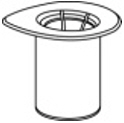
- Ensure that the AFSTYLA vial and diluent vial are at room temperature. Prepare and administer using aseptic technique.
- Place the AFSTYLA vial, diluent vial, and Mix2Vial® transfer set on a flat surface.
- Remove AFSTYLA and diluent vial flip caps. Wipe the stoppers with the sterile alcohol swab provided and allow the stoppers to dry prior to opening the Mix2Vial transfer set package.
- Open the Mix2Vial transfer set package by peeling away the lid (Fig. 1). Leave the Mix2Vial transfer set in the clear package.
Fig. 1 - Place the diluent vial on a flat surface and hold the vial tightly. Grip the Mix2Vial transfer set together with the clear package and push the plastic spike at the blue end of the Mix2Vial transfer set firmly through the center of the stopper of the diluent vial (Fig. 2).
Fig. 2 - Carefully remove the clear package from the Mix2Vial transfer set. Make sure that you pull up only the clear package, not the Mix2Vial transfer set (Fig. 3).
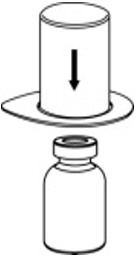
Fig. 3 - With the AFSTYLA vial placed firmly on a flat surface, invert the diluent vial with the Mix2Vial transfer set attached and push the plastic spike of the transparent adapter firmly through the center of the stopper of the AFSTYLA vial (Fig. 4). The diluent will automatically transfer into the AFSTYLA vial.
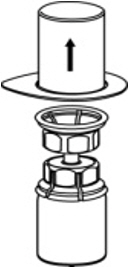
Fig. 4 - With the diluent and AFSTYLA vial still attached to the Mix2Vial transfer set, gently swirl the AFSTYLA vial to ensure that the AFSTYLA is fully dissolved (Fig. 5). Do not shake the vial.
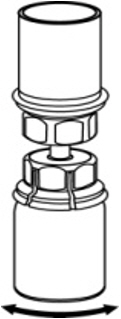
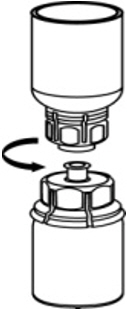
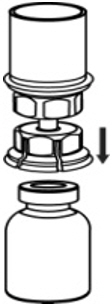
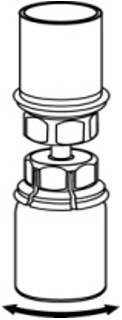
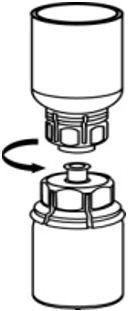
Fig. 5 - With one hand, grasp the AFSTYLA side of the Mix2Vial transfer set and with the other hand grasp the blue diluent-side of the Mix2Vial transfer set, and unscrew the set into two pieces. (Fig. 6).
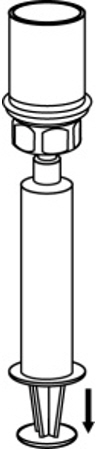
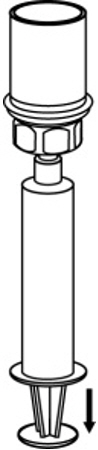
Fig. 6 - Draw air into an empty, sterile syringe. While the AFSTYLA vial is upright, screw the syringe to the Mix2Vial transfer set. Inject air into the AFSTYLA vial. While keeping the syringe plunger pressed, invert the system upside down and draw the concentrate into the syringe by pulling the plunger back slowly. (Fig. 7).
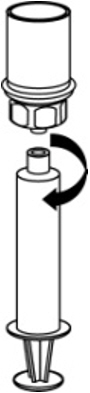
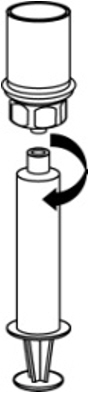
Fig. 7 - Now that the concentrate has been transferred into the syringe, firmly grasp the barrel of the syringe (keeping the plunger facing down) and unscrew the syringe from the Mix2Vial transfer set (Fig. 8).
Fig. 8 - After reconstitution, infuse immediately or within 4 hours. Reconstituted AFSTYLA may be stored at room temperature, not to exceed 25°C (77°F), for up to 4 hours. Do not freeze. Protect from direct sunlight.
- Record treatment – Remove the peel-off portion of the label from each vial used, and affix it to the patient's treatment diary/log book or scan the vial if recording the infusion electronically.
- If the dose requires more than one vial, use a separate, unused Mix2Vial® transfer set for each product vial. Repeat step 10 to pool the contents of the vial into one syringe.
Risk Summary
There are no data with AFSTYLA use in pregnant women to inform on drug-associated risk. No developmental or animal reproduction toxicity studies were conducted with AFSTYLA. Thus, the risk of developmental toxicity including, structural abnormalities, embryo-fetal and/or infant mortality, functional impairment, and alterations to growth is not known. In the US general population, the estimated background risk of major birth defects occurs in 2-4% of the general population and miscarriage occurs in 15-20% of clinically recognized pregnancies.
Risk Summary
There is no information regarding the excretion of AFSTYLA in human milk, the effect on the breastfed infant, or the effects on milk production. The developmental and health benefits of breastfeeding should be considered along with the mother's clinical need for AFSTYLA and any potential adverse effects on the breastfed infant from AFSTYLA or from the underlying maternal condition.
Subjects ≥12 years
The pharmacokinetics (PK) of AFSTYLA were evaluated in 91 (81 adults ≥18 years and 10 adolescents ≥12 to <18 years) previously treated subjects following an intravenous injection of a single dose of 50 IU/kg.
The PK parameters (Table 5) were based on plasma Factor VIII activity measured by the chromogenic assay after the first dose (initial PK assessment). The PK profile obtained 3 to 6 months after the initial PK assessment was comparable with the PK profile obtained after the first dose.
Table 5. Pharmacokinetic Parameters (Arithmetic Mean, Coefficient of Variation [CV%]) in Adults and Adolescents Following a Single Injection of 50 IU/kg of AFSTYLA - Chromogenic Assay| PK Parameters | ≥18 years
(N=81) | ≥12 to <18 years
(N=10) |
|---|
| IR = incremental recovery recorded at 30 minutes after injection; Cmax = observed maximum plasma concentration; AUC0-inf = area under the Factor VIII activity time curve extrapolated to infinity; t1/2 = half-life; MRT = mean residence time; CL = body weight adjusted clearance; Vss = body weight adjusted volume of distribution at steady-state. |
| IR (IU/dL)/(IU/kg) | 2.00 (20.8) | 1.69 (24.8) |
| Cmax (IU/dL) | 106 (18.1) | 89.7 (24.8) |
| AUC0-inf (IU*h/dL) | 1960 (33.1) | 1540 (36.5) |
| t1/2 (h) | 14.2 (26.0) | 14.3 (33.3) |
| MRT (h) | 20.4 (25.8) | 20.0 (32.2) |
| CL (mL/h/kg) | 2.90 (34.4) | 3.80 (46.9) |
| Vss (mL/kg) | 55.2 (20.8) | 68.5 (29.9) |
Children <12 years
Pharmacokinetic parameters of AFSTYLA were evaluated in 39 previously treated children (0 to <12 years) in open-label, multicenter studies following a 50 IU/kg intravenous injection of AFSTYLA.
Table 6 summarizes the PK parameters calculated from the pediatric data. These parameters were estimated based on the plasma Factor VIII activity over time profile.
Table 6. Comparison of Pharmacokinetic Parameters in Children by Age Category (Arithmetic Mean, Coefficient of Variation [CV%]) Following a Single Injection of 50 IU/kg of AFSTYLA - Chromogenic Assay| PK Parameters | 0 to <6 years
(N=20) | ≥6 to <12 years
(N=19) |
|---|
| IR = incremental recovery recorded at 30 minutes after injection for subjects 12 to <18 years and at 60 minutes after injection for subjects 1 to <12 years; Cmax = observed maximum plasma concentration; AUC = area under the Factor VIII activity time curve extrapolated to infinity; t1/2 = half-life; MRT = mean residence time; CL = body weight adjusted clearance; Vss = body weight adjusted volume of distribution at steady-state. |
| IR (IU/dL)/(IU/kg) | 1.60 (21.1) | 1.66 (19.7) |
| Cmax (IU/dL) | 80.2 (20.6) | 83.5 (19.5) |
| AUC0-inf (IU*h/dL) | 1080 (31.0) | 1170 (26.3) |
| t1/2 (h) | 10.4 (28.7) | 10.2 (19.4) |
| MRT (h) | 12.4 (25.0) | 12.3 (16.8) |
| CL (mL/h/kg) | 5.07 (29.6) | 4.63 (29.5) |
| Vss (mL/kg) | 71.0 (11.8) | 67.1 (22.3) |
On-demand Treatment and Control of Bleeding Episodes
In the adult/adolescent study a total of 848 bleeding episodes were treated with AFSTYLA and 835 received an efficacy assessment by the investigator. The majority of the bleeding episodes occurred in joints. The median dose per injection used to treat a bleeding episode was 31.7 IU/kg (range 6 to 84 IU/kg). Of the 848 bleeding episodes, 686 (81%) were controlled with a single AFSTYLA injection and another 107 (13%) were controlled with 2 injections. Fifty-five (6%) of the 848 bleeding episodes required 3 or more injections. For 94% of bleeding episodes the hemostatic efficacy rating by the investigator was either excellent or good.
In the pediatric study a total of 347 bleeding episodes were treated with AFSTYLA all of which received an efficacy assessment by the investigator. The majority of the bleeding episodes occurred in joints. The median dose per injection used to treat a bleeding episode was 27.3 IU/kg (range 16 to 76 IU/kg). Of the 347 bleeding episodes, 298 (86%) were controlled with a single AFSTYLA injection and another 34 (10%) were controlled with 2 injections. Fifteen (4%) of the 347 bleeding episodes required 3 or more injections. For 96% of bleeding episodes the hemostatic efficacy rating by the investigator was either excellent or good.
Assessment of response to treatment of bleeds by the investigator was as follows:
Excellent: Pain relief and/or improvement in signs of bleeding (i.e., swelling, tenderness, and/or increased range of motion in the case of musculoskeletal hemorrhage) within approximately 8 hours after the first infusion
Good: Pain relief and/or improvement in signs of bleeding at approximately 8 hours after the first infusion, but requires two infusions for complete resolution
Moderate: Probable or slight beneficial effect within approximately 8 hours after the first infusion; requires more than two infusions for complete resolution
No response: No improvement at all or condition worsens (i.e., signs of bleeding) after the first infusion and additional hemostatic intervention is required with another FVIII product, cryoprecipitate, or plasma for complete resolution.
Efficacy in control of bleeding episodes in both studies is summarized in Table 7.
Table 7. Efficacy of AFSTYLA in Control of Bleeding| Bleeding Episodes Treated | Adult and Adolescent
(≥12 to 65 years of age)
(N=848) | Pediatric
(0 to <12 years of age)
(N=347) |
|---|
| Number of injections | | |
| 1 injection, n (%) | 686 (81%) | 298 (85.9%) |
| 2 injections, n (%) | 107 (13%) | 34 (9.8%) |
| 3 injections, n (%) | 29 (3%) | 8 (2.3%) |
| >3 injections, n (%) | 26 (3%) | 7 (2.0%) |
| Efficacy evaluation by investigator | (N=835) | (N=347) |
| Excellent or Good, n (%) | 783 (94%) | 334 (96.3%) |
| Moderate, n (%) | 52 (6%) | 12 (3.5%) |
| No response, n (%) | 0 | 1 (0.3%) |
Routine Prophylaxis
Adult and Adolescent Study
In the adult/adolescent and pediatric studies, subjects received prophylaxis in a regimen that was determined by the investigator, taking into account the subject's Factor VIII treatment regimen used prior to enrollment and the subject's bleeding phenotype.
In the adult/adolescent study, 54% of the 146 subjects on prophylaxis received AFSTYLA 3 times weekly; 32% of subjects received AFSTYLA 2 times weekly; 6% received AFSTYLA every other day, and 8% of subjects received other regimens.
The annualized bleeding rate (ABR) was comparable between subjects on a 3 times weekly regimen (median ABR of 1.53) and those on a 2 times weekly regimen (median ABR of 0.00). The annualized spontaneous bleeding rate (AsBR) was also comparable between subjects on a 3 times weekly regimen (median AsBR of 0.0) and those on a 2 times weekly regimen (median AsBR of 0.0). The number of subjects who needed dose adjustments was comparable between the two groups (34.2% [27 subjects] for three times weekly and 27.7% [13 subjects] for twice weekly).
The median prescribed dose for subjects on a 3 times weekly prophylaxis regimen was 30 IU/kg (12 to 50 IU/kg). The median prescribed dose for subjects on a 2 times weekly regimen was 35 IU/kg (17 to 50 IU/kg).
The ABR in prophylaxis (median of 1.14) was significantly lower (p <0.0001) than the ABR that was observed in subjects treated on-demand (median of 19.64). Sixty-three of 146 subjects (43%) experienced no bleeding episodes while on prophylaxis. There were no severe or life-threatening bleeds (e.g., intracranial hemorrhage) in subjects receiving prophylaxis.
Pediatric Study
In the pediatric study, 54% of the 80 subjects on prophylaxis received AFSTYLA 2 times a week; 30% of subjects received AFSTYLA 3 times a week; 4% received AFSTYLA every other day; and 12% of subjects received other regimens.
Twenty-one of 80 subjects (26%) experienced no bleeding episodes while on prophylaxis. There was one severe bleed (hip joint hemorrhage) in the pediatric study that was successfully treated.
For subjects on prophylaxis the overall ABR was 3.69, with a median ABR of 2.30 for subjects on a 3 times a week regimen and 4.37 for subjects on a 2 times a week regimen. The median AsBR (0.00) was identical between subjects on the 3 times a week and 2 times a week regimens.
The median prescribed dose for subjects on a 3 times a week regimen was 32 IU/kg (19 to 50 IU/kg) and for subjects on a 2 times a week regimen was 35 IU/kg (20 to 57 IU/kg).
The ABRs for prophylaxis and on-demand in both studies are summarized in Table 8.
Table 8. Summary of Annualized Bleeding Rate (ABR) by AFSTYLA Treatment Regimen | Phase I/III Adult/Adolescent Study | Phase III Pediatric Study |
|---|
| Prophylaxis
(N=146) | On-demand
(N=27) | Prophylaxis
(N=80) | On-demand
(N=3) |
|---|
Overall ABR
Median (IQRIQR = interquartile range, 25th percentile to 75th percentile ) |
1.14 (0–4.2) |
19.64 (6.2–46.5) | 3.69 (0–7.2) | 78.56 (35.1–86.6) |
Annualized Spontaneous Bleeding Rate (AsBR)
Median (IQR) | 0 (0–2.4) | 11.73 (2.8–36.5) | 0 (0–2.2) | 31.76 (0–42.7) |
| Number of subjects with zero bleeding episodes |
63 (43.2%) |
1 (3.7%) |
21 (26.3%) |
0 |
Perioperative Management of Bleeding
Thirteen subjects in the adult/adolescent study underwent a total of 16 surgical procedures. Overall, investigators assessed hemostatic efficacy of AFSTYLA in perioperative management of bleeding as excellent in 15 of 16 surgeries and as good in 1 of 16 surgeries (see Table 9). Median factor consumption pre- and intra-operatively was 89.4 IU/kg (range 40.5 to 108.6 IU/kg).
Assessment of hemostasis during surgical procedures by the investigator was as follows:
Excellent: Hemostasis clinically not significantly different from normal (e.g., achieved hemostasis comparable to that expected during similar surgery in a non-factor deficient patient) in the absence of other hemostatic intervention and estimated blood loss during surgery is not more than 20% higher than the predicted blood loss for the intended surgery
Good: Normal or mildly abnormal hemostasis in terms of quantity and/or quality (e.g., slight oozing, prolonged time to hemostasis with somewhat increased bleeding compared to a non-factor deficient patient in the absence of other hemostatic intervention) or estimated blood loss is >20%, but ≤30% higher than the predicted blood loss for intended surgery
Moderate: Moderately abnormal hemostasis in terms of quantity and/or quality (e.g., moderate hemorrhage that is difficult to control) with estimated blood loss greater than what is defined as good
Poor/No Response: Severely abnormal hemostasis in terms of quantity and/or quality (e.g., severe hemorrhage that is difficult to control) and/or additional hemostatic intervention required with another FVIII product, cryoprecipitate, or plasma for complete resolution.
Table 9. Efficacy of AFSTYLA in Perioperative Management of Bleeding| Procedure | Efficacy Evaluation | Factor Consumption (IU/kg)
(pre- and intra-operatively) |
|---|
| Extraction of wisdom teeth | Excellent | 51.09 |
| Abdominal hernia repair | Excellent | 47.89 |
| Elbow replacement | Excellent | 108.58 |
| Ankle arthroplasty | Excellent | 76.83 |
| Knee replacement (5) | Excellent (4), Good (1) | 92.49
100.9
67.26
105.79
86.09 |
Cholecystectomy
and
Lengthening of the Achilles tendon combined with: Straightening of the right toes | Excellent
Excellent | 105.95 |
| Circumcision (3) | Excellent (3) | 99.04
92.74
81.5 |
| Open reduction internal fixation (ORIF) right ankle | Excellent | 89.36 |
| Hardware removal, Right ankle | Excellent | 40.45 |
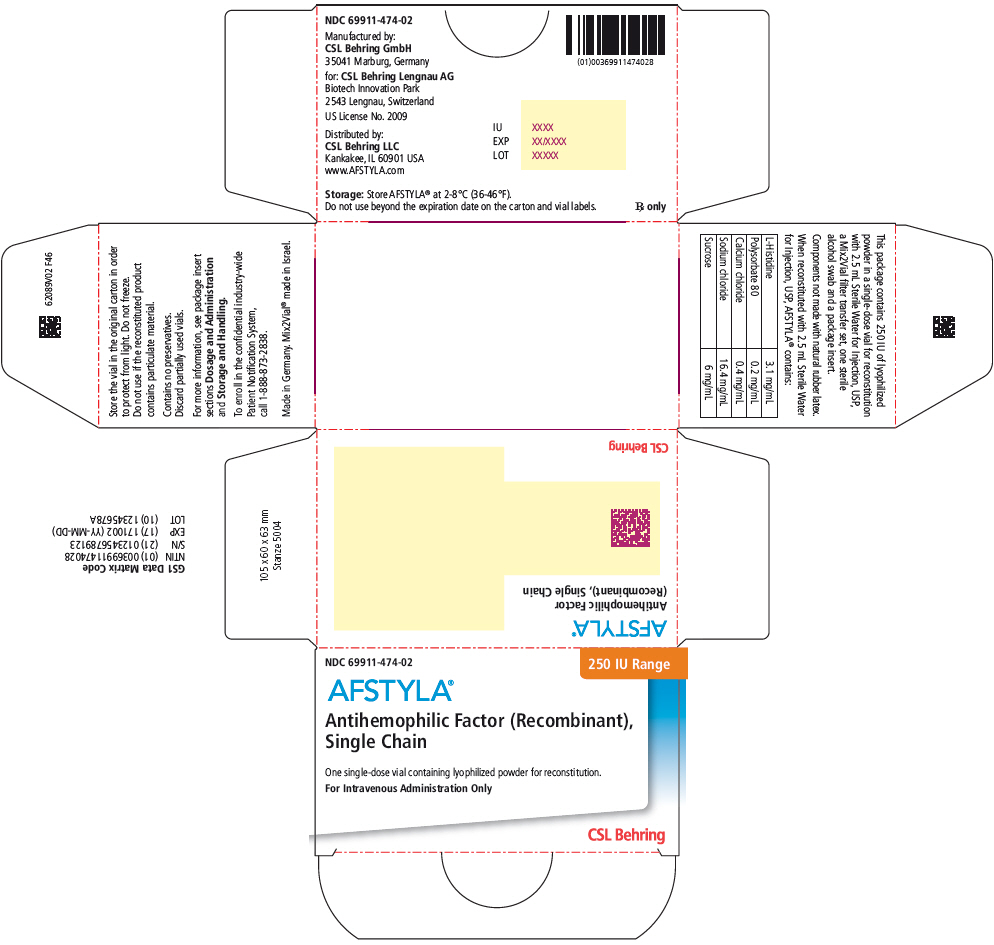
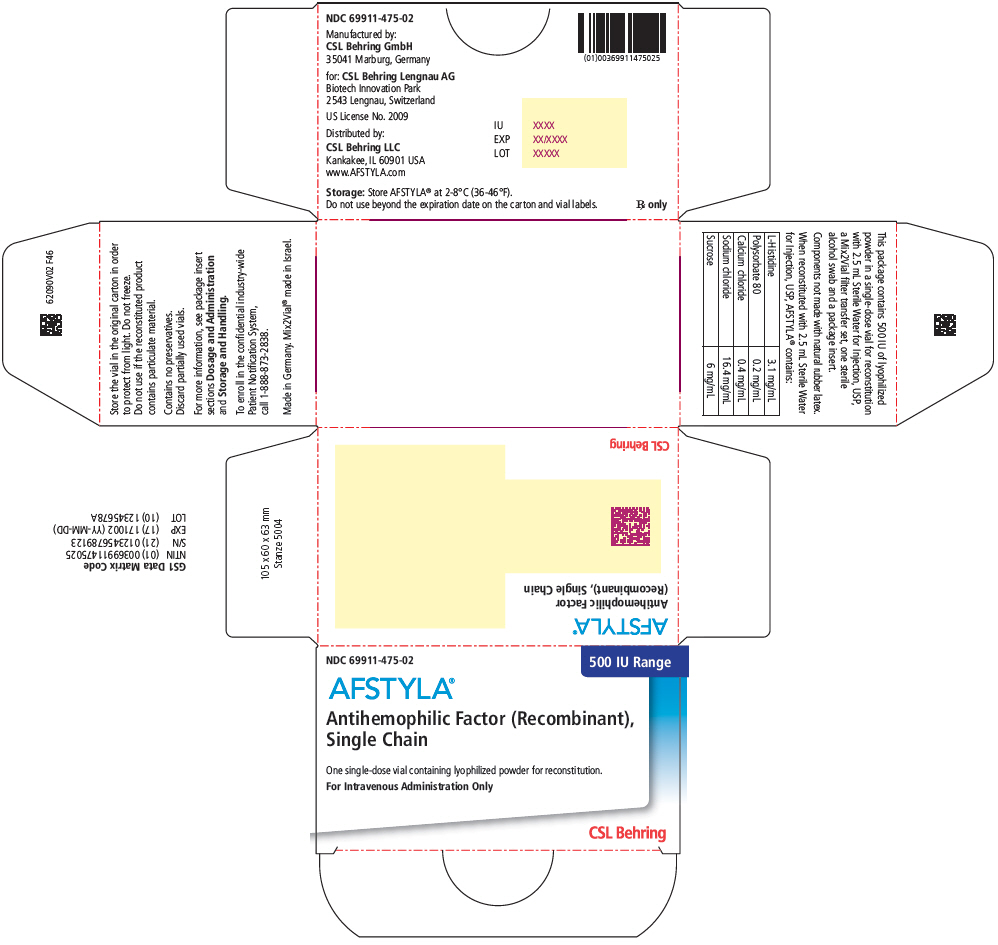
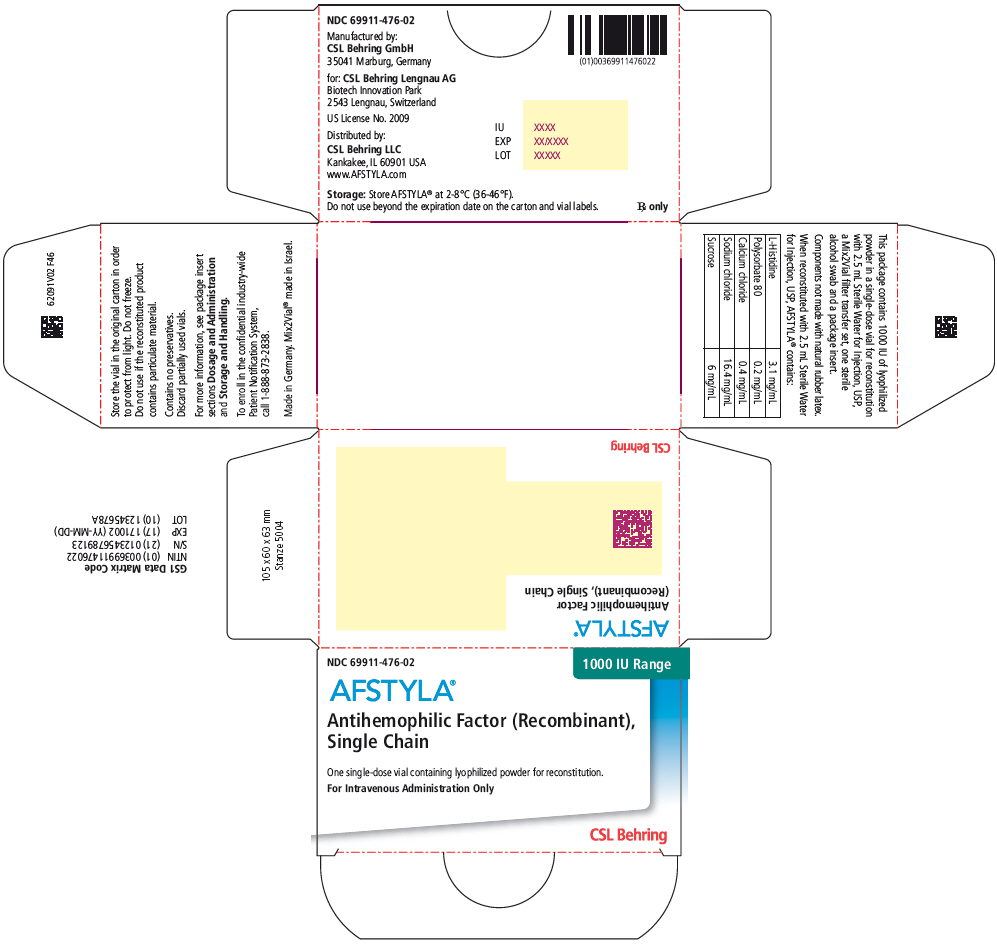
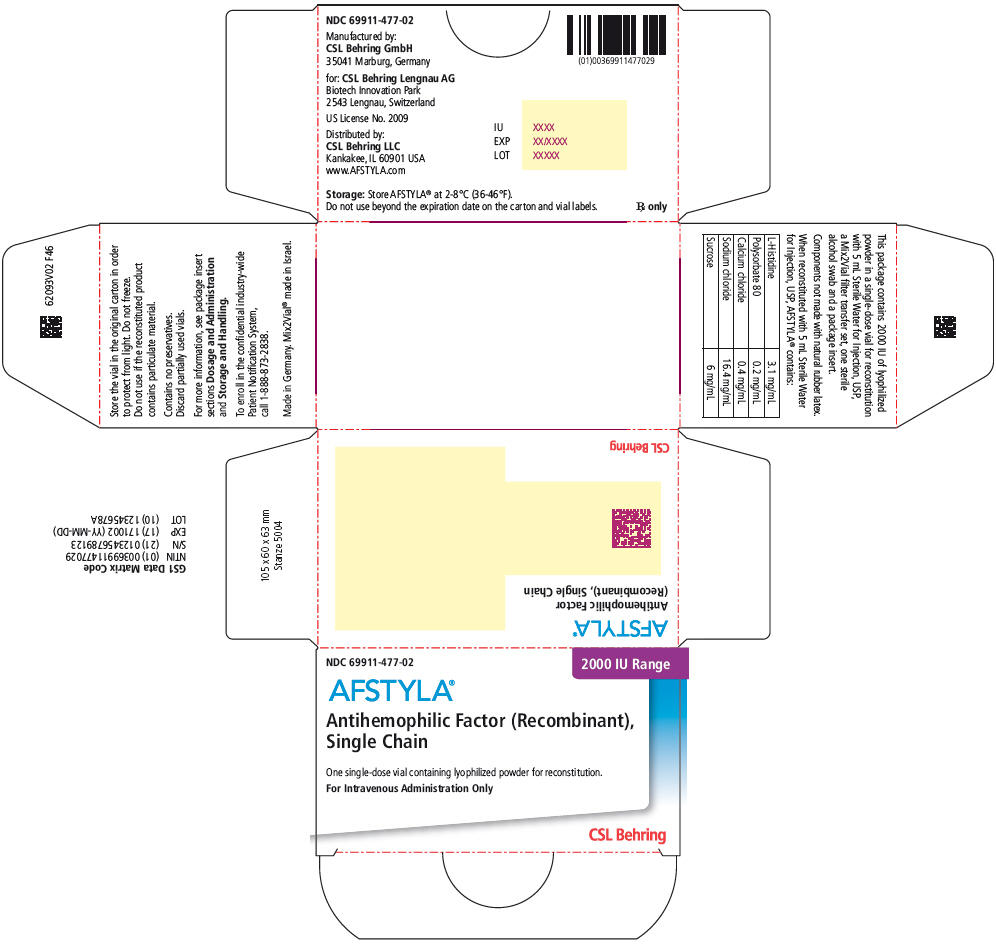
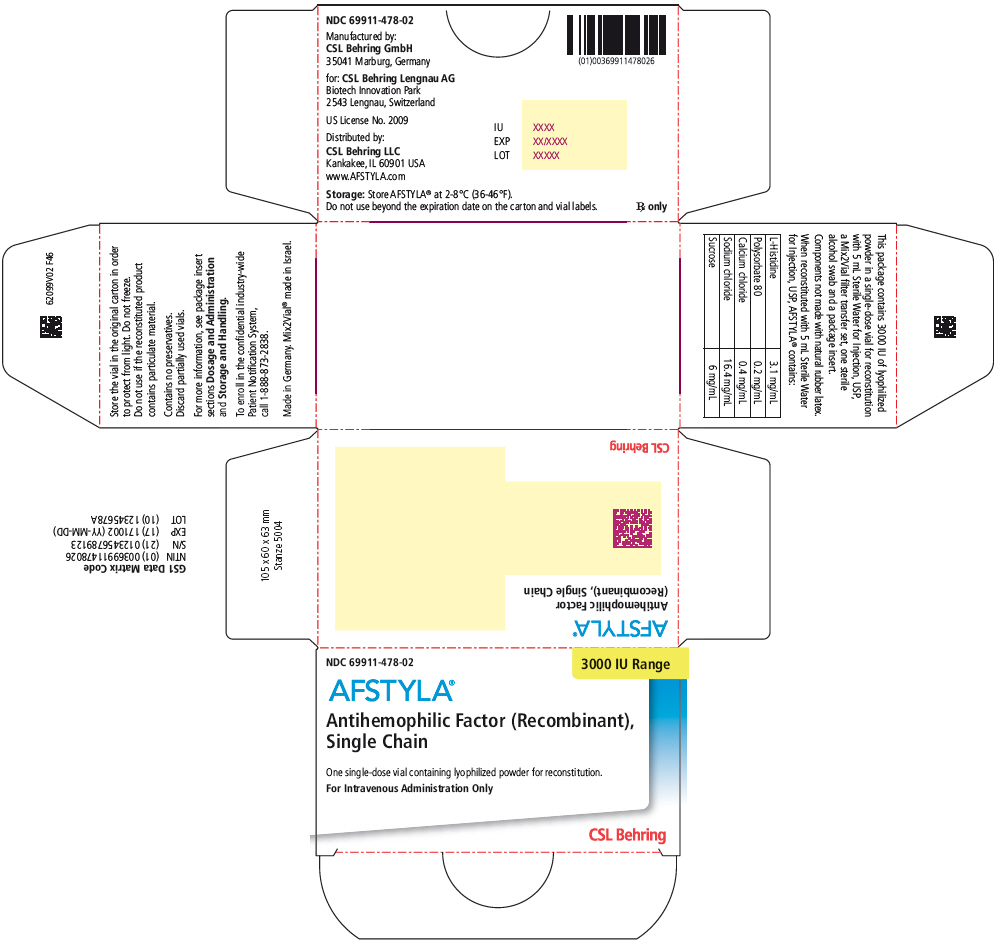
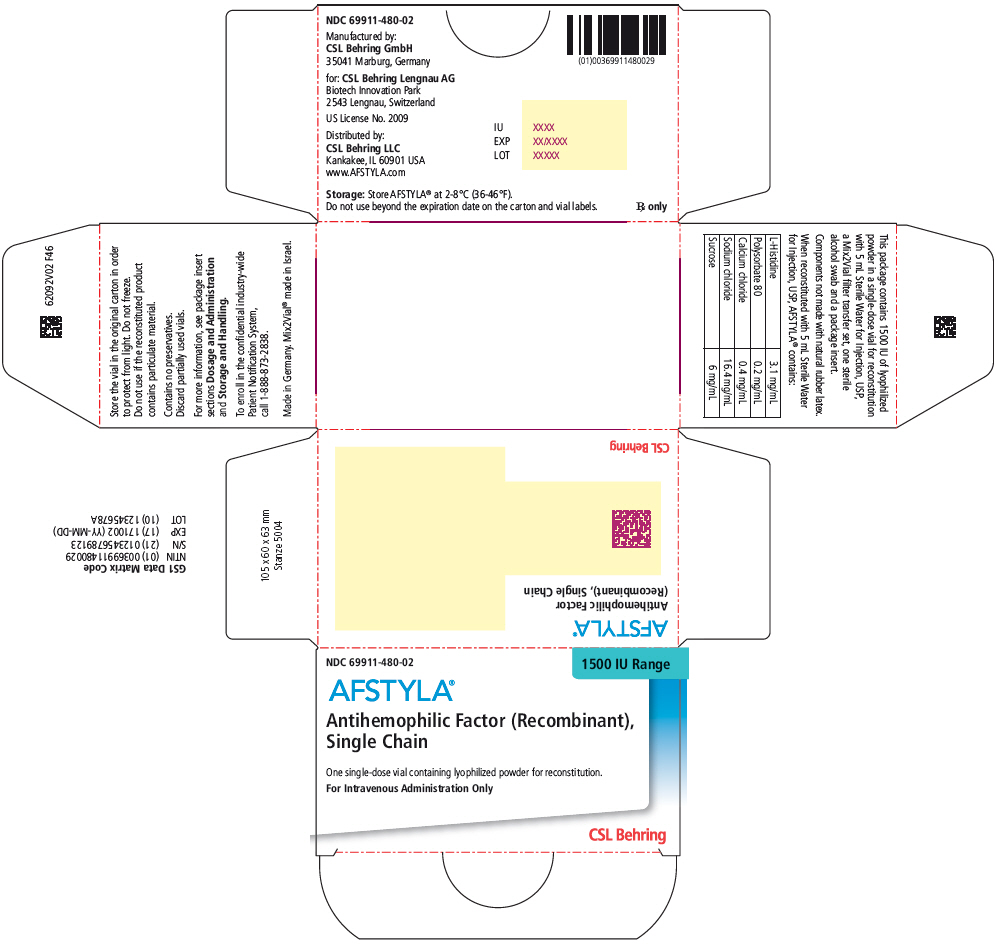
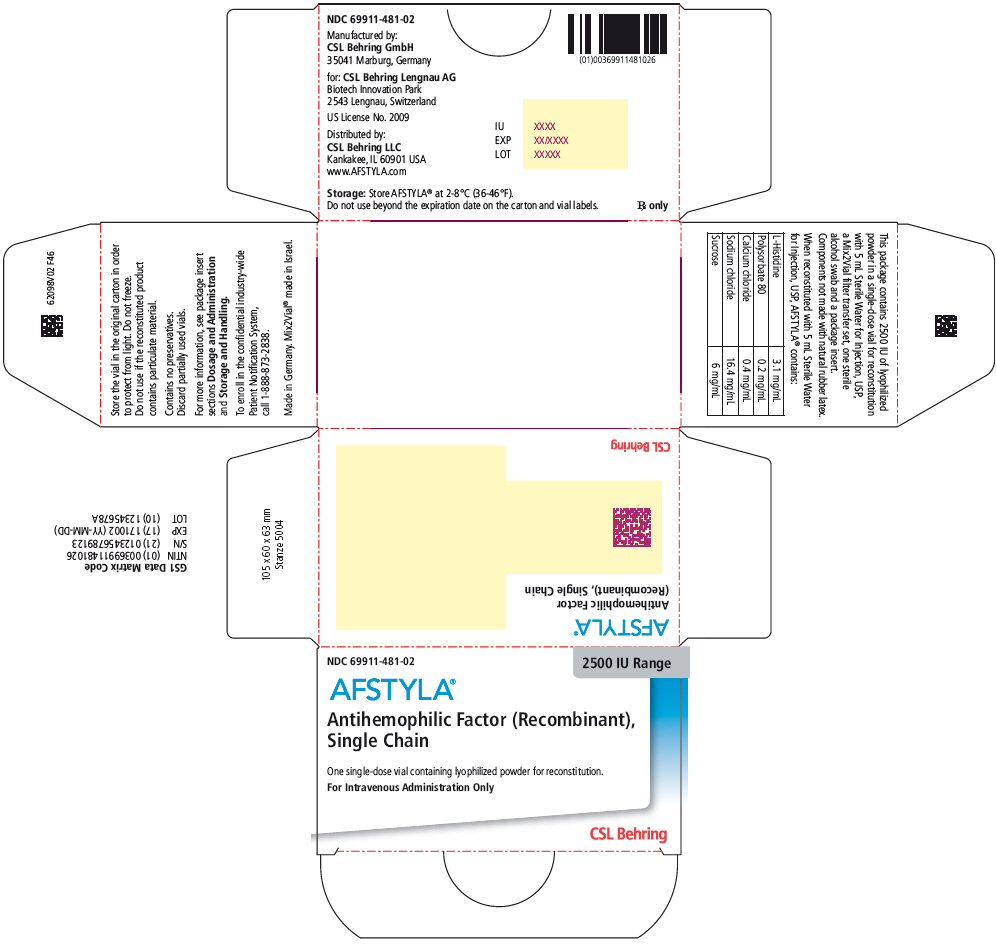
Manufactured by:
CSL Behring GmbH
35041 Marburg, Germany
for:
CSL Behring Lengnau AG
Biotech Innovation Park
2543 Lengnau, Switzerland
US License No. 2009
Distributed by:
CSL Behring LLC
Kankakee, IL 60901 USA
Mix2Vial® is a registered trademark of West Pharma. Services IL, Ltd., a subsidiary of West Pharmaceuticals Services, Inc.
Resources at CSL Behring available to the patient:
For Adverse Reaction Reporting contact:
CSL Behring Pharmacovigilance Department at 1-866-915-6958
Contact CSL Behring to receive more product information:
Patient Support Hotline at 1-800-676-4266
For more information, visit www.AFSTYLA.com
Manufactured by:
CSL Behring GmbH
35041 Marburg, Germany
for:
CSL Behring Lengnau AG
Biotech Innovation Park
2543 Lengnau, Switzerland
US License No. 2009
Distributed by:
CSL Behring LLC
Kankakee, IL 60901 USA
Mix2Vial® is a registered trademark of West Pharma. Services IL, Ltd., a subsidiary of West Pharmaceuticals Services, Inc.
Revised: 4/2021