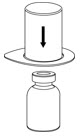
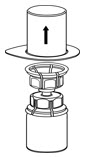
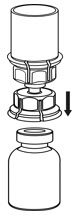
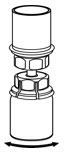
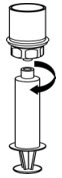
Limitations of Use:
IDELVION is not indicated for immune tolerance induction in patients with Hemophilia B.
On-demand Treatment and Control of Bleeding Episodes
A guide for dosing IDELVION for the on-demand treatment and control of bleeding episodes is provided in Table 1. Dosing should aim at maintaining a plasma Factor IX activity level at or above the plasma levels (in % of normal or IU/dL) outlined in Table 1.
Table 1. Dosing for On-demand Treatment and Control of Bleeding Episodes| Type of Bleeding Episode | Circulating Factor IX Activity Required
[% or (IU/dL)] | Frequency of Dosing (hours) | Duration of Therapy (days) Adapted from the WFH Guidelines for the Management of Hemophilia. |
|---|
Minor or Moderate
Uncomplicated hemarthrosis, muscle bleeding (except iliopsoas) or oral bleeding | 30-60 | 48-72 | At least 1 day, until bleeding stops and healing is achieved. Single dose should be sufficient for majority of bleeds. |
Major
Life or limb threatening hemorrhage, deep muscle bleeding, including iliopsoas, intracranial, retropharyngeal | 60-100 | 48-72 | 7-14 days, until bleeding stops and healing is achieved. Maintenance dose weekly. |
Perioperative Management of Bleeding
A guide for dosing IDELVION for perioperative management of bleeding is provided in Table 2.
Table 2. Dosing for Perioperative Management of Bleeding| Type of Surgery | Circulating Factor IX Activity Required
[% or (IU/dL)] | Frequency of Dosing (hours) | Duration of Therapy (days) Adapted from the WFH Guidelines for the Management of Hemophilia. |
|---|
Minor
(including uncomplicated tooth extraction) | 50-80 | 48-72 | At least 1 day, or until healing is achieved. Single dose should be sufficient for a majority of minor surgeries. |
Major
(including intracranial, pharyngeal, retropharyngeal, retroperitoneal) | 60-100
(initial level) | 48-72 | 7-14 days, or until bleeding stops and healing is achieved. Repeat dose every 48-72 hours for the first week or until healing is achieved. Maintenance dose 1-2 times per week. |
Routine Prophylaxis
For patients ≥12 years of age, the recommended dose is 25-40 IU IDELVION per kg body weight every 7 days. Patients who are well-controlled on this regimen may be switched to a 14-day interval at 50-75 IU IDELVION per kg body weight [see Clinical Studies (14)].
For patients <12 years of age, the recommended dose is 40-55 IU per kg body weight every 7 days.
Adjust the dosing regimen based on individual response.
Risk Summary
There are no data with IDELVION use in pregnant women to inform on drug-associated risk. Animal reproduction studies have not been conducted using IDELVION. It is not known whether IDELVION can cause fetal harm or affect reproduction capacity when administered to a pregnant woman. IDELVION should be given to a pregnant woman only if clearly needed. In the U.S. general population, the estimated background risk of major birth defects and miscarriage in clinically recognized pregnancies is 2-4% and 15-20%, respectively.
Risk Summary
There is no information regarding the excretion of IDELVION in human milk, the effect on the breastfed infant, or the effects on milk production. The developmental and health benefits of breastfeeding should be considered along with the mother's clinical need for IDELVION and any potential adverse effects on the breastfed infant from IDELVION or from the underlying maternal condition.
Adults ≥18 years
The pharmacokinetic (PK) profiles of IDELVION were evaluated following an intravenous injection of a single dose of 25, 50 or 75 IU/kg. The PK parameters were based on plasma Factor IX activity measured by the one-stage clotting assay. Blood samples for PK analysis were collected prior to dosing and up to 336 hours (14 days) after dosing.
Table 5 provides the pharmacokinetic parameters following a single 25 IU/kg, 50 IU/kg, or 75 IU/kg dose of IDELVION.
Table 5. Pharmacokinetic Parameters (Arithmetic Mean, CV%) Following a Single 25 IU/kg, 50 IU/kg, or 75 IU/kg Dose of IDELVION| PK Parameters | rIX-FP
25 (IU/kg)
(N=7) | rIX-FP
50 (IU/kg)
(N=47) | rIX-FP
75 (IU/kg)
(N=8) |
|---|
| IR = incremental recovery recorded 30 minutes after injection; AUC = area under the Factor IX activity time curve; t1/2 = half-life; MRT = mean residence time; CL = body weight adjusted clearance; Vss = body weight adjusted volume of distribution at steady-state. |
| IR (IU/dL)/(IU/kg) | 1.65 (11) | 1.30 (24) | 1.08 (20) |
| Cmax (IU/dL) | 41.1 (13) | 66.6 (27) | 82.0 (20) |
| AUC0-inf (h*IU/dL) | 4658 (36) | 7482 (28) | 9345 (20) |
| t1/2 (hours) | 118 (38) | 104 (25) | 104 (18) |
| MRT (hours) | 153 (24) | 143 (23) | 145 (14) |
| CL (mL/h/kg) | 0.57 (31) | 0.73 (27) | 0.84 (20) |
| Vss (dL/kg) | 0.86 (32) | 1.02 (28) | 1.20 (23) |
| Time to 1% Factor IX Activity (days) = Estimated time to mean Factor IX activity maintained above the pre-specified percent (%) | 22 (25) | 23 (19) | 25 (13) |
| Time to 3% Factor IX Activity (days) | 14 (19) | 17 (19) | 18 (13) |
| Time to 5% Factor IX Activity (days) | 10 (25) | 13 (20) | 15 (13) |
IDELVION PK parameters following single or repeat dosing for up to 30 weeks were similar.
Subjects <18 years
Pharmacokinetics parameters of IDELVION were evaluated in 5 adolescents (12 to <18 years of age) and 27 children (0 to <12 years of age) in open-label, multi-center studies following a 50 IU/kg intravenous injection of IDELVION. The PK samples were collected prior to dosing and at multiple time points up to 336 hours (14 days) after dosing.
Table 6 summarizes the PK parameters calculated from the pediatric data of 32 subjects, 0 to <18 years of age. The parameters estimated were based on the plasma Factor IX activity over time profile. Compared to adults, incremental recovery is lower (15% to 27%) and body weight-adjusted clearance is higher (45% to 62%) in children.
Table 6. Pharmacokinetic Parameters (Arithmetic Mean, CV%) of IDELVION Following a Single 50 IU/kg Dose| PK Parameters | 0 to <6 years
(N=12) | 6 to <12 years
(N=15) | 12 to <18 years
(N=5) |
|---|
| IR = incremental recovery recorded 30 minutes after injection; AUC = area under the Factor IX activity time curve; t1/2 = half-life; MRT = mean residence time; CL = body weight adjusted clearance; Vss = body weight adjusted volume of distribution at steady-state. |
| IR (IU/dL)/(IU/kg) | 0.95 (22) | 1.06 (23) | 1.11 (28) |
| Cmax (IU/dL) | 48.3 (19) | 52.9 (23) | 55.3 (28) |
| AUC0-inf (h*IU/dL) | 4583 (33) | 5123 (31) | 5347 (48) |
| t1/2 (hours) | 90 (13) | 93 (21) | 87 (36) |
| MRT (hours) | 123 (14) | 129 (19) | 119 (31) |
| CL (mL/h/kg) | 1.18 (28) | 1.06 (29) | 1.08 (39) |
| Vss (dL/kg) | 1.42 (24) | 1.32 (20) | 1.16 (14) |
| Time to 1% Factor IX Activity (days) = Estimated time to mean Factor IX activity maintained above the pre-specified percent (%) | 17 (29) | 20 (22) | 19 (37) |
| Time to 3% Factor IX Activity (days) | 12 (32) | 14 (22) | 13 (38) |
| Time to 5% Factor IX Activity (days) | 9 (32) | 11 (26) | 11 (38) |
On-demand Treatment and Control of Bleeding Episodes
A total of 358 bleeding events were treated with IDELVION. Among them, 204 (57%) bleeding events were spontaneous, 140 (39%) events were traumatic and 14 (4%) events were unknown. In addition, a total of 267 (75%) episodes were joint bleeding events.
Overall treatment efficacy was assessed for each bleeding episode by the investigator based on a 4-point scale of excellent, good, moderate, or poor/no response. The efficacy of IDELVION for the on-demand treatment and control of bleeding episodes is summarized in Table 7.
Table 7. EfficacyExcellent: Pain relief and/or unequivocal improvement in objective signs of bleeding and no additional infusion required in order to achieve hemostasis; Good: Definite pain relief and/or improvement in signs of bleeding at approximately 8 hours after the first infusion, but may require a second infusion; Moderate: Probable or slight beneficial effect, and requires more than two infusions to achieve hemostasis; Poor/no response: No improvement at all or condition worsens, additional hemostatic intervention is required. Responses evaluated at approximately 24 hours after treatment.
of IDELVION for the On-demand Treatment and Control of Bleeding Episodes| Number of Bleeding Episodes Requiring Treatment (n = 358) |
|---|
| Number of injections to treat bleeding episodes | |
| 1 injection, n (%) | 335 (94) |
| 2 injections, n (%) | 18 (5) |
| >2 injections, n (%) | 5 (1.4) |
| Assessment of Efficacy | |
| Excellent or Good, n (%) | 337 (94) |
| Moderate, n (%) | 9 (2.5) |
| Poor/no response, n (%) | 1 (0.3) |
Perioperative Management of Bleeding
In three clinical studies, 13 subjects received IDELVION for perioperative management of 15 surgical procedures. Dose was individualized based on subject's PK and clinical response to treatment. The 15 surgical procedures included a double mastectomy, four knee replacements, a hemorrhoidectomy, a rhinoplasty, a nevus excision, an ankle arthroplasty, an endoscopic mucosal resection, four complicated dental surgeries and one uncomplicated dental surgery. Two of the four dental surgeries were performed in children <12 years of age.
The efficacy analysis of IDELVION in perioperative management included 12 surgeries in 10 PTPs between 12 and 61 years of age and 3 surgical procedures in 3 children <12 years of age undergoing a major or minor surgical procedure, including dental surgeries. Hemostasis was assessed by the investigator/surgeon at wound closure (intraoperative assessment), 72 hours after surgery or at hospital discharge and at the end of the surgical substudy using a 4-point scale of: excellent, good, fair or none. Of the 15 surgeries included in the intraoperative assessment of hemostatic response, 12 surgeries were assessed as excellent (n=11) or good (n=1), and three minor surgeries were not rated. At hospital discharge or at the end of the surgical substudy, 14 surgical procedures had a rating of excellent (n=13) or good (n=1), and one surgery was not rated.
Routine Prophylaxis
Of the 63 subjects treated with IDELVION, twenty-three PTPs received IDELVION only for the treatment of bleeding episodes during the first 6 months of the study. Nineteen of these PTPs switched to once weekly prophylaxis with additional median duration of 10 months.
Based on the analysis of the 19 subjects treated with IDELVION for on-demand therapy and weekly prophylaxis, the median annualized spontaneous bleeding rate (AsBR) during prophylaxis treatment was zero (range: 0 to 4.2), as compared to 15.4 (range: 2 to 39.5) during on-demand treatment. Based on the Poisson model, prophylaxis treatment with IDELVION resulted in a 96% reduction in the annualized spontaneous bleeding rate.
The median annualized bleeding rate (total ABR – spontaneous and traumatic) during prophylaxis treatment was 1.6; (range: 0 to 21.1), as compared to 19.2; (range: 2 to 46.1) during on-demand treatment. Based on the Poisson model, prophylaxis treatment with IDELVION resulted in an 89% reduction in the annualized bleeding rate.
Table 8. Comparison of Annualized Bleeding Rates for Subjects Treated for On-demand Therapy and Weekly Prophylaxis| Bleeding Episode Etiology | On-demand (n=19) Based on matched pairs design | Weekly Prophylaxis
(n=19) | Percent Reduction with Prophylaxis
(n=19) |
|---|
| IQR=interquartile range, defined for 25th percentile and 75th percentile; SD=standard deviation; Subjects evaluable for efficacy are subjects who received at least one dose of on-demand treatment, and one dose of prophylaxis treatment. |
| Spontaneous | | | |
| Mean (SD) | 14.6 (8.42) | 0.7 (1.17) | 96.0 (5.54) |
| Median | 15.4 | 0 | 100 |
| IQR | 8.0, 18.0 | 0, 1.0 | 90.5, 100 |
| Range | 2.0, 39.5 | 0, 4.2 | 82.8, 100 |
| Total Total includes spontaneous and traumatic bleeds | | | |
| Mean (SD) | 20.8 (9.19) | 2.9 (4.81) | 88.8 (17.76) |
| Median | 19.2 | 1.6 | 90.9 |
| IQR | 16.7, 25.8 | 0, 4.1 | 81.2, 100 |
| Range | 2.0, 46.1 | 0, 21.1 | 54.3, 100 |
Forty subjects received weekly routine prophylaxis. Thirty-seven subjects completed 6 months of once weekly prophylaxis. Of these, 21 subjects switched to a 14-day interval with 50-75 IU/kg of IDELVION with a median duration of 12.7 months. Prior to switching, these 21 subjects were well controlled with IDELVION (did not require dose adjustments or experience spontaneous bleeding 1 month prior to switch and were maintained on a prophylaxis dose of ≤40 IU/kg every 7 days).
The median AsBRs for the 21 subjects treated with weekly and 14-day prophylaxis were zero (range: 0 to 4.5) and zero (range: 0 to 7.3), respectively (summarized in Table 9). In addition, the median AsBRs for the 7 subjects treated with weekly and 10-day prophylaxis were zero (range: 0 to 0) and zero (range: 0 to 0.9), respectively.
Table 9. Comparison of Annualized Spontaneous Bleeding Rate (AsBR) by Prophylaxis Regimen for Subjects in the Clinical Trial| Bleeding Episode Etiology | Weekly Prophylaxis
(n=21)Based on a matched pairs design | 14-day Prophylaxis
(n=21) |
|---|
| IQR = interquartile range; SD = Standard deviation |
| Spontaneous | | |
| Mean (SD) | 0.28 (1.01) | 1.07 (2.1) |
| Median | 0 | 0 |
| IQR | 0, 0 | 0, 1 |
| Range | 0, 4.5 | 0, 7.3 |
How Supplied
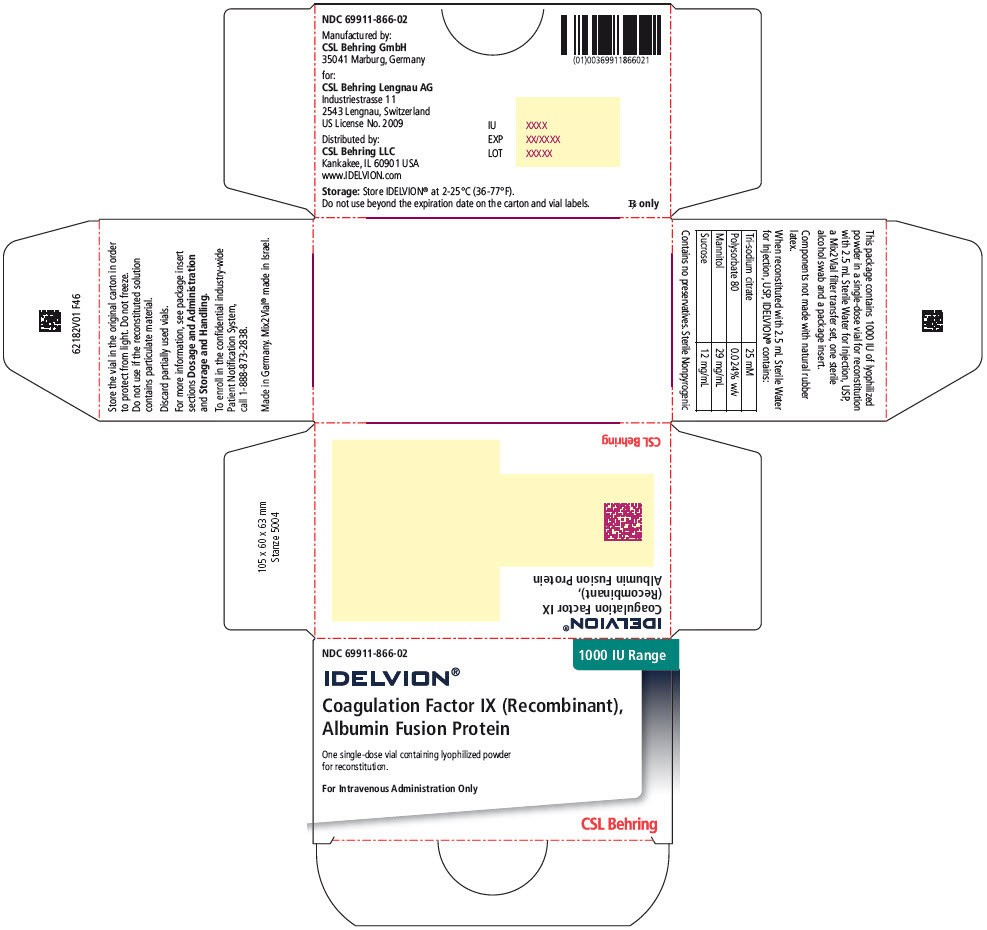
IDELVION is supplied as a lyophilized powder in single-use vials containing the labeled amount of Factor IX activity, expressed in international units (IU).
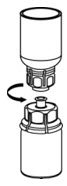
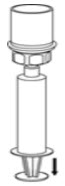
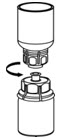
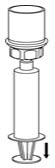
IDELVION is packaged with 2.5 mL (for reconstitution of 250, 500 or 1000 IU vials) or 5 mL (for reconstitution of 2000 IU vials) of Sterile Water for Injection, USP, one Mix2Vial filter transfer set, and one sterile alcohol swab. Components are not made with natural rubber latex.
Nominal Strength
(International Units) | Fill Size
Color Indicator | Kit NDC |
|---|
| 250 | Orange | 69911-864-02 |
| 500 | Blue | 69911-865-02 |
| 1000 | Green | 69911-866-02 |
| 2000 | Purple | 69911-867-02 |
Manufactured by:
CSL Behring GmbH
35041 Marburg, Germany
for:
CSL Behring Recombinant Facility AG
Bern 22, Switzerland 3000
US License No. 2009
Distributed by:
CSL Behring LLC
Kankakee, IL 60901 USA
IDELVION® is manufactured under a license by Novozymes Biopharma A/S, Bagsvaerd, Denmark (US patents pending).
Mix2Vial® is a trademark of West Pharmaceutical Services, Inc. or one of its subsidiaries.