Epidiolex Solution
Product Images NDC 70127-100

25 FDA label images from Jazz Pharmaceuticals, Inc. · Packaging, Regulatory Labels, and Product Appearance

Product Visual Gallery

This gallery contains 25 technical images submitted to the FDA as part of the official labeling for Epidiolex (NDC 70127-100). Unlike standard consumer photos, these assets often include clinical data figures, molecular chemical structures, and official manufacturer packaging layouts.

As provided by Jazz Pharmaceuticals, Inc., these visuals offer a comprehensive scientific overview of the product's physical and chemical identity, aiding pharmacists and researchers in product verification and study.

FDA Label Image

Cannabidiol Chemical Structure (Image 01)
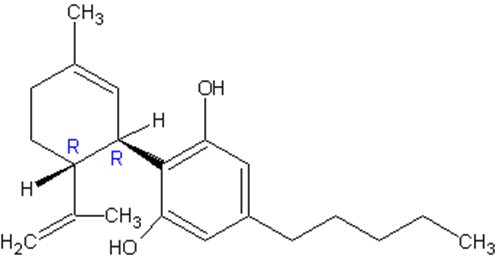
Cannabidiol Chemical Structure (Image 01)
Chemical structure of cannabidiol, the active ingredient in Epidiolex 100 mg/mL oral solution by Jazz Pharmaceuticals, Inc. The diagram illustrates the molecular arrangement of cannabidiol atoms and bonds.*
FDA Label Image

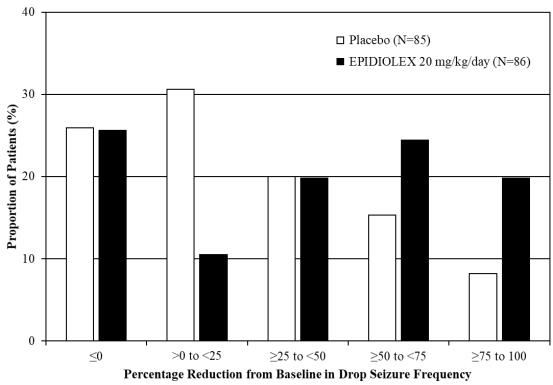
Figure 1: Proportion Of Patients By Category Of Seizure Response For Epidiolex And Placebo In Patients With Lennox–gastaut Syndrome (study 1) (Figure 01)

Figure 1: Proportion Of Patients By Category Of Seizure Response For Epidiolex And Placebo In Patients With Lennox–gastaut Syndrome (study 1) (Figure 01)
A bar chart comparing the proportion of patients achieving different percentage ranges of reduction from baseline in drop seizure frequency between placebo and Epidiolex 20 mg/kg/day groups. The x-axis shows seizure frequency reduction categories, and the y-axis depicts the proportion of patients in percentages. Placebo and Epidiolex groups are represented with white and black bars respectively.*
FDA Label Image

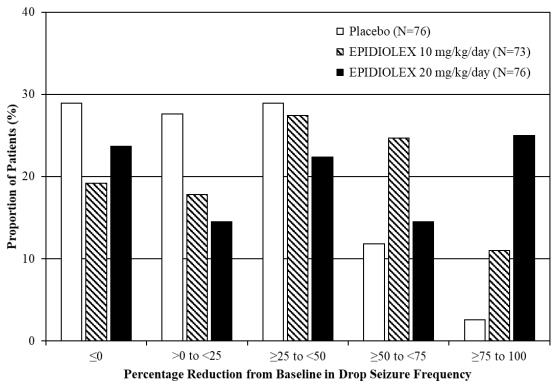
Figure 2: Proportion Of Patients By Category Of Seizure Response For Epidiolex And Placebo In Patients With Lennox–gastaut Syndrome (study 2) (Figure 02)

Figure 2: Proportion Of Patients By Category Of Seizure Response For Epidiolex And Placebo In Patients With Lennox–gastaut Syndrome (study 2) (Figure 02)
A bar graph depicting the proportion of patients (%) by percentage reduction from baseline in drop seizure frequency. Data compares three groups: placebo (N=76), Epidiolex 10 mg/kg/day (N=73), and Epidiolex 20 mg/kg/day (N=76) across five percentage reduction intervals: ≤0, >0 to <25, ≥25 to <50, ≥50 to <75, and ≥75 to 100.*
FDA Label Image

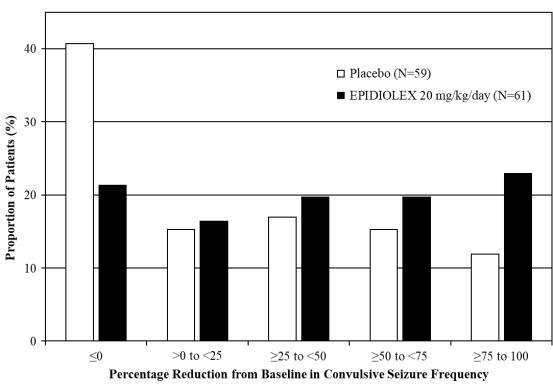
Figure 3: Proportion Of Patients By Category Of Seizure Response For Epidiolex And Placebo In Patients With Dravet Syndrome (study 3) (Figure 03)

Figure 3: Proportion Of Patients By Category Of Seizure Response For Epidiolex And Placebo In Patients With Dravet Syndrome (study 3) (Figure 03)
A bar chart comparing the proportion of patients achieving various percentage reductions from baseline in convulsive seizure frequency between placebo and EPIDIOLEX 20 mg/kg/day. The horizontal axis shows percentage reduction categories (≤0, >0 to <25, ≥25 to <50, ≥50 to <75, ≥75 to 100), and the vertical axis shows the proportion of patients as a percentage. Data is shown for two groups: placebo (N=59) and EPIDIOLEX (N=61). EPIDIOLEX groups generally have higher proportions of patients with greater seizure reduction compared to placebo.*
FDA Label Image

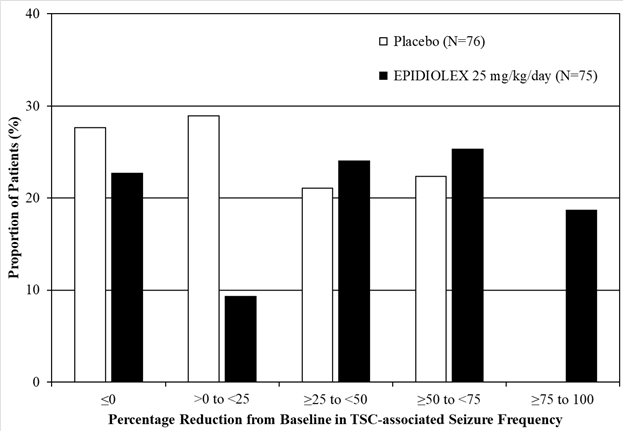
Figure 4: Proportion Of Patients By Category Of Seizure Response For Epidiolex And Placebo In Patients With Tuberous Sclerosis Complex (study 4) (Figure 04)

Figure 4: Proportion Of Patients By Category Of Seizure Response For Epidiolex And Placebo In Patients With Tuberous Sclerosis Complex (study 4) (Figure 04)
A bar chart comparing the percentage of patients with different ranges of seizure frequency reduction. It shows two groups: Placebo (N=76) and EPIDIOLEX 25 mg/kg/day (N=75). The x-axis categorizes percentage reduction ranges from baseline in TSC-associated seizure frequency; y-axis represents the proportion of patients (%). Bars illustrate the distribution of patients achieving varying levels of seizure reduction for each group.*
FDA Label Image

Child-resistant Cap (Image 02)

Child-resistant Cap (Image 02)
The image shows an oval-shaped clear plastic bottle with a white child-resistant cap. The bottle contains a clear liquid solution, consistent with the oral solution dosage form of Epidiolex (cannabidiol) 100 mg/mL, marketed by Jazz Pharmaceuticals, Inc. No additional text or labeling is visible on the bottle.*
FDA Label Image

Bottle Adapter (Image 03)

Bottle Adapter (Image 03)
Epidiolex 100 mg/mL oral solution in a white plastic bottle with a child-resistant cap. The label includes the proprietary name Epidiolex, the active ingredient cannabidiol, and indicates the dosage form as a solution. The manufacturer is Jazz Pharmaceuticals, Inc.*
FDA Label Image

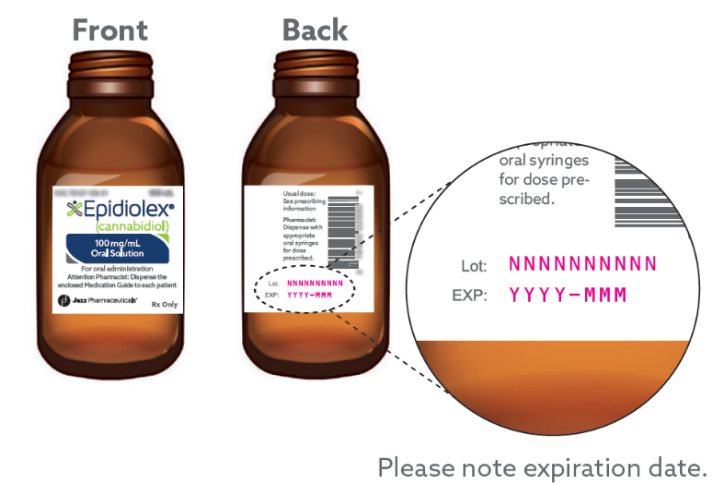
Epidiolex Bottle (Image 04)

Epidiolex Bottle (Image 04)
Images show front and back views of an Epidiolex 100 mg/mL oral solution bottle. The front label displays the product name Epidiolex (cannabidiol), strength, dosage form, and manufacturer Jazz Pharmaceuticals, Inc. The back label includes usage instructions, a barcode, lot number, and expiration date information highlighting the location for lot and expiry date details.*
FDA Label Image

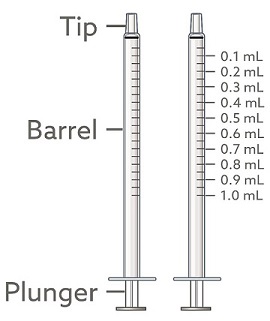
2 Reusable 1 mL Oral Syringes (Image 05)

2 Reusable 1 mL Oral Syringes (Image 05)
An instructional illustration showing two side views of an oral dosing syringe. The syringe is labeled by parts—Tip, Barrel, and Plunger—and includes measurement markings from 0.1 mL to 1.0 mL along the barrel.*
FDA Label Image

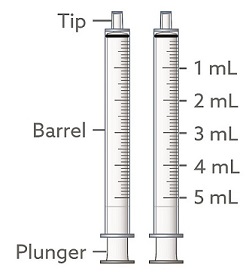
2 Reusable 5 mL Oral Syringes (Image 06)

2 Reusable 5 mL Oral Syringes (Image 06)
An instructional illustration showing two views of an oral dosing syringe for liquid medication. The syringe is labeled with the parts Tip, Barrel, and Plunger, and the barrel is marked with volume measurements from 1 mL to 5 mL.*
FDA Label Image

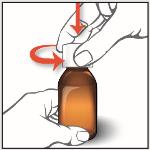
1. Remove The Child-resistant Cap By Pushing Down While Turning The Cap To The Left (counter-clockwise). (Image 07)

1. Remove The Child-resistant Cap By Pushing Down While Turning The Cap To The Left (counter-clockwise). (Image 07)
An instructional illustration showing hands opening a brown glass bottle by twisting off the child-resistant cap, indicating the proper method to access the oral solution inside.*
FDA Label Image

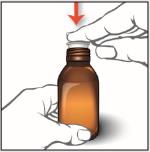
Note: Do Not Remove The Bottle Adapter From The Bottle After It Is Inserted. (Image 08)

Note: Do Not Remove The Bottle Adapter From The Bottle After It Is Inserted. (Image 08)
An illustration showing two hands opening a brown glass bottle by removing the cap. A red arrow points downward toward the cap, indicating the direction of removal or placement. The image likely demonstrates how to open the container safely before use.*
FDA Label Image

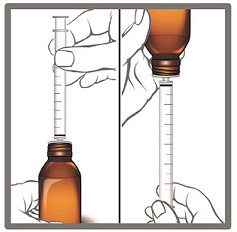
4. Push The Plunger All The Way Down And Insert The Tip Of The Oral Syringe Fully Into The Bottle Adapter. With The Oral Syringe In Place, Turn The Bottle Upside Down. (Image 09)

4. Push The Plunger All The Way Down And Insert The Tip Of The Oral Syringe Fully Into The Bottle Adapter. With The Oral Syringe In Place, Turn The Bottle Upside Down. (Image 09)
An instructional diagram showing two steps for withdrawing liquid from a brown bottle using a syringe. The left side illustrates holding the bottle steady while inserting the syringe, and the right side shows inverting the bottle with the syringe inside to draw up the liquid. No text is present to specify the product.*
FDA Label Image

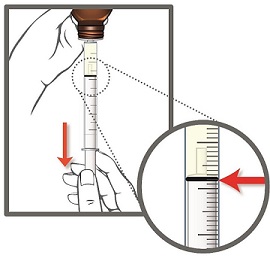
5. Slowly Pull The Plunger Of The Oral Syringe To Withdraw The Dose Of Epidiolex Needed. See Step 3 For How To Measure The Total Dose Of Epidiolex. (Image 10)

5. Slowly Pull The Plunger Of The Oral Syringe To Withdraw The Dose Of Epidiolex Needed. See Step 3 For How To Measure The Total Dose Of Epidiolex. (Image 10)
An instructional illustration showing a hand holding an oral solution syringe. The image highlights proper measurement technique by focusing on the syringe's graduated markings, with an arrow indicating the fluid level aligned with a specific mark to ensure accurate dosing.*
FDA Label Image

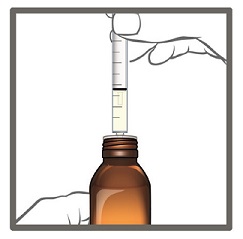
6. When You Have Measured The Correct Dose Of Epidiolex, Leave The Oral Syringe In The Bottle Adapter And Turn The Bottle Right Side Up. (Image 11)

6. When You Have Measured The Correct Dose Of Epidiolex, Leave The Oral Syringe In The Bottle Adapter And Turn The Bottle Right Side Up. (Image 11)
Illustration showing a hand holding a graduated dropper above an open amber glass bottle, demonstrating how to measure and withdraw an oral solution dose. The image emphasizes proper use of the dropper device for liquid medication administration.*
FDA Label Image

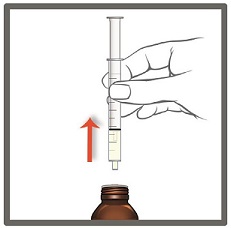
7. Carefully Remove The Oral Syringe From The Bottle Adapter. (Image 12)

7. Carefully Remove The Oral Syringe From The Bottle Adapter. (Image 12)
An instructional illustration showing a hand holding a syringe above an open bottle. A red arrow points upward, indicating the syringe should be pulled upward to draw liquid from the bottle. The image demonstrates how to draw the oral solution from the container using the syringe.*
FDA Label Image

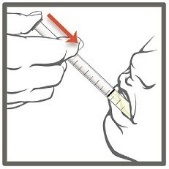
8. Place The Tip Of The Oral Syringe Against The Inside Of The Cheek And Gently Push The Plunger Until All The Epidiolex In The Syringe Is Given. (Image 13)

8. Place The Tip Of The Oral Syringe Against The Inside Of The Cheek And Gently Push The Plunger Until All The Epidiolex In The Syringe Is Given. (Image 13)
An instructional illustration depicts a person placing a syringe into their mouth, demonstrating the oral administration of medication. The hand holds the syringe filled with liquid, with an arrow indicating the correct positioning for delivery.*
FDA Label Image

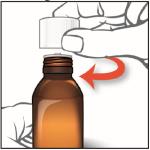
9. Screw The Child-resistant Cap Back On The Bottle Tightly By Turning The Cap To The Right (clockwise). (Image 14)

9. Screw The Child-resistant Cap Back On The Bottle Tightly By Turning The Cap To The Right (clockwise). (Image 14)
An instructional illustration showing a hand removing a child-resistant safety cap from a glass bottle, demonstrating how to open the bottle by pushing down and twisting the cap.*
FDA Label Image

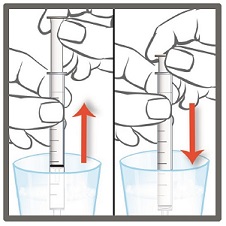
10. Fill A Cup With Warm Soapy Water And Clean The Oral Syringe By Drawing Water In And Out Of The Syringe Using The Plunger. (Image 15)

10. Fill A Cup With Warm Soapy Water And Clean The Oral Syringe By Drawing Water In And Out Of The Syringe Using The Plunger. (Image 15)
Instructional diagram showing how to use a dosing syringe for Epidiolex 100 mg/mL oral solution. The two panels illustrate pulling the plunger up to draw the solution into the syringe and then pushing the plunger down to dispense the solution, with arrows indicating the direction of movement.*
FDA Label Image

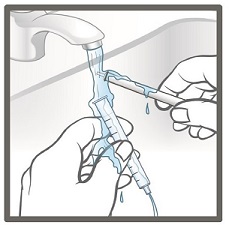
11. Remove The Plunger From The Barrel Of The Oral Syringe And Rinse Both Parts Under Tap Water. (Image 16)

11. Remove The Plunger From The Barrel Of The Oral Syringe And Rinse Both Parts Under Tap Water. (Image 16)
An instructional illustration showing hands holding and rinsing a clear oral dosing syringe under running tap water from a faucet, likely demonstrating cleaning or washing of the syringe used for oral solution administration.*
FDA Label Image

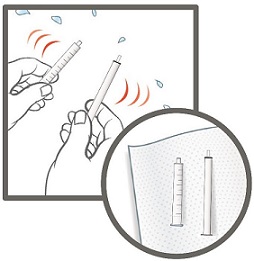
12. Shake Off Any Extra Water From The Plunger And Oral Syringe Barrel, And Allow Them To Air Dry Until Next Use. (Image 17)

12. Shake Off Any Extra Water From The Plunger And Oral Syringe Barrel, And Allow Them To Air Dry Until Next Use. (Image 17)
Illustration showing hands holding two oral syringes, demonstrating shaking or mixing the contents. An enlarged circular inset shows the two syringes side-by-side on a textured surface, highlighting their appearance and measurement markings.*
FDA Label Image

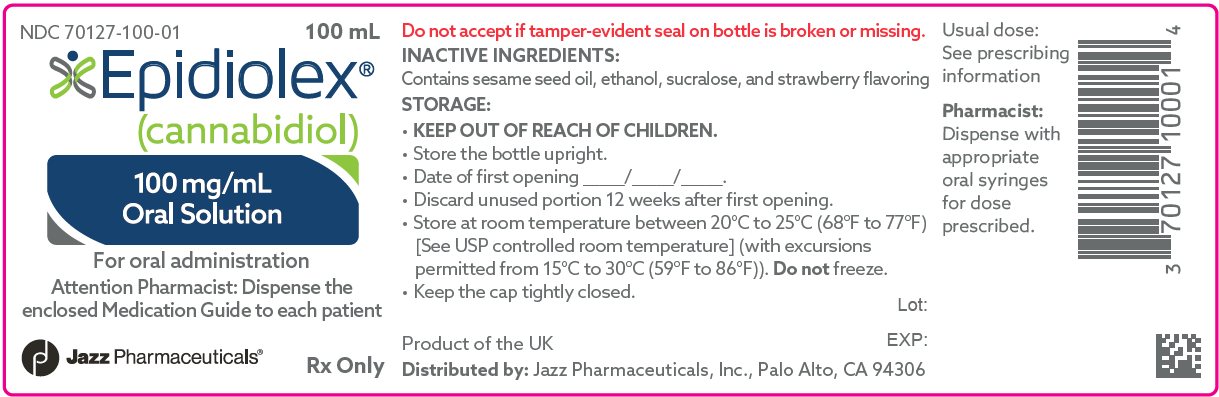
100 mL Bottle Label (Bottle Label 100mg)

100 mL Bottle Label (Bottle Label 100mg)
Label for Epidiolex 100 mg/mL oral solution, containing cannabidiol as the active ingredient. The label includes usage instructions for oral administration, storage conditions, and pharmacist dispensing information. It shows the Jazz Pharmaceuticals, Inc. logo, NDC 70127-100, a 100 mL volume, and notes it is a product of the UK distributed by Jazz Pharmaceuticals, Inc., Palo Alto, CA.*
FDA Label Image

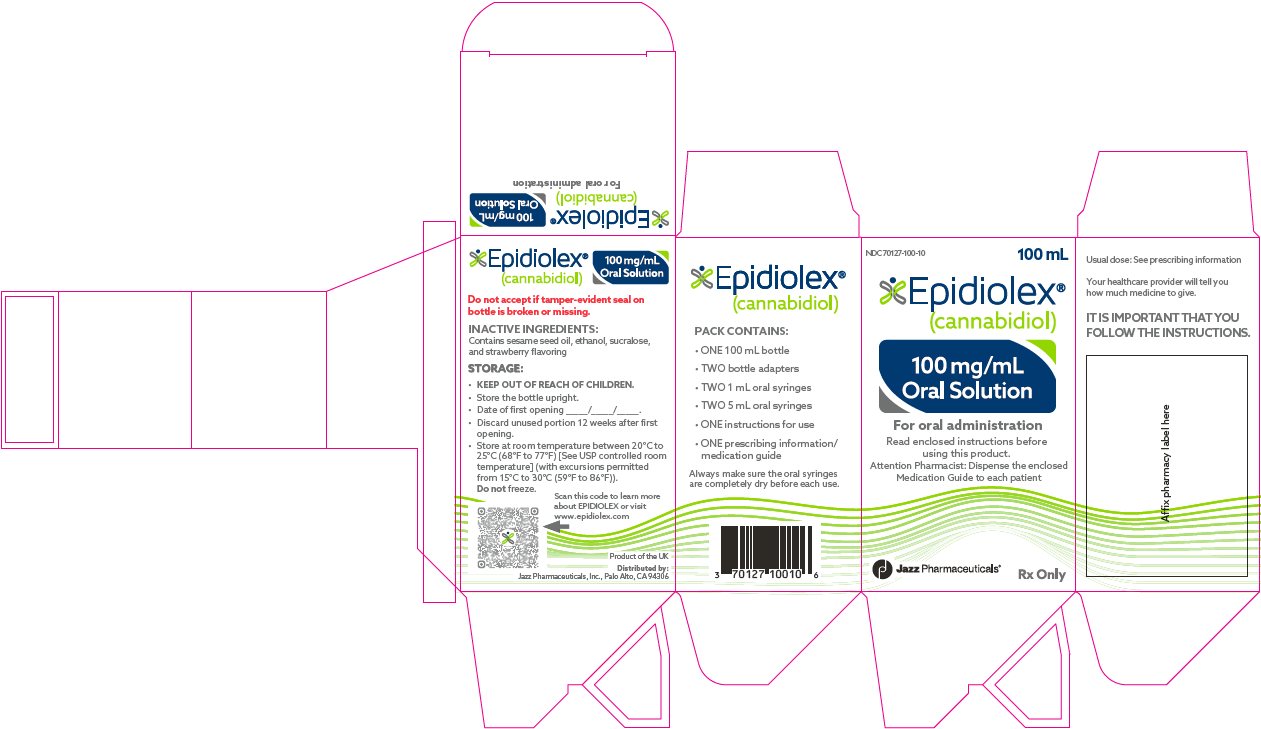
100 mL Carton (Carton Label 100mg)

100 mL Carton (Carton Label 100mg)
Epidiolex 100 mg/mL Oral Solution carton for cannabidiol, marketed by Jazz Pharmaceuticals, Inc. The label highlights product contents including a 100 mL bottle, multiple syringes, bottle adapters, instructions, and prescribing information. It emphasizes oral administration, storage instructions, and tamper-evident seal warnings. The packaging includes a barcode and contact website.*
FDA Label Image

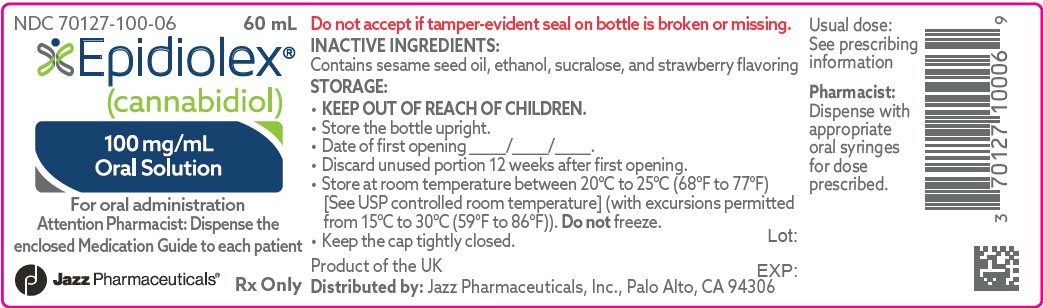
60 mL Bottle Label (Bottle Label 60mg)

60 mL Bottle Label (Bottle Label 60mg)
Label for Epidiolex cannabidiol 100 mg/mL oral solution, 60 mL bottle, by Jazz Pharmaceuticals, Inc. It includes instructions for oral administration, inactive ingredients, storage guidelines, and pharmacy dispensing notes. The label also features tamper-evident warnings and product lot/expiration details.*
FDA Label Image

60 mL Carton (Carton Label 60mg)

60 mL Carton (Carton Label 60mg)
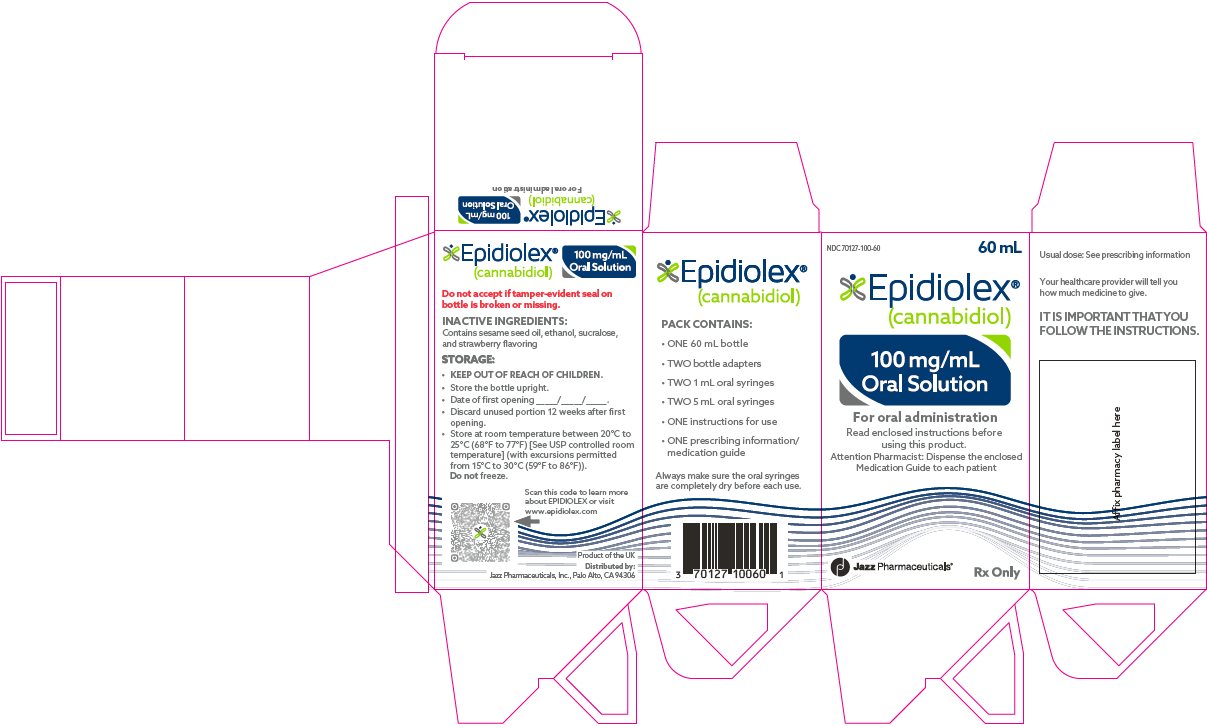
Packaging label for Epidiolex cannabidiol 100 mg/mL oral solution by Jazz Pharmaceuticals, Inc. The label indicates a 60 mL bottle size. It includes usage instructions for oral administration, storage directions, inactive ingredients, pack contents such as bottle adapters and oral syringes, bar code, and a tamper-evident seal notice. The label also directs users to read enclosed prescribing information and medication guide.*

* About these descriptions: Image descriptions on this page are generated by automated AI analysis of the product label images from the manufacturer's FDA label submission (SPL). They are provided for reference only and may contain errors or omissions. Always rely on the printed label itself and the official FDA labeling, and consult a pharmacist or healthcare professional with any questions about this product.