Screening patients for bipolar disorder
A major depressive episode may be the initial presentation of bipolar disorder. It is generally believed (though not established in controlled studies) that treating such an episode with an antidepressant alone may increase the likelihood of precipitation of a mixed/manic episode in patients at risk for bipolar disorder. Whether any of the symptoms described above represent such a conversion is unknown. However, prior to initiating treatment with an antidepressant, patients with depressive symptoms should be adequately screened to determine if they are at risk for bipolar disorder; such screening should include a detailed psychiatric history, including a family history of suicide, bipolar disorder, and depression. It should be noted that desvenlafaxine is not approved for use in treating bipolar depression.
Patient exposure
Desvenlafaxine was evaluated for safety in 8,394 patients diagnosed with major depressive disorder who participated in multiple-dose pre-marketing studies, representing 2,784 patient-years of exposure. Of the total 8,394 patients exposed to at least one dose of desvenlafaxine; 2,116 were exposed to desvenlafaxine for 6 months, representing 1,658 patient-years of exposure, and 421 were exposed for one year, representing 416 patient-years of exposure.
Adverse reactions reported as reasons for discontinuation of treatment
In the pre-marketing pooled 8-week placebo-controlled studies in patients with MDD, 1,834 patients were exposed to desvenlafaxine (50 to 400 mg). Of the 1,834 patients, 12% discontinued treatment due to an adverse reaction, compared with 3% of the 1,116 placebo-treated patients. At the recommended dose of 50 mg, the discontinuation rate due to an adverse reaction for desvenlafaxine (4.1%) was similar to the rate for placebo (3.8%). For the 100 mg dose of desvenlafaxine the discontinuation rate due to an adverse reaction was 8.7%.
The most common adverse reactions leading to discontinuation in at least 2% and at a rate greater than placebo of the desvenlafaxine treated patients in the short-term studies, up to 8 weeks, were: nausea (4%); dizziness, headache and vomiting (2% each). In a longer-term study, up to 9 months, the most common was vomiting (2%).
Common adverse reactions in placebo-controlled MDD studies
The most commonly observed adverse reactions in desvenlafaxine treated MDD patients in pre-marketing pooled 8-week, placebo-controlled, fixed-dose studies (incidence ≥5% and at least twice the rate of placebo in the 50 or 100 mg dose groups) were: nausea, dizziness, insomnia, hyperhidrosis, constipation, somnolence, decreased appetite, anxiety, and specific male sexual function disorders.
Table 2 shows the incidence of common adverse reactions that occurred in ≥2% of desvenlafaxine treated MDD patients and twice the rate of placebo at any dose in the pre-marketing pooled 8-week, placebo-controlled, fixed dose clinical studies
Table 2: Common Adverse Reactions (≥2% in any Fixed-Dose Group and Twice the Rate of Placebo) in Pre-marketing Pooled MDD 8-Week Placebo-Controlled Studies | Percentage of Patients Reporting Reaction |
|---|
| | Desvenlafaxine Extended-Release Tablets |
|---|
System Organ Class
Preferred Term
| Placebo
(n=636)
| 50 mg
(n=317)
| 100 mg
(n=424)
| 200 mg
(n=307)
| 400 mg
(n=317)
|
|---|
| Cardiac disorders |
| Blood pressure increased | 1 | 1 | 1 | 2 | 2 |
| Gastrointestinal disorders |
| Nausea | 10 | 22 | 26 | 36 | 41 |
| Dry mouth | 9 | 11 | 17 | 21 | 25 |
| Constipation | 4 | 9 | 9 | 10 | 14 |
| Vomiting | 3 | 3 | 4 | 6 | 9 |
| General disorders and administration site conditions |
| Fatigue | 4 | 7 | 7 | 10 | 11 |
| Chills | 1 | 1 | <1 | 3 | 4 |
| Feeling jittery | 1 | 1 | 2 | 3 | 3 |
| Metabolism and nutrition disorders |
| Decreased appetite | 2 | 5 | 8 | 10 | 10 |
| Nervous system disorders |
| Dizziness | 5 | 13 | 10 | 15 | 16 |
| Somnolence | 4 | 4 | 9 | 12 | 12 |
| Tremor | 2 | 2 | 3 | 9 | 9 |
| Disturbance in attention | <1 | <1 | 1 | 2 | 1 |
| Psychiatric disorders |
| Insomnia | 6 | 9 | 12 | 14 | 15 |
| Anxiety | 2 | 3 | 5 | 4 | 4 |
| Nervousness | 1 | <1 | 1 | 2 | 2 |
| Abnormal dreams | 1 | 2 | 3 | 2 | 4 |
| Renal and urinary disorders |
| Urinary hesitation | 0 | <1 | 1 | 2 | 2 |
| Respiratory, thoracic and mediastinal disorders |
| Yawning | <1 | 1 | 1 | 4 | 3 |
| Skin and subcutaneous tissue disorders |
| Hyperhidrosis | 4 | 10 | 11 | 18 | 21 |
| Special Senses |
| Vision blurred | 1 | 3 | 4 | 4 | 4 |
| Mydriasis | <1 | 2 | 2 | 6 | 6 |
| Vertigo | 1 | 2 | 1 | 5 | 3 |
| Tinnitus | 1 | 2 | 1 | 1 | 2 |
| Dysgeusia | 1 | 1 | 1 | 1 | 2 |
| Vascular disorders |
| Hot flush | <1 | 1 | 1 | 2 | 2 |
Sexual function adverse reactions
Table 3 shows the incidence of sexual function adverse reactions that occurred in ≥2% of desvenlafaxine treated MDD patients in any fixed-dose group (pre-marketing pooled 8-week, placebo-controlled, fixed-dose, clinical studies).
Table 3: Sexual Function Adverse Reactions (≥2% in Men or Women in any Desvenlafaxine Group) During the On-Therapy Period | | Desvenlafaxine Extended-Release Tablets |
| Placebo (n=239) | 50 mg (n=108) | 100 mg (n=157) | 200 mg (n=131) | 400 mg (n=154) |
| Men only |
| Anorgasmia | 0 | 0 | 3 | 5 | 8 |
| Libido decreased | 1 | 4 | 5 | 6 | 3 |
| Orgasm abnormal | 0 | 0 | 1 | 2 | 3 |
| Ejaculation delayed | <1 | 1 | 5 | 7 | 6 |
| Erectile dysfunction | 1 | 3 | 6 | 8 | 11 |
| Ejaculation disorder | 0 | 0 | 1 | 2 | 5 |
| Ejaculation failure | 0 | 1 | 0 | 2 | 2 |
| Sexual dysfunction | 0 | 1 | 0 | 0 | 2 |
| | Desvenlafaxine Extended-Release Tablets |
| Placebo
(n=397)
| 50 mg
(n=209)
| 100 mg
(n=267)
| 200 mg
(n=176)
| 400 mg
(n=163)
|
| Women only |
| Anorgasmia | 0 | 1 | 1 | 0 | 3 |
Other adverse reactions observed in premarketing and postmarketing clinical studies
Other infrequent adverse reactions, not described elsewhere in the label, occurring at an incidence of <2% in MDD patients treated with desvenlafaxine were:
Cardiac disorders – Tachycardia.
General disorders and administration site conditions – Asthenia.
Investigations – Weight increased, liver function test abnormal, blood prolactin increased.
Musculoskeletal and connective tissue disorders – Musculoskeletal stiffness.
Nervous system disorders – Syncope, convulsion, dystonia.
Psychiatric disorders – Depersonalization, bruxism.
Renal and urinary disorders – Urinary retention.
Skin and subcutaneous tissue disorders – Rash, alopecia, photosensitivity reaction, angioedema.
In clinical studies, there were uncommon reports of ischemic cardiac adverse reactions, including myocardial ischemia, myocardial infarction, and coronary occlusion requiring revascularization; these patients had multiple underlying cardiac risk factors. More patients experienced these events during desvenlafaxine treatment as compared to placebo.
Laboratory, ECG and vital sign changes observed in MDD clinical studies
The following changes were observed in pre-marketing placebo-controlled, short-term MDD studies with desvenlafaxine.
Lipids
Elevations in fasting serum total cholesterol, LDL (low density lipoproteins) cholesterol, and triglycerides occurred in the controlled studies. Some of these abnormalities were considered potentially clinically significant.
The percentage of patients who exceeded a predetermined threshold value is shown in Table 4.
Table 4: Incidence (%) of Patients with Lipid Abnormalities of Potential Clinical Significance* | | Desvenlafaxine Extended-Release Tablets |
| Placebo | 50 mg | 100 mg | 200 mg | 400 mg |
| Total Cholesterol | 2 | 3 | 4 | 4 | 10 |
| *(Increase of ≥50 mg/dl and an absolute value of | | | | | |
| ≥261 mg/dl) | | | | | |
| LDL Cholesterol | 0 | 1 | 0 | 1 | 2 |
| *(Increase ≥50 mg/dl and an absolute value of | | | | | |
| ≥190 mg/dl) | | | | | |
| Triglycerides, fasting | 3 | 2 | 1 | 4 | 6 |
| *(Fasting: ≥327 mg/dl) | | | | | |
Proteinuria
Proteinuria, greater than or equal to trace, was observed in the pre-marketing fixed-dose controlled studies (see Table 5). This proteinuria was not associated with increases in BUN or creatinine and was generally transient.
Table 5: Incidence (%) of Patients with Proteinuria in the Fixed-dose Clinical Studies | | | Desvenlafaxine Extended-Release Tablets |
| Placebo | 50 mg | 100 mg | 200 mg | 400 mg |
| Proteinuria | 4 | 6 | 8 | 5 | 7 |
Vital sign changes
Table 6 summarizes the changes that were observed in placebo-controlled, short-term, pre-marketing studies with desvenlafaxine in patients with MDD (doses 50 to 400 mg).
Table 6: Mean Changes in Vital Signs at Final on Therapy for All Short-term, Fixed-dose Controlled Studies | Desvenlafaxine Extended-Release Tablets |
| Placebo | 50 mg | 100 mg | 200 mg | 400 mg |
| Blood pressure | | | | | |
| Supine systolic bp (mm Hg) | -1.4 | 1.2 | 2.0 | 2.5 | 2.1 |
| Supine diastolic bp (mm Hg) | -0.6 | 0.7 | 0.8 | 1.8 | 2.3 |
| Pulse rate | | | | | |
| Supine pulse (bpm) | -0.3 | 1.3 | 1.3 | 0.9 | 4.1 |
| Weight (kg) | 0.0 | -0.4 | -0.6 | -0.9 | -1.1 |
Treatment with desvenlafaxine at all doses from 50 mg per day to 400 mg per day in controlled studies was associated with sustained hypertension, defined as treatment-emergent supine diastolic blood pressure (SDBP) ≥90 mm Hg and ≥10 mm Hg above baseline for 3 consecutive on-therapy visits (see Table 7). Analyses of patients in desvenlafaxine pre-marketing short-term controlled studies who met criteria for sustained hypertension revealed a consistent increase in the proportion of patients who developed sustained hypertension. This was seen at all doses with a suggestion of a higher rate at 400 mg per day.
Table 7: Proportion of Patients with Sustained Elevation of Supine Diastolic Blood Pressure | Treatment Group | Proportion of Patients with Sustained Hypertension |
| Placebo | 0.5% |
| Desvenlafaxine 50 mg per day | 1.3% |
| Desvenlafaxine 100 mg per day | 0.7% |
| Desvenlafaxine 200 mg per day | 1.1% |
| Desvenlafaxine 400 mg per day | 2.3% |
Orthostatic hypotension
In the pre-marketing short-term, placebo-controlled clinical studies with doses of 50 to 400 mg, systolic orthostatic hypotension (decrease ≥30 mm Hg from supine to standing position) occurred more frequently in patients ≥65 years of age receiving desvenlafaxine (8%, 7/87) versus placebo (2.5%, 1/40), compared to patients <65 years of age receiving desvenlafaxine (0.9%, 18/1,937) versus placebo (0.7%, 8/1,218).
Pregnancy Exposure Registry
There is a pregnancy exposure registry that monitors pregnancy outcomes in women exposed to antidepressants during pregnancy. Healthcare providers are encouraged to register patients by calling the National Pregnancy Registry for Antidepressants at 1-844-405-6185.
Risk summary
There are no published studies on desvenlafaxine in pregnant women; however published epidemiologic studies of pregnant women exposed to venlafaxine, the parent compound, have not reported a clear association with adverse developmental outcomes
(see Data). There are risks associated with untreated depression in pregnancy and with exposure to SNRIs and SSRIs, including desvenlafaxine, during pregnancy
(see Clinical Considerations).
In reproductive developmental studies in rats and rabbits treated with desvenlafaxine succinate, there was no evidence of teratogenicity at a plasma exposure (AUC) that is up to 19-times (rats) and 0.5-times (rabbits) the exposure at an adult human dose of 100 mg per day. However, fetotoxicity and pup deaths were observed in rats at 4.5-times the AUC exposure observed with an adult human dose of 100 mg per day.
The estimated background risk of major birth defects and miscarriage for the indicated population is unknown. All pregnancies have a background risk of birth defect, loss, or other adverse outcomes. In the U.S. general population, the estimated background risk of major birth defects and miscarriage in clinically recognized pregnancies is 2 to 4% and 15 to 20%, respectively.
Clinical Considerations
Disease-associated maternal and/or embryo/fetal risk
A prospective longitudinal study of 201 women with a history of major depression who were euthymic at the beginning of pregnancy, showed that women who discontinued antidepressant medication during pregnancy were more likely to experience a relapse of major depression than women who continued antidepressant medication.
Maternal adverse reactions
Exposure to SNRIs in mid to late pregnancy may increase the risk for preeclampsia, and exposure to SNRIs near delivery may increase the risk for postpartum hemorrhage.
Fetal/Neonatal adverse reactions
Exposure to SNRIs or SSRIs in late pregnancy may lead to an increased risk for neonatal complications requiring prolonged hospitalization, respiratory support, and tube feeding. Monitor neonates who were exposed to desvenlafaxine in the third trimester of pregnancy for drug discontinuation syndrome
(see Data).
Data
Human Data
Published epidemiological studies of pregnant women exposed to the parent compound venlafaxine have not reported a clear association with major birth defects or miscarriage. Methodological limitations of these observational studies include possible exposure and outcome misclassification, lack of adequate controls, adjustment for confounders, and confirmatory studies; therefore, these studies cannot establish or exclude any drug-associated risk during pregnancy.
Retrospective cohort studies based on claims data have shown an association between venlafaxine use and preeclampsia, compared to depressed women who did not take an antidepressant during pregnancy. One study that assessed venlafaxine exposure in the second trimester or first half of the third trimester and preeclampsia showed an increased risk compared to unexposed depressed women (adjusted (adj) RR 1.57, 95% CI 1.29 to 1.91). Preeclampsia was observed at venlafaxine doses equal to or greater than 75 mg/day and a duration of treatment >30 days. Another study that assessed venlafaxine exposure in gestational weeks 10 to 20 and preeclampsia showed an increased risk at doses equal to or greater than 150 mg/day. Available data are limited by possible outcome misclassification and possible confounding due to depression severity and other confounders.
Retrospective cohort studies based on claims data have suggested an association between venlafaxine use near the time of delivery or through delivery and postpartum hemorrhage. One study showed an increased risk for postpartum hemorrhage when venlafaxine exposure occurred through delivery, compared to unexposed depressed women (adj RR 2.24 (95% CI 1.69 to 2.97). There was no increased risk in women who were exposed to venlafaxine earlier in pregnancy. Limitations of this study include possible confounding due to depression severity and other confounders. Another study showed an increased risk for postpartum hemorrhage when SNRI exposure occurred for at least 15 days in the last month of pregnancy or through delivery, compared to unexposed women (adj RR 1.64 to 1.76). The results of this study may be confounded by the effects of depression.
Neonates exposed to SNRIs or SSRIs, late in the third trimester have developed complications requiring prolonged hospitalization, respiratory support, and tube feeding. Such complications can arise immediately upon delivery. Reported clinical findings have included respiratory distress, cyanosis, apnea, seizures, temperature instability, feeding difficulty, vomiting, hypoglycemia, hypotonia, hypertonia, hyperreflexia, tremor, jitteriness, irritability, and constant crying. These features are consistent with either a direct toxic effect of SSRIs and SNRIs or, possibly, a drug discontinuation syndrome. It should be noted that, in some cases, the clinical picture is consistent with serotonin syndrome
[see Warnings and Precautions (
5.2)].
Animal Data
When desvenlafaxine succinate was administered orally to pregnant rats and rabbits during the period of organogenesis at doses up to 300 mg/kg/day and 75 mg/kg/day, respectively, no teratogenic effects were observed. These doses were associated with a plasma exposure (AUC) 19 times (rats) and 0.5 times (rabbits) the AUC exposure at an adult human dose of 100 mg per day. However, fetal weights were decreased and skeletal ossification was delayed in rats in association with maternal toxicity at the highest dose, with an AUC exposure at the no-effect dose that is 4.5-times the AUC exposure at an adult human dose of 100 mg per day.
When desvenlafaxine succinate was administered orally to pregnant rats throughout gestation and lactation, there was a decrease in pup weights and an increase in pup deaths during the first four days of lactation at the highest dose of 300 mg/kg/day. The cause of these deaths is not known. The AUC exposure at the no-effect dose for rat pup mortality was 4.5-times the AUC exposure at an adult human dose of 100 mg per day. Post-weaning growth and reproductive performance of the progeny were not affected by maternal treatment with desvenlafaxine succinate at exposures 19 times the AUC exposure at an adult human dose of 100 mg per day.
Risk Summary
Available limited data from published literature show low levels of desvenlafaxine in human milk, and have not shown adverse reactions in breastfed infants (
see Data). There are no data on the effects of desvenlafaxine on milk production.
The developmental and health benefits of breastfeeding should be considered along with the mother’s clinical need for desvenlafaxine and any potential adverse effects on the breastfed child from desvenlafaxine or from the underlying maternal condition.
Data
A lactation study was conducted in 10 breastfeeding women (at a mean of 4.3 months post-partum) who were being treated with a 50 to 150 mg daily dose of desvenlafaxine for postpartum depression. Sampling was performed at steady state (up to 8 samples) over a 24 hour dosing period, and included foremilk and hindmilk. The mean relative infant dose was calculated to be 6.8% (range of 5.5 to 8.1%). No adverse reactions were seen in the infants.
Juvenile Animal Studies
In a juvenile animal study, male and female rats were treated with desvenlafaxine (75, 225 and 675 mg/kg/day) starting on postnatal day (PND) 22 through 112. Behavioral deficits (longer time immobile in a motor activity test, longer time swimming in a straight channel test, and lack of habituation in an acoustic startle test) were observed in males and females but were reversed after a recovery period. A No Adverse Effect Level (NOAEL) was not identified for these deficits. The Low Adverse Effect Level (LOAEL) was 75 mg/kg/day which was associated with plasma exposure (AUC) twice the levels measured with a pediatric dose of 100 mg/day.
In a second juvenile animal study, male and female rats were administered desvenlafaxine (75, 225 or 675 mg/kg/day) for 8 to 9 weeks starting on PND 22 and were mated with naïve counterparts. Delays in sexual maturation and decreased fertility, number of implantation sites and total live embryos were observed in treated females at all doses. The LOAEL for these findings is 75 mg/kg/day which was associated with an AUC twice the levels measured with a pediatric dose of 100 mg/day. These findings were reversed at the end of a 4-week recovery period. The relevance of these findings to humans is not known.
ECG changes
Electrocardiograms were obtained from 1,492 desvenlafaxine treated patients with major depressive disorder and 984 placebo-treated patients in clinical studies lasting up to 8 weeks. No clinically relevant differences were observed between desvenlafaxine treated and placebo-treated patients for QT, QTc, PR, and QRS intervals. In a thorough QTc study with prospectively determined criteria, desvenlafaxine did not cause QT prolongation. No difference was observed between placebo and desvenlafaxine treatments for the QRS interval.
Absorption
The absolute oral bioavailability of desvenlafaxine after oral administration is about 80%.
Effect of Food
Ingestion of a high-fat meal (800 to 1,000 calories) increased desvenlafaxine C
max about 16% and had no effect on AUC.
Distribution
Steady-state volume of distribution of desvenlafaxine is 3.4 L/kg. Plasma protein binding of desvenlafaxine is 30% and is independent of drug concentration.
Elimination
Metabolism
Desvenlafaxine is primarily metabolized by conjugation (mediated by UGT isoforms) and, to a minor extent, through oxidative metabolism. CYP3A4 mediates the oxidative metabolism (N-demethylation) of desvenlafaxine. The CYP2D6 metabolic pathway is not involved. The pharmacokinetics of desvenlafaxine was similar in subjects with CYP2D6 poor and extensive metabolizer phenotype.
Excretion
Approximately 45% of desvenlafaxine is excreted unchanged in urine at 72 hours after oral administration. Approximately 19% of the administered dose is excreted as the glucuronide metabolite and <5% as the oxidative metabolite (N,O-didesmethylvenlafaxine) in urine.
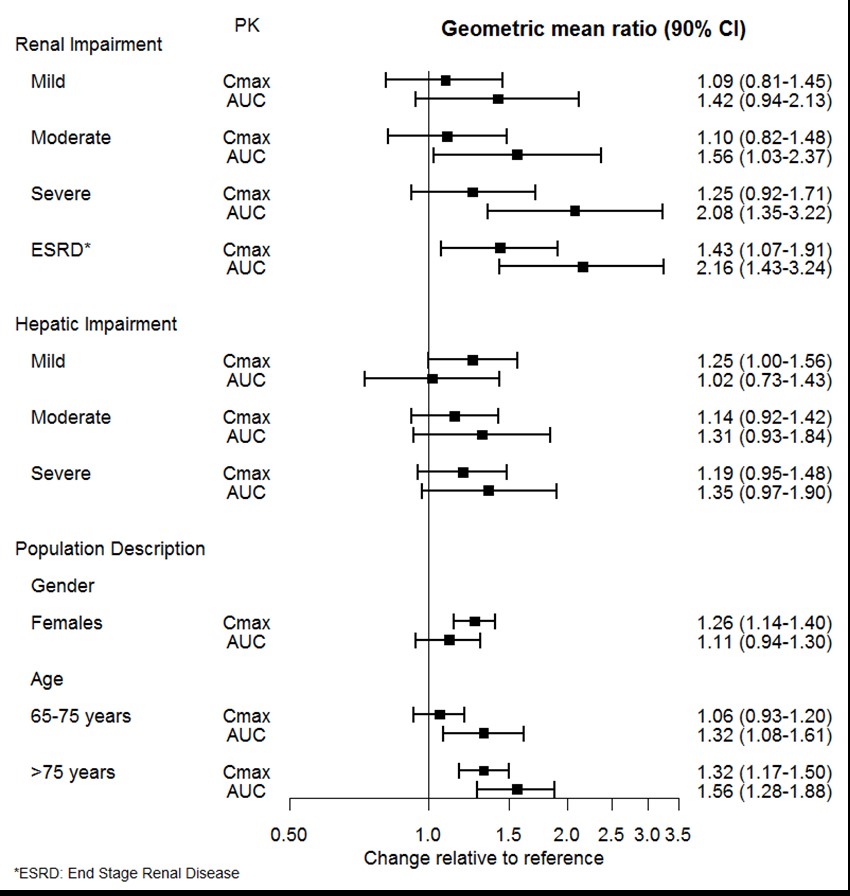
Specific Populations
No clinically significant differences in the exposures of desvenlafaxine were observed based on ethnicity (White, Black, Hispanic).
The effect of intrinsic patient factors on the pharmacokinetics of desvenlafaxine is presented in Figure 1.
Figure 1: Impact of Intrinsic Factors (Renal, Hepatic Impairment and Population Description) on Desvenlafaxine Pharmacokinetics
Drug Interaction Studies
Clinical Studies
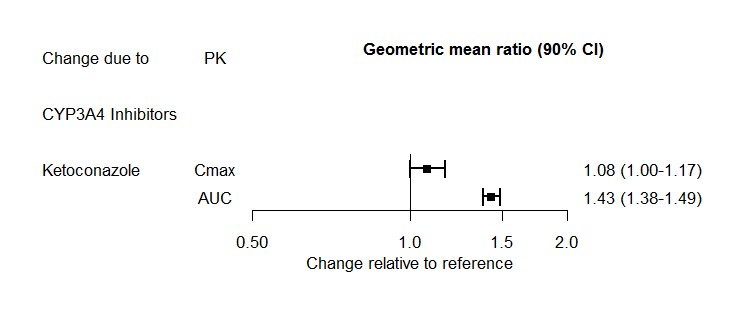
Other Drugs on Desvenlafaxine
The effect of ketoconazole on the exposures of desvenlafaxine is summarized in Figure 2.
Figure 2: Effect of Other Drugs on Desvenlafaxine Pharmacokinetics
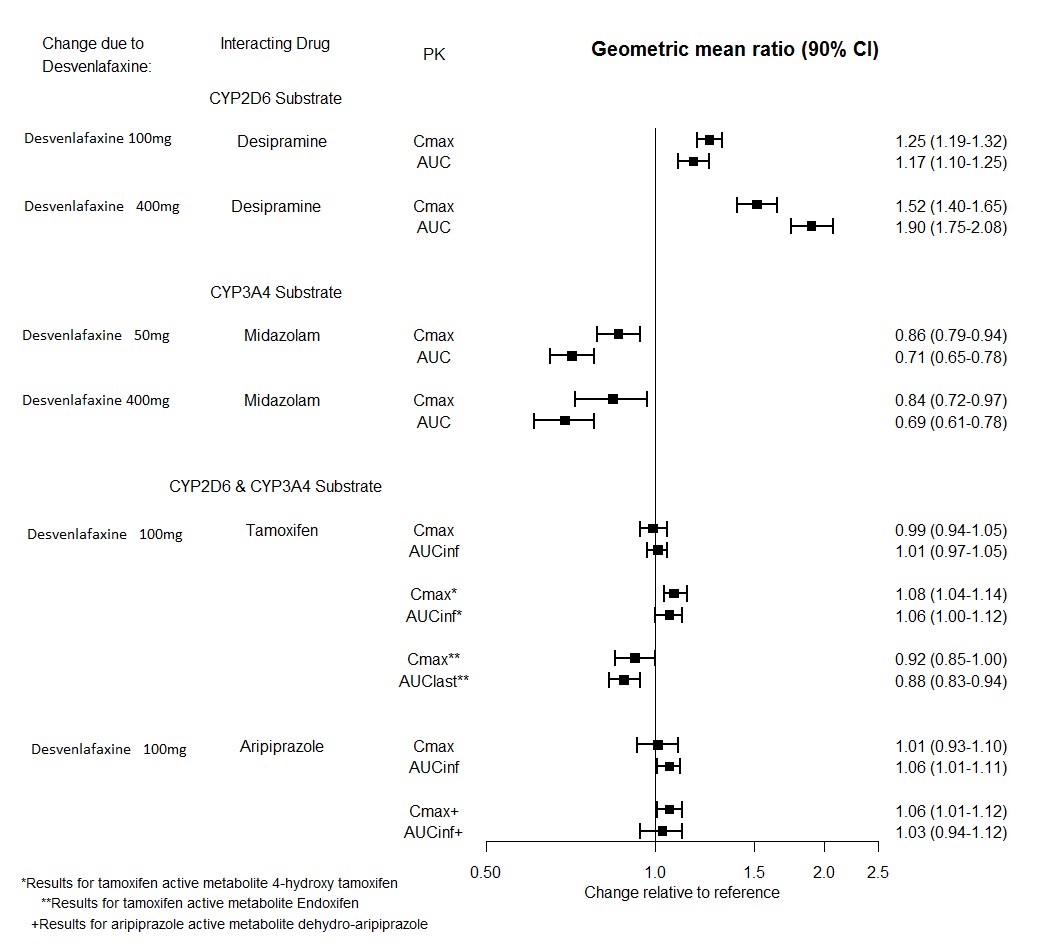
Desvenlafaxine on Other Drugs
The effects of desvenlafaxine on the exposures of other drugs are summarized in Figure 3.
Figure 3: Effects of Desvenlafaxine on Pharmacokinetics of Other Drugs
In Vitro Studies
Based on
in vitro data, drugs that inhibit CYP isozymes 1A1, 1A2, 2A6, 2D6, 2C8, 2C9, 2C19, and 2E1 are not expected to have significant impact on the pharmacokinetic profile of desvenlafaxine.
Desvenlafaxine does not inhibit CYP1A2, 2A6, 2C8, 2C9, 2C19, CYP2D6, or CYP3A4 isozymes. Desvenlafaxine does not induce CYP3A4 either.
Desvenlafaxine is not a substrate or an inhibitor for the P-glycoprotein (P-gp) transporter.
Carcinogenesis
Desvenlafaxine succinate administered by oral gavage to mice and rats for 2 years did not increase the incidence of tumors in either study.
Mice received desvenlafaxine succinate at dosages up to 500/300 mg/kg/day (dosage lowered after 45 weeks of dosing). The AUC exposure at 300 mg/kg/day dose is estimated at 10 times the AUC exposure at an adult human dose of 100 mg per day.
Rats received desvenlafaxine succinate at dosages up to 300 mg/kg/day (males) or 500 mg/kg/day (females). The AUC exposure at the highest dose is estimated at 11 (males) or 26 (females) times the AUC exposure at an adult human dose of 100 mg per day.
Mutagenesis
Desvenlafaxine was not mutagenic in the
in vitro bacterial mutation assay (Ames test) and was not clastogenic in an
in vitro chromosome aberration assay in cultured CHO cells, an
in vivo mouse micronucleus assay, or an
in vivo chromosome aberration assay in rats. Additionally, desvenlafaxine was not genotoxic in the
in vitro CHO mammalian cell forward mutation assay and was negative in the
in vitro BALB/c-3T3 mouse embryo cell transformation assay.
Impairment of fertility
When desvenlafaxine succinate was administered orally to male and female rats, fertility was reduced at the high dose of 300 mg/kg/day, which is 10 (males) and 19 (females) times the AUC exposure at an adult human dose of 100 mg per day. There was no effect on fertility at 100 mg/kg/day, which is 3 (males) or 5 (females) times the AUC exposure at an adult human dose of 100 mg per day. These studies did not address reversibility of the effect on fertility. The relevance of these findings to humans is not known.
Suicidal Thoughts and Behaviors
Advise patients and caregivers to look for the emergence of suicidality, especially early during treatment and when the dose is adjusted up or down, and instruct them to report such symptoms to the healthcare provider
[see Boxed Warning and Warnings and Precautions (
5.1)].
Concomitant Medication
Advise patients taking desvenlafaxine not to use concomitantly other products containing desvenlafaxine or venlafaxine. Healthcare professionals should instruct patients not to take desvenlafaxine with an MAOI or within 14 days of stopping an MAOI and to allow 7 days after stopping desvenlafaxine before starting an MAOI
[see Contraindications (
4)]
.
Concomitant Medication
Advise patients taking desvenlafaxine not to use concomitantly other products containing desvenlafaxine or venlafaxine. Healthcare professionals should instruct patients not to take desvenlafaxine with an MAOI or within 14 days of stopping an MAOI and to allow 7 days after stopping desvenlafaxine before starting an MAOI
[see Contraindications (
4)]
.
Serotonin Syndrome
Caution patients about the risk of serotonin syndrome, particularly with the concomitant use of desvenlafaxine with other serotonergic agents (including triptans, tricyclic antidepressants, fentanyl, lithium, tramadol, amphetamines, tryptophan, buspirone, and St. John's Wort supplements)
[see Warnings and Precautions (
5.2)].
Elevated Blood Pressure
Advise patients that they should have regular monitoring of blood pressure when taking desvenlafaxine
[see Warnings and Precautions (
5.3)]
.
Increased Risk of Bleeding
Inform patients about the concomitant use of desvenlafaxine with NSAIDs, aspirin, other antiplatelet drugs, warfarin, or other coagulants because the combined use of has been associated with an increased risk of bleeding. Advise patients to inform their health care providers if they are taking or planning to take any prescription or over-the-counter medications that increase the risk of bleeding
[see Warnings and Precautions (
5.4)]
.
Activation of Mania/Hypomania
Advise patients, their families, and caregivers to observe for signs of activation of mania/hypomania
[see Warnings and Precautions (
5.6)].
Discontinuation
Advise patients not to abruptly stop taking desvenlafaxine without talking first with their healthcare professional. Patients should be aware that discontinuation effects may occur when stopping desvenlafaxine, and a dose of 25 mg per day is available for discontinuing therapy
[see Warnings and Precautions (
5.7) and Adverse Reactions (
6.1)].
Switching Patients From Other Antidepressants to Desvenlafaxine
Discontinuation symptoms have been reported when switching patients from other antidepressants, including venlafaxine, to desvenlafaxine. Tapering of the initial antidepressant may be necessary to minimize discontinuation symptoms.
Interference with Cognitive and Motor Performance
Caution patients about operating hazardous machinery, including automobiles, until they are reasonably certain that desvenlafaxine therapy does not adversely affect their ability to engage in such activities.
Alcohol
Advise patients to avoid alcohol while taking desvenlafaxine
[see Drug Interactions (
7.3)].
Allergic Reactions
Advise patients to notify their physician if they develop allergic phenomena such as rash, hives, swelling, or difficulty breathing.
Pregnancy
Advise patients to notify their physician if they become pregnant or intend to become pregnant during therapy. Advise patients that there is a pregnancy exposure registry that monitors pregnancy outcomes in women exposed to desvenlafaxine during pregnancy
[see Use in Specific Populations (
8.1)].
Residual Inert Matrix Tablet
Patients receiving desvenlafaxine may notice an inert matrix tablet passing in the stool or via colostomy. Patients should be informed that the active medication has already been absorbed by the time the patient sees the inert matrix tablet.
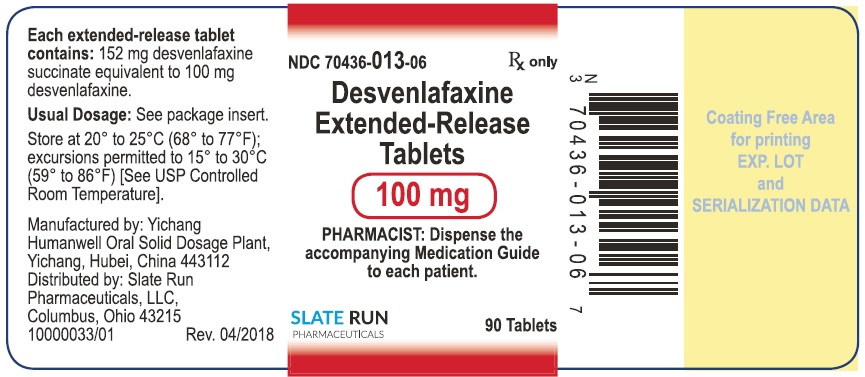
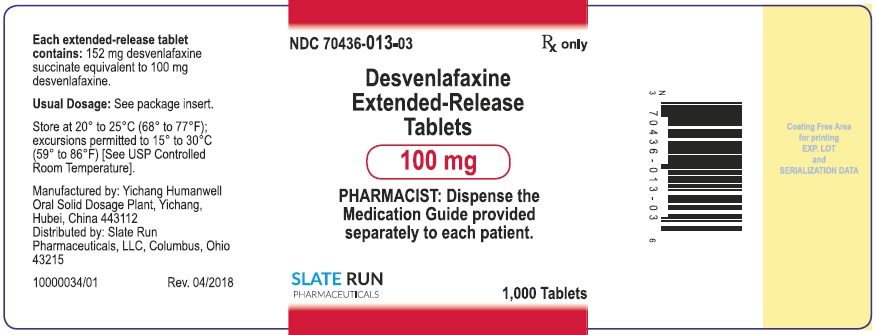
Manufactured by:
Yichang Humanwell Oral Solid Dosage Plant
Yichang, Hubei, China 443112
Distributed by:
Slate Run Pharmaceuticals, LLC
Columbus, Ohio 43215
Made in China
10000046/01
Revised 10/2018
Manufactured by:
Yichang Humanwell Oral Solid Dosage Plant
Yichang, Hubei, China 443112
Distributed by:
Slate Run Pharmaceuticals, LLC
Columbus, Ohio 43215
Made in China
10000046/01
Revised 10/2018