Because clinical trials are conducted under widely varying conditions, adverse reaction rates observed in the clinical trials of a drug cannot be directly compared to rates in the clinical trials of another drug and may not reflect rates observed in practice. The most common adverse reactions and laboratory abnormalities reported in at least 20% of patients were pyrexia, diarrhea, leukopenia, nausea, anemia, asthenia, headache, cough, decreased appetite, dyspnea, abdominal pain, sepsis, hyperhidrosis, and blood creatinine increased.
Selected adverse reactions that occurred during clinical trials of ganciclovir are summarized below, according to the participating study patient population.
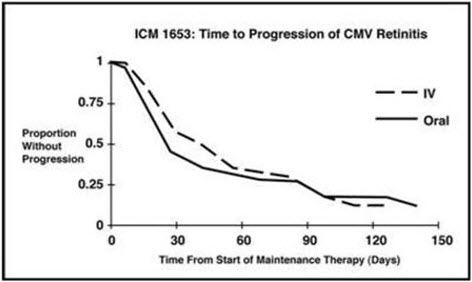
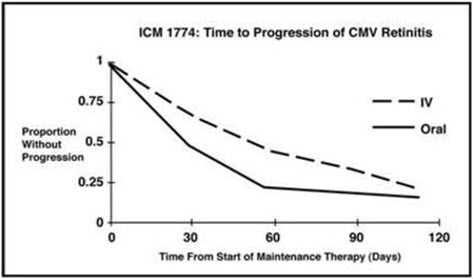
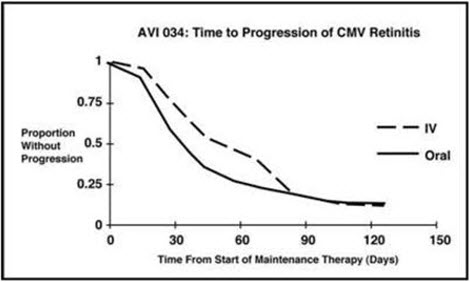
Adverse Reactions in Patients with CMV Retinitis: Three controlled, randomized, phase 3 trials comparing intravenous ganciclovir and ganciclovir capsules for maintenance treatment of CMV retinitis have been completed. During these trials, intravenous ganciclovir or ganciclovir capsules were prematurely discontinued in 9% of subjects because of adverse reactions. Selected adverse reactions and laboratory abnormalities reported during the conduct of these controlled trials are summarized in
Table 2 and
Table 3, respectively
[see Clinical Studies (14.1)].
Table 2. Pooled Selected Adverse Reactions Reported in ≥5% of Subjects Comparing Intravenous Ganciclovir to Ganciclovir Capsules for Maintenance Treatment of CMV Retinitis| Adverse Reaction | Maintenance Treatment Studies |
|---|
Intravenous Ganciclovir
(n=179)
| Ganciclovir Capsules
(n=326) |
|---|
Pyrexia | 48% | 38% |
Diarrhea | 44% | 41% |
Leukopenia | 41% | 29% |
Anemia | 25% | 19% |
Total catheter events | 22% | 6% |
Catheter infection | 9% | 4% |
Catheter sepsis | 8% | 1% |
Other catheter related events | 5% | 1% |
Sepsis | 15% | 4% |
Decreased appetite | 14% | 15% |
Vomiting | 13% | 13% |
Infection | 13% | 9% |
Hyperhidrosis | 12% | 11% |
Chills | 10% | 7% |
Neuropathy peripheral | 9% | 8% |
Thrombocytopenia | 6% | 6% |
Pruritus | 5% | 6% |
Retinal Detachment: Retinal detachment has been observed in subjects with CMV retinitis both before and after initiation of therapy with ganciclovir. Its relationship to therapy with ganciclovir is unknown. Retinal detachment occurred in 11% of patients treated with intravenous ganciclovir and in 8% of patients treated with ganciclovir capsules.
Table 3. Selected Laboratory Abnormalities in Trials for Treatment of CMV Retinitis | CMV Retinitis Treatment Pooled data from Treatment Studies: ICM 1653, ICM 1774 and AVI 034 |
|---|
| Laboratory Abnormalities | Intravenous Ganciclovir Mean time on therapy = 103 days, including allowed re-induction treatment periods
5 mg/kg/day
(N=175)
%
| Ganciclovir Capsules Mean time on therapy = 91 days, including allowed re-induction treatment periods
3000 mg/day
(N=320)
%
|
|---|
Neutropenia with Absolute Neutrophil Count (ANC) per µL: | | |
<500 | 25% | 18% |
500 – <749 | 14% | 17% |
750 – <1000 | 26% | 19% |
Anemia with Hemoglobin (g/dL): | | |
<6.5 g/dL | 5% | 2% |
6.5 – <8.0 | 16% | 10% |
8.0 – <9.5 | 26% | 25% |
Serum Creatinine mg/dL: | | |
≥2.5 | 2% | 1% |
≥1.5 – <2.5 | 14% | 12% |
Adverse Reactions in Transplant Recipients: There have been three controlled clinical trials of intravenous ganciclovir for the prevention of CMV disease in transplant recipients. Selected laboratory abnormalities are summarized in
Table 4 and
Table 5 below.
Table 4 shows the frequency of neutropenia and thrombocytopenia and
Table 5 shows the frequency of elevated serum creatinine values observed in these trials
[see Clinical Studies (14.2)].
Table 4. Laboratory Abnormalities in Controlled Trials - Transplant Recipients who Received Intravenous Ganciclovir, Placebo or Control | Intravenous Ganciclovir |
|---|
| Heart Allograft Study ICM 1496. Mean duration of treatment = 28 days | Bone Marrow Allograft Study ICM 1570 and ICM 1689. Mean duration of treatment = 45 days |
|---|
Intravenous Ganciclovir
(n=76)
| Placebo
(n=73)
| Intravenous Ganciclovir
(n=57)
| Control
(n=55)
|
|---|
Neutropenia | | | | |
Absolute Neutrophil Count (ANC) per µL | | | | |
<500 | 4% | 3% | 12% | 6% |
500 – 1000 | 3% | 8% | 29% | 17% |
Total ANC ≤1000/µL | 7% | 11% | 41% | 23% |
Thrombocytopenia | | | | |
Platelet count per µL | | | | |
<25,000 | 3% | 1% | 32% | 28% |
25,000 - 50,000 | 5% | 3% | 25% | 37% |
Total Platelet Count ≤50,000/µL | 8% | 4% | 57% | 65% |
Table 5. Serum Creatinine Levels in Controlled Trials - Transplant Recipients who Received Intravenous Ganciclovir or Placebo | Heart Allograft
ICM 1496
| Bone Marrow Allograft
ICM 1570
| Bone Marrow Allograft
ICM 1689
|
|---|
| Serum Creatinine Levels (mg/dL) | Intravenous Ganciclovir
(n=76)
| Placebo
(n=73)
| Intravenous Ganciclovir
(n=20)
| Control
(n=73)
| Intravenous Ganciclovir
(n=37)
| Placebo
(n=35)
|
|---|
≥2.5 | 18% | 4% | 20% | 0% | 0% | 0% |
≥1.5 – <2.5 | 58% | 69% | 50% | 35% | 43% | 44% |
Other Adverse Reactions in Clinical Trials in Patients with CMV Retinitis and in Transplant Recipients
Adverse drug reactions with intravenous ganciclovir or ganciclovir capsules in controlled clinical studies in either subjects with AIDS or transplant recipients are listed below
[see Clinical Studies (
14)]
. All these events occurred in at least 3 subjects.
Blood and lymphatic disorders: pancytopenia, bone marrow failure
Cardiac disorders: arrhythmias
Ear and labyrinth disorders: tinnitus, ear pain, deafness
Eye disorders: visual impairment, vitreous disorders, eye pain, conjunctivitis, macular edema
Gastrointestinal disorders: nausea, abdominal pain, dyspepsia, flatulence, constipation, mouth ulceration, dysphagia, abdominal distention, pancreatitis, gastrointestinal perforation, eructation, dry mouth
General disorders and administration site conditions: fatigue, injection site inflammation, edema, pain, malaise, asthenia, chest pain, multiple organ failure
Immune system disorders: hypersensitivity
Infections and infestations: candida infections including oral candidiasis, upper respiratory infection, influenza, urinary tract infections, cellulitis
Investigations: blood alkaline phosphatase increased, hepatic function abnormal, aspartate aminotransferase increased, alanine aminotransferase increased, creatinine clearance decreased
Metabolism and nutrition disorders: weight decreased
Musculoskeletal and connective tissue disorders: back pain, myalgia, arthralgia, muscle spasms, leg cramps, myasthenia
Nervous system disorders: headache, insomnia, dizziness, paresthesia, hypoaesthesia, seizures, somnolence, dysgeusia (taste disturbance), tremor
Psychiatric disorders: depression, confusional state, anxiety, agitation, psychotic disorder, thinking abnormal, abnormal dreams
Renal and urinary disorders: kidney failure, renal function abnormal, urinary frequency, hematuria
Respiratory, thoracic and mediastinal disorders: cough, dyspnea
Skin and subcutaneous tissues disorders: dermatitis, alopecia, dry skin, urticaria, rash
Vascular disorders: hypotension, hypertension, phlebitis, vasodilation