Tudorza Pressair Powder, Metered
Product Images NDC 70515-002

View Photos of Packaging, Regulatory Labels, and Product Appearance

Product Visual Gallery

This gallery contains 22 technical images submitted to the FDA as part of the official labeling for Tudorza Pressair (NDC 70515-002). Unlike standard consumer photos, these assets often include clinical data figures, molecular chemical structures, and official manufacturer packaging layouts.

As provided by Covis Pharma Us, Inc, these visuals offer a comprehensive scientific overview of the product's physical and chemical identity, aiding pharmacists and researchers in product verification and study.

FDA Label Image

Structural Formula (Checmicalstructure)

Structural Formula (Checmicalstructure)
Chemical structure of aclidinium bromide, the active ingredient in Tudorza Pressair. The diagram shows the molecular arrangement including the bromide ion and characteristic cyclopentyl and phenyl groups.*
FDA Label Image

Figure 1 (Figure 1 Change From Baseline In Fev1over Time (prior To And After Administration Of Study Drug) At Week 1 In Trial A)

Figure 1 (Figure 1 Change From Baseline In Fev1over Time (prior To And After Administration Of Study Drug) At Week 1 In Trial A)
A line graph showing the change from baseline in FEV1 (L) over 24 hours after evening administration of aclidinium bromide in doses of 100 mcg, 200 mcg, and 400 mcg compared to placebo. The x-axis represents time in hours, and the y-axis shows change from baseline in FEV1. Each dose group and the placebo are represented by distinct markers with sample sizes indicated.*
FDA Label Image

Figure 2 (Figure 2)

Figure 2 (Figure 2)
This image contains two line graphs comparing the change from baseline in FEV1 over 12 hours on Day 1 and at Week 12 for placebo versus aclidinium 400 mcg inhalation powder. The graphs show measurements taken at multiple time points from just before dosing through 12 hours post-dose, illustrating lung function improvement with aclidinium compared to placebo.*
FDA Label Image

Figure_4_time_to_first (Figure 4 Time To First)

Figure_4_time_to_first (Figure  4 Time To First)
A line graph comparing the proportion of subjects with events over time (days) from randomization between two groups: aclidinium 400 mcg and placebo. The graph includes patient counts at risk over various time points, showing the response trends for each group.*
FDA Label Image

Figure_3 (Figure 3)

Figure_3 (Figure 3)
A line graph comparing the proportion of subjects with events over time in days from randomization for aclidinium 400 mcg versus placebo groups. The x-axis represents time in days up to approximately 1300 days, and the y-axis shows the proportion of subjects with events ranging from 0 to 1. Two lines indicate the data for aclidinium 400 mcg and placebo, with a table below showing the number of patients at risk over various time points for each group.*
FDA Label Image

Figure_a_ifu (Image 01)

Figure_a_ifu (Image 01)
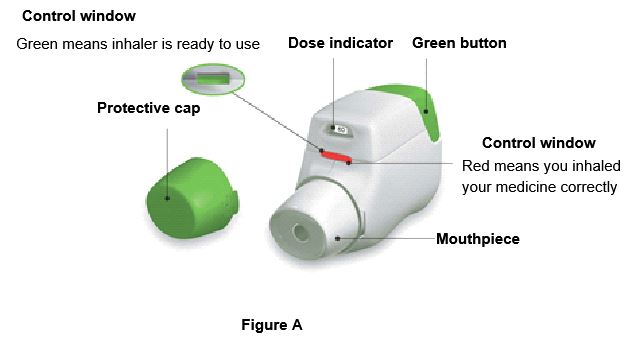
Illustration of the Tudorza Pressair inhaler showing its main components: green protective cap, dose indicator, green button, control window with color indicators, and mouthpiece. The diagram explains that the green control window means the inhaler is ready to use, and the red control window means the medicine has been inhaled correctly.*
FDA Label Image

Figure_c_ifu (Image 02)

Figure_c_ifu (Image 02)
An illustration of the Tudorza Pressair inhaler device showing the mouthpiece opening and a red indicator window above it. The red indicator is highlighted to demonstrate its function as seen in Figure C of the instructional material.*
FDA Label Image

Figure_b_ifu (Image 03)

Figure_b_ifu (Image 03)
An instructional diagram showing how to use an inhaler device. It depicts a person holding the inhaler and pulling a green component with the instruction "Squeeze here and pull" to prepare the device for use.*
FDA Label Image

Figure_d_ifu (Image 04)

Figure_d_ifu (Image 04)
Illustration depicting a hand holding a Tudorza Pressair inhaler device, a powder metered dose inhaler for respiratory use containing aclidinium bromide. The image highlights the proper grip and positioning of the inhaler for administration.*
FDA Label Image

Figure_e_ifu (Image 05)

Figure_e_ifu (Image 05)
Illustration showing a hand holding the Tudorza Pressair inhaler with an arrow indicating the step to press down on the top of the device, demonstrating how to use the powder metered respiratory inhaler.*
FDA Label Image

Figure_f_ifu (Image 06)

Figure_f_ifu (Image 06)
Illustration showing a hand holding the Tudorza Pressair inhaler device with an arrow indicating the action of moving or lifting a green lever upward, presumably as part of the inhaler’s usage instructions.*
FDA Label Image

Figure_g_ifu (Image 07)

Figure_g_ifu (Image 07)
An illustration labeled 'Figure G' depicting the front view of the Tudorza Pressair inhaler device. The device features a green rectangular indicator on its top section, beneath a small window displaying the number 60, likely representing remaining doses.*
FDA Label Image

Figure_h_ifu (Image 08)

Figure_h_ifu (Image 08)
An instructional illustration labeled Figure H showing the top view of a Tudorza Pressair inhaler dose counter displaying the number 60. A red X is overlaid on the image, indicating an action or status to avoid or discontinue.*
FDA Label Image

Figure_i_ifu (Image 09)

Figure_i_ifu (Image 09)
An instructional illustration showing a side profile of a person's lower face and mouth with a green arrow pointing outward from the lips, indicating exhalation or breath release.*
FDA Label Image

Figure_j_ifu (Image 10)

Figure_j_ifu (Image 10)
An instructional illustration showing a person using a handheld respiratory inhalation device. The device is positioned at the mouth, and a sprayed powder inhalation is depicted, demonstrating proper use of the inhaler.*
FDA Label Image

Figure_k_ifu (Image 11)

Figure_k_ifu (Image 11)
Illustration labeled Figure K showing the front view of an inhaler device with an arrow pointing to a red indicator on the upper section near a dose counter displaying the number 60.*
FDA Label Image

Figure_l_ifu (Image 12)

Figure_l_ifu (Image 12)
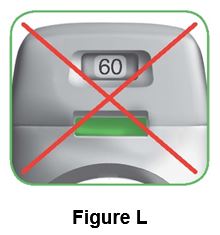
Illustration labeled Figure L showing the top portion of an inhaler device with a counter display reading '60' crossed out by a red X mark, indicating a specific status or instruction related to the device counter.*
FDA Label Image

Figure_m_ifu (Image 13)

Figure_m_ifu (Image 13)
An instructional illustration showing hands demonstrating how to operate the Tudorza Pressair device by pressing the green button and sliding the cover away from the mouthpiece, indicated by an arrow pointing to the right.*
FDA Label Image

Figure_n_ifu (Image 14)

Figure_n_ifu (Image 14)
An instructional diagram showing the dose indicator mechanism of Tudorza Pressair inhaler. It highlights the dose indicator moving slowly from 60 to 0 in increments of 10, with a red band appearing next to the dose indicator as the count approaches zero.*
FDA Label Image

Figure_o_ifu (Image 15)

Figure_o_ifu (Image 15)
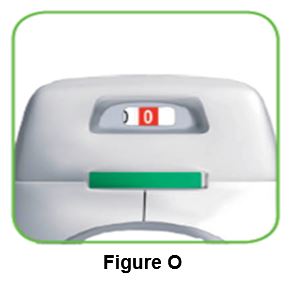
Illustration of the dose counter window on a Tudorza Pressair inhaler device, showing a red number '0' indicating the remaining doses. The inhaler surface is gray with a green button.*
FDA Label Image

Figure_p_ifu (Image 16)

Figure_p_ifu (Image 16)
An instructional diagram showing a side profile of the Tudorza Pressair inhaler in a locked state, with a white body and green element visible on the top back portion of the device. The word 'Locked' is labeled next to the device, and the figure is marked as 'Figure P'.*
FDA Label Image

60 Metered Doses Carton (Image 17)

60 Metered Doses Carton (Image 17)
Tudorza Pressair (aclidinium bromide inhalation powder) 400 mcg per actuation metered dose inhaler packaging label. The label indicates 60 metered doses for oral inhalation and is labeled for prescription use only. The product is manufactured by Covis Pharma US, Inc.*

* About these descriptions: Image descriptions on this page are generated by automated AI analysis of the product label images from the manufacturer's FDA label submission (SPL). They are provided for reference only and may contain errors or omissions. Always rely on the printed label itself and the official FDA labeling, and consult a pharmacist or healthcare professional with any questions about this product.