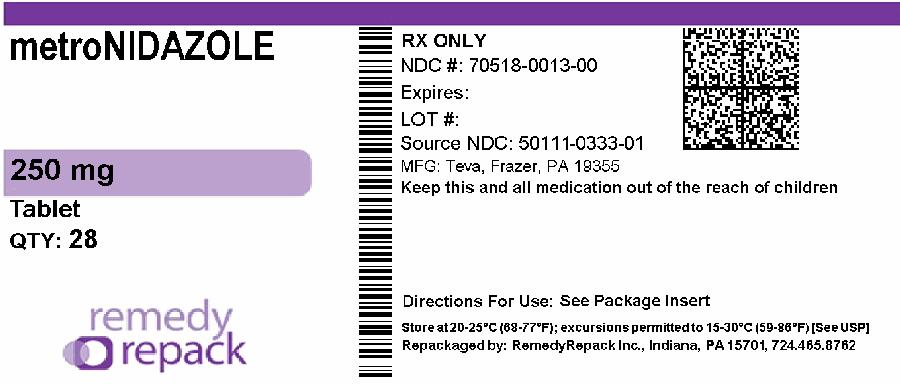
Metronidazole Tablets USP are indicated in the treatment of serious infections caused by susceptible anaerobic bacteria. Indicated surgical procedures should be performed in conjunction with metronidazole tablets USP therapy. In a mixed aerobic and anaerobic infection, antimicrobials appropriate for the treatment of the aerobic infection should be used in addition to metronidazole tablets USP.
INTRA-ABDOMINAL INFECTIONS,
including peritonitis, intra-abdominal abscess, and liver abscess, caused by
Bacteroides species including the
B. fragilis group (
B. fragilis, B. distasonis, B. ovatus, B. thetaiotaomicron, B. vulgatus),
Clostridium species,
Eubacterium species,
Peptococcus species
, and
Peptostreptococcus species.
SKIN AND SKIN STRUCTURE INFECTIONS
caused by
Bacteroides species including the
B. fragilis group,
Clostridium species,
Peptococcus species
, Peptostreptococcus species, and
Fusobacterium species.
GYNECOLOGIC INFECTIONS, including endometritis, endomyometritis, tubo-ovarian abscess, and postsurgical vaginal cuff infection, caused by
Bacteroides species including the
B. fragilis group,
Clostridium species,
Peptococcus species
, Peptostreptococcus species, and
Fusobacterium species.
BACTERIAL SEPTICEMIA
caused by
Bacteroides species including the
B. fragilis group and
Clostridium species.
BONE AND JOINT INFECTIONS,
(as adjunctive therapy), caused by
Bacteroides species including the
B. fragilis group.
CENTRAL NERVOUS SYSTEM (CNS) INFECTIONS, including meningitis and brain abscess, caused by
Bacteroides species including the
B. fragilis group.
LOWER RESPIRATORY TRACT INFECTIONS, including pneumonia, empyema, and lung abscess, caused by
Bacteroides species including the
B. fragilis group.
ENDOCARDITIS
caused by
Bacteroides species including the
B. fragilis group.
To reduce the development of drug-resistant bacteria and maintain the effectiveness of metronidazole tablets USP and other antibacterial drugs, metronidazole tablets USP should be used only to treat or prevent infections that are proven or strongly suspected to be caused by susceptible bacteria. When culture and susceptibility information are available, they should be considered in selecting or modifying antibacterial therapy. In the absence of such data, local epidemiology and susceptibility patterns may contribute to the empiric selection of therapy.
In the treatment of most serious anaerobic infections, intravenous metronidazole is usually administered initially.
The usual adult oral dosage is 7.5 mg/kg every six hours (approx. 500 mg for a 70 kg adult). A maximum of 4 g should not be exceeded during a 24 hour period.
The usual duration of therapy is 7 to 10 days; however, infections of the bone and joint, lower respiratory tract, and endocardium may require longer treatment.
Dosage Adjustments
Patients With Severe Hepatic Impairment
For patients with severe hepatic impairment (Child-Pugh C), the dose of metronidazole tablets should be reduced by 50% (see
CLINICAL PHARMACOLOGY and
PRECAUTIONS).
Patients Undergoing Hemodialysis:
Hemodialysis removes significant amounts of metronidazole and its metabolites from systemic circulation. The clearance of metronidazole will depend on the type of dialysis membrane used, the duration of the dialysis session, and other factors. If the administration of metronidazole cannot be separated from the hemodialysis session, supplementation of metronidazole dosage following the hemodialysis session should be considered, depending on the patient’s clinical situation (see
CLINICAL PHARMACOLOGY).