Other
Increased Mortality in Elderly Patients with Dementia-Related Psychosis
Elderly patients with dementia-related psychosis treated with antipsychotic drugs are at an increased risk of death [see WARNINGS AND PRECAUTIONS ( 5.1)]. Quetiapine is not approved for the treatment of patients with dementia-related psychosis [see WARNINGS AND PRECAUTIONS ( 5.1)].
Suicidal Thoughts and Behaviors
Antidepressants increased the risk of suicidal thoughts and behavior in children, adolescents, and young adults in short-term studies. These studies did not show an increase in the risk of suicidal thoughts and behavior with antidepressant use in patients over age 24; there was a reduction in risk with antidepressant use in patients aged 65 and older [see WARNINGS AND PRECAUTIONS ( 5.2)].
In patients of all ages who are started on antidepressant therapy, monitor closely for worsening, and for emergence of suicidal thoughts and behaviors. Advise families and caregivers of the need for close observation and communication with the prescriber [see WARNINGS AND PRECAUTIONS ( 5.2)].
Quetiapine is not approved for use in pediatric patients under ten years of age [see USE IN SPECIFIC POPULATIONS ( 8.4)].
- Quetiapine tablets, 25 mg (as quetiapine) are pink colored, round, biconvex, film-coated tablets, debossed "LU" on one side and "Y15" on the other side.
- Quetiapine tablets, 50 mg (as quetiapine) are white, round, biconvex, film-coated tablets, debossed "LU" on one side and "Y16" on the other side.
- Quetiapine tablets, 100 mg (as quetiapine) are yellow colored, round, biconvex, film-coated tablets, debossed "LU" on one side and "Y17" on the other side.
- Quetiapine tablets, 200 mg (as quetiapine) are white, round, biconvex, film-coated tablets, debossed "LU" on one side and "Y18" on the other side.
- Quetiapine tablets, 300 mg (as quetiapine) are white, capsule shape, biconvex, film-coated tablets, debossed "LU" on one side and "Y19" on the other side.
- Quetiapine tablets, 400 mg (as quetiapine) are yellow colored, capsule shape, biconvex, film-coated tablets, debossed "LU" on one side and "Y20" on the other side.
- Increased mortality in elderly patients with dementia-related psychosis [see WARNINGSANDPRECAUTIONS ( 5.1 )]
- Suicidal thoughts and behaviors in adolescents and young adults [see WARNINGSANDPRECAUTIONS ( 5.2 )]
- Cerebrovascular adverse reactions, including stroke in elderly patients with dementia-related psychosis [see WARNINGSANDPRECAUTIONS ( 5.3 )]
- Neuroleptic Malignant Syndrome (NMS) [see WARNINGSANDPRECAUTIONS ( 5.4 )]
- Metabolic changes (hyperglycemia, dyslipidemia, weight gain) [see WARNINGSANDPRECAUTIONS ( 5.5 )]
- Tardive dyskinesia [see WARNINGSANDPRECAUTIONS ( 5.6 )]
- Hypotension [see WARNINGSANDPRECAUTIONS ( 5.7 )]
- Falls [see WARNINGS AND PRECAUTIONS ( 5.8) ]
- Increases in blood pressure (children and adolescents) [see WARNINGSANDPRECAUTIONS ( 5.9 )]
- Leukopenia, neutropenia and agranulocytosis [see WARNINGSANDPRECAUTIONS ( 5.10 )]
- Cataracts [see WARNINGSANDPRECAUTIONS ( 5.11 )]
- QT Prolongation [see WARNINGSANDPRECAUTIONS ( 5.12 )]
- Seizures [see WARNINGSANDPRECAUTIONS ( 5.13 )]
- Hypothyroidism [see WARNINGSANDPRECAUTIONS ( 5.14 )]
- Hyperprolactinemia [see WARNINGSANDPRECAUTIONS ( 5.15 )]
- Potential for cognitive and motor impairment [see WARNINGSANDPRECAUTIONS ( 5.16 )]
- Body temperature regulation [see WARNINGSANDPRECAUTIONS ( 5.17 )]
- Dysphagia [see WARNINGSANDPRECAUTIONS ( 5.18 )]
- Discontinuation Syndrome [see WARNINGSANDPRECAUTIONS ( 5.19 )]
- risk of death in the elderly with dementia. Medicines like quetiapine can increase the risk of death in elderly people who have memory loss (dementia). Quetiapine tablets are not for treating psychosis in the elderly with dementia.
- risk of suicidal thoughts or actions (antidepressant medicines, depression and other serious mental illnesses, and suicidal thoughts or actions).
- Talk to your or your family member's healthcare provider about:
- all risks and benefits of treatment with antidepressant medicines.
- all treatment choices for depression or other serious mental illness.
- Antidepressant medications may increase suicidal thoughts or actions in some children, teenagers, and young adults within the first few months of treatment.
- Depression and other serious mental illnesses are the most important causes of suicidal thoughts and actions. Some people may have a particularly high risk of having suicidal thoughts or actions. These include people who have (or have a family history of) depression, bipolar illness (also called manic-depressive illness), or suicidal thoughts or actions.
- How can I watch for and try to prevent suicidal thoughts and actions in myself or a family member?
- Pay close attention to any changes, especially sudden changes, in mood, behaviors, thoughts, or feelings. This is very important when an antidepressant medicine is started or when the dose is changed.
- Call the healthcare provider right away to report new or sudden changes in mood, behavior, thoughts, or feelings.
- Keep all follow-up visits with the healthcare provider as scheduled. Call the healthcare provider between visits as needed, especially if you have concerns about symptoms.
- thoughts about suicide or dying
- attempts to commit suicide
- new or worse depression
- new or worse anxiety
- feeling very agitated or restless
- panic attacks
- trouble sleeping (insomnia)
- new or worse irritability
- acting aggressive, being angry, or violent
- acting on dangerous impulses
- an extreme increase in activity and talking (mania)
- other unusual changes in behavior or mood
- Never stop an antidepressant medicine without first talking to your healthcare provider. Stopping an antidepressant medicine suddenly can cause other symptoms.
- Antidepressants are medicines used to treat depression and other illnesses. It is important to discuss all the risks of treating depression and also the risks of not treating it. Patients and their families or other caregivers should discuss all treatment choices with the healthcare provider, not just the use of antidepressants.
- Antidepressant medicines have other side effects. Talk to the healthcare provider about the side effects of the medicine prescribed for you or your family member.
- Antidepressant medicines can interact with other medicines. Know all of the medicines that you or your family member take. Keep a list of all medicines to show the healthcare provider. Do not start new medicines without first checking with your healthcare provider.
- Not all antidepressant medicines prescribed for children are FDA approved for use in children. Talk to your child's healthcare provider for more information.
- schizophrenia in people 13 years of age or older
- bipolar disorder in adults, including:
- depressive episodes associated with bipolar disorder
- manic episodes associated with bipolar I disorder alone or with lithium or divalproex
- long-term treatment of bipolar I disorder with lithium or divalproex
- manic episodes associated with bipolar I disorder in children ages 10 to 17 years old
- diabetes or high blood sugar in you or your family. Your healthcare provider should check your blood sugar before you start quetiapine tablets and also during therapy
- high levels of total cholesterol, triglycerides or LDL-cholesterol or low levels of HDL-cholesterol
- low or high blood pressure
- low white blood cell count
- cataracts
- seizures
- abnormal thyroid tests
- high prolactin levels
- heart problems
- liver problems
- any other medical condition
- pregnancy or plans to become pregnant. It is not known if quetiapine tablets will harm your unborn baby.
- Breast-feeding or plans to breast-feed. Quetiapine can pass into your breast milk. You and your healthcare provider should decide if you will take quetiapine tablets or breast-feed. You should not do both.
- Take quetiapine tablets exactly as your healthcare provider tells you to take it. Do not change the dose yourself.
- Take quetiapine tablets by mouth, with or without food.
- If you feel you need to stop quetiapine tablets, talk with your healthcare provider first. If you suddenly stop taking quetiapine tablets, you may have side effects such as trouble sleeping or trouble staying asleep (insomnia), nausea, and vomiting.
- If you miss a dose of quetiapine tablets, take it as soon as you remember. If you are close to your next dose, skip the missed dose. Just take the next dose at your regular time. Do not take 2 doses at the same time unless your healthcare provider tells you to. If you are not sure about your dosing, call your healthcare provider.
- Do not drive, operate machinery, or do other dangerous activities until you know how quetiapine tablet affects you. Quetiapine tablets may make you drowsy.
- Avoid getting overheated or dehydrated.
- Do not over-exercise.
- In hot weather, stay inside in a cool place if possible.
- Stay out of the sun. Do not wear too much or heavy clothing.
- Drink plenty of water.
- Do not drink alcohol while taking quetiapine tablets. It may make some side effects of quetiapine tablets worse.
- See "What is the most important information I should know about quetiapine tablets?"
- stroke that can lead to death can happen in elderly people with dementia who take medicines like quetiapine tablets
- neuroleptic malignant syndrome (NMS). NMS is a rare but very serious condition that can happen in people who take antipsychotic medicines, including quetiapine tablets. NMS can cause death and must be treated in a hospital. Call your healthcare provider right away if you become severely ill and have some or all of these symptoms:
- high fever
- excessive sweating
- rigid muscles
- confusion
- changes in your breathing, heartbeat, and blood pressure
- falls can happen in some people who take quetiapine tablets. These falls may cause serious injuries.
- high blood sugar (hyperglycemia). High blood sugar can happen if you have diabetes already or if you have never had diabetes. High blood sugar could lead to:
- build up of acid in your blood due to ketones (ketoacidosis)
- coma
- death
- feel very thirsty
- need to urinate more than usual
- feel very hungry
- feel weak or tired
- feel sick to your stomach
- feel confused, or your breath smells fruity
- high fat levels in your blood (increased cholesterol and triglycerides). High fat levels may happen in people treated with quetiapine tablets. You may not have any symptoms, so your healthcare provider may decide to check your cholesterol and triglycerides during your treatment with quetiapine tablets.
- increase in weight (weight gain). Weight gain is common in people who take quetiapine tablets so you and your healthcare provider should check your weight regularly. Talk to your healthcare provider about ways to control weight gain, such as eating a healthy, balanced diet, and exercising.
- movements you cannot control in your face, tongue, or other body parts (tardive dyskinesia). These may be signs of a serious condition. Tardive dyskinesia may not go away, even if you stop taking quetiapine tablets. Tardive dyskinesia may also start after you stop taking quetiapine tablets.
- decreased blood pressure (orthostatic hypotension), including lightheadedness or fainting caused by a sudden change in heart rate and blood pressure when rising too quickly from a sitting or lying position.
- increases in blood pressure in children and teenagers. Your healthcare provider should check blood pressure in children and adolescents before starting quetiapine tablets and during therapy.
- low white blood cell count
- cataracts
- seizures
- abnormal thyroid tests. Your healthcare provider may do blood tests to check your thyroid hormone level.
- increases in prolactin levels. Your healthcare provider may do blood tests to check your prolactin levels.
- sleepiness, drowsiness, feeling tired, difficulty thinking and doing normal activities
- increased body temperature
- difficulty swallowing
- trouble sleeping or trouble staying asleep (insomnia), nausea, or vomiting if you suddenly stop taking quetiapine tablets. These symptoms usually get better 1 week after you start having them.
- dry mouth
- dizziness
- weakness
- abdominal pain
- constipation
- sore throat
- difficulty moving
- nausea
- dry mouth
- weight gain
- increased appetite
- vomiting
- rapid heart beat
- Store quetiapine tablets at room temperature, between 68°F to 77°F (20°C to 25°C).
- Keep quetiapine tablets and all medicines out of the reach of children.
Hypersensitivity to quetiapine or to any excipients in the quetiapine tablets formulation. Anaphylactic reactions have been reported in patients treated with quetiapine tablets.
The following adverse reactions are discussed in more detail in other sections of the labeling:
Adverse Reactions Associated with Discontinuation of Treatment in Short-Term, Placebo-Controlled Trials
Schizophrenia:
The incidence of discontinuation due to adverse reactions for quetiapine-treated and placebo-treated patients was 8.2% and 2.7%, respectively. The adverse event leading to discontinuation in 1% or more of patients on quetiapine and at a greater incidence than placebo was somnolence (2.7% and 0% for placebo).
Bipolar I Mania:
The incidence of discontinuation due to adverse reactions for quetiapine-treated and placebo-treated patients was 11.4% and 4.4%, respectively. The adverse reactions leading to discontinuation in 2% or more of patients on quetiapine and at a greater incidence than placebo were somnolence (4.1% vs. 1.1%) and fatigue (2.1% vs. 0).
Commonly Observed Adverse Reactions in Short-Term, Placebo-Controlled Trials
In therapy for schizophrenia (up to 6 weeks), the most commonly observed adverse reactions associated with the use of quetiapine in adolescents (incidence of 5% or greater and quetiapine incidence at least twice that for placebo) were somnolence (34%), dizziness (12%), dry mouth (7%), tachycardia (7%).
In bipolar mania therapy (up to 3 weeks) the most commonly observed adverse reactions associated with the use of quetiapine in children and adolescents (incidence of 5% or greater and quetiapine incidence at least twice that for placebo) were somnolence (53%), dizziness (18%), fatigue (11%), increased appetite (9%), nausea (8%), vomiting (8%), tachycardia (7%), dry mouth (7%), and weight increased (6%).
In an acute (8-week) quetiapine extended-release trial in children and adolescents (10 to 17 years of age) with bipolar depression, in which efficacy was not established, the most commonly observed adverse reactions associated with the use of quetiapine extended-release (incidence of 5% or greater and at least twice that for placebo) were dizziness 7%, diarrhea 5%, fatigue 5% and nausea 5%.
Adverse Reactions Occurring at an Incidence of ≥2% among Quetiapine Treated Patients in Short-Term, Placebo-Controlled Trials
Schizophrenia (Adolescents, 13 to 17 years old):
The following findings were based on a 6-week placebo-controlled trial in which quetiapine was administered in either doses of 400 or 800 mg/day.
Table 13 enumerates the incidence, rounded to the nearest percent, of treatment-emergent adverse reactions that occurred during therapy (up to 6 weeks) of schizophrenia in 2% or more of patients treated with quetiapine (doses of 400 or 800 mg/day) where the incidence in patients treated with quetiapine was at least twice the incidence in placebo-treated patients.
Adverse events that were potentially dose-related with higher frequency in the 800 mg group compared to the 400 mg group included dizziness (8% vs. 15%), dry mouth (4% vs. 10%), and tachycardia (6% vs. 11%).
| Preferred Term | Quetiapine 400 mg (n=73) | Quetiapine 800 mg (n=74) | Placebo (n=75) |
| Somnolence
Somnolence combines adverse reaction terms somnolence and sedation. | 33%
| 35%
| 11%
|
| Dizziness
| 8% | 15%
| 5%
|
| Dry Mouth
| 4%
| 10%
| 1%
|
| Tachycardia
Tachycardia combines adverse reaction terms tachycardia and sinus tachycardia. | 6%
| 11%
| 0%
|
| Irritability
| 3%
| 5%
| 0%
|
| Arthralgia
| 1%
| 3%
| 0%
|
| Asthenia
| 1%
| 3%
| 1%
|
| Back Pain
| 1%
| 3%
| 0%
|
| Dyspnea
| 0%
| 3%
| 0%
|
| Abdominal Pain
| 3%
| 1%
| 0%
|
| Anorexia
| 3%
| 1%
| 0%
|
| Tooth Abscess
| 3%
| 1%
| 0%
|
| Dyskinesia
| 3%
| 0%
| 0%
|
| Epistaxis
| 3%
| 0%
| 1%
|
| Muscle Rigidity
| 3%
| 0%
| 0%
|
Bipolar I Mania (Children and Adolescents 10 to 17 years old):
The following findings were based on a 3-week placebo-controlled trial in which quetiapine was administered in either doses of 400 or 600 mg/day.
Commonly Observed Adverse Reactions
In bipolar mania therapy (up to 3 weeks) the most commonly observed adverse reactions associated with the use of quetiapine in children and adolescents (incidence of 5% or greater and quetiapine incidence at least twice that for placebo) were somnolence (53%), dizziness (18%), fatigue (11%), increased appetite (9%), nausea (8%), vomiting (8%), tachycardia (7%), dry mouth (7%), and weight increased (6%).
Table 14 enumerates the incidence, rounded to the nearest percent, of treatment-emergent adverse reactions that occurred during therapy (up to 3 weeks) of bipolar mania in 2% or more of patients treated with quetiapine (doses of 400 or 600 mg/day) where the incidence in patients treated with quetiapine was greater than the incidence in placebo-treated patients.
Adverse events that were potentially dose-related with higher frequency in the 600 mg group compared to the 400 mg group included somnolence (50% vs. 57%), nausea (6% vs. 10%) and tachycardia (6% vs. 9%).
| Preferred Term | Quetiapine 400 mg (n=95) | Quetiapine 600 mg (n=98) | Placebo (n=90) |
| Somnolence
Somnolence combines adverse reactions terms somnolence and sedation. | 50%
| 57%
| 14%
|
| Dizziness
| 19% | 17%
| 2%
|
| Nausea
| 6%
| 10%
| 4%
|
| Fatigue | 14%
| 9%
| 4%
|
| Increased Appetite
| 10%
| 9%
| 1%
|
| Tachycardia
Tachycardia combines adverse reaction terms tachycardia and sinus tachycardia. | 6%
| 9%
| 1%
|
| Dry Mouth
| 7%
| 7%
| 0%
|
| Vomiting
| 8%
| 7%
| 3%
|
| Nasal Congestion
| 3%
| 6%
| 2%
|
| Weight Increased
| 6%
| 6%
| 0%
|
| Irritability
| 3%
| 5%
| 1%
|
| Pyrexia
| 1%
| 4%
| 1%
|
| Aggression
| 1%
| 3%
| 0%
|
| Musculoskeletal Stiffness
| 1%
| 3%
| 1%
|
| Accidental Overdose
| 0%
| 2%
| 0%
|
| Acne
| 3%
| 2%
| 0%
|
| Arthralgia
| 4%
| 2%
| 1%
|
| Lethargy
| 2%
| 2%
| 0%
|
| Pallor
| 1%
| 2%
| 0%
|
| Stomach Discomfort
| 4%
| 2%
| 1%
|
| Syncope
| 2%
| 2%
| 0%
|
| Vision Blurred
| 3%
| 2%
| 0%
|
| Constipation
| 4%
| 2%
| 0%
|
| Ear Pain
| 2%
| 0%
| 0%
|
| Paraesthesia
| 2%
| 0%
| 0%
|
| Sinus Congestion
| 3%
| 0%
| 0%
|
| Thirst
| 2%
| 0%
| 0%
|
Extrapyramidal Symptoms
In a short-term placebo-controlled monotherapy trial in adolescent patients with schizophrenia (6-week duration), the aggregated incidence of extrapyramidal symptoms was 12.9% (19/147) for quetiapine and 5.3% (4/75) for placebo, though the incidence of the individual adverse events (akathisia, tremor, extrapyramidal disorder, hypokinesia, restlessness, psychomotor hyperactivity, muscle rigidity, dyskinesia) did not exceed 4.1% in any treatment group. In a short-term placebo-controlled monotherapy trial in children and adolescent patients with bipolar mania (3-week duration), the aggregated incidence of extrapyramidal symptoms was 3.6% (7/193) or quetiapine and 1.1% (1/90) for placebo.
Table 15 presents a listing of patients with adverse reactions potentially associated with extrapyramidal symptoms in the short-term placebo-controlled monotherapy trial in adolescent patients with schizophrenia (6-week duration).
In Tables 15 and 16 dystonic event included nuchal rigidity, hypertonia, and muscle rigidity; parkinsonism included cogwheel rigidity and tremor; akathisia included akathisia only; dyskinetic event included tardive dyskinesia, dyskinesia, and choreoathetosis; and other extrapyramidal event included restlessness and extrapyramidal disorder.
| Preferred Term | Quetiapine 400 mg/day (N=73) | Quetiapine 800 mg/day (N=74) | All Quetiapine (N=147) | Placebo (N=75) | ||||
| n | % | n | % | n | % | n | % | |
| Dystonic event
| 2
| 2.7
| 0
| 0.0
| 2
| 1.4
| 0
| 0.0
|
| Parkinsonism
| 4
| 5.5
| 4
| 5.4
| 8
| 5.4
| 2
| 2.7
|
| Akathisia
| 3
| 4.1
| 4
| 5.4
| 7
| 4.8
| 3
| 4.0
|
| Dyskinetic event
| 2
| 2.7
| 0
| 0.0
| 2
| 1.4
| 0
| 0.0
|
| Other Extrapyramidal
event | 2
| 2.7
| 2
| 2.7
| 4
| 2.7
| 0
| 0.0
|
Table 16 presents a listing of patients with adverse reactions associated with extrapyramidal symptoms in a short-term placebo-controlled monotherapy trial in children and adolescent patients with bipolar mania (3-week duration).
| Preferred Term There were no adverse experiences with the preferred term of dystonic or dyskinetic events. | Quetiapine 400 mg/day (N=95) | Quetiapine 600 mg/day (N=98) | All Quetiapine (N=193) | Placebo (N=90) | ||||
| n | % | n | % | n | % | n | % | |
| Parkinsonism
| 2
| 2.1
| 1
| 1.0
| 3
| 1.6
| 1
| 1.1
|
| Akathisia | 1
| 1.0
| 1
| 1.0
| 2
| 1.0
| 0
| 0.0
|
| Other Extrapyramidal event | 1
| 1.1
| 1
| 1.0
| 2
| 1.0
| 0
| 0.0
|
Other Adverse Reactions Observed During the Pre-Marketing Evaluation of Quetiapine
Following is a list of COSTART terms that reflect treatment-emergent adverse reactions as defined in the introduction to the ADVERSE REACTIONS section reported by patients treated with quetiapine at multiple doses ≥75 mg/day during any phase of a trial within the premarketing database of approximately 2200 patients treated for schizophrenia. All reported reactions are included except those already listed in the tables or elsewhere in labeling, those reactions for which a drug cause was remote, and those reaction terms which were so general as to be uninformative. It is important to emphasize that, although the reactions reported occurred during treatment with quetiapine, they were not necessarily caused by it.
Reactions are further categorized by body system and listed in order of decreasing frequency according to the following definitions: frequent adverse reactions are those occurring in at least 1/100 patients (only those not already listed in the tabulated results from placebo-controlled trials appear in this listing); infrequent adverse reactions are those occurring in 1/100 to 1/1000 patients; rare reactions are those occurring in fewer than 1/1000 patients.
Nervous System:
Infrequent: abnormal dreams, dyskinesia, thinking abnormal, tardive dyskinesia, vertigo, involuntary movements, confusion, amnesia, psychosis, hallucinations, hyperkinesia, libido increased *, urinary retention, incoordination, paranoid reaction, abnormal gait, myoclonus, delusions, manic reaction, apathy, ataxia, depersonalization, stupor, bruxism, catatonic reaction, hemiplegia;
Rare: aphasia, buccoglossal syndrome, choreoathetosis, delirium, emotional lability, euphoria, libido decreased *, neuralgia, stuttering, subdural hematoma.
Body as a Whole:
Frequent: flu syndrome;
Infrequent: neck pain, pelvic pain *, suicide attempt, malaise, photosensitivity reaction, chills, face edema, moniliasis;
Rare: abdomen enlarged.
Digestive System:
Frequent: anorexia;
Infrequent: increased salivation, increased appetite, gamma glutamyl transpeptidase increased, gingivitis, dysphagia, flatulence, gastroenteritis, gastritis, hemorrhoids, stomatitis, thirst, tooth caries, fecal incontinence, gastroesophageal reflux, gum hemorrhage, mouth ulceration, rectal hemorrhage, tongue edema;
Rare: glossitis, hematemesis, intestinal obstruction, melena, pancreatitis.
Cardiovascular System:
Infrequent: vasodilatation, QT interval prolonged, migraine, bradycardia, cerebral ischemia, irregular pulse, T wave abnormality, bundle branch block, cerebrovascular accident, deep thrombophlebitis, T wave inversion;
Rare: angina pectoris, atrial fibrillation, AV block first degree, congestive heart failure, ST elevated, thrombophlebitis, T wave flattening, ST abnormality, increased QRS duration.
Respiratory System:
Frequent: cough increased, dyspnea;
Infrequent: pneumonia, epistaxis, asthma;
Rare: hiccup, hyperventilation.
Metabolic and Nutritional System:
Infrequent: weight loss, alkaline phosphatase increased, hyperlipidemia, alcohol intolerance, dehydration, hyperglycemia, creatinine increased, hypoglycemia;
Rare: glycosuria, gout, hand edema, hypokalemia, water intoxication.
Skin and Appendages System:
Infrequent: pruritus, acne, eczema, contact dermatitis, maculopapular rash, seborrhea, skin ulcer;
Rare: exfoliative dermatitis, psoriasis, skin discoloration.
Urogenital System:
Infrequent: dysmenorrhea *, vaginitis *, urinary incontinence, metrorrhagia *, impotence *, dysuria, vaginal moniliasis *, abnormal ejaculation *, cystitis, urinary frequency, amenorrhea *, female lactation *, leukorrhea *, vaginal hemorrhage *, vulvovaginitis * orchitis *;
Rare: gynecomastia *, nocturia, polyuria, acute kidney failure.
Special Senses:
Infrequent: conjunctivitis, abnormal vision, dry eyes, tinnitus, taste perversion, blepharitis, eye pain;
Rare: abnormality of accommodation, deafness, glaucoma.
Musculoskeletal System:
Infrequent: pathological fracture, myasthenia, twitching, arthralgia, arthritis, leg cramps, bone pain.
Hemic and Lymphatic System:
Infrequent: leukocytosis, anemia, ecchymosis, eosinophilia, hypochromic anemia; lymphadenopathy, cyanosis;
Rare: hemolysis, thrombocytopenia.
Endocrine System:
Infrequent: hypothyroidism, diabetes mellitus;
Rare: hyperthyroidism.
* Adjusted for gender.
Laboratory, ECG and Vital Sign Changes Observed in Clinical Studies
Laboratory Changes:
Neutrophil Counts
Adults:
In placebo-controlled monotherapy clinical trials involving 3368 patients on quetiapine fumarate and 1515 on placebo, the incidence of at least one occurrence of neutrophil count <1.0 x 10 9/L among patients with a normal baseline neutrophil count and at least one available follow up laboratory measurement was 0.3% (10/2967) in patients treated with quetiapine fumarate, compared to 0.1% (2/1349) in patients treated with placebo [see WARNINGS AND PRECAUTIONS ( 5.10)].
Transaminase Elevations
Adults:
Asymptomatic, transient and reversible elevations in serum transaminases (primarily ALT) have been reported. In schizophrenia trials in adults, the proportions of patients with transaminase elevations of >3 times the upper limits of the normal reference range in a pool of 3- to 6-week placebo-controlled trials were approximately 6% (29/483) for quetiapine compared to 1% (3/194) for placebo. In acute bipolar mania trials in adults, the proportions of patients with transaminase elevations of >3 times the upper limits of the normal reference range in a pool of 3- to 12-week placebo-controlled trials were approximately 1% for both quetiapine (3/560) and placebo (3/294). These hepatic enzyme elevations usually occurred within the first 3 weeks of drug treatment and promptly returned to pre-study levels with ongoing treatment with quetiapine. In bipolar depression trials, the proportions of patients with transaminase elevations of >3 times the upper limits of the normal reference range in two 8-week placebo-controlled trials was 1% (5/698) for quetiapine and 2% (6/347) for placebo.
Decreased Hemoglobin
Adults:
In short-term placebo-controlled trials, decreases in hemoglobin to ≤13 g/dL males, ≤12 g/dL females on at least one occasion occurred in 8.3% (594/7155) of quetiapine-treated patients compared to 6.2% (219/3536) of patients treated with placebo. In a database of controlled and uncontrolled clinical trials, decreases in hemoglobin to ≤13 g/dL males, ≤12 g/dL females on at least one occasion occurred in 11% (2277/20729) of quetiapine-treated patients.
Interference with Urine Drug Screens
There have been literature reports suggesting false positive results in urine enzyme immunoassays for methadone and tricyclic antidepressants in patients who have taken quetiapine. Caution should be exercised in the interpretation of positive urine drug screen results for these drugs, and confirmation by alternative analytical technique (e.g., chromatographic methods) should be considered.
ECG Changes:
Adults
Between-group comparisons for pooled placebo-controlled trials revealed no statistically significant quetiapine/placebo differences in the proportions of patients experiencing potentially important changes in ECG parameters, including QT, QTc, and PR intervals. However, the proportions of patients meeting the criteria for tachycardia were compared in four 3- to 6-week placebo-controlled clinical trials for the treatment of schizophrenia revealing a 1% (4/399) incidence for quetiapine compared to 0.6% (1/156) incidence for placebo. In acute (monotherapy) bipolar mania trials the proportions of patients meeting the criteria for tachycardia was 0.5% (1/192) for quetiapine compared to 0% (0/178) incidence for placebo. In acute bipolar mania (adjunct) trials the proportions of patients meeting the same criteria was 0.6% (1/166) for quetiapine compared to 0% (0/171) incidence for placebo. In bipolar depression trials, no patients had heart rate increases to >120 beats per minute. Quetiapine use was associated with a mean increase in heart rate, assessed by ECG, of 7 beats per minute compared to a mean increase of 1 beat per minute among placebo patients. This slight tendency to tachycardia in adults may be related to quetiapine's potential for inducing orthostatic changes [see WARNINGS AND PRECAUTIONS ( 5.7)].
Children and Adolescents
In the acute (6 week) schizophrenia trial in adolescents, increases in heart rate (>110 bpm) occurred in 5.2% (3/73) of patients receiving quetiapine 400 mg and 8.5% (5/74) of patients receiving quetiapine 800 mg compared to 0% (0/75) of patients receiving placebo. Mean increases in heart rate were 3.8 bpm and 11.2 bpm for quetiapine 400 mg and 800 mg groups, respectively, compared to a decrease of 3.3 bpm in the placebo group [see WARNINGS AND PRECAUTIONS ( 5.7)].
In the acute (3 week) bipolar mania trial in children and adolescents, increases in heart rate (>110 bpm) occurred in 1.1% (1/89) of patients receiving quetiapine 400 mg and 4.7% (4/85) of patients receiving quetiapine 600 mg compared to 0% (0/98) of patients receiving placebo. Mean increases in heart rate were 12.8 bpm and 13.4 bpm for quetiapine 400 mg and 600 mg groups, respectively, compared to a decrease of 1.7 bpm in the placebo group [see WARNINGS AND PRECAUTIONS ( 5.7)].
In an acute (8-week) quetiapine extended-release trial in children and adolescents (10 to 17 years of age) with bipolar depression, in which efficacy was not established, increases in heart rate (>110 bpm 10 to 12 years and 13 to 17 years) occurred in 0% of patients receiving quetiapine extended-release and 1.2% of patients receiving placebo. Mean increases in heart rate were 3.4 bpm for quetiapine extended-release, compared to 0.3 bpm in the placebo group [see WARNINGS AND PRECAUTIONS ( 5.7)].
Quetiapine fumarate is a psychotropic agent belonging to a chemical class, the dibenzothiazepine derivatives. The chemical designation is 2-[2-(4-dibenzo [b, f] [1,4]thiazepin-11-yl-1-piperazinyl)ethoxy]-ethanol fumarate (2:1) (salt). It is present in tablets as the fumarate salt. All doses and tablet strengths are expressed as milligrams of base, not as fumarate salt. Its molecular formula is C 42H 50N 6O 4S 2.C 4H 4O 4 and it has a molecular weight of 883.11 (fumarate salt). The structural formula is:
Quetiapine fumarate is a white to off-white crystalline powder which is moderately soluble in water.
Quetiapine tablets USP are supplied for oral administration as 25 mg (quetiapine) round, pink tablets, 50 mg (quetiapine) round, white tablets, 100 mg (quetiapine) round, yellow tablets, 200 mg (quetiapine) round, white tablets, 300 mg (quetiapine) capsule-shaped, white tablets and 400 mg (quetiapine) capsule-shaped, yellow tablets.
Inactive ingredients are dibasic calcium phosphate dihydrate, hypromellose, lactose monohydrate, magnesium stearate, microcrystalline cellulose, polyethylene glycol, povidone, sodium starch glycolate and titanium dioxide.
The 25 mg tablets contain iron oxide red and iron oxide black; and the 100 mg and 400 mg tablets contain iron oxide yellow.
Quetiapine tablets USP , 25 mg (as quetiapine) are pink colored, round, biconvex, film-coated tablets, debossed "LU" on one side and "Y15" on the other side, which are supplied as follows:
NDC 68180-445-01 Bottle of 100s
NDC 68180-445-03 Bottle of 1000s
NDC 68180-445-13 Unit Dose Blisters of 10 x 10s
Quetiapine tablets USP , 50 mg (as quetiapine) are white, round, biconvex, film-coated tablets, debossed "LU" on one side and "Y16" on the other side, which are supplied as follows:
NDC 68180-446-01 Bottle of 100s
NDC 68180-446-03 Bottle of 1000s
NDC 68180-446-13 Unit Dose Blisters of 10 x 10s
Quetiapine tablets USP, 100 mg (as quetiapine) are yellow colored, round, biconvex, film-coated tablets, debossed "LU" on one side and "Y17" on the other side, which are supplied as follows:
NDC 68180-447-01 Bottle of 100s
NDC 68180-447-03 Bottle of 1000s
NDC 68180-447-13 Unit Dose Blisters of 10 x 10s
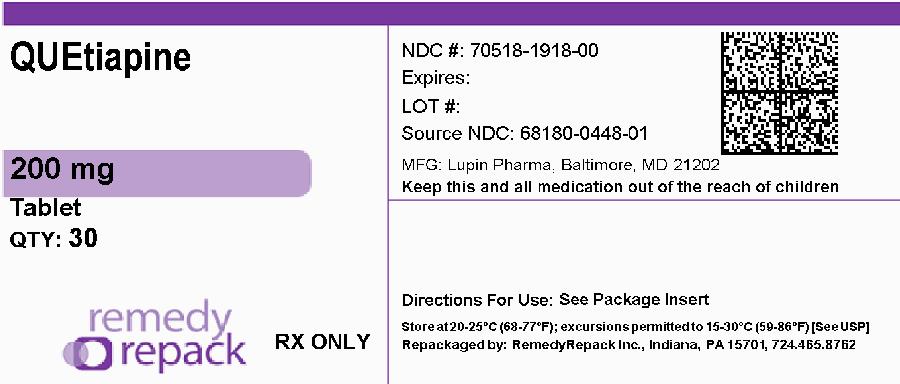
Quetiapine tablets USP, 200 mg (as quetiapine) are white, round, biconvex, film-coated tablets, debossed "LU" on one side and "Y18" on the other side, which are supplied as follows:
NDC 68180-448-01 Bottle of 100s
NDC 68180-448-02 Bottle of 500s
NDC 68180-448-03 Bottle of 1000s
NDC 68180-448-13 Unit Dose Blisters of 10 x 10s
Quetiapine tablets USP, 300 mg (as quetiapine) are white, capsule shape, biconvex, film-coated tablets, debossed "LU" on one side and "Y19" on the other side, which are supplied as follows:
NDC 68180-449-07 Bottle of 60s
NDC 68180-449-01 Bottle of 100s
NDC 68180-449-02 Bottle of 500s
NDC 68180-449-03 Bottle of 1000s
NDC 68180-449-13 Unit Dose Blisters of 10 x 10s
Quetiapine tablets USP, 400 mg (as quetiapine) are yellow colored, capsule shape, biconvex, film-coated tablets, debossed "LU" on one side and "Y20" on the other side, which are supplied as follows:
NDC 68180-450-01 Bottle of 100s
NDC 68180-450-02 Bottle of 500s
NDC 68180-450-03 Bottle of 1000s
NDC 68180-450-13 Unit Dose Blisters of 10 x 10s
Store at 25°C (77°F); excursions permitted to 15° to 30°C (59° to 86°F) [see USP Controlled Room Temperature].
See FDA-approved patient labeling ( MEDICATION GUIDE)
Prescribers or other health professionals should inform patients, their families, and their caregivers about the benefits and risks associated with treatment with quetiapine and should counsel them in its appropriate use. A patient Medication Guide about "Antidepressant Medicines, Depression and other Serious Mental Illness, and Suicidal Thoughts or Actions" is available for quetiapine. The prescriber or health professional should instruct patients, their families, and their caregivers to read the Medication Guide and should assist them in understanding its contents. Patients should be given the opportunity to discuss the contents of the Medication Guide and to obtain answers to any questions they may have. The complete text of the Medication Guide is reprinted at the end of this document.
Patients should be advised of the following issues and asked to alert their prescriber if these occur while taking quetiapine.
Increased Mortality in Elderly Patients with Dementia-Related Psychosis
Patients and caregivers should be advised that elderly patients with dementia-related psychosis treated with atypical antipsychotic drugs are at increased risk of death compared with placebo. Quetiapine is not approved for elderly patients with dementia-related psychosis [see WARNINGS AND PRECAUTIONS ( 5.1)].
Suicidal Thoughts and Behaviors
Patients, their families, and their caregivers should be encouraged to be alert to the emergence of anxiety, agitation, panic attacks, insomnia, irritability, hostility, aggressiveness, impulsivity, akathisia (psychomotor restlessness), hypomania, mania, other unusual changes in behavior, worsening of depression, and suicidal ideation, especially early during antidepressant treatment and when the dose is adjusted up or down. Families and caregivers of patients should be advised to look for the emergence of such symptoms on a day-to-day basis, since changes may be abrupt. Such symptoms should be reported to the patient's prescriber or health professional, especially if they are severe, abrupt in onset, or were not part of the patient's presenting symptoms. Symptoms such as these may be associated with an increased risk for suicidal thinking and behavior and indicate a need for very close monitoring and possibly changes in the medication [see WARNINGS AND PRECAUTIONS ( 5.2)].
Neuroleptic Malignant Syndrome (NMS)
Patients should be advised to report to their physician any signs or symptoms that may be related to NMS. These may include muscle stiffness and high fever [see WARNINGS AND PRECAUTIONS ( 5.4)].
Hyperglycemia and Diabetes Mellitus
Patients should be aware of the symptoms of hyperglycemia (high blood sugar) and diabetes mellitus. Patients who are diagnosed with diabetes, those with risk factors for diabetes, or those that develop these symptoms during treatment should have their blood glucose monitored at the beginning of and periodically during treatment [see WARNINGS AND PRECAUTIONS ( 5.5)].
Hyperlipidemia
Patients should be advised that elevations in total cholesterol, LDL-cholesterol and triglycerides and decreases in HDL-cholesterol may occur. Patients should have their lipid profile monitored at the beginning of and periodically during treatment [see WARNINGS AND PRECAUTIONS ( 5.5)].
Weight Gain
Patients should be advised that they may experience weight gain. Patients should have their weight monitored regularly [see WARNINGS AND PRECAUTIONS ( 5.5)].
Orthostatic Hypotension
Patients should be advised of the risk of orthostatic hypotension (symptoms include feeling dizzy or lightheaded upon standing, which may lead to falls), especially during the period of initial dose titration, and also at times of re-initiating treatment or increases in dose [see WARNINGS AND PRECAUTIONS ( 5.7)].
Increased Blood Pressure in Children and Adolescents
Children and adolescent patients should have their blood pressure measured at the beginning of, and periodically during, treatment [see WARNINGS AND PRECAUTIONS ( 5.9)].
Leukopenia/Neutropenia
Patients with a pre-existing low WBC or a history of drug induced leukopenia/neutropenia should be advised that they should have their CBC monitored while taking quetiapine [see WARNINGS AND PRECAUTIONS ( 5.10)].
Interference with Cognitive and Motor Performance
Patients should be advised of the risk of somnolence or sedation (which may lead to falls), especially during the period of initial dose titration. Patients should be cautioned about performing any activity requiring mental alertness, such as operating a motor vehicle (including automobiles) or operating machinery, until they are reasonably certain quetiapine therapy does not affect them adversely [see WARNINGS AND PRECAUTIONS ( 5.16)].
Heat Exposure and Dehydration
Patients should be advised regarding appropriate care in avoiding overheating and dehydration [see WARNINGS AND PRECAUTIONS ( 5.17)].
Concomitant Medication
As with other medications, patients should be advised to notify their physicians if they are taking, or plan to take, any prescription or over-the-counter drugs [see DRUG INTERACTIONS ( 7.1)].
Pregnancy and Nursing
Patients should be advised to notify their physician if they become pregnant or intend to become pregnant during therapy with quetiapine [see USE IN SPECIFIC POPULATIONS ( 8.1) and ( 8.3)].
Need for Comprehensive Treatment Program
Quetiapine is indicated as an integral part of a total treatment program for adolescents with schizophrenia and pediatric bipolar disorder that may include other measures (psychological, educational, and social). Effectiveness and safety of quetiapine have not been established in pediatric patients less than 13 years of age for schizophrenia or less than 10 years of age for bipolar mania. Appropriate educational placement is essential and psychosocial intervention is often helpful. The decision to prescribe atypical antipsychotic medication will depend upon the physician's assessment of the chronicity and severity of the patient's symptoms [see INDICATIONS AND USAGE ( 1.3)].
Manufactured for:
Lupin Pharmaceuticals, Inc.
Baltimore, Maryland 21202
United States.
MADE IN INDIA.
Rev: October 2017 ID#: 253002
MEDICATION GUIDE
Quetiapine (kwe-TYE-a-peen) Tablets USP
Read this Medication Guide before you start taking quetiapine tablets and each time you get a refill. There may be new information. This information does not take the place of talking to your healthcare provider about your medical condition or your treatment.
What is the most important information I should know about quetiapine tablets?
Quetiapine tablets may cause serious side effects, including:
Call a healthcare provider right away if you or your family member has any of the following symptoms, especially if they are new, worse, or worry you:
What else do I need to know about antidepressant medicines?
What is quetiapine tablet?
Quetiapine tablet is a prescription medicine used to treat:
It is not known if quetiapine tablet is safe and effective in children under 10 years of age.
What should I tell my healthcare provider before taking quetiapine tablets?
Before you take quetiapine tablets, tell your healthcare provider if you have or have had:
Tell the healthcare provider about all the medicines that you take or recently have taken including prescription medicines, over-the-counter medicines, herbal supplements and vitamins.
Quetiapine tablets and other medicines may affect each other causing serious side effects. Quetiapine tablets may affect the way other medicines work, and other medicines may affect how quetiapine tablet works.
Tell your healthcare provider if you are having a urine drug screen because quetiapine may affect your test results. Tell those giving the test that you are taking quetiapine tablets.
How should I take quetiapine tablets?
What should I avoid while taking quetiapine tablets?
What are possible side effects of quetiapine tablets?
Quetiapine tablets can cause serious side effects, including:
Increases in blood sugar can happen in some people who take quetiapine tablets. Extremely high blood sugar can lead to coma or death. If you have diabetes or risk factors for diabetes (such as being overweight or a family history of diabetes) your healthcare provider should check your blood sugar before you start quetiapine tablets and during therapy.
Call your healthcare provider if you have any of these symptoms of high blood sugar (hyperglycemia) while taking quetiapine tablets:
The most common side effects of quetiapine tablets include:
In Adults:
In Children and Adolescents:
These are not all the possible side effects of quetiapine tablets. For more information, ask your healthcare provider or pharmacist.
Call your doctor for medical advice about side effects. You may report side effects to FDA at 1-800-FDA-1088.
You may also report side effects to Lupin Pharmaceuticals, Inc. at 1-800-399-2561.
How should I store quetiapine tablets?
General information about the safe and effective use of quetiapine tablets.
Medicines are sometimes prescribed for purposes other than those listed in a Medication Guide. Do not use quetiapine tablets for a condition for which it was not prescribed. Do not give quetiapine tablets to other people, even if they have the same symptoms you have. It may harm them.
This Medication Guide summarizes the most important information about quetiapine tablets. If you would like more information, talk with your healthcare provider. You can ask your pharmacist or healthcare provider for information about quetiapine tablets that is written for health professionals.
For more information, go to www.lupinpharmaceuticals.com, or call 1-800-399-2561.
What are the ingredients in quetiapine tablets?
Active ingredient: quetiapine fumarate
Inactive ingredients: dibasic calcium phosphate dihydrate, hypromellose, lactose monohydrate, magnesium stearate, microcrystalline cellulose, polyethylene glycol, povidone, sodium starch glycolate and titanium dioxide. The 25 mg tablets contain iron oxide red and iron oxide black; and the 100 mg and 400 mg tablets contain only iron oxide yellow.
This Medication Guide has been approved by the U.S. Food and Drug Administration.
Manufactured for:
Lupin Pharmaceuticals, Inc.
Baltimore, Maryland 21202
United States.
MADE IN INDIA.
Rev: April 2017 ID#: 251262