Aripiprazole Tablet
Product Images NDC 70518-2584

View Photos of Packaging, Regulatory Labels, and Product Appearance

Product Visual Gallery

This gallery contains 11 technical images submitted to the FDA as part of the official labeling for Aripiprazole (NDC 70518-2584). Unlike standard consumer photos, these assets often include clinical data figures, molecular chemical structures, and official manufacturer packaging layouts.

As provided by Remedyrepack Inc., these visuals offer a comprehensive scientific overview of the product's physical and chemical identity, aiding pharmacists and researchers in product verification and study.

FDA Label Image

Aripiprazole 2mg 70518 2584 01
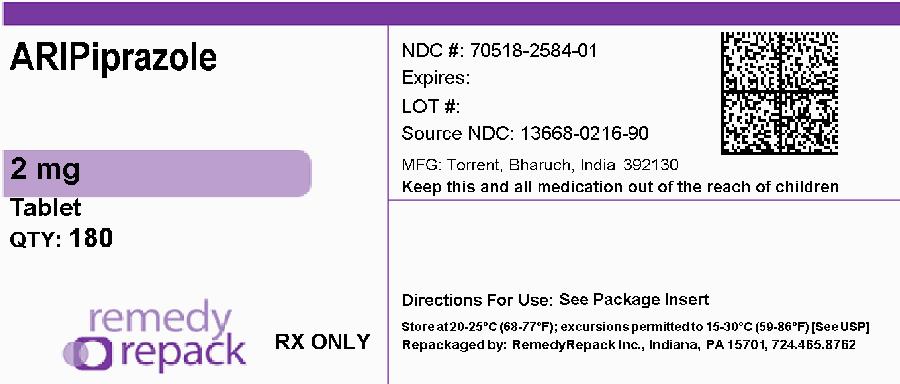
Aripiprazole 2mg 70518 2584 01
Aripiprazole is a prescription medication intended for RX use only. It has an NDC number of 70518-2684-01 and a source NDC of 13668-0216-90. The drug should be stored between 20-26°C (63-77°F) with excursions to 15-30°C (59-86°F) allowed as per USP guidelines. The manufacturer of the medication is Torrent located in Bharuch, India. The label recommends keeping the medication out of reach of children. Direction for use can be found in the package insert. The drug has been repackaged by RemedyRepack Inc. situated in Indiana, PA 15701, with a contact number of 724.466.8762.*
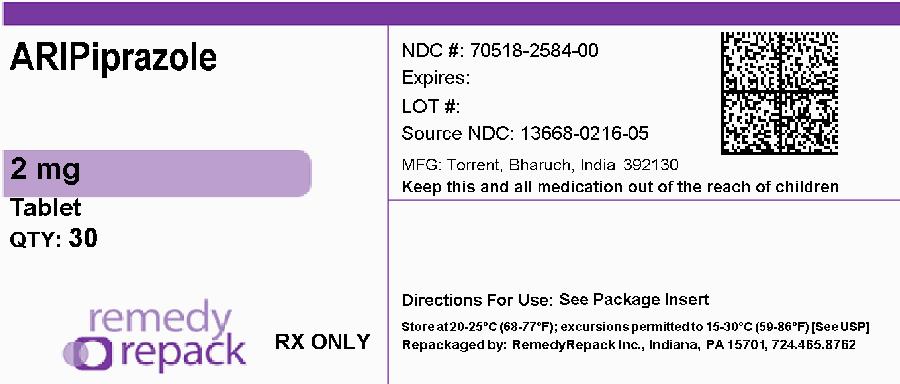
FDA Label Image

Remedy_label (Remedy Label)

Remedy_label (Remedy Label)
This is a prescription medication called Aripiprazole, with NDC number 70518-2584-00. It is manufactured by Torrent in India and repackaged by RemedyRepack Inc. It comes with a warning to keep it out of children's reach and must be stored within the temperature range of 20-26°C (63-77°F) with excursions permitted up to 15-30°C (59-86°F). There are no instructions provided for its use, and the package insert must be consulted. The text does not provide any expiry date or Lot number.*
FDA Label Image

Image Fig1 Effectofotherdrug Arip

Image Fig1 Effectofotherdrug Arip
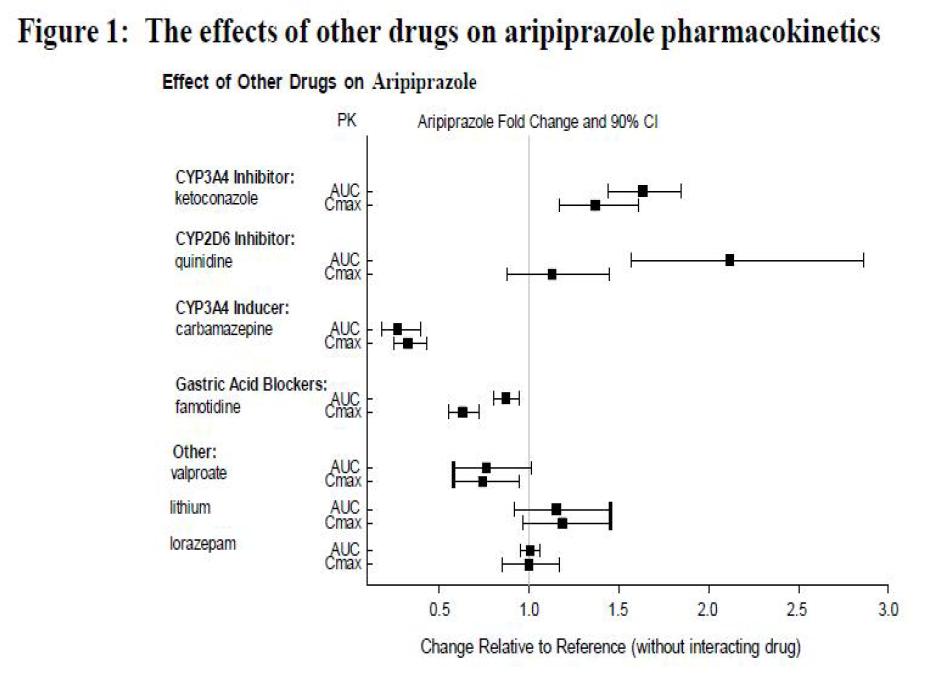
The text describes the effects of various drugs on the pharmacokinetics of aripiprazole. These drugs include inhibitors and inducers of CYP enzymes, gastric acid blockers, valproate, lithium, and lorazepam. The effect of each drug is represented in Figure 1 as a fold change and 90% confidence interval compared to a reference without the interacting drug.*
FDA Label Image

Image Fig2 Effectofotherdrug Dehydroarip

Image Fig2 Effectofotherdrug Dehydroarip
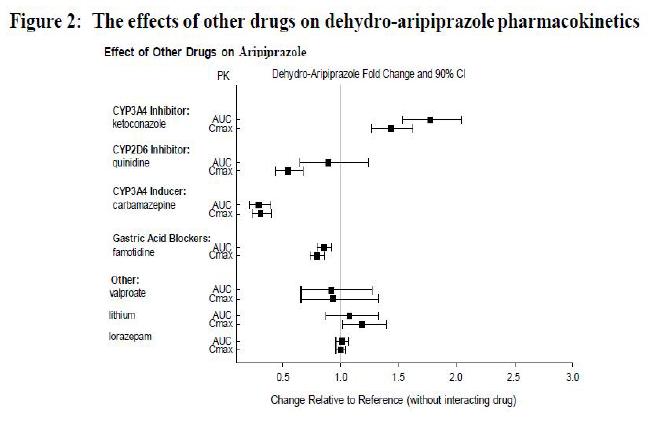
Figure 2 displays the impact of different medications on the pharmacokinetics of dehydro-aripiprazole. The fold change and 90% confidence interval of dehydro-aripiprazole PK are shown concerning several drugs, such as gastric acid blockers, antipsychotics, and antibiotics. No other information or context is available to provide further details.*
FDA Label Image

Image Fig3 Effectofarip Otherdrug

Image Fig3 Effectofarip Otherdrug
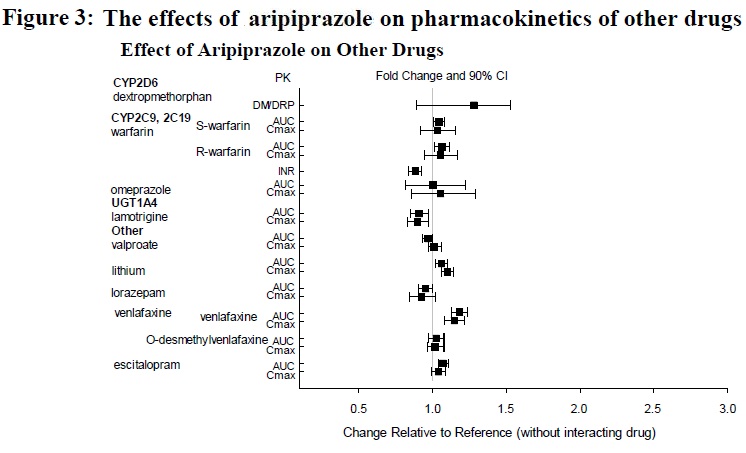
Figure 3 shows the effect of aripiprazole on the pharmacokinetics of other drugs. The graph displays the GP fold change and 50% CI for various drugs such as deropmetoptan, cvpace, artann, Roartain, omeprazole, UoTiAd, lamotigine, valproate, lithium, lorazepam, venidaine, Odesmyhenataing, and escitiopram. The relative change to reference (without interacting drug) is plotted on the x-axis.*
FDA Label Image

Image Fig4 Effectofintrinsicfactor Arip

Image Fig4 Effectofintrinsicfactor Arip
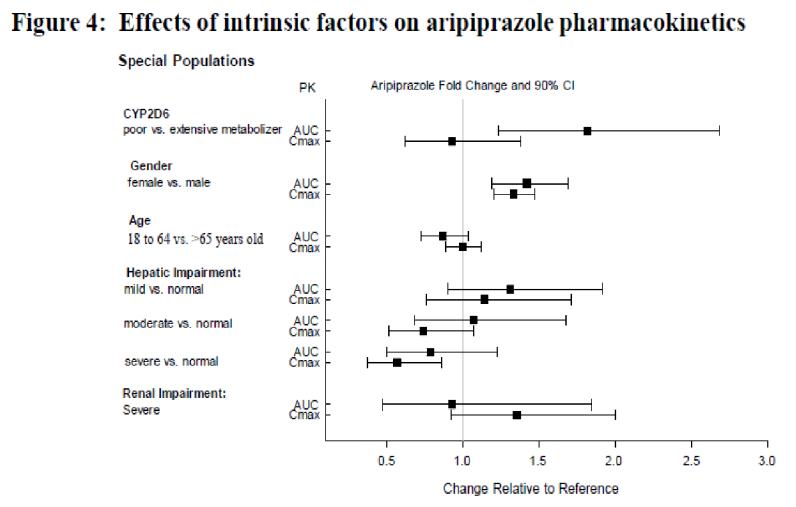
The text provides a figure labeled as "Figure 4" showcasing the effects of intrinsic factors on the pharmacokinetics of aripiprazole. The figure shows fold change and 90% confidence interval of K anipiprazole for several factors such as CYP206 (poor vs. extensive metabolizer), gender (female vs. male), age (18-64 vs. 65 years old), hepatic impairment (mid vs. normal, moderate vs. normal, severe vs. normal), and renal impairment (severe). The figure also includes a chart with a change relative to the reference.*
FDA Label Image

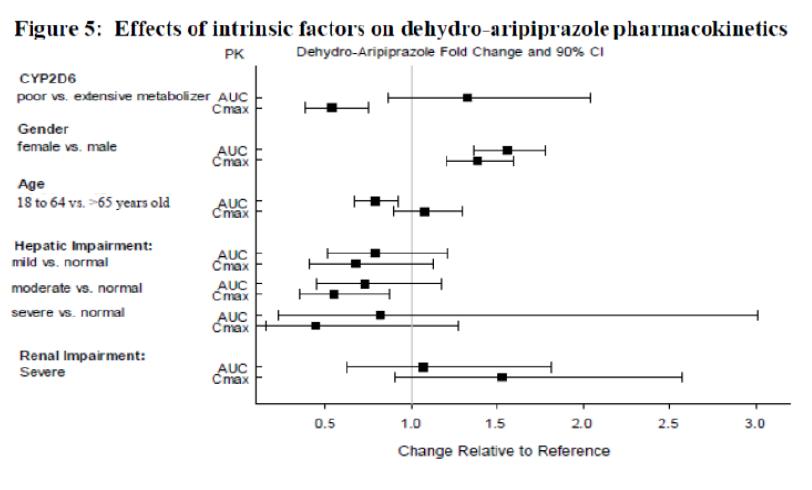
Image Fig5 Effectofintrinsicfactor Dehydroarip

Image Fig5 Effectofintrinsicfactor Dehydroarip
The text describes a figure labeled as "Figure 5." It indicates the effects of intrinsic factors on dehydro-aripiprazole pharmacokinetics. The figure contains a table with data on the fold change and confidence intervals for Denyaro-Aripiprazole PK, AUC, Cmax, and relative change, as affected by intrinsic factors including CYP2D6 metabolizer status, gender, age, hepatic impairment, and renal impairment. The table presents data for poor vs. extensive metabolizers, female vs. male gender, 18 to 64 vs. 65 years old age groups, as well as mild, moderate, and severe hepatic and renal impairment.*
FDA Label Image

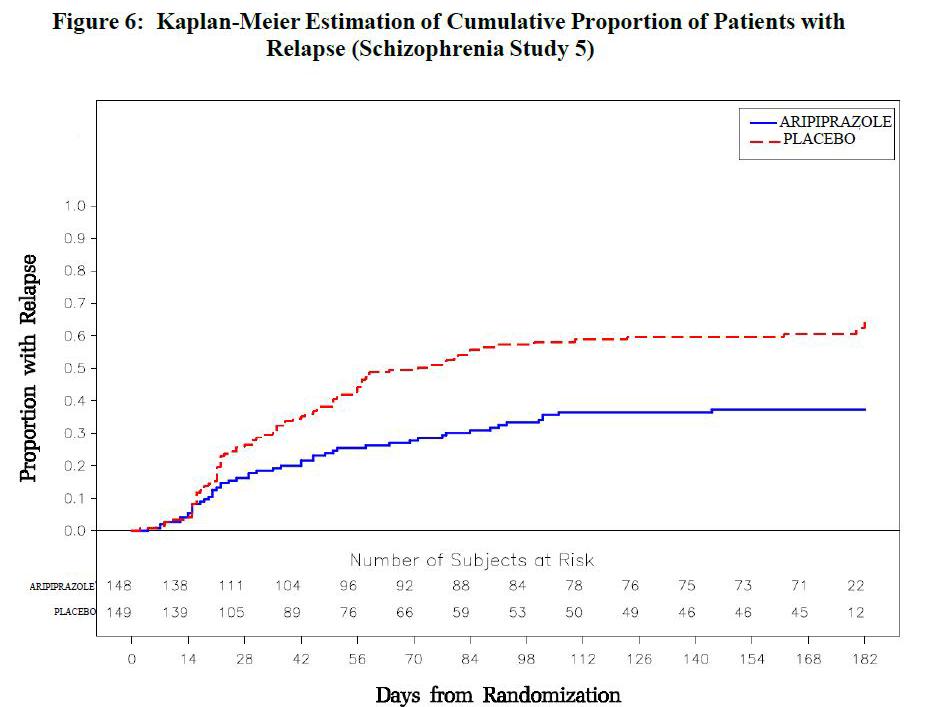
Image Fig6 Schizophreniastudy 5

Image Fig6 Schizophreniastudy 5
This is a graph showing the cumulative proportion of patients with relapse in a study on schizophrenia. The graph compares the drug Aripiprazole to placebo. The number of subjects at risk for each treatment arm is also shown. The x-axis indicates the number of days from randomization, and the y-axis represents the proportion of patients with relapse.*
FDA Label Image

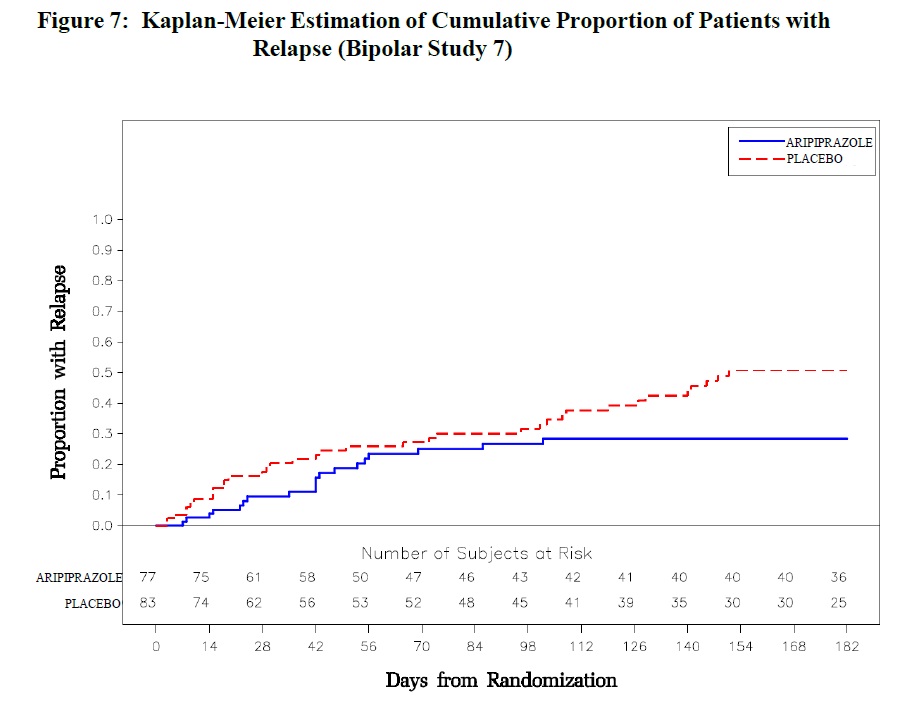
Image Fig7 Bipolarstudy 7

Image Fig7 Bipolarstudy 7
The text refers to Figure 7, a graph showing the Kaplan-Meier estimation of the cumulative proportion of patients with relapse in Bipolar Study 7. The graph compares the effectiveness of Aripiprazole versus Placebo in preventing relapse in patients. Unfortunately, there is no way to determine the timeframe or type of relapse, as the text provided consists solely of the data presented in the figure.*
FDA Label Image

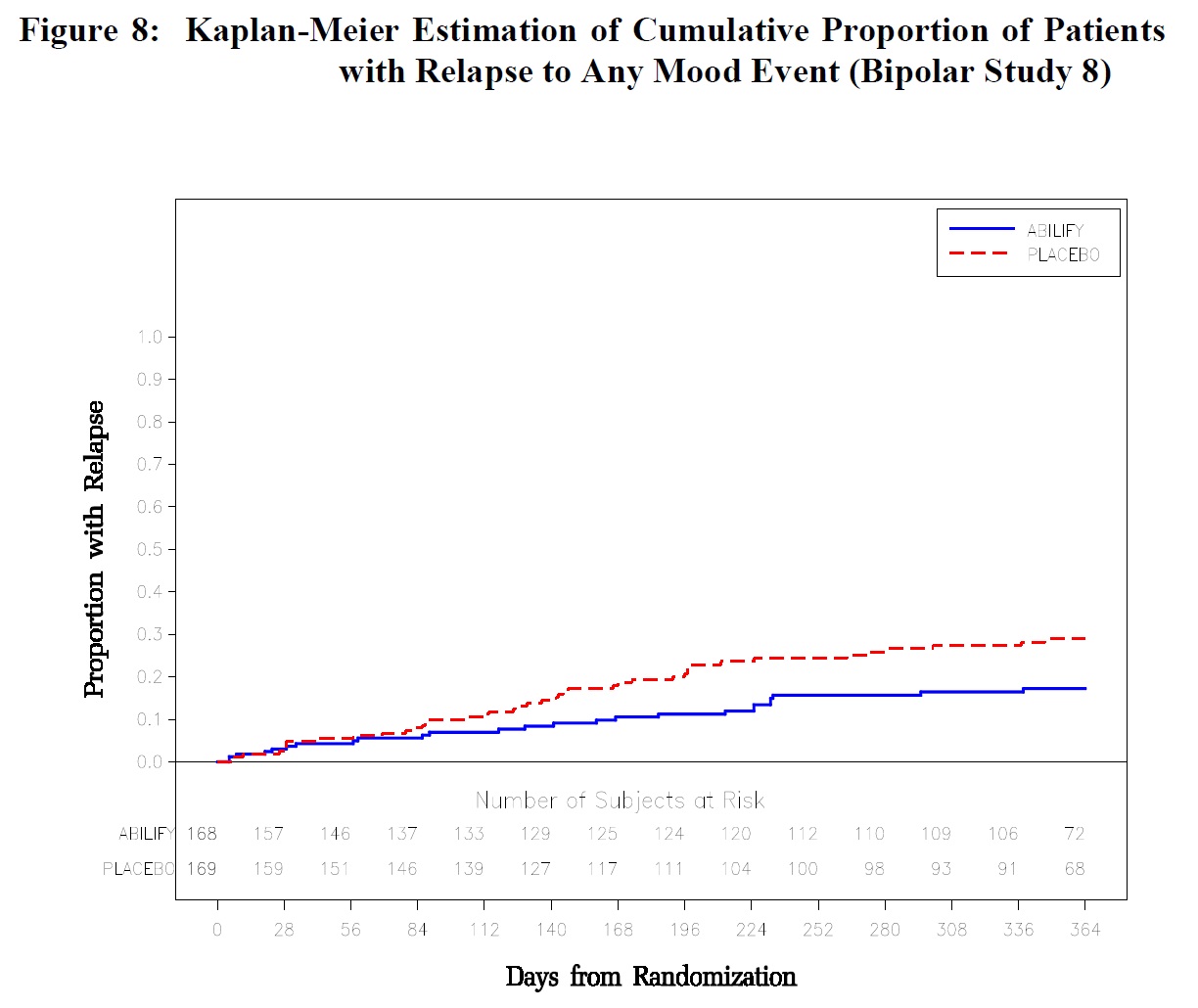
Image Fig8 Bipolarstudy 8

Image Fig8 Bipolarstudy 8
The text appears to be a figure caption or legend for a graph titled "Kaplan-Meier Estimation of Cumulative Proportion of Patients with Relapse to Any Mood Event (Bipolar Study 8)." The graph displays the proportion of patients who experienced relapse to any mood event over time, represented in days from randomization. The two treatments being compared are Abilify and LACE 169, with Abilify showing a relapse proportion of 168 and LACE 169 showing a relapse proportion of 7. However, without the graph itself, a more detailed description cannot be provided.*
FDA Label Image

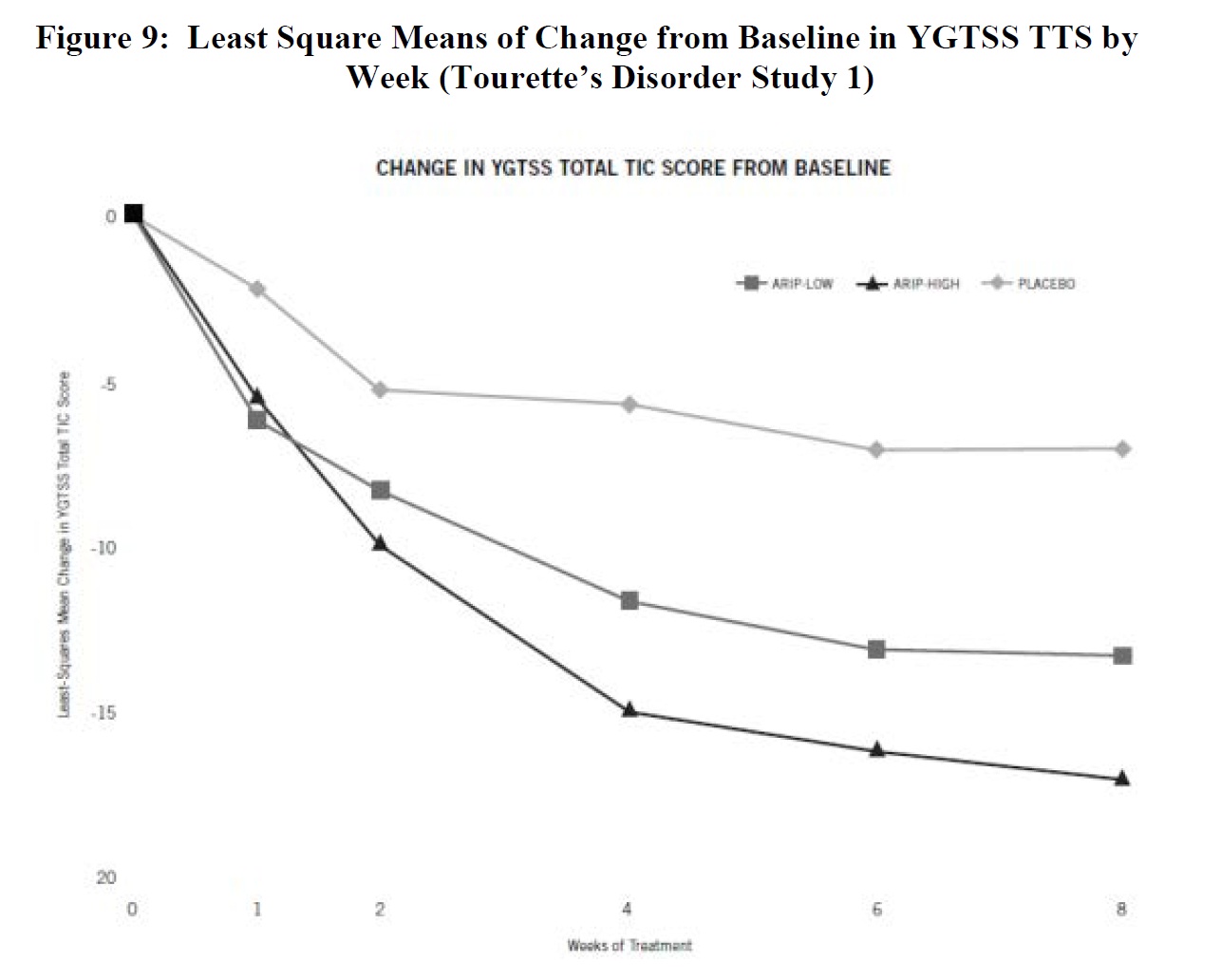
Image Fig9 Tourettesdisorderstudy1

Image Fig9 Tourettesdisorderstudy1
This is a graph showing the change in YGTSS TTS (total tic score) from baseline in patients with Tourette's Disorder. The x-axis represents the weeks of treatment and the y-axis represents the least square means of change from baseline in YGTSS TTS. The graph shows the data points for 5 different timepoints during the study. The text is partially readable due to errors.*

* These product label images have been analyzed using experimental machine learning. Please verify findings with the primary label text.