Rexulti Tablet
Product Images NDC 70518-3548

View Photos of Packaging, Regulatory Labels, and Product Appearance

Product Visual Gallery

This gallery contains 8 technical images submitted to the FDA as part of the official labeling for Rexulti (NDC 70518-3548). Unlike standard consumer photos, these assets often include clinical data figures, molecular chemical structures, and official manufacturer packaging layouts.

As provided by Remedyrepack Inc., these visuals offer a comprehensive scientific overview of the product's physical and chemical identity, aiding pharmacists and researchers in product verification and study.

FDA Label Image

Remedy_label (Remedy Label)
Remedy_label (Remedy Label)
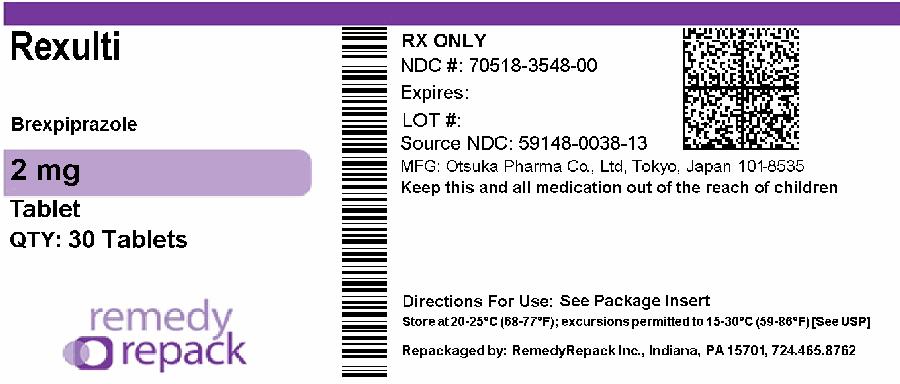
Rexulti 2 mg tablet label showing the active ingredient brexpiprazole. The label indicates a quantity of 30 tablets, with packaging information including the NDC number 70518-3548-00, manufacturer Otsuka Pharma Co., Ltd., Tokyo, Japan, and repackaging by RemedyRepack Inc. Storage instructions and a barcode are also visible.*
FDA Label Image

Chemical Structure (Rexulti Chem Structure)

Chemical Structure (Rexulti Chem Structure)
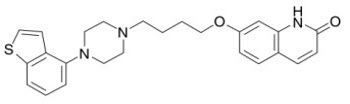
Chemical structure diagram of brexpiprazole, the active ingredient in Rexulti 2 mg oral tablets by Remedyrepack Inc. The structure includes aromatic rings, nitrogen atoms, oxygen, and sulfur components.*
FDA Label Image

Figure 1 (Rexulti Figure 01)

Figure 1 (Rexulti Figure 01)
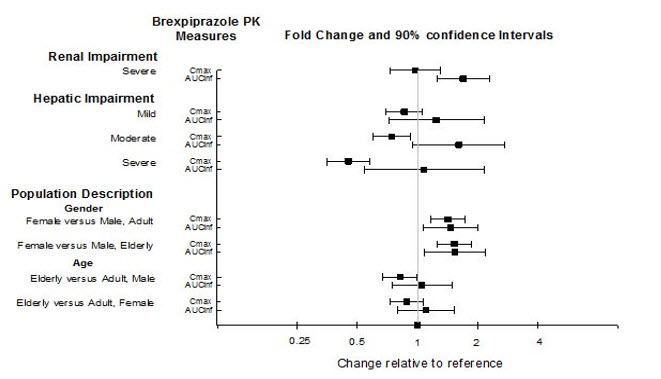
A chart showing fold change and 90% confidence intervals for brexpiprazole pharmacokinetic measures comparing Cmax and AUCinf across renal impairment (severe), hepatic impairment (mild, moderate, severe), and population descriptions by gender and age groups. The x-axis represents change relative to reference, ranging from 0.25 to 4.*
FDA Label Image

Figure 2 (Rexulti Figure 02)

Figure 2 (Rexulti Figure 02)
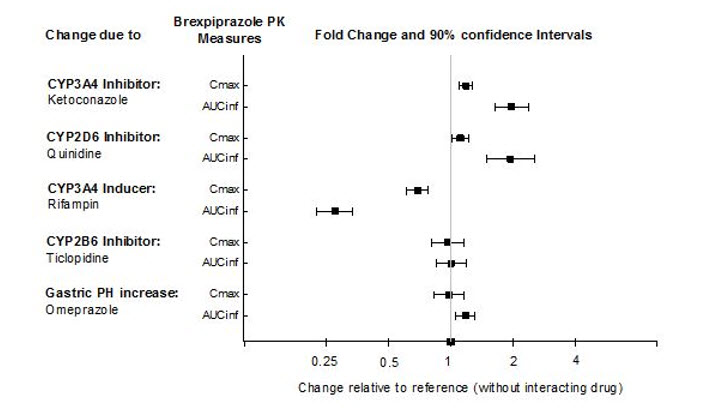
A chart showing fold change and 90% confidence intervals for brexpiprazole pharmacokinetic measures (Cmax and AUCinf) with various interacting drugs, including CYP3A4 inhibitors (ketoconazole), CYP2D6 inhibitors (quinidine), CYP3A4 inducer (rifampin), CYP2B6 inhibitor (ticlopidine), and gastric pH increase (omeprazole). The x-axis indicates change relative to reference without interacting drug.*
FDA Label Image

Figure 3 (Rexulti Figure 03)

Figure 3 (Rexulti Figure 03)
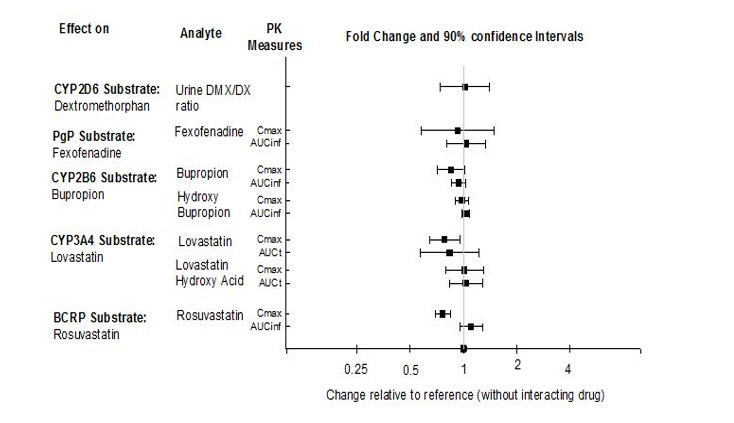
A chart depicting the fold change and 90% confidence intervals of various pharmacokinetic measures for different substrates affected by the drug. The chart compares changes relative to a reference without interacting drug, listing CYP2D6, Pgp, CYP2B6, CYP3A4, and BCRP substrates with their respective analytes and PK parameters such as Cmax and AUCinf.*
FDA Label Image

Figure 4 (Rexulti Figure 04)

Figure 4 (Rexulti Figure 04)
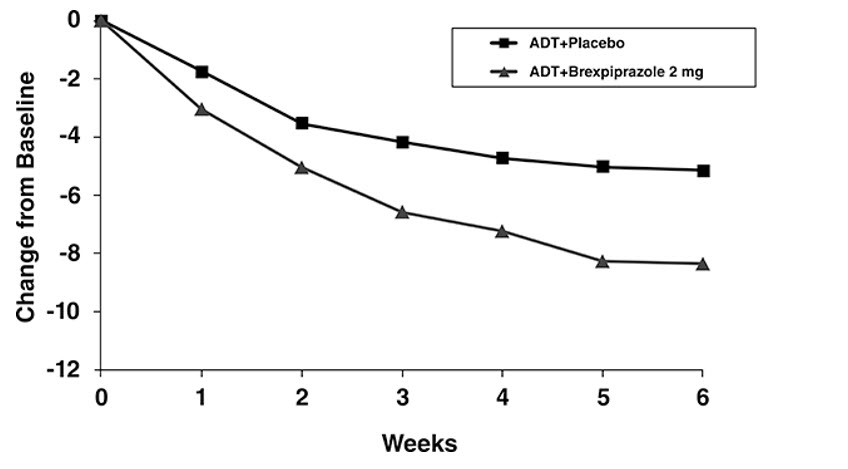
A line graph showing change from baseline over 6 weeks comparing two groups: ADT plus Placebo and ADT plus Brexpiprazole 2 mg. The vertical axis represents change from baseline and the horizontal axis represents weeks. The graph shows a greater decrease for the ADT plus Brexpiprazole 2 mg group compared to ADT plus Placebo over time.*
FDA Label Image

Figure 5 (Rexulti Figure 05)

Figure 5 (Rexulti Figure 05)
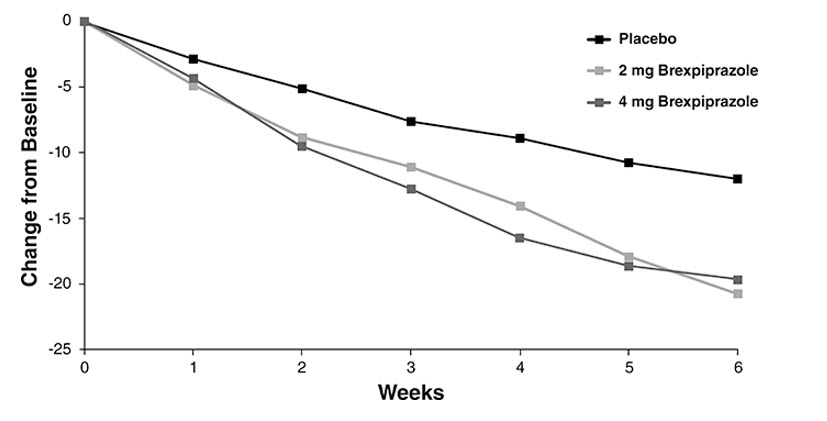
Line graph showing change from baseline over 6 weeks for placebo and brexpiprazole at 2 mg and 4 mg doses. The vertical axis represents change from baseline, and the horizontal axis represents weeks. Lines indicate decreasing values over time, with 2 mg and 4 mg brexpiprazole groups showing greater decline compared to placebo.*
FDA Label Image

Figure 6 (Rexulti Figure 06)

Figure 6 (Rexulti Figure 06)
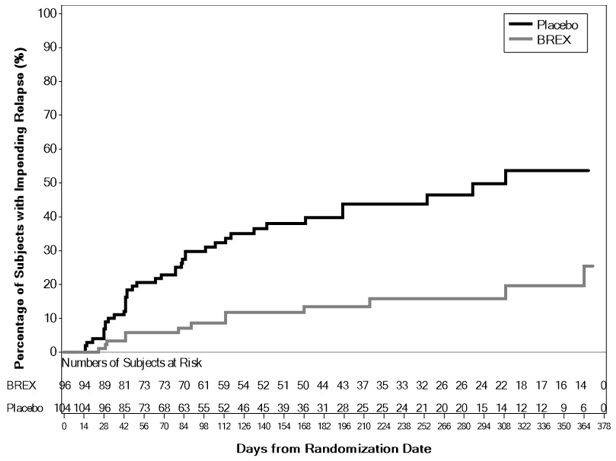
A Kaplan-Meier curve showing the percentage of subjects with impending relapse over time in days from randomization date. Two groups are compared: one receiving placebo and the other BREX (brexpiprazole). The vertical axis represents the percentage of subjects with impending relapse, and the horizontal axis shows days from randomization. The graph includes the number of subjects at risk at various time points for both groups.*

* About these descriptions: Image descriptions on this page are generated by automated AI analysis of the product label images from the manufacturer's FDA label submission (SPL). They are provided for reference only and may contain errors or omissions. Always rely on the printed label itself and the official FDA labeling, and consult a pharmacist or healthcare professional with any questions about this product.