Fluticasone Propionate And Salmeterol Powder
Product Images NDC 70518-3968

View Photos of Packaging, Regulatory Labels, and Product Appearance

Product Visual Gallery

This gallery contains 12 technical images submitted to the FDA as part of the official labeling for Fluticasone Propionate And Salmeterol (NDC 70518-3968). Unlike standard consumer photos, these assets often include clinical data figures, molecular chemical structures, and official manufacturer packaging layouts.

As provided by Remedyrepack Inc., these visuals offer a comprehensive scientific overview of the product's physical and chemical identity, aiding pharmacists and researchers in product verification and study.

FDA Label Image

Remedy_label (Remedy Label)

Remedy_label (Remedy Label)
Label for fluticasone propionate and salmeterol inhalation powder, 250 mcg / 50 mcg strength, packaged as 60 blisters. The label shows the product name, dosage form, quantity, manufacturer as Hikma Pharma (Amman, Jordan), and repackager RemedyRepack Inc. Additional information includes storage instructions and a barcode.*

FDA Label Image

Figurec.jpg (Figurec)

Figurec.jpg (Figurec)
An instructional illustration showing two hands holding a respiratory inhaler device. The image includes a white arrow indicating a twisting or turning motion, likely demonstrating how to prepare or activate the inhaler for use. A dose counter on the device displays the number 60.*
FDA Label Image

Fluticasone-propionate-chemical.jpg (Fluticasone Propionate Chemical)

Fluticasone-propionate-chemical.jpg (Fluticasone Propionate Chemical)
Chemical structure of fluticasone propionate, one of the active ingredients in fluticasone propionate and salmeterol powder for respiratory inhalation.*
FDA Label Image

Figure-5-08172021.jpg (Image 03)

Figure-5-08172021.jpg (Image 03)
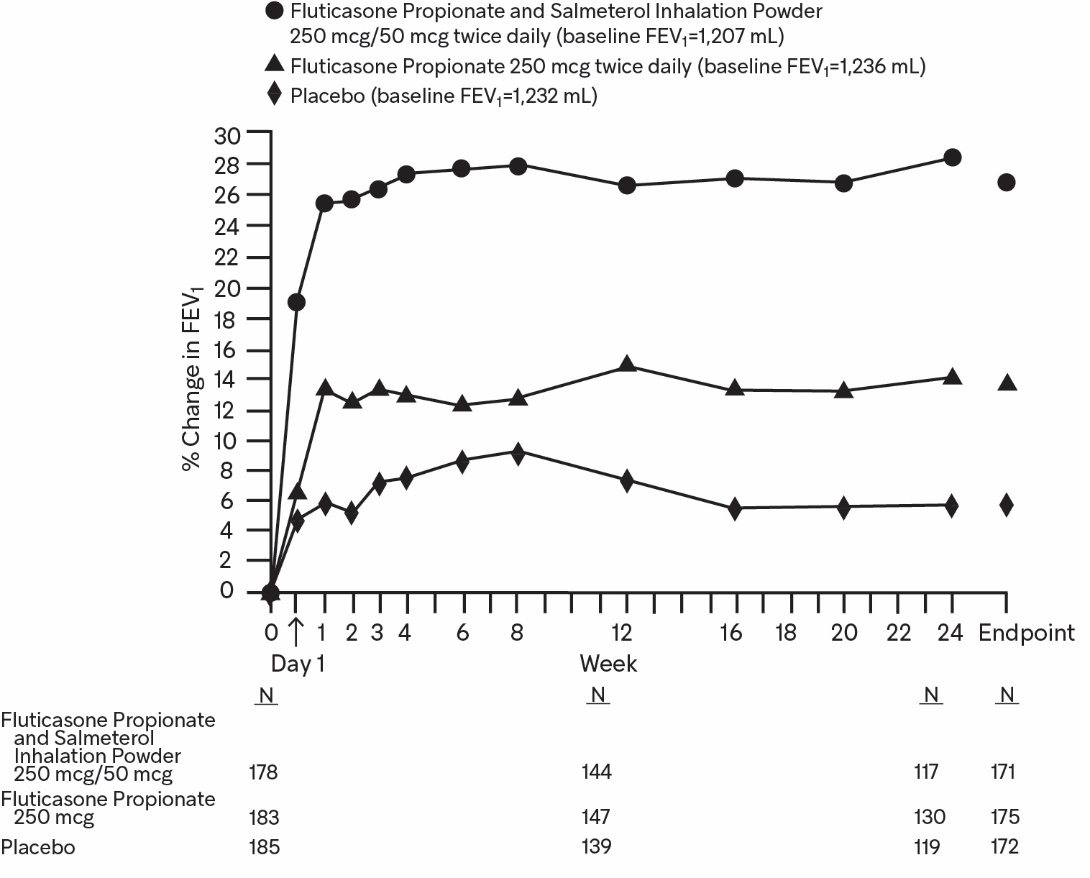
A line graph showing percent change in FEV1 over time comparing fluticasone propionate and salmeterol inhalation powder 250 mcg/50 mcg, fluticasone propionate 250 mcg, and placebo. The x-axis represents days and weeks from day 1 to endpoint, and the y-axis represents percent change in FEV1 from 0 to 30%. The fluticasone propionate and salmeterol group shows the highest increase, followed by fluticasone propionate, then placebo, with sample sizes indicated for each group at multiple time points.*
FDA Label Image

Figure-4.jpg (Image 04)

Figure-4.jpg (Image 04)
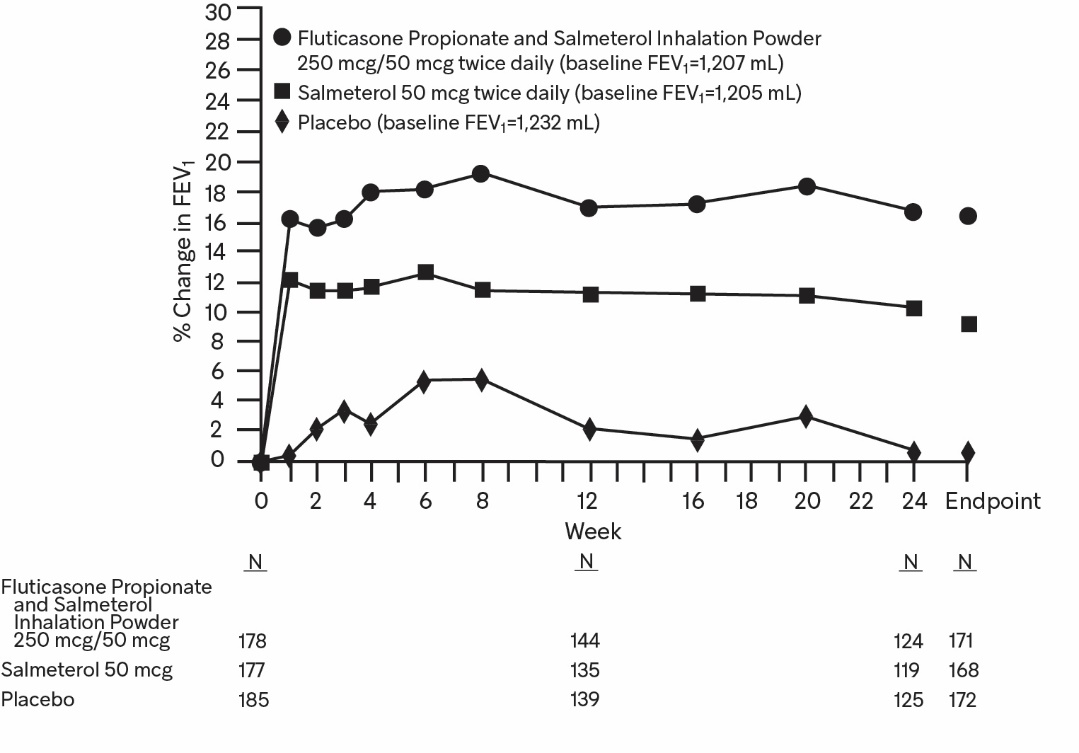
A line graph showing the percent change in FEV1 (forced expiratory volume) over 24 weeks for three groups: Fluticasone Propionate and Salmeterol Inhalation Powder 250 mcg/50 mcg twice daily, Salmeterol 50 mcg twice daily, and placebo. The combined treatment group shows the highest percent improvement, followed by Salmeterol alone, with placebo showing the least change. Number of participants at various weeks is listed below the graph for each group.*
FDA Label Image

Figure-1a (Image 05)

Figure-1a (Image 05)
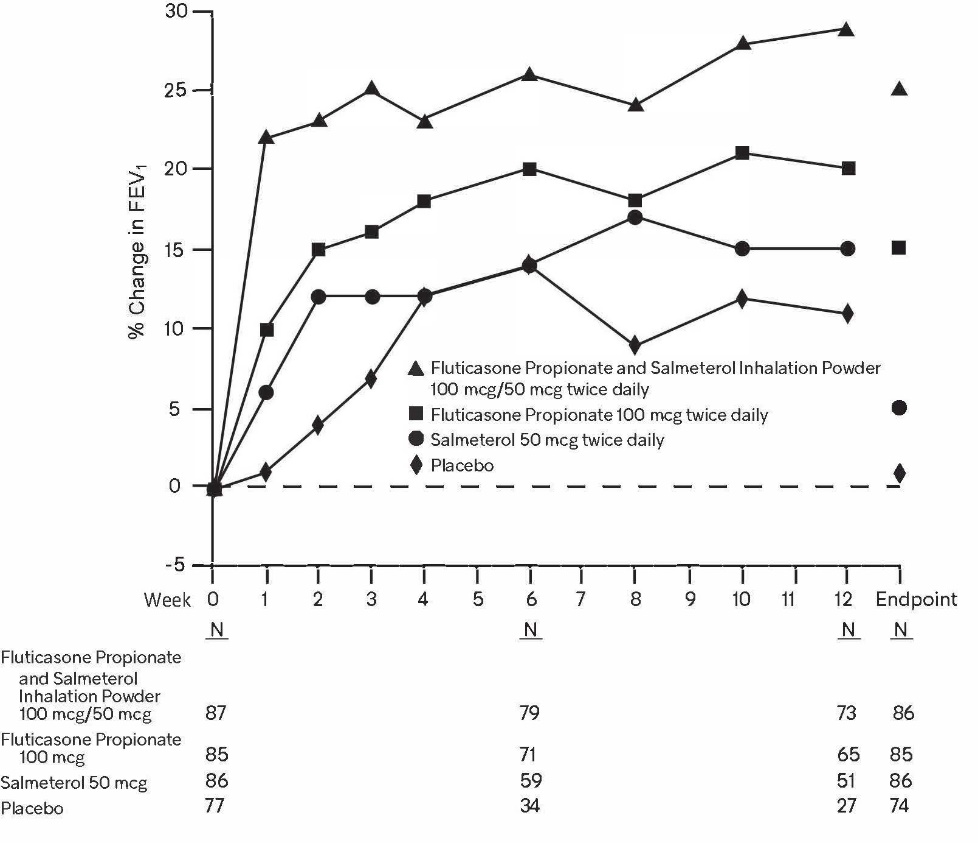
Line graph depicting the percentage change in FEV1 over 12 weeks for fluticasone propionate and salmeterol inhalation powder 100 mcg/50 mcg, fluticasone propionate 100 mcg, salmeterol 50 mcg, and placebo. The graph shows higher improvement for the combination treatment compared to individual treatments and placebo, with subject numbers listed below for each group at weeks 0, 6, 12, and endpoint.*
FDA Label Image

Figure-2.jpg (Image 06)

Figure-2.jpg (Image 06)
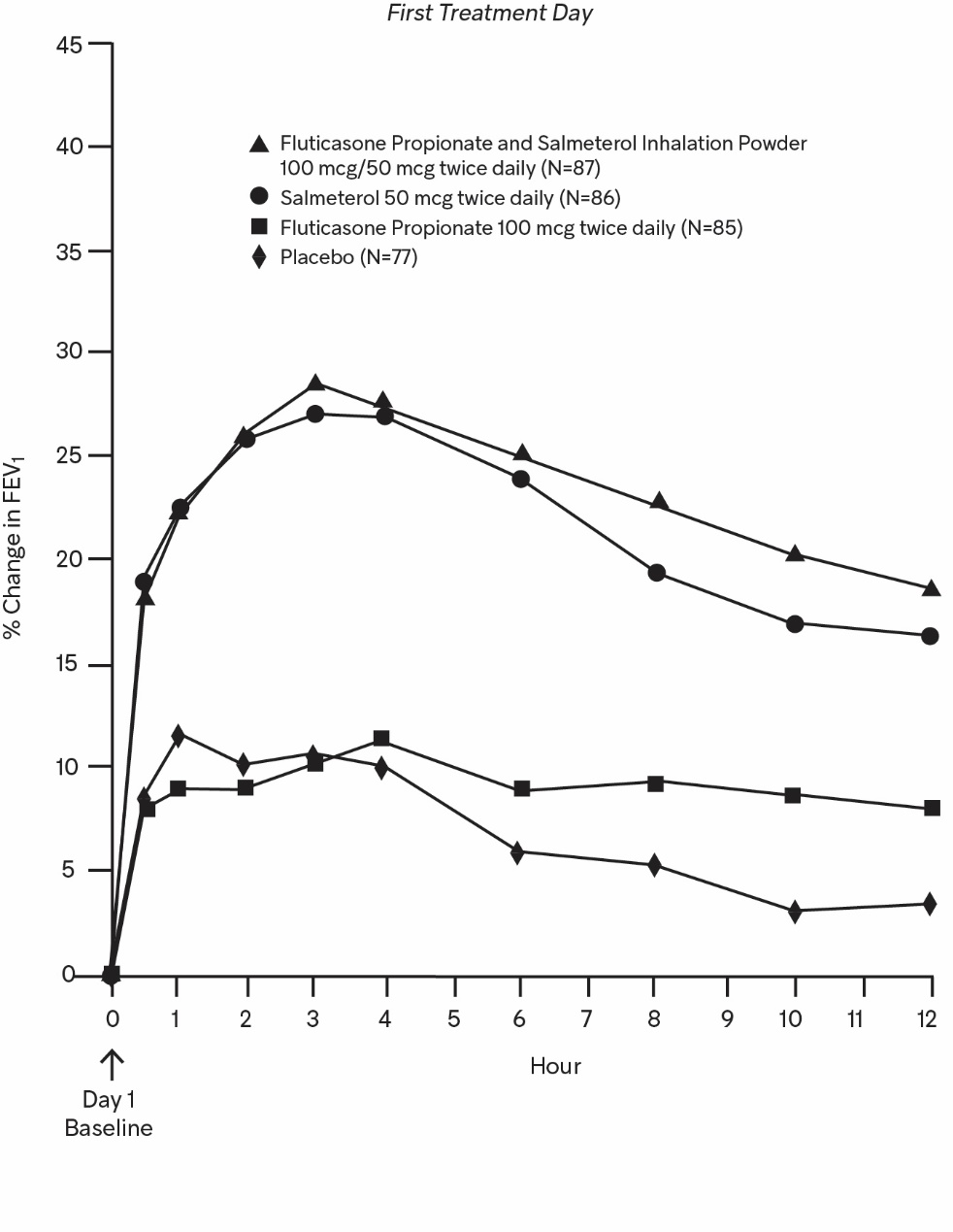
Line graph showing percent change in FEV1 over 12 hours on the first treatment day. Four groups are plotted: Fluticasone propionate and salmeterol inhalation powder 100 mcg/50 mcg twice daily, salmeterol 50 mcg twice daily, fluticasone propionate 100 mcg twice daily, and placebo. The graph illustrates changes by hour from baseline at hour 0.*
FDA Label Image

Figure-3a (Image 07)

Figure-3a (Image 07)
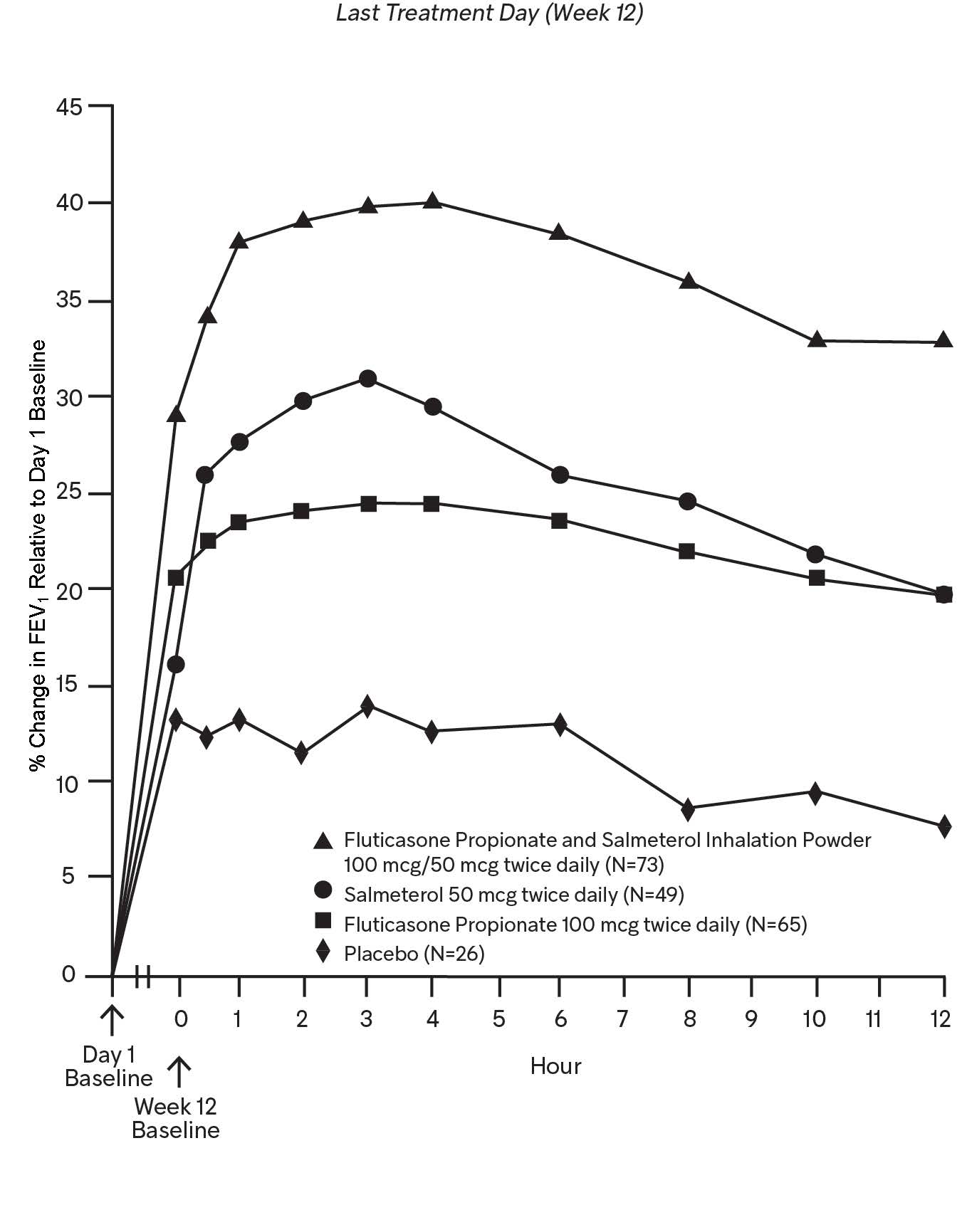
A line graph showing the percent change in FEV1 relative to Day 1 baseline over 12 hours on the last treatment day (Week 12). The graph compares four groups: Fluticasone Propionate and Salmeterol Inhalation Powder 100 mcg/50 mcg twice daily, Salmeterol 50 mcg twice daily, Fluticasone Propionate 100 mcg twice daily, and Placebo. Percent changes vary over time, with the combination treatment showing the highest increases.*
FDA Label Image

Salmeterol-xinafoate-chemical.jpg (Salmeterol Xinafoate Chemical)

Salmeterol-xinafoate-chemical.jpg (Salmeterol Xinafoate Chemical)
Chemical structure of fluticasone propionate and salmeterol as depicted in the image, showing the molecular arrangement of these active ingredients used in respiratory inhalation powder products.*
FDA Label Image

Ww-image-2.jpg (Ww Image 2)

Ww-image-2.jpg (Ww Image 2)
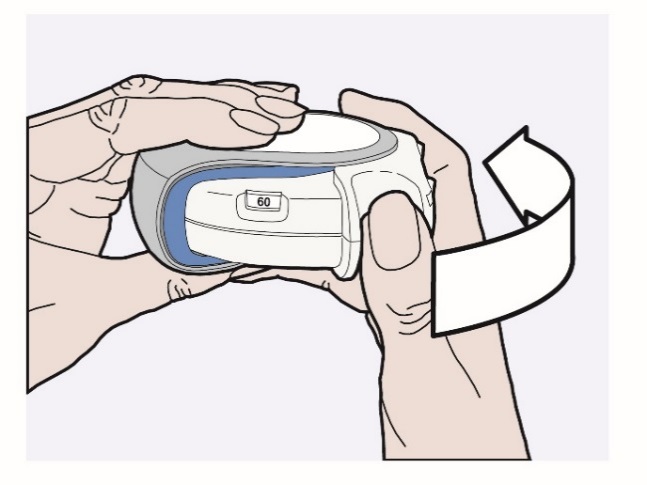
An instructional illustration showing two hands holding a respiratory inhaler device. The thumb and forefinger of one hand rotate the inhaler, indicated by a curved arrow. The device includes a dose counter displaying the number 60.*
FDA Label Image

Ww-image-4.jpg (Ww Image 4)

Ww-image-4.jpg (Ww Image 4)
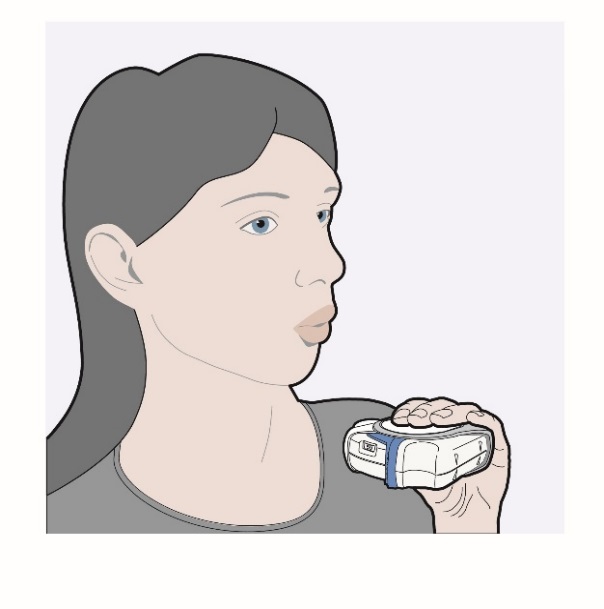
Illustration showing a person holding a respiratory inhalation device near the mouth, demonstrating the use of a powder inhaler for delivery of fluticasone propionate and salmeterol medication.*
FDA Label Image

Ww-image-5.jpg (Ww Image 5)

Ww-image-5.jpg (Ww Image 5)
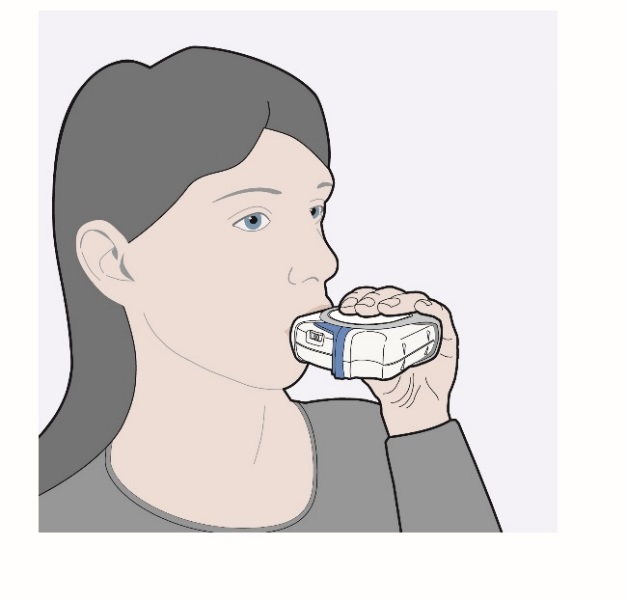
An instructional illustration showing a person using a respiratory inhalation device, placing the mouthpiece into their mouth and holding the device with one hand. This image is related to the administration of fluticasone propionate and salmeterol powder for inhalation.*

* About these descriptions: Image descriptions on this page are generated by automated AI analysis of the product label images from the manufacturer's FDA label submission (SPL). They are provided for reference only and may contain errors or omissions. Always rely on the printed label itself and the official FDA labeling, and consult a pharmacist or healthcare professional with any questions about this product.