Weight Changes
The average change in body weight and incidence of weight loss (percentage of patients who lost 3.5% or more) in the placebo-controlled pediatric studies in MDD, GAD, and SAD are shown in Tables 3 and 4.
Table 3: Average Change in Body Weight (kg) from Beginning of Treatment in Pediatric Patients
a in Double-blind, Placebo-controlled Studies of Venlafaxine Hydrochloride Extended-Release Capsules
Indication
(Duration)
| Venlafaxine Hydrochloride Extended-Release Capsules | Placebo |
|---|
MDD and GAD
(4 pooled studies, 8 weeks)
| -0.45 (n=333) | +0.77 (n=333) |
SAD
(16 weeks)
| -0.75 (n=137) | +0.76 (n=148) |
| aVenlafaxine hydrochloride extended-release capsules are not approved for use in pediatric patients.
|
Table 4: Incidence (%) of Pediatric Patients
aExperiencing Weight Loss (3.5% or more) in Double-blind, Placebo-controlled Studies of Venlafaxine Hydrochloride Extended-Release Capsules
Indication
(Duration)
| Venlafaxine Hydrochloride Extended-Release Capsules | Placebo |
|---|
MDD and GAD
(4 pooled studies, 8 weeks)
| 18
b(n=333)
| 3.6 (n=333) |
SAD
(16 weeks)
| 47
b(n=137)
| 14 (n=148) |
aVenlafaxine hydrochloride extended-release capsules are not approved for use in pediatric patients.
bp<0.001 versus placebo
|
Weight loss was not limited to patients with anorexia
[see
Warnings and Precautions (5.11)]
.
The risks associated with longer term venlafaxine hydrochloride extended-release capsules use were assessed in an open-label MDD study of children and adolescents who received venlafaxine hydrochloride extended-release capsules for up to six months. The children and adolescents in the study had increases in weight that were less than expected, based on data from age- and sex-matched peers. The difference between observed weight gain and expected weight gain was larger for children (<12 years old) than for adolescents (≥12 years old).
Venlafaxine hydrochloride extended-release capsules are not approved for use in pediatric patients
[
Use in Specific Populations (8.4)]
.
Height Changes
Table 5 shows the average height increase in pediatric patients in the short-term, placebo-controlled MDD, GAD, and SAD studies. The differences in height increases in GAD and MDD studies were most notable in patients younger than 12 years old.
Table 5: Average Height Increases (cm) in Pediatric Patients
a in Placebo-controlled Studies of Venlafaxine Hydrochloride Extended-Release Capsules
Indication
(Duration)
| Venlafaxine Hydrochloride Extended-Release Capsules | Placebo |
|---|
MDD
(8 weeks)
| 0.8 (n=146) | 0.7 (n=147) |
GAD
(8 weeks)
| 0.3
b(n=122)
| 1.0 (n=132) |
SAD
(16 weeks)
| 1.0 (n=109) | 1.0 (n=112) |
aVenlafaxine hydrochloride extended-release capsules are not approved for use in pediatric patients.
bp=0.041
|
In the six-month, open-label MDD study, children and adolescents had height increases that were less than expected, based on data from age- and sex-matched peers. The difference between observed and expected growth rates was larger for children (<12 years old) than for adolescents (≥12 years old)
[see Use in Specific Populations (8.4)].
Most Common Adverse Reactions
The most commonly observed adverse reactions in the clinical study database in venlafaxine hydrochloride extended-release capsules treated patients in MDD, GAD, SAD, and PD (incidence ≥5% and at least twice the rate of placebo) were: nausea (30.0%), somnolence (15.3%), dry mouth (14.8%), sweating (11.4%), abnormal ejaculation (9.9%), anorexia (9.8%), constipation (9.3%), impotence (5.3%), and decreased libido (5.1%).
Adverse Reactions Reported as Reasons for Discontinuation of Treatment
Combined across short-term, placebo-controlled premarketing studies for all indications, 12% of the 3,558 patients who received venlafaxine hydrochloride extended-release capsules (37.5 to 225 mg) discontinued treatment due to an adverse experience, compared with 4% of the 2,197 placebo-treated patients in those studies.
The most common adverse reactions leading to discontinuation in ≥1% of the venlafaxine hydrochloride extended-release capsules treated patients in the short-term studies (up to 12 weeks) across indications are shown in Table 7.
Table 7: Incidence (%) of Patients Reporting Adverse Reactions Leading to Discontinuation in Placebo-controlled Clinical Studies (up to 12 Weeks Duration)Body System
Adverse Reaction
| Venlafaxine Hydrochloride Extended-Release Capsules
n = 3,558
| Placebo
n = 2,197
|
|---|
| Body as a whole | | |
| Asthenia | 1.7 | 0.5 |
| Headache | 1.5 | 0.8 |
| Digestive system | | |
| Nausea | 4.3 | 0.4 |
| Nervous system | | |
| Dizziness | 2.2 | 0.8 |
| Insomnia | 2.1 | 0.6 |
| Somnolence | 1.7 | 0.3 |
| Skin and appendages | 1.5 | 0.6 |
| Sweating | 1.0 | 0.2 |
Common Adverse Reactions in Placebo-controlled Studies
The number of patients receiving multiple doses of venlafaxine hydrochloride extended-release capsules during the premarketing assessment for each approved indication is shown in Table 8. The conditions and duration of exposure to venlafaxine in all development programs varied greatly, and included (in overlapping categories) open and double-blind studies, uncontrolled and controlled studies, inpatient (venlafaxine hydrochloride tablets only) and outpatient studies, fixed-dose, and titration studies.
Table 8: Patients Receiving Venlafaxine Hydrochloride Extended-Release Capsules in Premarketing Clinical Studies| Indication | Venlafaxine Hydrochloride Extended-Release Capsules |
|---|
| MDD | 705
a |
| GAD | 1,381 |
| SAD | 819 |
| PD | 1,314 |
| aIn addition, in the premarketing assessment of venlafaxine hydrochloride tablets, multiple doses were administered to 2,897 patients in studies for MDD.
|
The incidences of common adverse reactions (those that occurred in ≥2% of venlafaxine hydrochloride extended-release capsules treated patients [357 MDD patients, 1,381 GAD patients, 819 SAD patients, and 1,001 PD patients] and more frequently than placebo) in venlafaxine hydrochloride extended-release capsules treated patients in short-term, placebo-controlled, fixed- and flexible-dose clinical studies (doses 37.5 to 225 mg per day) are shown in Table 9.
The adverse reaction profile did not differ substantially between the different patient populations.
Table 9: Common Adverse Reactions: Percentage of Patients Reporting Adverse Reactions (≥2% and >placebo) in Placebo-controlled Studies (up to 12 Weeks Duration) across All IndicationsBody System
Adverse Reaction
| Venlafaxine Hydrochloride Extended-Release Capsules
n = 3,558
| Placebo
n = 2,197
|
|---|
| Body as a whole | | |
| Asthenia | 12.6 | 7.8 |
| Cardiovascular system | | |
| Hypertension | 3.4 | 2.6 |
| Palpitation | 2.2 | 2.0 |
| Vasodilatation | 3.7 | 1.9 |
| Digestive system | | |
| Anorexia | 9.8 | 2.6 |
| Constipation | 9.3 | 3.4 |
| Diarrhea | 7.7 | 7.2 |
| Dry mouth | 14.8 | 5.3 |
| Nausea | 30.0 | 11.8 |
| Vomiting | 4.3 | 2.7 |
| Nervous system | | |
| Abnormal dreams | 2.9 | 1.4 |
| Dizziness | 15.8 | 9.5 |
| Insomnia | 17.8 | 9.5 |
| Libido decreased | 5.1 | 1.6 |
| Nervousness | 7.1 | 5.0 |
| Paresthesia | 2.4 | 1.4 |
| Somnolence | 15.3 | 7.5 |
| Tremor | 4.7 | 1.6 |
| Respiratory system | | |
| Yawn | 3.7 | 0.2 |
| Skin and appendages | | |
| Sweating (including night sweats) | 11.4 | 2.9 |
| Special senses | | |
| Abnormal vision | 4.2 | 1.6 |
| Urogenital system | | |
| Abnormal ejaculation/orgasm (men)
a | 9.9 | 0.5 |
| Anorgasmia (men)
a | 3.6 | 0.1 |
| Anorgasmia (women)
b | 2.0 | 0.2 |
| Impotence (men)
a | 5.3 | 1.0 |
aPercentages based on the number of men (venlafaxine hydrochloride extended-release capsules, n=1,440; placebo, n=923)
bPercentages based on the number of women (venlafaxine hydrochloride extended-release capsules, n=2,118; placebo, n=1,274)
|
Other Adverse Reactions Observed in Clinical Studies
Body as a Whole– Photosensitivity reaction, chills
Cardiovascular System– Postural hypotension, syncope, hypotension, tachycardia
Digestive System– Gastrointestinal hemorrhage
[see
Warnings and Precautions (5.4)]
, bruxism
Hemic/Lymphatic System– Ecchymosis
[see
Warnings and Precautions (5.4)]
Metabolic/Nutritional– Hypercholesterolemia, weight gain
[see
Warnings and Precautions (5.10)]
, weight loss
[see
Warnings and Precautions (5.10)]
Nervous System– Seizures
[see
Warnings and Precautions (5.8)]
, manic reaction
[see
Warnings and Precautions (5.6)]
, agitation, confusion, akathisia, hallucinations, hypertonia, myoclonus, depersonalization, apathy
Skin and Appendages– Urticaria, pruritus, rash, alopecia
Special Senses– Mydriasis, abnormality of accommodation, tinnitus, taste perversion
Urogenital System– Urinary retention, urination impaired, urinary incontinence, urinary frequency increased, menstrual disorders associated with increased bleeding or increased irregular bleeding (e.g., menorrhagia, metrorrhagia)
Vital Sign Changes
In placebo-controlled premarketing studies, there were increases in mean blood pressure (see
Table 10). Across most indications, a dose-related increase in mean supine systolic and diastolic blood pressure was evident in patients treated with venlafaxine hydrochloride extended-release capsules. Across all clinical studies in MDD, GAD, SAD and PD, 1.4% of patients in the venlafaxine hydrochloride extended-release capsules groups experienced an increase in SDBP of ≥15 mm Hg along with a blood pressure ≥105 mm Hg, compared to 0.9% of patients in the placebo groups. Similarly, 1% of patients in the venlafaxine hydrochloride extended-release capsules groups experienced an increase in SSBP of ≥20 mm Hg with a blood pressure ≥180 mm Hg, compared to 0.3% of patients in the placebo groups.
Table 10: Final On-therapy Mean Changes from Baseline in Supine Systolic (SSBP) and Diastolic (SDBP) Blood Pressure (mm Hg) in Placebo-controlled Studies | Venlafaxine Hydrochloride Extended-Release Capsules | Placebo |
|---|
| Indication | ≤75 mg per day | >75 mg per day | | |
|---|
| (Duration) | SSBP | SDBP | SSBP | SDBP | SSBP | SDBP |
|---|
| MDD | | | | | | |
| (8 to12 weeks) | -0.28 | 0.37 | 2.93 | 3.56 | -1.08 | -0.10 |
| GAD | | | | | | |
| (8 weeks) | -0.28 | 0.02 | 2.40 | 1.68 | -1.26 | -0.92 |
| (6 months) | 1.27 | -0.69 | 2.06 | 1.28 | -1.29 | -0.74 |
| SAD | | | | | | |
| (12 weeks) | -0.29 | -1.26 | 1.18 | 1.34 | -1.96 | -1.22 |
| (6 months) | -0.98 | -0.49 | 2.51 | 1.96 | -1.84 | -0.65 |
| PD | | | | | | |
| (10 to 2 weeks) | -1.15 | 0.97 | -0.36 | 0.16 | -1.29 | -0.99 |
Venlafaxine hydrochloride extended-release capsules treatment was associated with sustained hypertension (defined as Supine Diastolic Blood Pressure [SDBP] ≥90 mm Hg and ≥10 mm Hg above baseline for three consecutive on-therapy visits (see
Table 11). An insufficient number of patients received mean doses of venlafaxine hydrochloride extended-release capsules over 300 mg per day in clinical studies to fully evaluate the incidence of sustained increases in blood pressure at these higher doses.
Table 11: Sustained Elevations in SDBP in Venlafaxine Hydrochloride Extended-Release Capsules Premarketing Studies| Indication | Dose Range (mg per day) | Incidence (%) |
|---|
| MDD | 75 to 375
a | 19/705 (3) |
| GAD | 37.5 to 225 | 5/1,011 (0.5) |
| SAD | 75 to 225 | 5/771 (0.6) |
| PD | 75 to 225 | 9/973 (0.9) |
| aMaximum recommended dosage for venlafaxine hydrochloride extended-release capsules is 225 mg once daily.
|
Venlafaxine hydrochloride extended-release capsules were associated with mean increases in pulse rate compared with placebo in premarketing placebo-controlled studies (see
Table 12)
[see
Warnings and Precautions (5.3,
5.4)]
.
Table 12: Approximate Mean Final On-therapy Increase in Pulse Rate (beats/min) in Venlafaxine Hydrochloride Extended-Release Capsules Premarketing Placebo-controlled Studies (up to 12 Weeks Duration)Indication
(Duration)
| Venlafaxine Hydrochloride Extended-Release Capsules | Placebo |
|---|
MDD
(12 weeks)
| 2 | 1 |
GAD
(8 weeks)
| 2 | <1 |
SAD
(12 weeks)
| 3 | 1 |
PD
(12 weeks)
| 1 | <1 |
Laboratory Changes
Serum Cholesterol
Venlafaxine hydrochloride extended-release capsules were associated with mean final increases in serum cholesterol concentrations compared with mean final decreases for placebo in premarketing MDD, GAD, SAD and PD clinical studies (Table 13).
Table 13: Mean Final On-therapy Changes in Cholesterol Concentrations (mg/dL) in Venlafaxine Hydrochloride Extended-Release Capsules Premarketing StudiesIndication
(Duration)
| Venlafaxine Hydrochloride Extended-Release Capsules | Placebo |
|---|
| MDD | | |
| (12 weeks) | +1.5 | -7.4 |
| GAD | | |
| (8 weeks) | +1.0 | -4.9 |
| (6 months) | +2.3 | -7.7 |
| SAD | | |
| (12 weeks) | +7.9 | -2.9 |
| (6 months) | +5.6 | -4.2 |
| PD | | |
| (12 weeks) | +5.8 | -3.7 |
Venlafaxine hydrochloride extended-release capsules treatment for up to 12 weeks in premarketing placebo-controlled trials for major depressive disorder was associated with a mean final on-therapy increase in serum cholesterol concentration of approximately 1.5 mg/dL compared with a mean final decrease of 7.4 mg/dL for placebo. Venlafaxine hydrochloride extended-release capsules treatment for up to 8 weeks and up to 6 months in premarketing placebo-controlled GAD trials was associated with mean final on-therapy increases in serum cholesterol concentration of approximately 1.0 mg/dL and 2.3 mg/dL, respectively while placebo subjects experienced mean final decreases of 4.9 mg/dL and 7.7 mg/dL, respectively. Venlafaxine hydrochloride extended-release capsules treatment for up to 12 weeks and up to 6 months in premarketing placebo-controlled Social Anxiety Disorder trials was associated with mean final on-therapy increases in serum cholesterol concentration of approximately 7.9 mg/dL and 5.6 mg/dL, respectively, compared with mean final decreases of 2.9 and 4.2 mg/dL, respectively, for placebo. Venlafaxine hydrochloride extended-release capsules treatment for up to 12 weeks in premarketing placebo-controlled panic disorder trials was associated with mean final on-therapy increases in serum cholesterol concentration of approximately 5.8 mg/dL compared with a mean final decrease of 3.7 mg/dL for placebo.
Patients treated with venlafaxine hydrochloride tablets (immediate-release) for at least 3 months in placebo-controlled 12-month extension trials had a mean final on-therapy increase in total cholesterol of 9.1 mg/dL compared with a decrease of 7.1 mg/dL among placebo-treated patients. This increase was duration dependent over the study period and tended to be greater with higher doses. Clinically relevant increases in serum cholesterol, defined as 1) a final on-therapy increase in serum cholesterol ≥50 mg/dL from baseline and to a value ≥261 mg/dL, or 2) an average on-therapy increase in serum cholesterol ≥50 mg/dL from baseline and to a value ≥261 mg/dL, were recorded in 5.3% of venlafaxine-treated patients and 0.0% of placebo-treated patients.
Serum Triglycerides
Venlafaxine hydrochloride extended-release capsules were associated with mean final on-therapy increases in fasting serum triglycerides compared with placebo in premarketing clinical studies of SAD and PD up to 12 weeks (pooled data) and 6 months duration (Table 14).
Table 14: Mean Final On-therapy Increases in Triglyceride Concentrations (mg/dL) in Venlafaxine Hydrochloride Extended-Release Capsules Premarketing StudiesIndication
(Duration)
| Venlafaxine Hydrochloride Extended-Release Capsules | Placebo |
|---|
SAD
(12 weeks)
| 8.2 | 0.4 |
SAD
(6 months)
| 11.8 | 1.8 |
PD
(12 weeks)
| 5.9 | 0.9 |
PD
(6 months)
| 9.3 | 0.3 |
Central Nervous System (CNS)-Active Drugs
The risk of using venlafaxine concomitantly with other CNS-active drugs (including alcohol) has not been systematically evaluated. Consequently, caution is advised when venlafaxine hydrochloride extended-release capsules are taken concomitantly in combination with other CNS-active drugs.
Weight Loss Agents
Concomitant use of venlafaxine hydrochloride extended-release capsules and weight loss agents is not recommended. The safety and efficacy of venlafaxine therapy in combination with weight loss agents, including phentermine, have not been established. Venlafaxine hydrochloride extended-release capsules are not indicated for weight loss alone or in combination with other products.
Laboratory Test Interference
False-positive urine immunoassay screening tests for phencyclidine (PCP) and amphetamine have been reported in patients taking venlafaxine due to lack of specificity of the screening tests. False-positive test results may be expected for several days following discontinuation of venlafaxine therapy. Confirmatory tests, such as gas chromatography/mass spectrometry, will distinguish venlafaxine from PCP and amphetamine.
Pregnancy Exposure Registry
There is a pregnancy exposure registry that monitors pregnancy outcomes in women exposed to antidepressants, including venlafaxine hydrochloride extended-release capsules, during pregnancy. Healthcare providers are encouraged to register patients by calling the National Pregnancy Registry for Antidepressants at 1-844-405-6185 or visiting online at
https://womensmentalhealth.org/clinical-and-research-programs/pregnancyregistry/antidepressants/.
Risk Summary
Based on data from published observational studies, exposure to SNRIs, particularly in the month before delivery, has been associated with a less than 2-fold increase in the risk of postpartum hemorrhage
[see
Warnings and Precautions (5.4)and
Clinical Considerations]
.
Available data from published epidemiologic studies on venlafaxine use in pregnant women have not identified a drug-associated risk of major birth defects, miscarriage or adverse fetal outcomes
(see
Data)
. Available data from observational studies with venlafaxine have identified a potential increased risk for preeclampsia when used during mid to late pregnancy; exposure to SNRIs near delivery may increase the risk for postpartum hemorrhage
(see
Clinical Considerations)
. There are risks associated with untreated depression in pregnancy and poor neonatal adaptation in newborns with exposure to SNRIs, including venlafaxine hydrochloride extended-release capsules, during pregnancy
(see
Clinical Considerations)
.
In animal studies, there was no evidence of malformations or fetotoxicity following administration of venlafaxine during organogenesis at doses up to 2.5 times (rat) or 4 times (rabbit) the maximum recommended human daily dose on a mg/m
2basis. Postnatal mortality and decreased pup weights were observed following venlafaxine administration to pregnant rats during gestation and lactation at 2.5 times (mg/m
2) the maximum human daily dose.
The estimated background risk of major birth defects and miscarriage for the indicated populations is unknown. All pregnancies have a background risk of birth defect, loss, or other adverse outcomes. In the U.S. general population, the estimated background risk of major birth defects and miscarriage in clinically recognized pregnancies is 2 to 4% and 15 to 20%, respectively.
Clinical Considerations
Disease-Associated Maternal and/or Embryo/Fetal Risk
Women who discontinue antidepressants during pregnancy are more likely to experience a relapse of major depression than women who continue antidepressants. This finding is from a prospective, longitudinal study that followed 201 pregnant women with a history of major depression who were euthymic and taking antidepressants at the beginning of pregnancy. Consider the risk of untreated depression when discontinuing or changing treatment with antidepressant medication during pregnancy and postpartum.
Maternal Adverse Reactions
Exposure to venlafaxine hydrochloride extended-release capsules in mid to late pregnancy may increase the risk for preeclampsia, and exposure to venlafaxine hydrochloride extended-release capsules in the month before delivery may be associated with an increased risk of postpartum hemorrhage
[see Warnings and Precautions (
5.4)]
.
Fetal/Neonatal Adverse Reactions
Neonates exposed to SNRIs late in the third trimester have developed complications requiring prolonged hospitalization, respiratory support, and tube feeding. Such complications can arise immediately upon delivery. Reported clinical findings have included respiratory distress, cyanosis, apnea, seizures, temperature instability, feeding difficulty, vomiting, hypoglycemia, hypotonia, hypertonia, hyperreflexia, tremors, jitteriness, irritability, and constant crying. These findings are consistent with either a direct toxic effect of SNRIs or possibly a drug discontinuation syndrome. It should be noted that, in some cases, the clinical picture is consistent with serotonin syndrome
[see
Warnings and Precautions (5.2)].
Monitor neonates who were exposed to venlafaxine hydrochloride extended-release capsules in the third trimester of pregnancy for drug discontinuation syndrome
(see
Data).
Data
Human Data
Published epidemiological studies of pregnant women exposed to venlafaxine have not established an increased risk of major birth defects, miscarriage or other adverse developmental outcomes. Methodological limitations may both fail to identify true findings and also identify findings that are not true.
Retrospective cohort studies based on claims data have shown an association between venlafaxine use and preeclampsia, compared to depressed women who did not take an antidepressant during pregnancy. One study that assessed venlafaxine exposure in the second trimester or first half of the third trimester and preeclampsia showed an increased risk compared to unexposed depressed women (adjusted [adj] RR 1.57, 95% confidence interval [CI] 1.29 to 1.91). Preeclampsia was observed at venlafaxine doses equal to or greater than 75 mg per day and a duration of treatment >30 days. Another study that assessed venlafaxine exposure in gestational weeks 10 to 20 and preeclampsia showed an increased risk at doses equal to or greater than 150 mg per day. Available data are limited by possible outcome misclassification and possible confounding due to depression severity and other confounders.
Retrospective cohort studies based on claims data have suggested an association between venlafaxine use near the time of delivery or through delivery and postpartum hemorrhage. One study showed an increased risk for postpartum hemorrhage when venlafaxine exposure occurred through delivery, compared to unexposed depressed women (adj RR 2.24 [95% CI 1.69 to 2.97]). There was no increased risk in women who were exposed to venlafaxine earlier in pregnancy. Limitations of this study include possible confounding due to depression severity and other confounders. Another study showed an increased risk for postpartum hemorrhage when SNRI exposure occurred for at least 15 days in the last month of pregnancy or through delivery, compared to unexposed women (adj RR 1.64 to 1.76). The results of this study may be confounded by the effects of depression.
Animal Data
Venlafaxine did not cause malformations in offspring of rats or rabbits given doses up to 2.5 times (rat) or 4 times (rabbit) the maximum recommended human daily dose on a mg/m
2basis. However, in rats, there was a decrease in pup weight, an increase in stillborn pups, and an increase in pup deaths during the first 5 days of lactation, when dosing began during pregnancy and continued until weaning. The cause of these deaths is not known. These effects occurred at 2.5 times (mg/m
2) the maximum human daily dose. The no effect dose for rat pup mortality was 0.25 times the human dose on a mg/m
2basis.
When desvenlafaxine succinate, the major metabolite of venlafaxine, was administered orally to pregnant rats and rabbits during the period of organogenesis at doses up to 300 mg/kg/day and 75 mg/kg/day, respectively, no fetal malformations were observed. These doses were associated with a plasma exposure (AUC) 19 times (rats) and 0.5 times (rabbits) the AUC exposure at an adult human dose of 100 mg per day. However, fetal weights were decreased and skeletal ossification was delayed in rats in association with maternal toxicity at the highest dose, with an AUC exposure at the no-effect dose that is 4.5-times the AUC exposure at an adult human dose of 100 mg per day.
Risk Summary
Data from published literature report the presence of venlafaxine and its active metabolite in human milk and have not shown adverse reactions in breastfed infants
(see
Data)
. There are no data on the effects of venlafaxine on milk production.
The developmental and health benefits of breastfeeding should be considered along with the mother's clinical need for venlafaxine hydrochloride extended-release capsules and any potential adverse effects on the breastfed child from venlafaxine hydrochloride extended-release capsules or from the underlying maternal condition.
Data
In a lactation study conducted in 11 breastfeeding women (at a mean of 20.1 months post-partum) who were taking a mean daily dose of 194.3 mg of venlafaxine and in a lactation study conducted in 6 breastfeeding women who were taking a daily dose of 225 mg to 300 mg of venlafaxine (at a mean of 7 months post-partum), the estimated mean relative infant dose was 8.1% and 6.4% based on the sum of venlafaxine and its major metabolite, desvenlafaxine. No adverse reactions were seen in the infants.
Human Experience
During the premarketing evaluations of venlafaxine hydrochloride extended-release capsules (for MDD, GAD, SAD, and PD) and venlafaxine hydrochloride tablets (for MDD), there were twenty reports of acute overdosage with venlafaxine hydrochloride tablets (6 and 14 reports in venlafaxine hydrochloride extended-release capsules and venlafaxine hydrochloride tablets patients, respectively), either alone or in combination with other drugs and/or alcohol.
Somnolence was the most commonly reported symptom. Among the other reported symptoms were paresthesia of all four limbs, moderate dizziness, nausea, numb hands and feet, and hot-cold spells 5 days after the overdose. In most cases, no signs or symptoms were associated with overdose. The majority of the reports involved ingestion in which the total dose of venlafaxine taken was estimated to be no more than several-fold higher than the usual therapeutic dose. One patient who ingested 2.75 g of venlafaxine was observed to have two generalized convulsions and a prolongation of QTc to 500 msec, compared with 405 msec at baseline. Mild sinus tachycardia was reported in two of the other patients.
Actions taken to treat the overdose included no treatment, hospitalization and symptomatic treatment, and hospitalization plus treatment with activated charcoal. All patients recovered.
In postmarketing experience, overdose with venlafaxine has occurred predominantly in combination with alcohol and/or other drugs. The most commonly reported events in overdosage include tachycardia, changes in level of consciousness (ranging from somnolence to coma), mydriasis, seizures, and vomiting. Electrocardiogram changes (e.g., prolongation of QT interval, bundle branch block, QRS prolongation), ventricular tachycardia, bradycardia, hypotension, rhabdomyolysis, vertigo, liver necrosis, serotonin syndrome, and death have been reported.
Published retrospective studies report that venlafaxine overdosage may be associated with an increased risk of fatal outcomes compared to that observed with SSRI antidepressant products, but lower than that for tricyclic antidepressants. Epidemiological studies have shown that venlafaxine-treated patients have a higher preexisting burden of suicide risk factors than SSRI-treated patients. The extent to which the finding of an increased risk of fatal outcomes can be attributed to the toxicity of venlafaxine in overdosage, as opposed to some characteristic(s) of venlafaxine-treated patients, is not clear. Prescriptions for venlafaxine hydrochloride extended-release capsules should be written for the smallest quantity of capsules consistent with good patient management, in order to reduce the risk of overdose.
Management of Overdosage
No specific antidotes for venlafaxine hydrochloride extended-release capsules are known. In managing overdosage, consider the possibility of multiple drug involvement. Consider contacting a Poison Center (1-800-222-1222) or a medical toxicologist for overdosage management recommendations for venlafaxine hydrochloride extended-release capsules.
Cardiac Electrophysiology
The effect of venlafaxine on the QT interval was evaluated in a randomized, double-blind, placebo- and positive-controlled three-period crossover thorough QT study in 54 healthy adult subjects. No significant QT prolongation effect of venlafaxine at 450 mg (2 times the maximum recommended dosage) was detected.
Absorption
Venlafaxine is well absorbed. On the basis of mass balance studies, at least 92% of a single oral dose of venlafaxine is absorbed. The absolute bioavailability of venlafaxine is approximately 45%.
Administration of venlafaxine hydrochloride extended-release capsules (150 mg once daily) generally resulted in lower C
maxand later T
maxvalues than for venlafaxine hydrochloride tablets administered twice daily (Table 17). When equal daily doses of venlafaxine were administered as either an immediate-release tablet or the extended-release capsule, the exposure to both venlafaxine and ODV was similar for the two treatments, and the fluctuation in plasma concentrations was slightly lower with the venlafaxine hydrochloride extended-release capsules. Therefore, venlafaxine hydrochloride extended-release capsules provide a slower rate of absorption, but the same extent of absorption compared with the immediate-release tablet.
Table 17: Comparison of C
maxand T
maxValues for Venlafaxine and ODV Following Oral Administration of Venlafaxine Hydrochloride Extended-Release Capsules and Venlafaxine Hydrochloride Tablets (Immediate-Release)
| Venlafaxine | ODV |
|---|
| C
max
(ng/mL)
| T
max
(h)
| C
max
(ng/mL)
| T
max
(h)
|
|---|
| Venlafaxine Hydrochloride Extended-Release Capsules (150 mg once daily) | 150 | 5.5 | 260 | 9 |
| Venlafaxine Hydrochloride Tablets (75 mg twice daily) | 225 | 2 | 290 | 3 |
Effect of Food
Food did not affect the bioavailability of venlafaxine or its active metabolite, ODV.
Distribution
Venlafaxine is 27% and ODV is 30% bound to plasma proteins. The apparent volume of distribution at steady-state is 7.5±3.7 L/kg for venlafaxine and 5.7±1.8 L/kg for ODV.
Elimination
Mean ± SD plasma apparent clearance at steady-state is 1.3±0.6 L/h/kg for venlafaxine and 0.4±0.2 L/h/kg for ODV. The apparent elimination half-life is 5±2 hours for venlafaxine and 11±2 hours for ODV.
Metabolism
Following absorption, venlafaxine undergoes extensive presystemic metabolism in the liver, primarily to ODV, but also to N-desmethylvenlafaxine, N,O-didesmethylvenlafaxine, and other minor metabolites.
In vitrostudies indicate that the formation of ODV is catalyzed by CYP2D6; this has been confirmed in a clinical study showing that patients with low CYP2D6 levels (poor metabolizers) had increased levels of venlafaxine and reduced levels of ODV compared to people with normal CYP2D6 levels (extensive metabolizers) (see
Figure 1).
Excretion
Approximately 87% of a venlafaxine dose is recovered in the urine within 48 hours as unchanged venlafaxine (5%), unconjugated ODV (29%), conjugated ODV (26%), or other minor inactive metabolites (27%).
Specific Populations
The effect of intrinsic patient factors on the pharmacokinetics of venlafaxine and its active metabolite ODV is presented in Figure 1.
Figure 1: Pharmacokinetics of Venlafaxine and Active Metabolite O-desmethylvenlafaxine (ODV) in Special Populations
ODV=O-desmethylvenlafaxine; AUC=area under the curve; C
max=peak plasma concentrations.
*Similar effect is expected with strong CYP2D6 inhibitors.
Drug Interaction Studies
Clinical Studies
Effect of Other Drugs on Venlafaxine Hydrochloride Extended-Release Capsules and Active Metabolite ODV
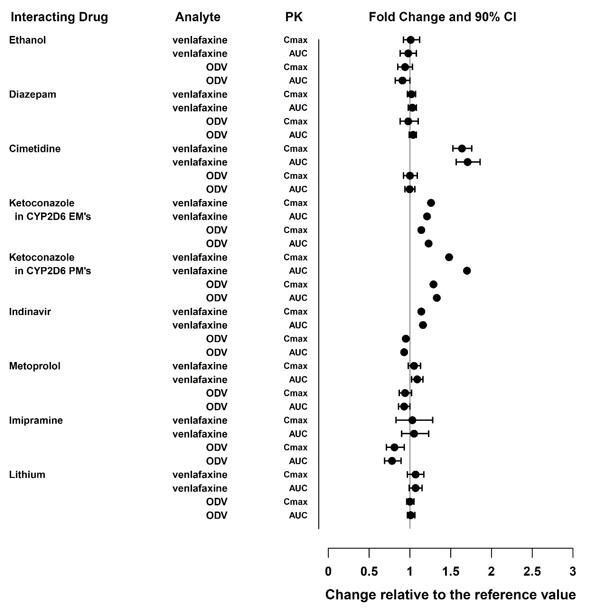
The effects of other drugs on the exposure of venlafaxine and ODV are summarized in Figure 2.
Figure 2: Effect of Other Drugs on the Pharmacokinetics of Venlafaxine and Active Metabolite O-desmethylvenlafaxine (ODV)
ODV=O-desmethylvenlafaxine; AUC=area under the curve; C
max=peak plasma concentrations; EM’s=extensive metabolizers; PM’s=poor metabolizers.
Effect of Venlafaxine Hydrochloride Extended-Release Capsules on Other Drugs
The effects of venlafaxine hydrochloride extended-release capsules on the exposure of other drugs are summarized in Figure 3.
Figure 3: Effect of Venlafaxine on the Pharmacokinetics of Interacting Drugs and their Active Metabolites
AUC=area under the curve; C
max=peak plasma concentrations; OH=hydroxyl.
* Data for 2-OH desipramine were not plotted to enhance clarity; the fold change and 90% CI for Cmax and AUC of 2-OH desipramine were 6.6 (5.5, 7.9) and 4.4 (3.8, 5.0), respectively.
Note:*Administration of venlafaxine in a stable regimen did not exaggerate the psychomotor and psychometric effects induced by ethanol in these same subjects when they were not receiving venlafaxine.
Carcinogenesis
Tumors were not increased by venlafaxine treatment in mice or rats. Venlafaxine was given by oral gavage to mice for 18 months at doses up to 120 mg/kg per day, which was 1.7 times the maximum recommended human dose on a mg/m
2basis. Venlafaxine was also given to rats by oral gavage for 24 months at doses up to 120 mg/kg per day. In rats receiving the 120 mg/kg dose, plasma concentrations of venlafaxine at necropsy were 1 times (male rats) and 6 times (female rats) the plasma concentrations of patients receiving the maximum recommended human dose. Plasma levels of the ODV were lower in rats than in patients receiving the maximum recommended dose. ODV, the major human metabolite of venlafaxine, administered by oral gavage to mice and rats for 2 years did not increase the incidence of tumors in either study. Mice received ODV at dosages up to 500/300 mg/kg/day (dosage lowered after 45 weeks of dosing). The exposure at the 300 mg/kg/day dose is 9 times that of a human dose of 225 mg/day. Rats received ODV at dosages up to 300 mg/kg/day (males) or 500 mg/kg/day (females). The exposure at the highest dose is approximately 8 (males) or 11 (females) times that of a human dose of 225 mg/day.
Mutagenesis
Venlafaxine and the major human metabolite, ODV, were not mutagenic in the Ames reverse mutation assay in
Salmonellabacteria or the Chinese hamster ovary/HGPRT mammalian cell forward gene mutation assay. Venlafaxine was also not mutagenic or clastogenic in the
in vitroBALB/c-3T3 mouse cell transformation assay, the sister chromatid exchange assay in cultured Chinese hamster ovary cells, or in the
in vivochromosomal aberration assay in rat bone marrow. ODV was not clastogenic in the
in vitroChinese hamster ovary cell chromosomal aberration assay or in the
in vivochromosomal aberration assay in rats.
Impairment of Fertility
Reproduction and fertility studies of venlafaxine in rats showed no adverse effects of venlafaxine on male or female fertility at oral doses of up to 2 times the maximum recommended human dose of 225 mg/day on a mg/m
2basis. However, when desvenlafaxine succinate, the major human metabolite of venlafaxine, was administered orally to male and female rats, fertility was reduced at the high dose of 300 mg/kg/day, which is 10 (males) and 19 (females) times the AUC exposure at an adult human dose of 100 mg per day. There was no effect on fertility at 100 mg/kg/day, which is 3 (males) or 5 (females) times the AUC exposure at an adult human dose of 100 mg per day. These studies did not address reversibility of the effect on fertility. The relevance of these findings to humans is not known.
Suicidal Thoughts and Behaviors
Advise patients and caregivers to look for the emergence of suicidality, especially early during treatment and when the dose is adjusted up or down, and instruct them to report such symptoms to the healthcare provider
[see
Boxed Warningand
Warnings and Precautions (5.1)]
.
Concomitant Medication
Instruct patients not to take venlafaxine hydrochloride extended-release capsules with an MAOI or within 14 days of stopping an MAOI
[see
Contraindications (4)]
.
Serotonin Syndrome
Caution patients about the risk of serotonin syndrome, particularly with the concomitant use of venlafaxine hydrochloride extended-release capsules with other serotonergic drugs including triptans, tricyclic antidepressants, opioids, lithium, tryptophan, buspirone, amphetamines, St. John’s Wort, and with drugs that impair metabolism of serotonin (in particular, MAOIs, both those intended to treat psychiatric disorders and also others, such as linezolid). Instruct patients to contact their healthcare provider or report to the emergency room if they experience signs or symptoms of serotonin syndrome
[s
ee
Warnings and Precautions (5.2)and
Drug Interactions (7.1)]
.
Elevated Blood Pressure
Advise patients that they should have regular monitoring of blood pressure when taking venlafaxine hydrochloride extended-release capsules
[see
Warnings and Precautions (5.3)]
.
Increased Risk of Bleeding
Inform patients about the concomitant use of venlafaxine hydrochloride extended-release capsules with NSAIDs, aspirin, other antiplatelet drugs, warfarin, or other drugs that affect coagulation because the combined use has been associated with an increased risk of bleeding. Advise patients to inform their health care providers if they are taking or planning to take any prescription or over-the-counter medications that increase the risk of bleeding
[see
Warnings and Precautions (5.4)]
.
Activation of Mania/Hypomania
Advise patients, their families and caregivers to observe for signs of activation of mania/hypomania and instruct them to report such symptoms to the healthcare provider
[see
Warnings and Precautions (5.6)]
.
Cardiovascular/Cerebrovascular Disease
Caution is advised in administering venlafaxine hydrochloride extended-release capsules to patients with cardiovascular, cerebrovascular, or lipid metabolism disorders
[see
Adverse Reactions (6.1)]
.
Serum Cholesterol and Triglyceride Elevation
Advise patients that elevations in total cholesterol, LDL and triglycerides may occur and that measurement of serum lipids may be considered
[see
Adverse Reactions (6.1)]
.
Discontinuation Syndrome
Advise patients not to abruptly stop taking venlafaxine hydrochloride extended-release capsules without talking first with their healthcare provider. Patients should be aware that discontinuation effects may occur when stopping venlafaxine hydrochloride extended-release capsules and they should monitor for discontinuation symptoms
[see
Warnings and Precautions (5.7)and
Adverse Reactions (6.1)]
.
Sexual Dysfunction
Advise patients that use of venlafaxine hydrochloride extended-release capsules may cause symptoms of sexual dysfunction in both male and female patients. Inform patients that they should discuss any changes in sexual function and potential management strategies with their healthcare provider
[see
Warnings and Precautions (5.13)].
Interference with Cognitive and Motor Performance
Caution patients about operating hazardous machinery, including automobiles, until they are reasonably certain that venlafaxine hydrochloride extended-release capsules therapy does not adversely affect their ability to engage in such activities.
Alcohol
Advise patients to avoid alcohol while taking venlafaxine hydrochloride extended-release capsules
[see
Drug Interactions (7.2)]
.
Allergic Reactions
Advise patients to notify their healthcare provider if they develop allergic phenomena such as rash, hives, swelling, or difficulty breathing
[see
Contraindications (4)and
Adverse Reactions (6.2)]
.
Pregnancy
Advise patients to notify their healthcare provider if they become pregnant or intend to become pregnant during treatment with venlafaxine hydrochloride extended-release capsules. Advise patients that venlafaxine hydrochloride extended-release capsules use during mid to late pregnancy may lead to an increased risk for preeclampsia and may increase the risk for neonatal complications requiring prolonged hospitalization, respiratory support, and tube feeding. Advise patients that there is a pregnancy exposure registry that monitors pregnancy outcomes in women exposed to venlafaxine hydrochloride extended-release capsules during pregnancy
[see
Use in Specific Populations (8.1)]
.
Residual Spheroids
Venlafaxine hydrochloride extended-release capsules contain spheroids, which release the drug slowly into the digestive tract. The insoluble portion of these spheroids is eliminated, and patients may notice spheroids passing in the stool or via colostomy. Patients should be informed that the active medication has already been absorbed by the time the patient sees the spheroids.
Repackaged and Distributed By:
Remedy Repack, Inc.
625 Kolter Dr. Suite #4 Indiana, PA 1-724-465-8762