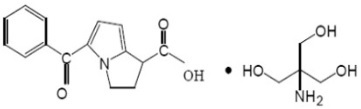
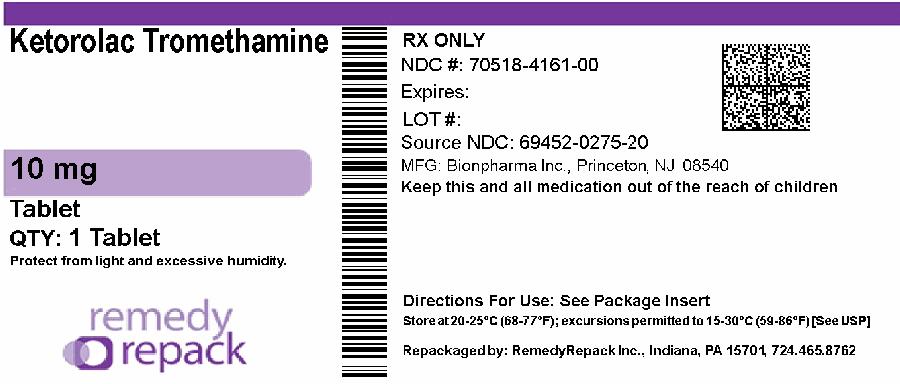
Adverse reaction rates increase with higher doses of ketorolac tromethamine. Practitioners should be alert for the severe complications of treatment with ketorolac tromethamine, such as GI ulceration, bleeding and perforation, postoperative bleeding, acute renal failure, anaphylactic and anaphylactoid reactions and liver failure (see
Boxed WARNING,
WARNINGS,
PRECAUTIONS, and
DOSAGE AND ADMINISTRATION). These NSAID-related complications can be serious in certain patients for whom ketorolac tromethamine is indicated, especially when the drug is used inappropriately.
In patients taking ketorolac tromethamine or other NSAIDs in clinical trials, the most frequently reported adverse experiences in approximately 1% to 10% of patients are:
Gastrointestinal (GI) experiences including:
| abdominal pain
* | constipation/diarrhea | dyspepsia
Incidence greater than 10% |
| flatulence | GI fullness | GI ulcers (gastric/duodenal) |
| gross bleeding/perforation | heartburn | nausea
* |
| stomatitis | vomiting | |
| Other experiences: | | |
| abnormal renal function | anemia | dizziness |
| drowsiness | edema | elevated liver enzymes |
| headaches
* | hypertension | increased bleeding time |
| injection site pain | pruritus | purpura |
| rashes | tinnitus | sweating |
Additional adverse experiences reported occasionally (< 1% in patients taking ketorolac tromethamine or other NSAIDs in clinical trials) include:
Body as a Whole:fever, infections, sepsis
Cardiovascular:congestive heart failure, palpitation, pallor, tachycardia, syncope
Dermatologic:alopecia, photosensitivity, urticaria
Gastrointestinal:anorexia, dry mouth, eructation, esophagitis, excessive thirst, gastritis, glossitis, hematemesis, hepatitis, increased appetite, jaundice, melena, rectal bleeding
Hemic and Lymphatic:ecchymosis, eosinophilia, epistaxis, leukopenia, thrombocytopenia
Metabolic and Nutritional:weight change
Nervous System:abnormal dreams, abnormal thinking, anxiety, asthenia, confusion, depression, euphoria, extrapyramidal symptoms, hallucinations, hyperkinesis, inability to concentrate, insomnia, nervousness, paresthesia, somnolence, stupor, tremors, vertigo, malaise
Reproductive, female:infertility
Respiratory:asthma, cough, dyspnea, pulmonary edema, rhinitis
Special Senses:abnormal taste, abnormal vision, blurred vision, hearing loss
Urogenital:cystitis, dysuria, hematuria, increased urinary frequency, interstitial nephritis, oliguria/polyuria, proteinuria, renal failure, urinary retention
Other rarely observed reactions (reported from post marketing experience in patients taking ketorolac tromethamine or other NSAIDs) are:
Body as a Whole:angioedema, death, hypersensitivity reactions such as anaphylaxis, anaphylactoid reaction, laryngeal edema, tongue edema (see
WARNINGS), myalgia
Cardiovascular:arrhythmia, bradycardia, chest pain, flushing, hypotension, myocardial infarction, vasculitis
Dermatologic:exfoliative dermatitis, erythema multiforme, Lyell's syndrome, bullous reactions including Stevens-Johnson syndrome and toxic epidermal necrolysis
Gastrointestinal:acute pancreatitis, liver failure, ulcerative stomatitis, exacerbation of inflammatory bowel disease (ulcerative colitis, Crohn's disease)
Hemic and Lymphatic:agranulocytosis, aplastic anemia, hemolytic anemia, lymphadenopathy, pancytopenia, postoperative wound hemorrhage (rarely requiring blood transfusion - see
Boxed WARNING,
WARNINGS, and
PRECAUTIONS)
Metabolic and Nutritional:hyperglycemia, hyperkalemia, hyponatremia
Nervous System:aseptic meningitis, convulsions, coma, psychosis
Respiratory:bronchospasm, respiratory depression, pneumonia
Special Senses:conjunctivitis
Urogenital:flank pain with or without hematuria and/or azotemia, hemolytic uremic syndrome
Post marketing Surveillance Study
A large post marketing observational, nonrandomized study, involving approximately 10,000 patients receiving ketorolac tromethamine
intravenous/intramuscular, demonstrated that the risk of clinically serious gastrointestinal (GI) bleeding was dose-dependent (see
Tables 3Aand
3B). This was particularly true in elderly patients who received an average daily dose greater than 60 mg/day of ketorolac tromethamine
intravenous/intramuscular (see
Table 3A).
Table 3: Incidence of Clinically Serious GI Bleeding as Related to Age, Total Daily Dose, and History of GI Perforation, Ulcer, Bleeding (PUB) After up to 5 Days of Treatment with Ketorolac Tromethamine
intravenous/intramuscular
A. Adult Patients without History of PUB| Age of Patients | Total Daily Dose of Ketorolac Tromethamine
intravenous/intramuscular |
| ≤ 60 mg | > 60 mg to 90 mg | > 90 mg to 120 mg | > 120 mg |
| < 65 years of age | 0.4% | 0.4% | 0.9% | 4.6% |
| ≥ 65 years of age | 1.2% | 2.8% | 2.2% | 7.7% |
B. Adult Patients with History of PUB| Age of Patients | Total Daily Dose of Ketorolac Tromethamine
intravenous/intramuscular |
| ≤ 60 mg | > 60 mg to 90 mg | > 90 mg to 120 mg | > 120 mg |
| < 65 years of age | 2.1% | 4.6% | 7.8% | 15.4% |
| ≥ 65 years of age | 4.7% | 3.7% | 2.8% | 25% |
To report SUSPECTED ADVERSE REACTIONS, contact Bionpharma Inc. at 1-888-235-BION or 1-888-235-2466 or FDA at 1-800-FDA-1088 or www.fda.gov/medwatch.