Intravenous infusion (drip method) is the only acceptable method of administration for the induction or stimulation of labor.
Accurate control of the rate of infusion flow is essential. An infusion pump or other such device and frequent monitoring of strength of contractions and fetal heart rate are necessary for the safe administration of oxytocin for the induction or stimulation of labor. If uterine contractions become too powerful, the infusion can be abruptly stopped, and oxytocic stimulation of the uterine musculature will soon wane.
An intravenous infusion of a non-oxytocin containing solution should be started. Physiologic electrolyte solutions should be used except under unusual circumstances.
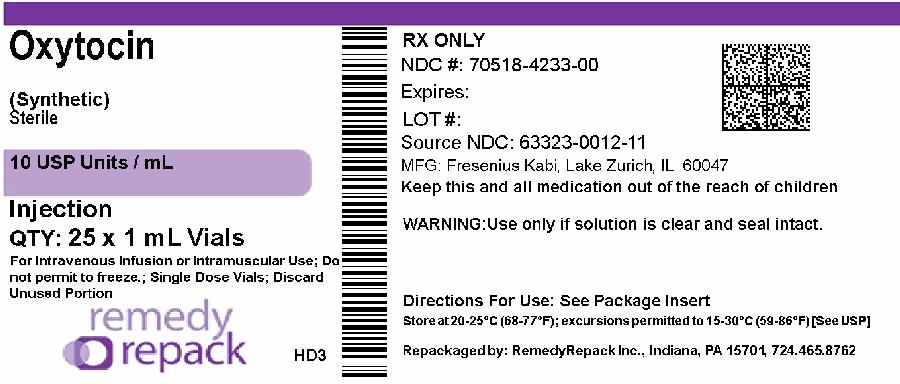
To prepare the usual solution for intravenous infusion–one mL (10 units) is combined aseptically with 1,000 mL of a non-hydrating diluent.
The combined solution, rotated in the infusion bottle to insure thorough mixing, contains 10 mU/mL. Add the container with dilute oxytocic solution to the system through the use of a constant infusion pump or other such device to control accurately the rate of infusion.
The initial dose should be no more than 1 to 2 mU/min. The dose may be gradually increased in increments of no more than 1 to 2 mU/min., until a contraction pattern has been established which is similar to normal labor.
The fetal heart rate, resting uterine tone, and the frequency, duration, and force of contractions should be monitored.
The oxytocin infusion should be discontinued immediately in the event of uterine hyperactivity or fetal distress. Oxygen should be administered to the mother. The mother and fetus must be evaluated by the responsible physician.