Metformin Tablet, Extended Release
Product Images NDC 70518-4651

View Photos of Packaging, Regulatory Labels, and Product Appearance

Product Visual Gallery

This gallery contains 12 technical images submitted to the FDA as part of the official labeling for Metformin (NDC 70518-4651). Unlike standard consumer photos, these assets often include clinical data figures, molecular chemical structures, and official manufacturer packaging layouts.

As provided by Remedyrepack Inc., these visuals offer a comprehensive scientific overview of the product's physical and chemical identity, aiding pharmacists and researchers in product verification and study.

FDA Label Image

Mm1 (Metformin HCl 1000mg 70518 4651 00)
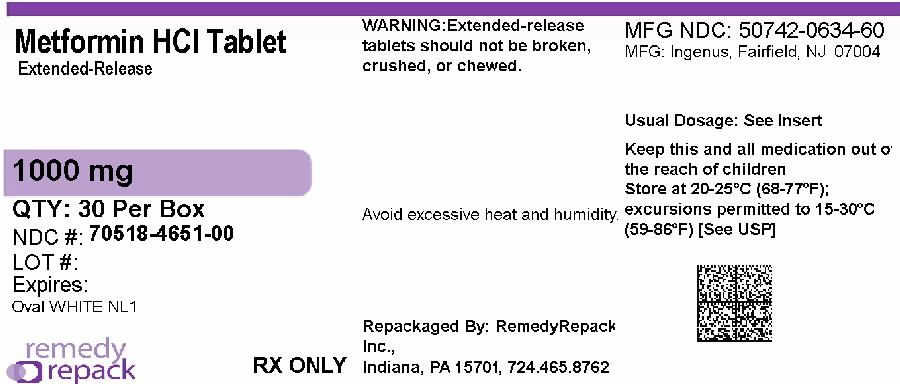
Mm1 (Metformin HCl 1000mg 70518 4651 00)
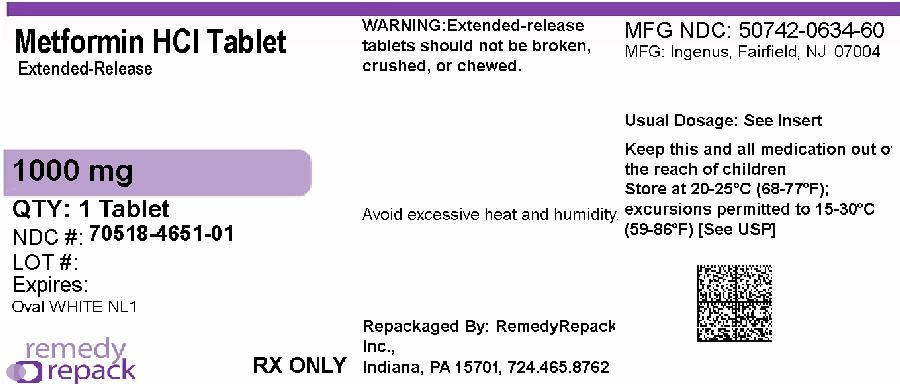
This is a description of Metformin HCI Extended-Release tablets, each containing 1000 mg. The medication comes in a box of 30 tablets and is oval, white, and imprinted with NL1. It is important not to break, crush, or chew the tablets. The usual dosage information can be found in the insert. The medication should be kept out of reach of children and stored at a temperature between 20-25°C (68-77°F) to avoid exposure to excessive heat and humidity. This particular batch was repackaged by RemedyRepack Inc. in Indiana, PA.*
FDA Label Image

Remedy_label (Remedy Label)

Remedy_label (Remedy Label)
This is a description for a Metformin HCI Extended-Release Tablet, 1000 mg strength. It is an oval white tablet. The package contains 1 tablet with an NDC number of 70618-4651-01. It is advised to not crush, chew, or break the extended-release tablet. The manufacturer is Ingenus from Fairfield, NJ. The medication should be stored at 20-25°C (68-77°F) with precautions against excessive heat and humidity. The usual dosage information is provided in the insert. This particular tablet was repackaged by RemedyRepack Inc. from Indiana, PA, with contact information provided.*
FDA Label Image

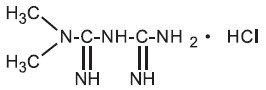
Structure (Structure)

FDA Label Image

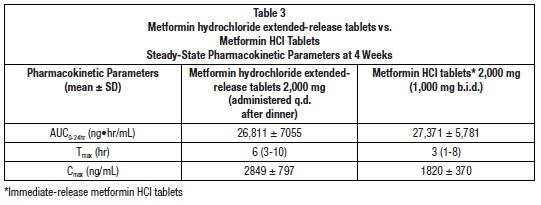
Table3 (Table 3)

FDA Label Image

Table4 (Table 4)

Table4 (Table 4)
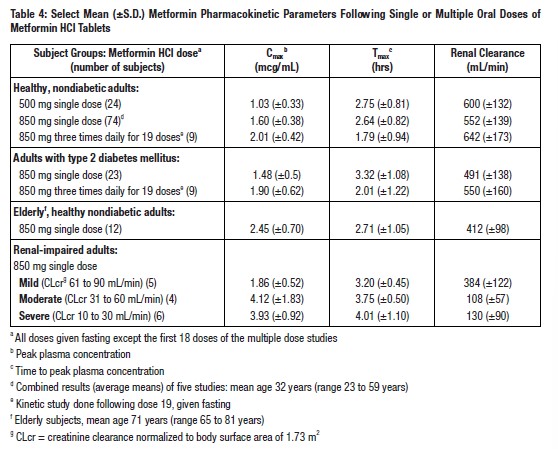
This text provides data on Metformin Pharmacokinetic Parameters in different subject groups following single or multiple oral doses of Metformin HCI tablets. The information includes Metformin clearance rates, plasma concentration levels, and time to peak plasma concentration in various populations such as healthy adults, adults with type 2 diabetes mellitus, elderly individuals, and renal-impaired adults. The results are based on several studies with different dosages and fasting conditions. Age ranges and additional details on the methodology used for the studies are also included.*
FDA Label Image

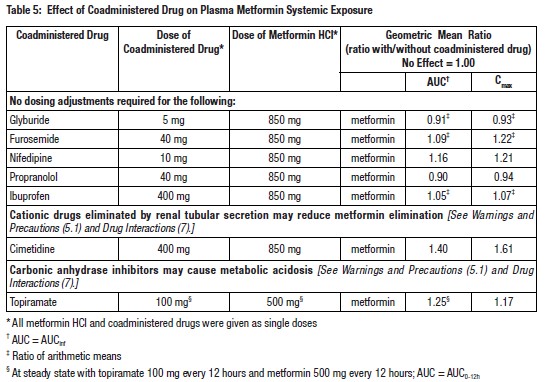
Table5 (Table 5)

Table5 (Table 5)
This text seems to be a table showing the effect of coadministered drugs on plasma metformin systemic exposure. The table includes information on different drugs like glyburide, furosemide, nifedipine, propranolol, cationic drugs, and carbonic anhydrase inhibitors, and how they affect the systemic exposure of metformin. It also mentions that dosing adjustments may be required with some of these coadministered drugs and includes some warnings and precautions related to interactions. The table provides ratios and geometric mean ratios for the coadministration of various drugs with metformin.*
FDA Label Image

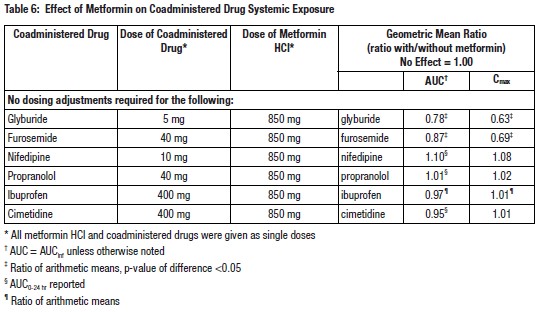
Table6 (Table 6)

Table6 (Table 6)
Table 6 shows the effect of Metformin on the systemic exposure of coadministered drugs. The table provides information on various drugs such as Glyburide, Nifedipine, Propranolol, Ibuprofen, and Cimetidine when taken in combination with Metformin. It indicates the ratios of systemic exposure with and without Metformin for each drug. Dosing adjustments may not be required for some drugs like Glyburide, Nifedipine, Propranolol, Ibuprofen, and Cimetidine when coadministered with Metformin based on the data presented. The study involved single doses of Metformin HCl and the coadministered drugs with AUC (area under the concentration-time curve) calculations and ratio comparisons.*
FDA Label Image

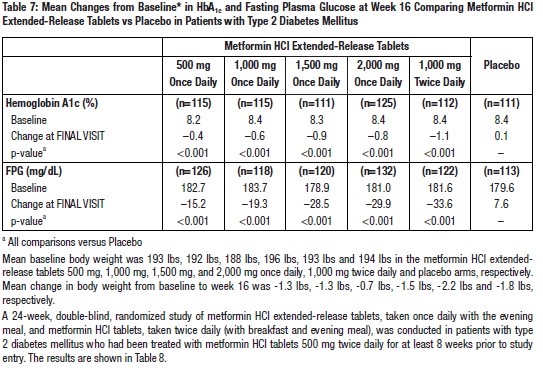
Table7 (Table 7)

Table7 (Table 7)
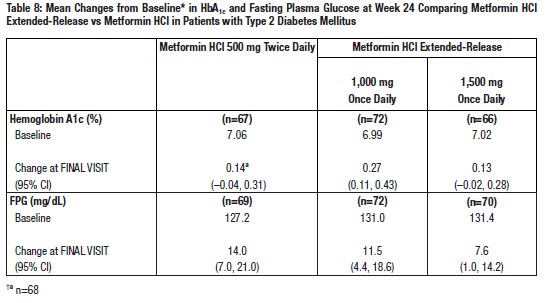
Table 7 shows the mean changes from baseline in HbA and Fasting Plasma Glucose at Week 16 comparing Metformin HCI Extended-Release Tablet vs Placebo in Patients with Type 2 Diabetes Mellitus. The table compares different dosages and frequencies of Metformin HCI Extended-Release Tablets with Placebo. It includes information on Hemoglobin A1c levels and Fasting Plasma Glucose levels at baseline and at the final visit, along with the corresponding changes and p-values. Additionally, the text mentions a 24-week study conducted on patients with type 2 diabetes mellitus who were treated with Metformin HCI tablets, detailing the mean baseline body weight and the changes in body weight from baseline to week 16 for different dosages of Metformin HCI Extended-Release Tablets and Placebo, administered once daily or twice daily with meals.*
FDA Label Image

Table8 (Table 8)

FDA Label Image

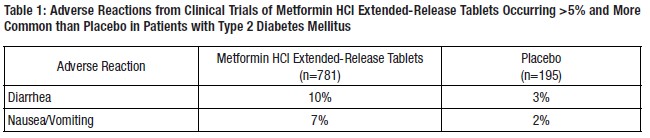
Table1 (Table1)

Table1 (Table1)
This text provides a table showing adverse reactions from clinical trials of Metformin HCI Extended-Release Tablets in patients with Type 2 Diabetes Mellitus. The table highlights the percentage of patients experiencing diarrhea, nausea, and vomiting with Metformin compared to placebo. Diarrhea was reported in 10% of patients on Metformin compared to 3% on placebo, while nausea and vomiting were reported in less than 5% of patients on Metformin and less than 3% on placebo.*
FDA Label Image

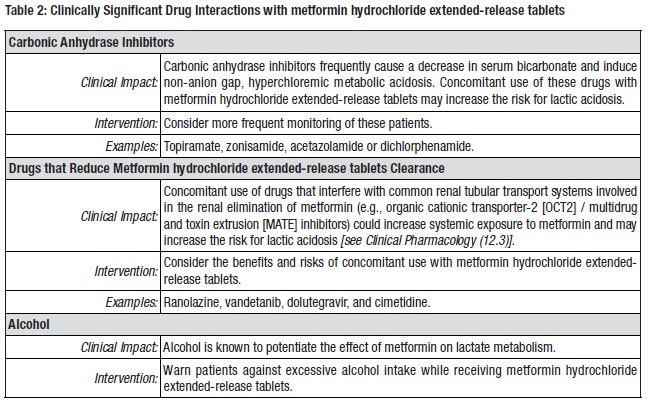
Table2-1 (Table2 1)

Table2-1 (Table2 1)
This text provides information on clinically significant drug interactions with metformin hydrochloride extended-release tablets. It mentions the impact of Carbonic Anhydrase Inhibitors, drugs that reduce Metformin clearance, and Alcohol on lactate metabolism. It also suggests interventions and examples of specific drugs that should be carefully monitored or avoided when used concomitantly with metformin. It highlights the importance of closer monitoring for patients on certain medications to prevent metabolic acidosis and other risks.*
FDA Label Image

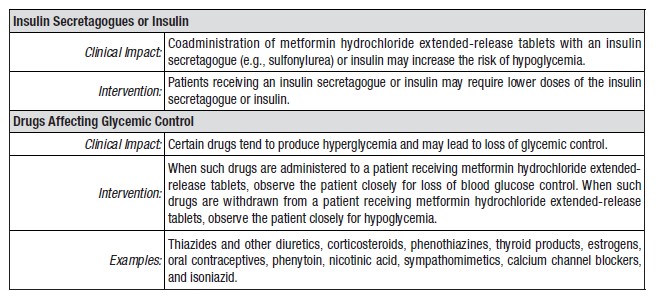
Table2-2 (Table2 2)

Table2-2 (Table2 2)
This text provides important information about potential interactions between metformin hydrochloride extended-release tablets and insulin secretagogues or insulin, which may increase the risk of hypoglycemia. It also mentions drugs that can affect glycemic control, leading to hyperglycemia or loss of blood glucose control. Examples of such drugs include thiazides, corticosteroids, and calcium channel blockers. Healthcare providers should closely monitor patients when these drugs are co-administered with metformin hydrochloride extended-release tablets to avoid any adverse effects on glycemic control.*

* These product label images have been analyzed using experimental machine learning. Please verify findings with the primary label text.