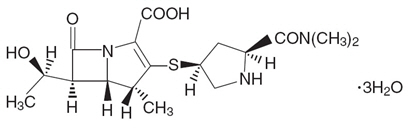
For pediatric patients (with normal renal function) less than 3 months of age, with complicated intra-abdominal infections, the Meropenem for Injection, USP dose is based on gestational age (GA) and postnatal age (PNA). See dosing table 3 below. Meropenem for Injection, USP should be given as intravenous infusion over 30 minutes.
Parenteral drug products should be inspected visually for particulate matter and discoloration prior to administration, whenever solution and container permit.
Re-constitute injection vials (500 mg and 1 gram) with Sterile Water for Injection (see table 4 below). Shake to dissolve and let stand until clear.
- Injection vials (500 mg and 1 gram) may be directly re-constituted with a compatible infusion fluid.
- Alternatively, an injection vial may be re-constituted, then the resulting solution added to an intravenous container and further diluted with an appropriate infusion fluid [see Dosage and Administration (2.5) and (2.6)].
- Do not use flexible container in series connections.
Intravenous Bolus Administration
Meropenem for Injection, USP vials re-constituted with Sterile Water for Injection for bolus administration (up to 50 mg/mL of Meropenem for Injection, USP) may be stored for up to 3 hours at up to 25°C (77°F) or for 13 hours at up to 5°C (41°F).
Intravenous Infusion Administration
Solutions prepared for infusion (Meropenem for Injection, USP concentrations ranging from 1 mg/mL to 20 mg/mL) re-constituted with Sodium Chloride Injection 0.9% may be stored for 1 hour at up to 25°C (77°F) or 15 hours at up to 5°C (41°F).
Solutions prepared for infusion (Meropenem for Injection, USP concentrations ranging from 1 mg/mL to 20 mg/mL) re-constituted with Dextrose Injection 5% should be used immediately.
Adult Patients
During clinical investigations, 2904 immunocompetent adult patients were treated for non-CNS infections with Meropenem for Injection, USP (500 mg or 1 gram every 8 hours). Deaths in 5 patients were assessed as possibly related to meropenem; 36 (1.2%) patients had meropenem discontinued because of adverse events. Many patients in these trials were severely ill and had multiple background diseases, physiological impairments and were receiving multiple other drug therapies. In the seriously ill patient population, it was not possible to determine the relationship between observed adverse events and therapy with Meropenem for Injection, USP.
The following adverse reaction frequencies were derived from the clinical trials in the 2904 patients treated with Meropenem for Injection, USP.
Local Adverse Reactions
Local adverse events that were reported with Meropenem for Injection, USP were as follows:
| Inflammation at the injection site | 2.4% |
| Injection site reaction | 0.9% |
| Phlebitis/thrombophlebitis | 0.8% |
| Pain at the injection site | 0.4% |
| Edema at the injection site | 0.2% |
Systemic Adverse Reactions
Systemic adverse events that were reported with Meropenem for Injection, USP occurring in greater than 1.0% of the patients were diarrhea (4.8%), nausea/vomiting (3.6%), headache (2.3%), rash (1.9%), sepsis (1.6%), constipation (1.4%), apnea (1.3%), shock (1.2%), and pruritus (1.2%).
Additional systemic adverse events that were reported with Meropenem for Injection, USP and occurring in less than or equal to 1.0% but greater than 0.1% of the patients are listed below within each body system in order of decreasing frequency:
Bleeding events were seen as follows: gastrointestinal hemorrhage (0.5%), melena (0.3%), epistaxis (0.2%), hemoperitoneum (0.2%).
Body as a Whole: pain, abdominal pain, chest pain, fever, back pain, abdominal enlargement, chills, pelvic pain
Cardiovascular: heart failure, heart arrest, tachycardia, hypertension, myocardial infarction, pulmonary embolus, bradycardia, hypotension, syncope
Digestive System: oral moniliasis, anorexia, cholestatic jaundice/jaundice, flatulence, ileus, hepatic failure, dyspepsia, intestinal obstruction
Hemic/Lymphatic: anemia, hypochromic anemia, hypervolemia
Metabolic/Nutritional: peripheral edema, hypoxia
Nervous System: insomnia, agitation, delirium, confusion, dizziness, seizure, nervousness, paresthesia, hallucinations, somnolence, anxiety, depression, asthenia [see Warnings and Precautions (5.3) and (5.9)]
Respiratory: respiratory disorder, dyspnea, pleural effusion, asthma, cough increased, lung edema
Skin and Appendages: urticaria, sweating, skin ulcer
Urogenital System: dysuria, kidney failure, vaginal moniliasis, urinary incontinence
Adverse Laboratory Changes
Adverse laboratory changes that were reported and occurring in greater than 0.2% of the patients were as follows:
Hepatic: increased alanine transaminase (ALT), aspartate transaminase (AST), alkaline phosphatase, lactate dehydrogenase (LDH), and bilirubin
Hematologic: increased platelets, increased eosinophils, decreased platelets, decreased hemoglobin, decreased hematocrit, decreased white blood cell (WBC), shortened prothrombin time and shortened partial thromboplastin time, leukocytosis, hypokalemia
Renal: increased creatinine and increased blood urea nitrogen (BUN)
Urinalysis: presence of red blood cells
Complicated Skin and Skin Structure Infections
In a study of complicated skin and skin structure infections, the adverse reactions were similar to those listed above. The most common adverse events occurring in greater than 5% of the patients were: headache (7.8%), nausea (7.8%), constipation (7.0%), diarrhea (7.0%), anemia (5.5%), and pain (5.1%). Adverse events with an incidence of greater than 1%, and not listed above, include: pharyngitis, accidental injury, gastrointestinal disorder, hypoglycemia, peripheral vascular disorder, and pneumonia.
Patients with Renal Impairment:
For patients with varying degrees of renal impairment, the incidence of heart failure, kidney failure, seizure and shock reported with Meropenem for Injection, USP, increased in patients with moderately severe renal impairment (creatinine clearance 10 to 26 mL/min) [see Dosage and Administration (2.2), Warnings and Precautions (5.9), Use in Specific Populations (8.5) and (8.6) and Clinical Pharmacology (12.3)].
Pediatric Patients:
Systemic and Local Adverse Reactions
Pediatric Patients with Serious Bacterial Infections (excluding Bacterial Meningitis):
Meropenem for Injection, USP was studied in 515 pediatric patients (3 months to less than 13 years of age) with serious bacterial infections (excluding meningitis, see next section) at dosages of 10 mg/kg to 20 mg/kg every 8 hours. The types of systemic and local adverse events seen in these patients are similar to the adults, with the most common adverse events reported as possibly, probably, or definitely related to Meropenem for Injection, USP and their rates of occurrence as follows:
| Diarrhea | 3.5% |
| Rash | 1.6% |
| Nausea and Vomiting | 0.8% |
Pediatric Patients with Bacterial Meningitis:
Meropenem for Injection, USP was studied in 321 pediatric patients (3 months to less than 17 years of age) with meningitis at a dosage of 40 mg/kg every 8 hours. The types of systemic and local adverse events seen in these patients are similar to the adults, with the most common adverse reactions reported as possibly, probably, or definitely related to Meropenem for Injection, USP and their rates of occurrence as follows:
| Diarrhea | 4.7% |
| Rash (mostly diaper area moniliasis) | 3.1% |
| Oral Moniliasis | 1.9% |
| Glossitis | 1.0% |
In the meningitis studies, the rates of seizure activity during therapy were comparable between patients with no CNS abnormalities who received meropenem and those who received comparator agents (either cefotaxime or ceftriaxone). In the Meropenem for Injection, USP treated group, 12/15 patients with seizures had late onset seizures (defined as occurring on day 3 or later) versus 7/20 in the comparator arm. The meropenem group had a statistically higher number of patients with transient elevation of liver enzymes.
Pediatric Patients (Neonates and Infants less than 3 months of Age):
Meropenem for Injection, USP was studied in 200 neonates and infants less than 3 months of age. The study was open-label, uncontrolled, 98% of the infants received concomitant medications, and the majority of adverse events were reported in neonates less than 32 weeks gestational age and critically ill at baseline, making it difficult to assess the relationship of the adverse events to Meropenem for Injection, USP.
The adverse reactions seen in these patients that were reported and their rates of occurrence are as follows:
| Convulsion | 5.0% |
| Hyperbilirubinemia (conjugated) | 4.5% |
| Vomiting | 2.5% |
Adverse Laboratory Changes in Pediatric Patients:
Laboratory changes seen in the pediatric studies, including the meningitis studies, were similar to those reported in the adult studies.
Risk Summary
There are insufficient human data to establish whether there is a drug-associated risk of major birth defects or miscarriages with meropenem in pregnant women.
No fetal toxicity or malformations were observed in pregnant rats and Cynomolgus monkeys administered intravenous meropenem during organogenesis at doses up to 2.4 and 2.3 times the maximum recommended human dose (MRHD) based on body surface area comparison, respectively. In rats administered intravenous meropenem in late pregnancy and during the lactation period, there were no adverse effects on offspring at doses equivalent to approximately 3.2 times the MRHD based on body surface area comparison (see Data).
The background risk of major birth defects and miscarriage for the indicated population is unknown. All pregnancies have a background risk of birth defect, loss, or other adverse outcomes. In the U.S. general population, the estimated background risk of major birth defects and miscarriage in clinically recognized pregnancies is 2% to 4% and 15% to 20%, respectively.
Data
Meropenem administered to pregnant rats during organogenesis (Gestation Day 6 to Gestation Day 17) in intravenous doses of 240, 500, and 750 mg/kg/day was associated with mild maternal weight loss at all doses, but did not produce malformations or fetal toxicity. The no-observed-adverse-effect-level (NOAEL) for fetal toxicity in this study was considered to be the high dose of 750 mg/kg/day (equivalent to approximately 2.4 times the MRHD of 1 gram every 8 hours based on body surface area comparison). Meropenem administered intravenously to pregnant Cynomolgus monkeys during organogenesis from Day 20 to 50 after mating at doses of 120, 240, and 360 mg/kg/day did not produce maternal or fetal toxicity at the NOAEL dose of 360 mg/kg/day (approximately 2.3 times the MRHD based on body surface area comparison).
In a peri-postnatal study in rats described in the published literature2, intravenous meropenem was administered to dams from Gestation Day 17 until Lactation Day 21 at doses of 240, 500, and 1000 mg/kg/day. There were no adverse effects in the dams and no adverse effects in the first generation offspring (including developmental, behavioral, and functional assessments and reproductive parameters) except that female offspring exhibited lowered body weights which continued during gestation and nursing of the second generation offspring. Second generation offspring showed no meropenem-related effects. The NOAEL value was considered to be 1000 mg/kg/day (approximately 3.2 times the MRHD based on body surface area comparisons).
Risk Summary
Meropenem has been reported to be excreted in human milk. No information is available on the effects of meropenem on the breast-fed child or on milk production. The developmental and health benefits of breastfeeding should be considered along with the mother's clinical need for Meropenem for Injection, USP and any potential adverse effects on the breast-fed child from Meropenem for Injection, USP or from the underlying maternal conditions.
Skin and Skin Structure Infections
Use of Meropenem for Injection, USP in pediatric patients 3 months of age and older with complicated skin and skin structure infections is supported by evidence from an adequate and well-controlled study in adults and additional data from pediatric pharmacokinetics studies [see Indications and Usage (1.3), Dosage and Administration (2.3), Adverse Reactions (6.1), Clinical Pharmacology (12.3) and Clinical Studies (14.1)].
Intra-abdominal Infections
Use of Meropenem for Injection, USP in pediatric patients 3 months of age and older with intra-abdominal infections is supported by evidence from adequate and well-controlled studies in adults with additional data from pediatric pharmacokinetics studies and controlled clinical trials in pediatric patients. Use of Meropenem for Injection, USP in pediatric patients less than 3 months of age with intra-abdominal infections is supported by evidence from adequate and well-controlled studies in adults with additional data from a pediatric pharmacokinetic and safety study [see Indications and Usage (1.2), Dosage and Administration (2.3), Adverse Reactions (6.1), Clinical Pharmacology (12.3) and Clinical Studies (14.2)].
Bacterial Meningitis
Use of Meropenem for Injection, USP in pediatric patients 3 months of age and older with bacterial meningitis is supported by evidence from adequate and well-controlled studies in the pediatric population [see Indications and Usage (1.3), Dosage and Administration (2.3), Adverse Reactions (6.1), Clinical Pharmacology (12.3) and Clinical Studies (14.3)].
Plasma Concentrations
At the end of a 30-minute intravenous infusion of a single dose of Meropenem for Injection, USP in healthy volunteers, mean peak plasma concentrations of meropenem are approximately 23 mcg/mL (range 14 to 26) for the 500 mg dose and 49 mcg/mL (range 39 to 58) for the 1 gram dose. A 5-minute intravenous bolus injection of Meropenem for Injection, USP in healthy volunteers results in mean peak plasma concentrations of approximately 45 mcg/mL (range 18 to 65) for the 500 mg dose and 112 mcg/mL (range 83 to 140) for the 1 gram dose.
Following intravenous doses of 500 mg, mean plasma concentrations of meropenem usually decline to approximately 1 mcg/mL at 6 hours after administration.
No accumulation of meropenem in plasma was observed with regimens using 500 mg administered every 8 hours or 1 gram administered every 6 hours in healthy volunteers with normal renal function.
Distribution
The plasma protein binding of meropenem is approximately 2%.
After a single intravenous dose of Meropenem for Injection, USP, the highest mean concentrations of meropenem were found in tissues and fluids at 1 hour (0.5 hours to 1.5 hours) after the start of infusion, except where indicated in the tissues and fluids listed in Table 5 below.
Table 5: Meropenem Concentrations in Selected Tissues (Highest Concentrations Reported)| Tissue | Intravenous Dose (gram) | Number of Samples | Mean [mcg/mL or mcg/(gram)] at 1 hour unless otherwise noted | Range [mcg/mL or mcg/(gram)] |
|---|
| Endometrium | 0.5 | 7 | 4.2 | 1.7 to 10.2 |
| Myometrium | 0.5 | 15 | 3.8 | 0.4 to 8.1 |
| Ovary | 0.5 | 8 | 2.8 | 0.8 to 4.8 |
| Cervix | 0.5 | 2 | 7 | 5.4 to 8.5 |
| Fallopian tube | 0.5 | 9 | 1.7 | 0.3 to 3.4 |
| Skin | 0.5 | 22 | 3.3 | 0.5 to 12.6 |
| Interstitial fluid | 0.5 | 9 | 5.5 | 3.2 to 8.6 |
| Skin | 1 | 10 | 5.3 | 1.3 to 16.7 |
| Interstitial fluid | 1 | 5 | 26.3 | 20.9 to 37.4 |
| Colon | 1 | 2 | 2.6 | 2.5 to 2.7 |
| Bile | 1 | 7 | 14.6 (3 hours) | 4 to 25.7 |
| Gall bladder | 1 | 1 | - | 3.9 |
| Peritoneal fluid | 1 | 9 | 30.2 | 7.4 to 54.6 |
| Lung | 1 | 2 | 4.8 (2 hours) | 1.4 to 8.2 |
| Bronchial mucosa | 1 | 7 | 4.5 | 1.3 to 11.1 |
| Muscle | 1 | 2 | 6.1 (2 hours) | 5.3 to 6.9 |
| Fascia | 1 | 9 | 8.8 | 1.5 to 20 |
| Heart valves | 1 | 7 | 9.7 | 6.4 to 12.1 |
| Myocardium | 1 | 10 | 15.5 | 5.2 to 25.5 |
| CSF (inflamed) | 20 mg/kg in pediatric patients of age 5 months to 8 years | 8 | 1.1 (2 hours) | 0.2 to 2.8 |
| 40 mg/kg in pediatric patients of age 1 month to 15 years | 5 | 3.3 (3 hours) | 0.9 to 6.5 |
| CSF (uninflamed) | 1 | 4 | 0.2 (2 hours) | 0.1 to 0.3 |
Elimination
In subjects with normal renal function, the elimination half-life of meropenem is approximately 1 hour.
Metabolism
There is one metabolite of meropenem that is microbiologically inactive.
Excretion
Meropenem is primarily excreted unchanged by the kidneys. Approximately 70% (50% to 75%) of the dose is excreted unchanged within 12 hours. A further 28% is recovered as the microbiologically inactive metabolite. Fecal elimination represents only approximately 2% of the dose. The measured renal clearance and the effect of probenecid show that meropenem undergoes both filtration and tubular secretion.
Urinary concentrations of meropenem in excess of 10 mcg/mL are maintained for up to 5 hours after a 500 mg dose.
Specific Populations
Patients with Renal Impairment
Pharmacokinetic studies with Meropenem for Injection, USP in patients with renal impairment have shown that the plasma clearance of meropenem correlates with creatinine clearance. Dosage adjustments are necessary in subjects with renal impairment (creatinine clearance 50 mL/min or less) [see Dosage and Administration (2.2) and Use in Specific Populations (8.6)].
Meropenem for Injection, USP is hemodialyzable. However, there is no information on the usefulness of hemodialysis to treat overdosage [see Overdosage (10)].
Patients with Hepatic Impairment
A pharmacokinetic study with Meropenem for Injection, USP in patients with hepatic impairment has shown no effects of liver disease on the pharmacokinetics of meropenem.
Geriatric Patients
A pharmacokinetic study with Meropenem for Injection, USP in elderly patients with renal impairment showed a reduction in plasma clearance of meropenem that correlates with age-associated reduction in creatinine clearance.
Pediatric Patients
The pharmacokinetics of meropenem for injection, USP, in pediatric patients 2 years of age or older, are similar to those in adults. The elimination half-life for meropenem was approximately 1.5 hours in pediatric patients of age 3 months to 2 years.
The pharmacokinetics of meropenem in patients less than 3 months of age receiving combination antibacterial drug therapy are given below.
Table 6: Meropenem Pharmacokinetic Parameters in Patients Less Than 3 Months of AgeValues are derived from a population pharmacokinetic analysis of sparse data
| GA less than 32 weeks PNA less than 2 weeks (20 mg/kg every 12 hours) | GA less than 32 weeks PNA 2 weeks or older (20 mg/kg every 8 hours) | GA 32 weeks or older PNA less than 2 weeks (20 mg/kg every 8 hours) | GA 32 weeks or older PNA 2 weeks or older (30 mg/kg every 8 hours) | Overall |
|---|
| CL (L/h/kg) | 0.089 | 0.122 | 0.135 | 0.202 | 0.119 |
| V (L/kg) | 0.489 | 0.467 | 0.463 | 0.451 | 0.468 |
| AUC0-24 (mcg-h/mL) | 448 | 491 | 445 | 444 | 467 |
| Cmax (mcg/mL) | 44.3 | 46.5 | 44.9 | 61 | 46.9 |
| Cmin (mcg/mL) | 5.36 | 6.65 | 4.84 | 2.1 | 5.65 |
| T1/2 (h) | 3.82 | 2.68 | 2.33 | 1.58 | 2.68 |
Drug Interactions
Probenecid competes with meropenem for active tubular secretion and thus inhibits the renal excretion of meropenem. Following administration of probenecid with meropenem, the mean systemic exposure increased 56% and the mean elimination half-life increased 38% [see Drug Interactions (7.1)].
Mechanism of Action
The bactericidal activity of meropenem results from the inhibition of cell wall synthesis. Meropenem penetrates the cell wall of most gram-positive and gram-negative bacteria to bind penicillin-binding-protein (PBP) targets. Meropenem binds to PBPs 2, 3 and 4 of Escherichia coli and Pseudomonas aeruginosa; and PBPs 1, 2 and 4 of Staphylococcus aureus. Bactericidal concentrations (defined as a 3 log10 reduction in cell counts within 12 hours to 24 hours) are typically 1 to 2 times the bacteriostatic concentrations of meropenem, with the exception of Listeria monocytogenes, against which lethal activity is not observed.
Meropenem does not have in vitro activity against methicillin-resistant Staphylococcus aureus (MRSA) or methicillin-resistant Staphylococcus epidermidis (MRSE).
Resistance
There are several mechanisms of resistance to carbapenems: 1) decreased permeability of the outer membrane of gram-negative bacteria (due to diminished production of porins) causing reduced bacterial uptake, 2) reduced affinity of the target PBPs, 3) increased expression of efflux pump components, and 4) production of antibacterial drug-destroying enzymes (carbapenemases, metallo-β-lactamases).
Cross-resistance is sometimes observed with isolates resistant to other carbapenems.
Interaction with Other Antimicrobials
In vitro tests show meropenem to act synergistically with aminoglycoside antibacterial drugs against some isolates of Pseudomonas aeruginosa.
Antimicrobial Activity
Meropenem has been shown to be active against most isolates of the following microorganisms, both in vitro and in clinical infections [see Indications and Usage (1)].
Gram-positive bacteria
Enterococcus faecalis (vancomycin-susceptible isolates only)
Staphylococcus aureus (methicillin-susceptible isolates only)
Streptococcus agalactiae
Streptococcus pneumoniae (penicillin-susceptible isolates only)
Streptococcus pyogenes
Viridans group streptococci
Gram-negative bacteria
Escherichia coli
Haemophilus influenzae
Klebsiella pneumoniae
Neisseria meningitidis
Proteus mirabilis
Pseudomonas aeruginosa
Anaerobic bacteria
Bacteroides fragilis
Bacteroides thetaiotaomicron
Peptostreptococcus species
The following in vitro data are available, but their clinical significance is unknown. At least 90% of the following bacteria exhibit an in vitro minimum inhibitory concentration (MIC) less than or equal to the susceptible breakpoint for meropenem against isolates of similar genus or organism group. However, the efficacy of meropenem in treating clinical infections caused by these bacteria have not been established in adequate and well-controlled clinical trials.
Gram-positive bacteria
Staphylococcus epidermidis (methicillin-susceptible isolates only)
Gram-negative bacteria
Aeromonas hydrophila
Campylobacter jejuni
Citrobacter freundii
Citrobacter koseri
Enterobacter cloacae
Hafnia alvei
Klebsiella oxytoca
Moraxella catarrhalis
Morganella morganii
Pasteurella multocida
Proteus vulgaris
Serratia marcescens
Anaerobic bacteria
Bacteroides ovatus
Bacteroides uniformis
Bacteroides ureolyticus
Bacteroides vulgatus
Clostridium difficile
Clostridium perfringens
Eggerthella lenta
Fusobacterium species
Parabacteroides distasonis
Porphyromonas asaccharolytica
Prevotella bivia
Prevotella intermedia
Prevotella melaninogenica
Propionibacterium acnes
Susceptibility Testing
For specific information regarding susceptibility test interpretive criteria and associated test methods and quality control standards recognized by FDA for this drug, please see: https://www.fda.gov/STIC.
Carcinogenesis:
Carcinogenesis studies have not been performed.
Mutagenesis:
Genetic toxicity studies were performed with meropenem using the bacterial reverse mutation test, the Chinese hamster ovary HGPRT assay, cultured human lymphocytes cytogenic assay, and the mouse micronucleus test. There was no evidence of mutagenic potential found in any of these tests.
Impairment of Fertility:
In fertility studies, intravenous meropenem was administered to male rats beginning 11 weeks before mating and throughout mating and to female rats from 2 weeks before mating through Gestation Day 7 at doses of 240, 500, and 1000 mg/kg/day. There was no evidence of impaired fertility at doses up to 1000 mg/kg/day (on the basis of body surface area comparison, approximately 3.2 times to the MRHD of 1 gram every 8 hours).
Manufactured for:
Xellia Pharmaceuticals USA, LLC
Buffalo Grove, IL 60089
Made in India
Revised: April 2021
LEA-020514-00