In cases of suspected massive overdose, or with concomitant ingestion of other substances, or in patients with preexisting liver disease; the absorption and/or the half-life of acetaminophen may be prolonged. In such cases, consideration should be given to the need for continued treatment with Acetylcysteine injection beyond a total of three separate doses over a 21-hour infusion period.
Acetaminophen levels and ALT/AST and INR should be checked after the last maintenance dose. If acetaminophen levels are still detectable, or if the ALT/AST are still increasing or the INR remains elevated; dosing should be continued and the treating physician should contact a US regional poison center at 1-800-222-1222, alternatively, a "special health professional assistance line for acetaminophen overdose" at 1-800-525-6115 for assistance with dosing recommendations, or 1-877-484-2700 for additional information.
The total recommended dosage of Acetylcysteine injection is 300 mg/kg given intravenously as 3 separate, sequential doses (i.e., 3-bag method to administer the loading, second, and third doses). The total recommended infusion time for 3 doses is 21 hours. For the recommended weight-based dosage and weight-based dilution in patients who weigh:
- 5 to 20 kg (see Table 2)
- 21 to 40 kg (see Table 3)
- 41 kg or greater (see Table 4)
Table 2. Recommended Acetylcysteine injection Dosage and Dilution for Patients 5 kg to 20 kg| Body Weight | Bag 1 (Loading Dose)
150 mg/kg in 3 mL/kg of diluentDilute Acetylcysteine injection in one of the following three solutions: sterile water for injection, 0.45% sodium chloride injection, or 5% dextrose in water. infused over 1 hour | Bag 2 (Second Dose)
50 mg/kg in 7 mL/kg of diluent infused over 4 hours | Bag 3 (Third Dose)
100 mg/kg diluted in 14 mL/kg of diluent infused over 16 hours |
|---|
| Loading Dose | Diluent Volume | Second Dose | Diluent Volume | Third Dose | Diluent Volume |
|---|
| 5 kg Recommended dosing for those less than 5 kg has not been studied. | 750 mg | 15 mL | 250 mg | 35 mL | 500 mg | 70 mL |
| 10 kg | 1,500 mg | 30 mL | 500 mg | 70 mL | 1,000 mg | 140 mL |
| 15 kg | 2,250 mg | 45 mL | 750 mg | 105 mL | 1,500 mg | 210 mL |
| 20 kg | 3,000 mg | 60 mL | 1,000 mg | 140 mL | 2,000 mg | 280 mL |
Table 3. Recommended Acetylcysteine injection Dosage and Dilution for Patients 21 kg to 40 kg| Body Weight | Bag 1 (Loading Dose)
150 mg/kg in 100 mL of diluentDilute Acetylcysteine injection in one of the following three solutions: sterile water for injection, 0.45% sodium chloride injection, or 5% dextrose in water. infused over 1 hour | Bag 2 (Second Dose)
50 mg/kg in 250 mL of diluent infused over 4 hours | Bag 3 (Third Dose)
100 mg/kg in 500 mL of diluent infused over 16 hours |
|---|
| 21 kg | 3,150 mg | 1,050 mg | 2,100 mg |
| 30 kg | 4,500 mg | 1,500 mg | 3,000 mg |
| 40 kg | 6,000 mg | 2,000 mg | 4,000 mg |
Table 4. Recommended Acetylcysteine injection Dosage and Dilution for Patients 41 kg or Greater| Body Weight | Bag 1 (Loading Dose)
150 mg/kg in 200 mL of diluentDilute Acetylcysteine injection in one of the following three solutions: sterile water for injection, 0.45% sodium chloride injection, or 5% dextrose in water. infused over 1 hour | Bag 2 (Second Dose)
50 mg/kg in 500 mL of diluent infused over 4 hours | Bag 3 (Third Dose)
100 mg/kg in 1000 mL of diluent infused over 16 hours |
|---|
| 41 kg | 6,150 mg | 2,050 mg | 4,100 mg |
| 50 kg | 7,500 mg | 2,500 mg | 5,000 mg |
| 60 kg | 9,000 mg | 3,000 mg | 6,000 mg |
| 70 kg | 10,500 mg | 3,500 mg | 7,000 mg |
| 80 kg | 12,000 mg | 4,000 mg | 8,000 mg |
| 90 kg | 13,500 mg | 4,500 mg | 9,000 mg |
| ≥ 100 kg No specific studies have been conducted to evaluate the necessity of dose adjustments in patients weighing over 100 kg. Limited information is available regarding the dosing requirements of patients that weigh more than 100 kg. | 15,000 mg | 5,000 mg | 10,000 mg |
Loading Dose/Infusion Rate Study
In a randomized, open-label, multi-center clinical study conducted in Australia in patients with acetaminophen poisoning, the rates of hypersensitivity reactions between a 15-minute and 60-minute intravenous infusion for the 150 mg/kg loading dose of acetylcysteine were compared.
The incidence of drug-related adverse reactions occurring within the first 2 hours following acetylcysteine administration is presented in Table 5. Overall, 17% of patients developed an acute hypersensitivity reaction (18% in the 15-minute infusion group; 14% in the 60-minute infusion group) [see Warnings and Precautions (5.1), Clinical Studies (14)].
Table 5. Incidence of Drug-Related Adverse Reactions Occurring Within the First 2 Hours Following Study Drug Administration by Preferred Term: Loading Dose/Infusion Rate Study| Treatment Group | 15-minutes | 60-minutes |
|---|
| Unkn= Unknown; NOS= not otherwise specified |
| Number of Patients | n=109 | n=71 |
| Cardiac disorders | 5 (5%) | 2 (3%) |
Severity:
Tachycardia NOS | Unkn | Mild | Moderate | Severe | Unkn | Mild | Moderate | Severe |
| 4 (4%) | 1 (1%) | | | 2 (3%) | | |
| Gastrointestinal disorders | 16 (15%) | 7 (10%) |
Severity:
Nausea Vomiting NOS | Unkn | Mild | Moderate | Severe | Unkn | Mild | Moderate | Severe |
| 1 (1%) | | 6 (6%) | | | 1 (1%) | 1 (1%) | |
| 2 (2%) | 11 (10%) | | | 2 (3%) | 4 (6%) | |
| Immune System Disorders | 20 (18%) | 10 (14%) |
Severity:
Hypersensitivity reaction | Unkn | Mild | Moderate | Severe | Unkn | Mild | Moderate | Severe |
| 2 (2%) | 6 (6%) | 11 (10%) | 1 (1%) | | 4 (6%) | 5 (7%) | 1 (1%) |
| Respiratory, thoracic and mediastinal disorders | 2 (2%) | 2 (3%) |
Severity:
Pharyngitis Rhinorrhea Rhonchi Throat tightness | Unkn | Mild | Moderate | Severe | Unkn | Mild | Moderate | Severe |
| | 1 (1%) | | | | | |
| 1 (1%) | | | | | | |
| | | | | 1 (1%) | | |
| | | | | 1 (1%) | | |
| Skin & subcutaneous tissue disorders | 6 (6%) | 5 (7%) |
Severity:
Pruritus Rash NOS | Unkn | Mild | Moderate | Severe | Unkn | Mild | Moderate | Severe |
| 1 (1%) | | | | 2 (3%) | | |
| 3 (3%) | 2 (2%) | | | 3 (4%) | | |
| Vascular disorders | 2 (2%) | 3 (4%) |
Severity:
Flushing | Unkn | Mild | Moderate | Severe | Unkn | Mild | Moderate | Severe |
| 1 (1%) | 1 (1%) | | | 2 (3%) | 1 (1%) | |
Safety Study
A large multi-center study was performed in Canada where data were collected from patients who were treated with intravenous acetylcysteine for acetaminophen overdose between 1980 and 2005. This study evaluated 4709 adult cases and 1905 pediatric cases. The incidence of hypersensitivity reactions in adult (overall incidence 8%) and pediatric (overall incidence 10%) patients is presented in Tables 6 and 7.
Table 6. Distribution of reported hypersensitivity reactions in adult patients receiving intravenous acetylcysteine| Reaction | Incidence (%) n=4709 |
|---|
| Urticaria/Facial Flushing | 6.1% |
| Pruritus | 4.3% |
| Respiratory Symptoms Respiratory symptoms are defined as presence of any of the following: cough, wheezing, stridor, shortness of breath, chest tightness, respiratory distress, or bronchospasm. | 1.9% |
| Edema | 1.6% |
| Hypotension | 0.1% |
| Anaphylaxis | 0.1% |
Table 7. Distribution of reported hypersensitivity reactions in pediatric patients receiving intravenous acetylcysteine| Reaction | Incidence (%) n=1905 |
|---|
| Urticaria/Facial Flushing | 7.6% |
| Pruritus | 4.1% |
| Respiratory Symptoms Respiratory symptoms are defined as presence of any of the following: cough, wheezing, stridor, shortness of breath, chest tightness, respiratory distress, or bronchospasm. | 2.2% |
| Edema | 1.2% |
| Anaphylaxis | 0.2% |
| Hypotension | 0.1% |
Risk Summary
Limited published case reports and case series of pregnant women exposed to acetylcysteine during various trimesters are not sufficient to inform any drug associated risk. Delaying treatment of acetaminophen overdose may increase the risk of maternal or fetal morbidity and mortality [see Clinical Considerations].
Reproduction studies in rats and rabbits following oral administration of acetylcysteine during the period of organogenesis at doses similar to the total intravenous dose (based on the body surface area) did not cause any adverse effects to the fetus. The estimated background risk of major birth defects and miscarriage for the indicated population is unknown. In the U.S. general population, the estimated background risk of major birth defects and miscarriage in clinically recognized pregnancies is 2% to 4% and 15% to 20%, respectively.
Clinical Considerations
Disease-Associated Maternal and/or Embryo/Fetal Risk
Acetaminophen and acetylcysteine cross the placenta. Delaying treatment in pregnant women with acetaminophen overdose and potentially toxic acetaminophen plasma levels may increase the risk of maternal and fetal morbidity and mortality.
Data
Animal Data
Reproduction studies have been performed following administration of acetylcysteine during the period of organogenesis in rats at oral doses up to 2000 mg/kg/day (1.1 times the recommended total human intravenous dose of 300 mg/kg based on body surface area comparison) and in rabbits at oral doses up to 1000 mg/kg/day (1.1 times the recommended total human intravenous dose of 300 mg/kg based on body surface area comparison). No adverse developmental outcomes due to acetylcysteine were observed.
Risk Summary
There are no data on the presence of acetylcysteine in human milk, the effects on the breastfed infant, or the effects on milk production. The developmental and health benefits of breastfeeding should be considered along with the mother's clinical need for Acetylcysteine injection and any potential adverse effects on the breastfed child from Acetylcysteine injection or from the underlying maternal condition.
Clinical Considerations
Based on the pharmacokinetic data, acetylcysteine should be nearly completely cleared 30 hours after administration. Breastfeeding women may consider pumping and discarding their milk for 30 hours after administration.
Distribution:
The steady-state volume of distribution (Vdss) following administration of an intravenous dose of acetylcysteine was 0.47 liter/kg. The protein binding of acetylcysteine ranges from 66 to 87%.
Elimination
Metabolism:
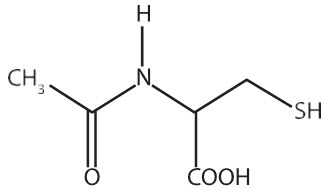
Acetylcysteine (i.e., N-acetylcysteine) is postulated to form cysteine and disulfides (N,N-diacetylcysteine and N-acetylcysteine). Cysteine is further metabolized to form glutathione and other metabolites.
Excretion
After a single oral dose of [35S]-acetylcysteine 100 mg, between 13 to 38% of the total radioactivity administered was recovered in urine within 24 hours. In a separate study, renal clearance was estimated to be approximately 30% of total body clearance.
Specific Populations:
Loading Dose/Infusion Rate Study
A randomized, open-label, multi-center clinical study was conducted in Australia in patients with acetaminophen poisoning to compare the rates of hypersensitivity reactions between two rates of infusion for the intravenous acetylcysteine loading dose. One hundred nine subjects were randomized to a 15-minute infusion rate and seventy-one subjects were randomized to a 60 minute infusion rate. The loading dose was 150 mg/kg followed by a maintenance dose of 50 mg/kg over 4 hours and then 100 mg/kg over 16 hours. Of the 180 patients, 27% were male and 73% were female. Ages ranged from 15 to 83 years, with the mean age being 30 years (±13.0).
A subgroup of 58 subjects (33 in the 15-minute infusion group; 25 in the 60-minute infusion group) was treated within 8 hours of acetaminophen ingestion. No hepatotoxicity occurred within this subgroup; however, with 95% confidence, the true hepatotoxicity rates could range from 0% to 9% for the 15-minute infusion group and from 0% to 12% for the 60-minute infusion group.
Observational Study
An open-label, observational database contained information on 1749 patients who sought treatment for acetaminophen overdose over a 16-year period. Of the 1749 patients, 65% were female, 34% were male and less than 1% was transgender. Ages ranged from 2 months to 96 years, with 72% of the patients falling in the 16- to 40-year-old age bracket. A total of 399 patients received acetylcysteine treatment. A post-hoc analysis identified 56 patients who (1) were at high or probable risk for hepatotoxicity (APAP greater than 150 mg/L at the four hours line according to the Australian nomogram) and (2) had a liver function test.
Of the 53 patients who were treated with intravenous acetylcysteine (300 mg/kg intravenous acetylcysteine administered over 20-21 hours) within 8 hours, two (4%) developed hepatotoxicity (AST or ALT greater than 1000 U/L). Twenty-one of 48 (44%) patients treated with acetylcysteine after 15 hours developed hepatotoxicity. The actual number of hepatotoxicity outcomes may be higher than what is reported here. For patients with multiple admissions for acetaminophen overdose, only the first overdose treated with intravenous acetylcysteine was examined. Hepatotoxicity may have occurred in subsequent admissions.
Evaluable data were available from a total of 148 pediatric patients (less than 16 years of age) who were admitted for poisoning following ingestion of acetaminophen, of whom 23 were treated with intravenous acetylcysteine. There were no deaths of pediatric patients. None of the pediatric patients receiving intravenous acetylcysteine developed hepatotoxicity while two patients not receiving intravenous acetylcysteine developed hepatotoxicity. The number of pediatric patients is too small to provide a statistically significant finding of efficacy; however the results appear to be consistent to those observed for adults.
Hypersensitivity Reactions
Advise patients and caregivers that hypersensitivity reactions related to administration and infusion may occur during and after Acetylcysteine injection treatment, including hypotension, wheezing, shortness of breath and bronchospasm [see Warnings and Precautions (5.1)].
For specific treatment information regarding the clinical management of acetaminophen overdose, please contact your regional poison center at 1-800-222-1222, or alternatively, a special health professional assistance line for acetaminophen overdose at 1-800-525-6115.
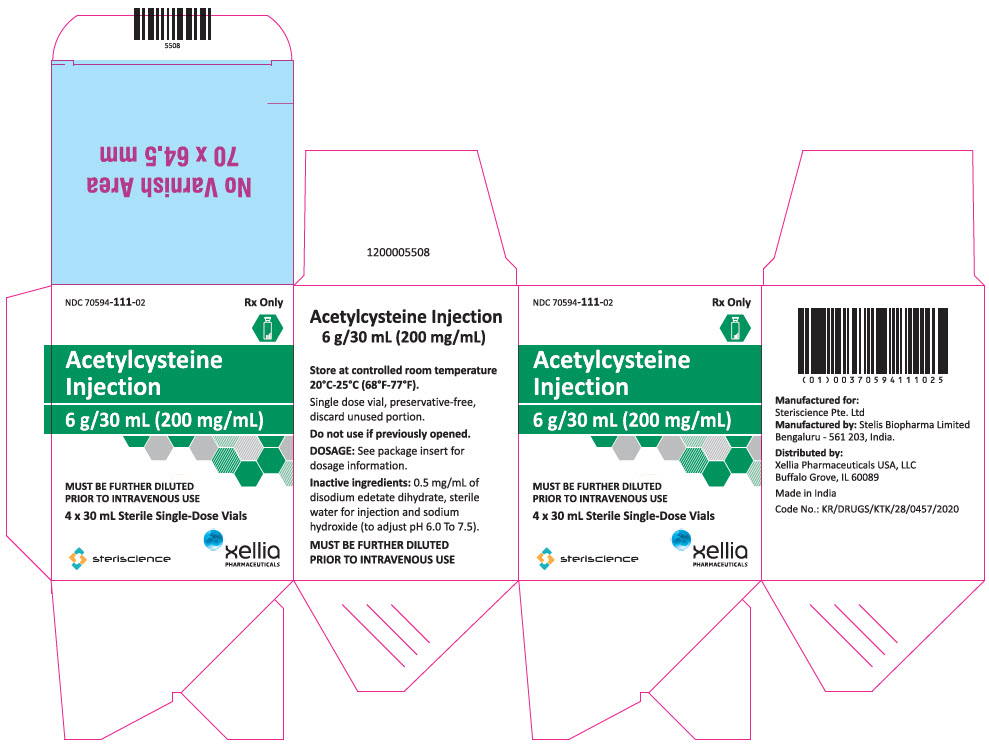
Manufactured for:
Steriscience Pte. Ltd
Manufactured by:
Stelis Biopharma Limited
Bengaluru – 561 203, India.
Distributed by:
Xellia Pharmaceuticals USA, LLC
Buffalo Grove, IL 60089
Made in India
Revised: 03/2023
To report SUSPECTED ADVERSE REACTIONS, contact Steriscience (1-888-278-1784) or FDA at 1-800-FDA-1088 or www.fda.gov/medwatch.
1200005510