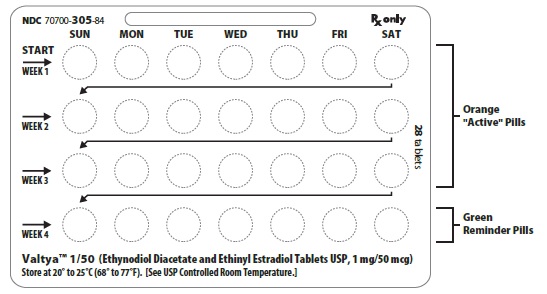
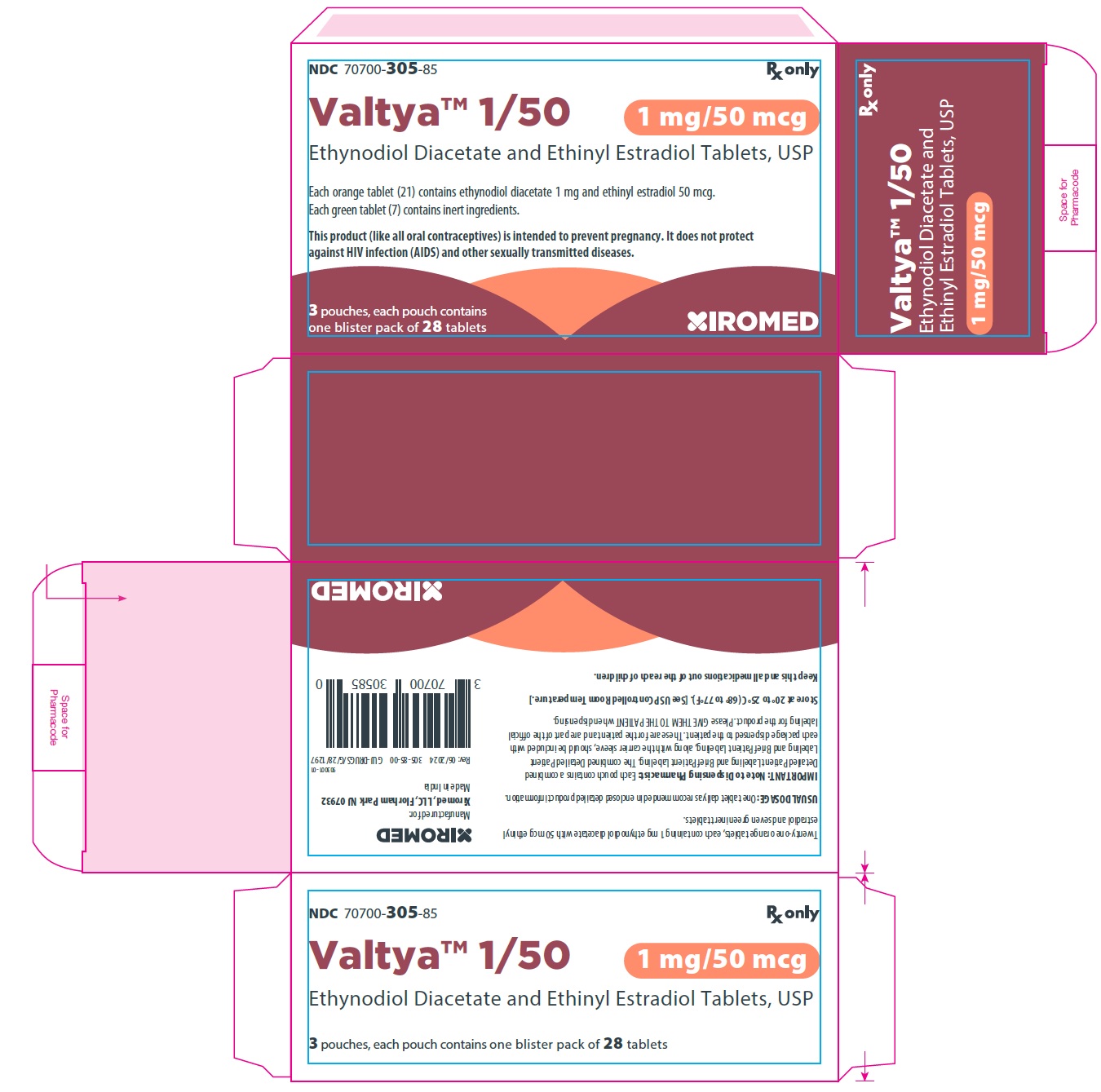
Women should not use oral contraceptives if they suspect they are pregnant or if they have unexplained vaginal bleeding.
Most side effects of the pill are not serious. The most common effects are nausea, vomiting, bleeding between menstrual periods, weight gain, breast tenderness, and difficulty wearing contact lenses. These side effects, especially nausea and vomiting, may subside within the first three months of use.
Proper use of oral contraceptives requires that they be taken under your doctor's continuing supervision, because they can be associated with serious side effects. The serious side effects of the pill occur very infrequently, especially if you are in good health and are young. However, you should know that the following medical conditions have been associated with or made worse by the pill, and that certain of the risks may persist after use of the pill has been discontinued:
Blood clots in the legs, arms, lungs, heart (heart attack), eyes, abdomen, or elsewhere in the body. As mentioned above, smoking increases the risk of heart attacks and strokes and subsequent serious medical consequences.
Stroke, due to a blood clot, or to bleeding in the brain (hemorrhage) as a result of bursting of a blood vessel. Stroke can lead to paralysis in all or part of the body, or to death.
Liver tumors, which may rupture and cause severe bleeding and death. A possible, but not definite, association has also been found with the pill and liver cancer. However, with or without use of the pill, liver cancers are extremely rare in the United States.
High blood pressure, although blood pressure ordinarily, but not always, returns to original levels when the pill is stopped.
Gallbladder disease, which might require surgery.
The symptoms associated with these serious side effects are discussed in the detailed leaflet given to you with your supply of pills. Notify your doctor or health care provider if you notice any unusual physical disturbances while taking the pill. In addition, you should be aware that drugs such as antiepileptics, antibiotics (especially rifampin), as well as certain other drugs, may decrease oral contraceptive effectiveness.
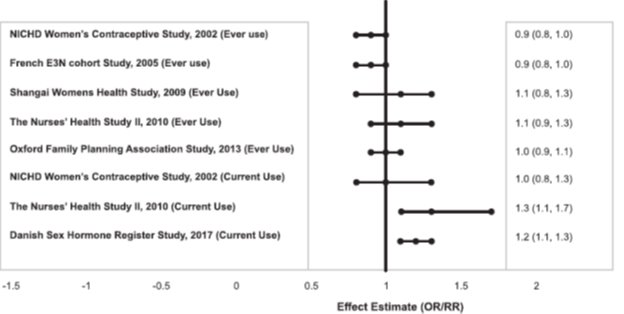
There may be slight increases in the risk of breast cancer among current users of hormonal birth control pills with longer duration of use of 8 years or more.
Some studies have found an increase in the incidence of cancer of the cervix in women who use oral contraceptives. However, this finding may be related to factors other than the use of oral contraceptives. There is insufficient evidence to rule out the possibility that pills may cause such cancers.
Taking the pill may provide some important non-contraceptive benefits. These include less painful menstruation, less menstrual blood loss and anemia, less risk of fibroids, pelvic infections, and noncancerous breast disease, and less risk of cancer of the ovary and of the lining of the uterus (womb).
Be sure to discuss any medical condition you may have with your health care provider. He or she will take a medical and family history before prescribing oral contraceptives and will also examine you. The physical examination may be delayed to another time if you request it and the health care provider believes that it is a good medical practice to postpone it. You should be re-examined at least once a year while taking oral contraceptives. The detailed patient information leaflet gives you further information that you should read and discuss with your health care provider.
DETAILED PATIENT LABELING:
WHAT YOU SHOULD KNOW ABOUT ORAL CONTRACEPTIVES
This product (like all oral contraceptives) is intended to prevent pregnancy. It does not protect against HIV infection (AIDS) and other sexually transmitted diseases.
INTRODUCTION
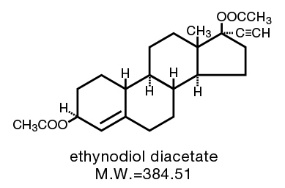
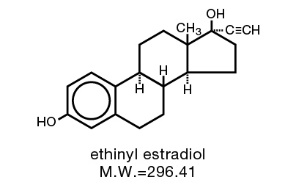
You should not use ethynodiol diacetate and ethinyl estradiol tablets, which contain higher doses of estrogen than other oral contraceptives, unless specifically recommended by your health care provider.
It is important that any woman who considers using an oral contraceptive understand the risks involved. Although the oral contraceptives have important advantages over other methods of contraception, they have certain risks that no other method has. Only you and your physician can decide whether the advantages are worth these risks. This leaflet will tell you about the most important risks. It will explain how you can help your doctor prescribe the pill as safely as possible by telling him/her about yourself and being alert for the earliest signs of trouble. And it will tell you how to use the pill properly so that it will be as effective as possible. THERE IS MORE DETAILED INFORMATION AVAILABLE IN THE LEAFLET PREPARED FOR DOCTORS. Your pharmacist can show you a copy; you may need your doctor's help in understanding parts of it.
This leaflet is not a replacement for a careful discussion between you and your health care provider. You should discuss the information provided in this leaflet with him or her, both when you first start taking the pill and during your revisits. You should also follow your health care provider's advice with regard to regular check-ups while you are on the pill.
If you do not have any of the conditions listed below and are thinking about using oral contraceptives, to help you decide, you need information about the advantages and risks of oral contraceptives and of other contraceptive methods as well. This leaflet describes the advantages and risks of oral contraceptives. Except for sterilization, the intrauterine device (IUD), and abortion, which have their own specific risks, the only risks of other methods are those due to pregnancy should the method fail. Your doctor can answer questions you may have with respect to other methods of contraception, and further questions you may have on oral contraceptives after reading this leaflet.
WHAT ARE ORAL CONTRACEPTIVES?
The most common type of oral contraceptive, often simply called "the pill," is a combination of estrogen and progestogen, the two kinds of female hormones. The amount of estrogen and progestogen can vary, but the amount of estrogen is more important because both the effectiveness and some of the dangers of the pill have been related to the amount of estrogen. The pill works principally by preventing release of an egg from the ovary during the cycle in which the pills are taken.
EFFECTIVENESS OF ORAL CONTRACEPTIVES
The pill is one of the most effective methods of birth control. When they are taken correctly, without missing any pills, the chance of becoming pregnant is less than 1% (1 pregnancy per 100 women per year of use) when used perfectly, without missing any pills. Typical failure rates are actually about 3% per year. The chance of becoming pregnant increases with each missed pill during a menstrual cycle.
In comparison, typical failure rates for other methods of birth control during the first year of use are as follows:
Percentage of women experiencing an unintended pregnancy during the first year of typical use and the first year of perfect use of contraception and the percentage continuing use at the end of the first year. United States. | % of women experiencing an
unintended pregnancy within the first year of use
| % of women
continuing use at one year(C)
|
Method
(1)
| Typical use(A)
(2)
| Perfect use(B)
(3)
|
(4)
|
Chance(D)
| 85
| 85
| |
Spermicides(E)
| 26
| 6
| 40
|
Periodic abstinence
| 25
| | 63
|
Calendar
| | 9
| |
Ovulation method
| | 3
| |
Sympto-thermal(F)
| | 2
| |
Post-ovulation
| | 1
| |
Withdrawal
| 19
| 4
| |
Cap(G)
| | | |
Parous women
| 40
| 26
| 42
|
Nulliparous women
| 20
| 9
| 56
|
Sponge
| | | |
Parous women
| 40
| 20
| 42
|
Nulliparous women
| 20
| 9
| 56
|
Diaphragm(G)
| 20
| 6
| 56
|
Condom(H)
| | | |
Female (Reality)
| 21
| 5
| 56
|
Male
| 14
| 3
| 61
|
Pill
| 5
| | 71
|
Progestin only
| | 0.5
| |
Combined
| | 0.1
| |
IUD
| | | |
Progesterone T
| 2
| 1.5
| 81
|
Copper T 380A
| 0.8
| 0.6
| 78
|
LNg 20
| 0.1
| 0.1
| 81
|
Injection (Depo-Provera)
| 0.3
| 0.3
| 70
|
Implant (Norplant and Norplant-2)
| 0.05
| 0.05
| 88
|
Female sterilization
| 0.5
| 0.5
| 100
|
Male sterilization
| 0.15
| 0.1
| 100
|
Emergency Contraceptive Pills: Treatment initiated within 72 hours after unprotected intercourse reduces the risk of pregnancy by at least 75%.(I)
Lactational Amenorrhea Method: LAM is a highly effective, temporary method of contraception.(J)
Source: Trussell J, Contraceptive efficacy. In Hatcher RA, Trussell J, Stewart F, Cates W, Stewart GK, Kowal D, Guest F, Contraceptive Technology: Seventeenth Revised Edition. New York NY: Irvington Publishers, 1998, in press.1
(A) Among typical couples who initiate use of a method (not necessarily for the first time), the percentage who experience an accidental pregnancy during the first year if they do not stop use for any other reason.
(B) Among couples who initiate use of a method (not necessarily for the first time) and who use it perfectly (both consistently and correctly), the percentage who experience an accidental pregnancy during the first year if they do not stop use for any other reason.
(C) Among couples attempting to avoid pregnancy, the percentage who continue to use a method for one year.
(D) The percents becoming pregnant in columns (2) and (3) are based on data from populations where contraception is not used and from women who cease using contraception in order to become pregnant. Among such populations, about 89% become pregnant within one year. This estimate was lowered slightly (to 85%) to represent the percent who would become pregnant within one year among women now relying on reversible methods of contraception if they abandoned contraception altogether.
(E) Foams, creams, gels, vaginal suppositories, and vaginal film.
(F) Cervical mucus (ovulation) method supplemented by calendar in the pre-ovulatory and basal body temperature in the post-ovulatory phases.
(G) With spermicidal cream or jelly.
(H) Without spermicides.
(I) The treatment schedule is one dose within 72 hours after unprotected intercourse and a second dose 12 hours after the first dose. The Food and Drug Administration has declared the following brands of oral contraceptives to be safe and effective for emergency contraception: Ovral (1 dose is 2 white pills), Alesse (1 dose is 5 pink pills), Nordette or Levlen (1 dose is 2 light-orange pills), Lo/Ovral (1 dose is 4 white pills), Triphasil or Tri-Levlen (1 dose is 4 yellow pills).
(J) However, to maintain effective protection against pregnancy, another method of contraception must be used as soon as menstruation resumes, the frequency or duration of breastfeeds is reduced, bottle feeds are introduced, or the baby reaches six months of age.
WHO SHOULD NOT TAKE ORAL CONTRACEPTIVES
Some women should not use the pill. For example, you should not take the pill if you are pregnant or think you may be pregnant. You should also not use the pill if you have any of the following conditions:
Heart attack or stroke (blood clot or hemorrhage in the brain), currently or in the past.
Blood clots in the legs (thrombophlebitis), lungs (pulmonary embolism), eyes, or elsewhere in the body, currently or in the past.
Chest pain (angina pectoris), currently or in the past.
Known or suspected breast cancer or cancer of the lining of the uterus (womb), cervix, or vagina, currently or in the past.
Unexplained vaginal bleeding (until a diagnosis is reached by your doctor).
Yellowing of the whites of the eyes or of the skin (jaundice) during pregnancy or during previous use of the pill.
Liver tumor (whether cancerous or not), currently or in the past.
Take any Hepatitis C drug combination containing ombitasvir/paritaprevir/ritonavir, with or without dasabuvir. This may increase levels of the liver enzyme "alanine aminotransferase" (ALT) in the blood.
Known or suspected pregnancy (one or more menstrual periods missed).
Tell your health care provider if you have ever had any of these conditions. He or she can recommend a safer method of birth control.
OTHER CONSIDERATIONS BEFORE TAKING ORAL CONTRACEPTIVES
Tell your health care provider if you have or have had any of the following conditions, as he or she will want to watch them closely or they might cause him or her to suggest using another method of contraception:
Breast nodules (lumps), fibrocystic disease (breast cysts), abnormal mammograms (x-ray pictures of the breast), or abnormal Pap smears
Diabetes
High blood pressure
High blood cholesterol or triglycerides
Migraine or other headaches or epilepsy
Mental depression
Gallbladder, heart, or kidney disease
History of scanty or irregular menstrual periods
Problems during a prior pregnancy
Fibroid tumors of the womb
History of jaundice (yellowing of the whites of the eyes or of the skin)
Varicose veins
Tuberculosis
Plans for elective surgery
Women with any of these conditions should be checked often by their health care provider if they choose to use oral contraceptives.
Also, be sure to tell your doctor if you smoke or are on any medications.
RISKS OF TAKING ORAL CONTRACEPTIVES
1. Risk of developing blood clots
Blood clots and blockage of blood vessels are the most serious side effects of taking oral contraceptives. In particular, a clot in the legs can cause thrombophlebitis and a clot that travels to the lungs can cause a sudden blocking of the vessel carrying blood to the lungs. Rarely, clots occur in the blood vessels of the eye and may cause blindness, double vision, or impaired vision.
If you take oral contraceptives and need elective surgery, need to stay in bed for a prolonged illness, or have recently delivered a baby, you may be at risk of developing blood clots. You should consult your doctor about stopping oral contraceptives 3 to 4 weeks before surgery and not taking oral contraceptives for 2 weeks after surgery or during bed rest. You should also not take oral contraceptives soon after delivery of a baby. It is advisable to wait for at least 4 weeks after delivery if you are not breast feeding. If you are breast feeding, you should wait until you have weaned your child before using the pill. (See also the section on Breast feeding in GENERAL PRECAUTIONS.)
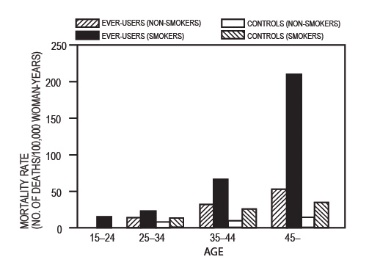
The risk of circulatory disease in oral contraceptive users may be higher in users of high-dose pills and may be greater with longer duration of oral contraceptive use. In addition, some of these increased risks may continue for a number of years after stopping oral contraceptives. The risk of abnormal blood clotting increases with age in both users and nonusers of oral contraceptives, but the increased risk from the oral contraceptive appears to be present at all ages. For women aged 20 to 44 it is estimated that about 1 in 2,000 using oral contraceptives will be hospitalized each year because of abnormal clotting. Among nonusers in the same age group, about 1 in 20,000 would be hospitalized each year. For oral contraceptive users in general, it has been estimated that in women between the ages of 15 and 34, the risk of death due to a circulatory disorder is about 1 in 12,000 per years, whereas for nonusers the rate is about 1 in 50,000 per year. In the age group 35 to 44, the risk is estimated to be about 1 in 2,500 per year for oral contraceptive users and about 1 in 10,000 per year for nonusers.
2. Heart attacks and strokes
Oral contraceptives may increase the tendency to develop strokes (stoppage by blood clots or rupture of blood vessels of the brain) and angina pectoris and heart attacks (blockage of blood vessels of the heart). Any of these conditions can cause death or permanent disability.
Smoking greatly increases the possibility of suffering heart attacks and strokes. Furthermore, smoking and the use of oral contraceptives greatly increases the chances of developing and dying of heart disease.
3. Gallbladder disease
Oral contraceptive users probably have a greater risk than nonusers of having gallbladder disease, although this risk may be related to pills containing high doses of estrogens.
4. Liver tumors
In rare cases, oral contraceptives can cause benign but dangerous liver tumors. These benign tumors can rupture and cause fatal internal bleeding. In addition, a possible but not definite association has been found with the pill and liver cancers in several studies, in which a few women who developed these very rare cancers were found to have used oral contraceptives for long periods. However, liver cancers are rare.
5. Risk of Cancer
It is not known if hormonal birth control pills cause breast cancer. Some studies, but not all, suggest that there could be a slight increase in the risk of breast cancer among current users with longer duration of use.
If you have breast cancer now, or have had it in the past, do not use hormonal birth control because some breast cancers are sensitive to hormones.
Some studies have found an increase in the incidence of cancer of the cervix in women who use oral contraceptives. However, this finding may be related to factors other than the use of oral contraceptives. There is insufficient evidence to rule out the possibility that pills may cause such cancers.
ESTIMATED RISK OF DEATH FROM BIRTH CONTROL METHOD OR PREGNANCY
All methods of birth control and pregnancy are associated with a risk of developing certain diseases that may lead to disability or death. An estimate of the number of deaths associated with different methods of birth control and pregnancy has been calculated and is shown in the following table.
Annual number of birth-related or method-related deaths associated with control of fertility per 100,000 nonsterile women, by fertility control method according to age. | Age
|
Method of control
| 15 to 19
| 20 to 24
| 25 to 29
| 30 to 34
| 35 to 39
| 40 to 44
|
No fertility control methods*
| 7
| 7.4
| 9.1
| 14.8
| 25.7
| 28.2
|
Oral contraceptives
| |
nonsmoker**
| 0.3
| 0.5
| 0.9
| 1.9
| 13.8
| 31.6
|
smoker**
| 2.2
| 3.4
| 6.6
| 13.5
| 51.1
| 117.2
|
IUD**
| 0.8
| 0.8
| 1
| 1
| 1.4
| 1.4
|
Condom*
| 1.1
| 1.6
| 0.7
| 0.2
| 0.3
| 0.4
|
Diaphragm/Spermicide*
| 1.9
| 1.2
| 1.2
| 1.3
| 2.2
| 2.8
|
Periodic abstinence*
| 2.5
| 1.6
| 1.6
| 1.7
| 2.9
| 3.6
|
*Deaths are birth-related
**Deaths are method-related
In the above table, the risk of death from any birth control method is less than the risk of childbirth, except for oral contraceptive users over the age of 35 who smoke and pill users over the age of 40 even if they do not smoke. It can be seen in the table that for women aged 15 to 39, the risk of death was highest with pregnancy (7 to 26 deaths per 100,000 women, depending on age). Among pill users who do not smoke, the risk of death was always lower than that associated with pregnancy for any age group, although over the age of 40, the risk increases to 32 deaths per 100,000 women, compared to 28 associated with pregnancy at that age. However, for pill users who smoke and are over the age of 35, the estimated number of deaths exceeds those for other methods of birth control. If a woman is over the age of 40 and smokes, her estimated risk of death is four times higher (117/100,000 women) than the estimated risk associated with pregnancy (28/100,000) in that age group.
The suggestion that women over 40 who don't smoke should not take oral contraceptives is based on information from older high-dose pills and on less selective use of pills than is practiced today. An Advisory Committee of the FDA discussed this issue in 1989 and recommended that the benefits of oral contraceptive use by healthy, nonsmoking women over 40 years of age may outweigh the possible risks. However, all women, especially older women, are cautioned to use the lowest dose pill that is effective.
WARNING SIGNALS
If any of these adverse effects occur while you are taking oral contraceptives, call your doctor immediately:
Sharp chest pain, coughing up blood, or sudden shortness of breath (indicating a possible blood clot in the lung).
Pain in the calf (indicating a possible blood clot in the leg).
Crushing chest pain or heaviness in the chest (indicating a possible heart attack).
Sudden severe headache or vomiting, dizziness or fainting, disturbances of vision or speech, or numbness in an arm or leg (indicating a possible stroke).
Sudden partial or complete loss of vision (indicating a possible blood clot in the blood vessels of the eye).
Breast lumps (indicating possible breast cancer or fibrocystic disease of the breast). Ask your doctor or health care provider to show you how to examine your own breasts.
Severe pain or tenderness or a mass in the stomach area (indicating a possible ruptured liver tumor).
Difficulty in sleeping, weakness, lack of energy, fatigue, or change in mood (possibly indicating severe depression).
Jaundice or a yellowing of the skin or eyeballs, accompanied frequently by fever, fatigue, loss of appetite, dark-colored urine, or light-colored bowel movements (indicating possible liver problems).
Unusual swelling.
Other unusual conditions.
SIDE EFFECTS OF ORAL CONTRACEPTIVES
1. Vaginal bleeding
Spotting. This is a slight staining between your menstrual periods that may not even require a pad. Some women spot even though they take their pills exactly as directed. Many women spot although they have never taken the pills. Spotting does not mean that your ovaries are releasing an egg. Spotting may be the result of irregular pill-taking. Getting back on schedule will usually stop it.
If you should spot while taking the pills, you should not be alarmed, because spotting usually stops by itself within a few days. It seldom occurs after the first pill cycle. Consult your doctor if spotting persists for more than a few days or if it occurs after the second cycle.
Unexpected (breakthrough) bleeding. Unexpected (breakthrough) bleeding does not mean that your ovaries have released an egg. It seldom occurs, but when it does happen it is most common in the first pill cycle. It is a flow much like a regular period, requiring the use of a pad or tampon.
If you experience breakthrough bleeding use a pad or tampon and continue with your schedule. Usually your periods will become regular within a few cycles. Breakthrough bleeding will seldom bother you again.
Consult your doctor or health care provider if breakthrough bleeding is heavy, does not stop within a week, or if it occurs after the second cycle.
2. Contact lenses
If you wear contact lenses and notice a change in vision or an inability to wear your lenses, contact your doctor or health care provider.
3. Fluid retention or raised blood pressure
Oral contraceptives may cause edema (fluid retention), with swelling of the fingers or ankles. If you experience fluid retention, contact your doctor or health care provider. Some women develop high blood pressure while on the pill, which ordinarily, but not always, returns to the original levels when the pill is stopped. High blood pressure predisposes one to strokes, heart attacks, kidney disease, and other diseases of the blood vessels.
4. Melasma
A spotty darkening of the skin is possible, particularly of the face. This may persist after the pill is discontinued.
5. Other side effects
Other side effects may include nausea and vomiting, change in appetite, headache, nervousness, depression, dizziness, loss of scalp hair, rash, and vaginal infections.If any of these, or other, side effects occur, call your doctor or health care provider.