1 Indications And Usage
NITYR™ is indicated for the treatment of patients with hereditary tyrosinemia type 1 (HT-1) in combination with dietary restriction of tyrosine and phenylalanine.
The following Structured Product Label (SPL) was submitted to the FDA by Cycle Pharmaceuticals Ltd. for the product Nityr (NDC 70709-002). This document serves as the official prescribing information, containing essential scientific data and clinical materials required for healthcare providers and patients.
This specific version of the label includes detailed information regarding 1 indications and usage, 2.1 dosage, 2.2 preparation and administration instructions, 3 dosage forms and strengths, 4 contraindications, 5.1 elevated plasma tyrosine levels, ocular symptoms, developmental delay and hyperkeratotic plaques, 5.2 leukopenia and severe thrombocytopenia, 6.1 clinical trials experience, and other regulatory disclosures. Use the navigation below to review specific sections of the FDA submission.
NITYR™ is indicated for the treatment of patients with hereditary tyrosinemia type 1 (HT-1) in combination with dietary restriction of tyrosine and phenylalanine.
Starting Dosage
The recommended starting dosage of NITYR is 0.5 mg/kg orally twice daily. Round up to the nearest dosage that can be administered using the available tablet strengths [see Dosage Forms and Strengths (3)].
Titrate the dosage for individual patients, as needed based on biochemical and/or clinical response.
Dosage Titration
Preparation and Administration of NITYR with Water in an Oral Syringe:
One Tablet
Two Tablets
Preparation and Administration of NITYR Mixed in Applesauce
For patients who can swallow semi-solid food, NITYR can be crushed and mixed with applesauce:
Tablets: 2 mg, 5 mg, and 10 mg white to off white, round, flat tablets debossed with "L" on one side and the strength ("2" mg, "5" mg, or "10" mg), on the other side.
None.
Nitisinone is an inhibitor of 4-hydroxyphenyl-pyruvate dioxygenase, an enzyme in the tyrosine metabolic pathway [see Clinical Pharmacology (12.1)]. Therefore, treatment with NITYR may cause an increase in plasma tyrosine levels in patients with HT-1. Maintain concomitant reduction in dietary tyrosine and phenylalanine while on NITYR. Do not adjust the dosage of NITYR in order to lower the plasma tyrosine concentration. Maintain plasma tyrosine levels below 500 micromol/L. Inadequate restriction of tyrosine and phenylalanine intake can lead to elevations in plasma tyrosine levels and levels greater than 500 micromol/L may lead to the following:
In patients with HT-1 treated with dietary restrictions and NITYR who develop elevated plasma tyrosine levels, assess dietary tyrosine and phenylalanine intake.
In clinical trials, patients treated with another oral formulation of nitisinone and dietary restriction developed transient leukopenia (3%), thrombocytopenia (3%), or both (1.5%) [see Adverse Reactions (6.1)]. One patient who developed both leukopenia and thrombocytopenia improved after the dose of nitisinone was decreased from 1 mg/kg to 0.5 mg/kg twice daily. No patients developed infections or bleeding as a result of the episodes of leukopenia and thrombocytopenia. Monitor platelet and white blood cell counts during therapy with NITYR.
Because clinical trials are conducted under widely varying conditions, adverse reaction rates observed in the clinical trials of a drug cannot be directly compared to rates in the clinical trials of another drug and may not reflect the rates observed in practice.
The safety of NITYR has been established based on studies of another oral formulation of nitisinone in patients with HT-1 [see Clinical Studies (14)]. Below is a display of the adverse reactions of nitisinone in these studies.
Nitisinone was studied in one open-label, uncontrolled study of 207 patients with HT-1, ages 0 to 22 years at enrollment (median age 9 months), who were diagnosed with HT-1 by the presence of succinylacetone in the urine or plasma. The starting dose of nitisinone was 0.3 to 0.5 mg/kg twice daily, and the dose was increased in some patients to 1 mg/kg twice daily based on weight, biochemical, and enzyme markers. Median duration of treatment was 22 months (range 0.1 to 80 months). The recommended dosage of NITYR is 0.5 mg/kg to 1 mg/kg twice daily [see Dosage and Administration (2.1)].
The most serious adverse reactions reported during nitisinone treatment were thrombocytopenia, leukopenia, porphyria, and ocular/visual complaints associated with elevated tyrosine levels [seeWarnings and Precautions (5.1, 5.2)]. Fourteen patients experienced ocular/visual events. The duration of the symptoms varied from 5 days to 2 years. Six patients had thrombocytopenia, three of which had platelet counts 30,000/microL or lower. In 4 patients with thrombocytopenia, platelet counts gradually returned to normal (duration up to 47 days) without change in the nitisinone dosage. No patients developed infections or bleeding as a result of the episodes of leukopenia and thrombocytopenia.
Patients with HT-1 are at increased risk of developing porphyric crises, hepatic neoplasms, and liver failure requiring liver transplantation. These complications of HT-1 were observed in patients treated with nitisinone for a median of 22 months during the clinical trial (liver transplantation 13%, liver failure 7%, malignant hepatic neoplasms 5%, benign hepatic neoplasms 3%, porphyria 1%).
The most common adverse reactions reported in the clinical trial are summarized in Table 1.
*reported in at least 1% of patients; ** another oral formulation of nitisinone | |
TABLE 1 | |
Elevated tyrosine levels | >10% |
Leukopenia | 3% |
Thrombocytopenia | 3% |
Conjunctivitis | 2% |
Corneal Opacity | 2% |
Keratitis | 2% |
Photophobia | 2% |
Eye Pain | 1% |
Blepharitis | 1% |
Cataracts | 1% |
Granulocytopenia | 1% |
Epistaxis | 1% |
Pruritus | 1% |
Exfoliative Dermatitis | 1% |
Dry Skin | 1% |
Maculopapular Rash | 1% |
Alopecia | 1% |
Adverse reactions reported in less than 1% of the patients, included death, seizure, brain tumor, encephalopathy, hyperkinesia, cyanosis, abdominal pain, diarrhea, enanthema, gastrointestinal hemorrhage, melena, elevated hepatic enzymes, liver enlargement, hypoglycemia, septicemia, and bronchitis.
If NITYR is co-administered with drugs that are metabolized by CYP2C9, additional monitoring may be warranted because of a potential for increased systemic exposure of these drugs [seeClinical Pharmacology (12.3)]. The risk is dependent upon the particular 2C9 substrate and its adverse reaction profile.
Risk Summary
Limited available data with nitisinone use in pregnant women are not sufficient to determine a drug-associated risk of adverse developmental outcomes. Animal reproduction studies have been conducted for nitisinone. In these studies, nitisinone was administered to mice and rabbits during organogenesis with oral doses of nitisinone up to 20 and 8-times, respectively, the recommended initial dose of 1 mg/kg/day. In mice, nitisinone caused incomplete skeletal ossification of fetal bones and decreased pup survival at doses 0.4 times the recommended initial dose, and increased gestational length at doses 4 times the recommended initial dose. In rabbits, nitisinone caused maternal toxicity and incomplete skeletal ossification of fetal bones at doses 1.6 times the recommended initial dose [see Data].
The estimated background risk of major birth defects and miscarriage for the indicated population are unknown. All pregnancies have a background risk of birth defect, loss, or other adverse outcomes. In the U.S. general population, the estimated background risk of major birth defects and miscarriage in clinically recognized pregnancies is 2 to 4% and 15 to 20%, respectively.
Data
Animal Data
Reproduction studies have been performed in mice at oral doses of about 0.4, 4 and 20 times the recommended initial dose (1 mg/kg/day) and in rabbits at oral doses of about 1.6, 4 and 8 times the recommended initial dose based on the body surface area. In mice, nitisinone has been shown to cause incomplete skeletal ossification of fetal bones at 0.4, 4 and 20 times the recommended initial dose, increased gestational length at 4 and 20 times the recommended initial dose, and decreased pup survival at 0.4 times the recommended initial dose based on the body surface area. In rabbits, nitisinone caused incomplete skeletal ossification of fetal bones at 1.6, 4 and 8 times the recommended initial dose based on the body surface area.
Risk Summary
There are no data on the presence of nitisinone in human milk, the effects on the breastfed infant, or the effects on milk production. Data suggest that nitisinone is present in rat milk due to findings of ocular toxicity and lower body weight seen in drug naive nursing rat pups. The developmental and health benefits of breastfeeding should be considered along with the mother’s clinical need for NITYR and any potential adverse effects on the breastfed infant from NITYR or from the underlying maternal condition.
Absorption
The pharmacokinetic characteristics following single oral administration of 10 mg NITYR under fasting conditions are shown in Table 2.
| Treatment | Cmax (ng/mL) [range] | Tmax* (h) [range] | AUC0-120h (ng*h/mL) [range] |
|---|---|---|---|
* presented as median [range] | |||
| Single 10 mg NITYR Tablet fasted (n=23) | 1278 [780 to 1649] | 3.5 [1.0 to 4.0] | 77874 [42335 to 104211] |
Food effect: In a food effect study, a high-fat and high-calorie breakfast (973.6 cal distributed in carbohydrate 250.1 cal, proteins 157 cal, fat 566.5 cal) did not significantly affect the total exposure (AUC0-120h) and Cmax of nitisinone following single oral administration of 10 mg NITYR. The median tmax was delayed to 6 hours under fed conditions [see Dosage and Administration (2.2)].
Distribution
In vitro binding of nitisinone to human plasma proteins is greater than 95% at 50 micromolar concentration. For NITYR, the arithmetic mean (SD) apparent volume of distribution of nitsinone is 8.2 (1.6) L in healthy subjects (n=23).
Elimination
For NITYR, the arithmetic mean (SD) terminal half-life of nitisinone is 59.3 (8.9) hours in healthy subjects (n=23).
Metabolism
In vitro studies have shown that nitisinone is relatively stable in human liver microsomes with minor metabolism possibly mediated by CYP3A4 enzyme.
Drug Interaction Studies
Based on in vitro studies, there is a potential for nitisinone to inhibit CYP2C9 [see Drug Interactions (7.1)]. Nitisinone is not expected to inhibit CYP 1A2, 2C19, or 3A4 based on in vitro studies. The potential for nitisinone to inhibit CYP2D6 and CYP2E1 at the recommended dosage is unknown due to limited data.
Manufactured by:
Rivopharm SA,
Centro Insema,
6928 Manno Switzerland
Marketed by:
Cycle Pharmaceuticals Ltd.
Bailey Grundy Barrett Building
Little St Mary’s Lane,
CB2 1RR, Cambridge, United Kingdom
AW000037
Manufactured by:
Rivopharm SA,
Centro Insema,
6928 Manno Switzerland
Marketed by:
Cycle Pharmaceuticals Ltd.
Bailey Grundy Barrett Building
Little St Mary’s Lane,
CB2 1RR, Cambridge, United Kingdom
AW000038
Issued: July 2017
Pediatric patients with HT-1, ages birth to 17 years have been treated with nitisinone in an open-label, uncontrolled clinical study [see Clinical Studies (14)]. Monitoring of plasma and urine succinylacetone levels are recommended in the pediatric patients to ensure adequate control [see Dosage and Administration (2)]. A nutritionist skilled in managing children with inborn errors of metabolism should be employed to design a low-protein diet deficient in tyrosine and phenylalanine.
Clinical studies of nitisinone did not include any subjects aged 65 and over. No pharmacokinetic studies of nitisinone have been performed in geriatric patients. In general, dose selection for an elderly patient should be cautious reflecting the greater frequency of decreased hepatic, renal, or cardiac function, and concomitant disease or other drug therapy in this patient population.
Accidental ingestion of nitisinone by individuals eating normal diets not restricted in tyrosine and phenylalanine will result in elevated tyrosine levels. In healthy subjects given a single 1 mg/kg dose of nitisinone, the plasma tyrosine level reached a maximum of 1200 micromol/L from 48 to 120 hours after dosing. After a washout period of 14 days, the mean value of plasma tyrosine was still 808 micromol/L. Fasted follow-up samples obtained from subjects several weeks later showed tyrosine values back to normal. There were no reports of changes in vital signs or laboratory data of any clinical significance. One patient reported sensitivity to sunlight. Hyper-tyrosinemia has been reported with nitisinone treatment [see Warnings and Precautions (5.1)].
NITYR contains nitisinone, which is a hydroxyphenyl-pyruvate dioxygenase inhibitor indicated as an adjunct to dietary restriction of tyrosine and phenylalanine in the treatment of hereditary tyrosinemia type 1 (HT-1).
Nitisinone occurs as white to yellowish-white, crystalline powder. It is practically insoluble in water, soluble in 2M sodium hydroxide and in methanol, and sparingly soluble in alcohol.
Chemically, nitisinone is 2-(2-nitro-4-trifluoromethylbenzoyl) cyclohexane-1,3-dione, and the structural formula is:
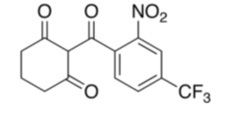
Figure 1 Structural Formula (Structure)
Figure 1. The molecular formula is C14H10NO5F3 and with a relative mass of 329.23
Each NITYR (nitisinone) tablet contains 2, 5 or 10 mg of nitisinone. Inactive ingredients are: glyceryl dibehenate, and lactose monohydrate. NITYR tablets are intended for oral administration.
Nitisinone is a competitive inhibitor of 4-hydroxyphenyl-pyruvate dioxygenase, an enzyme upstream of fumarylacetoacetate hydrolase (FAH) in the tyrosine catabolic pathway. By inhibiting the normal catabolism of tyrosine in patients with HT-1, nitisinone prevents the accumulation of the catabolic intermediates maleylacetoacetate and fumarylacetoacetate. In patients with HT-1, these catabolic intermediates are converted to the toxic metabolites succinylacetone and succinylacetoacetate, which are responsible for the observed liver and kidney toxicity. Succinylacetone can also inhibit the porphyrin synthesis pathway leading to the accumulation of 5-aminolevulinate, a neurotoxin responsible for the porphyric crises characteristic of HT-1.
Nitisinone inhibits catabolism of the amino acid tyrosine and can result in elevated plasma levels of tyrosine. Therefore, treatment with nitisinone requires restriction of the dietary intake of tyrosine and phenylalanine to prevent the toxicity associated with elevated plasma levels of tyrosine [see Warnings and Precautions (5.1)].
The single-dose pharmacokinetics of nitisinone have been studied for NITYR tablets in healthy adult subjects.
No long-term studies in animals have been performed to evaluate the carcinogenic potential of nitisinone. Nitisinone was not genotoxic in the Ames test and the in vivo mouse liver unscheduled DNA synthesis (UDS) test. Nitisinone was mutagenic in the mouse lymphoma cell (L5178Y/TK+/-) forward mutation test and in an in vivo mouse bone marrow micronucleus test.
In a single dose-group study in rats given 100 mg/kg (16 times the recommended initial dose of 1 mg/kg/day on a body surface area basis), reduced litter size, decreased pup weight at birth, and decreased survival of pups after birth was demonstrated.
The safety and efficacy of NITYR have been established based on studies of another oral formulation of nitisinone in patients with HT-1. Below is a display of the results of these studies.
The efficacy and safety of nitisinone in patients with HT-1 was evaluated in one open-label, uncontrolled study of 207 patients with HT-1, ages 0 to 22 years at enrollment (median age 9 months). Patients were diagnosed with HT-1 by the presence of succinylacetone in the urine or plasma. All patients were treated with nitisinone at a starting dose of 0.3 to 0.5 mg/kg twice daily, and the dose was increased in some patients to 1 mg/kg twice daily based on weight, liver and kidney function tests, platelet count, serum amino acids, urinary phenolic acid, plasma and urine succinylacetone, erythrocyte PBG- synthase, and urine 5-ALA. The median duration of treatment was 22 months (range less than 1 month to 80 months). Efficacy was assessed by comparison of survival and incidence of liver transplant to historical controls.
In this clinical study, for patients presenting with HT-1 younger than 2 months of age who were treated with dietary restriction and nitisinone, 2- and 4-year survival probabilities were 88% and 88%, respectively. Data from historical controls showed that patients presenting with HT-1 younger than 2 months of age treated with dietary restriction alone had 2- and 4-year survival probabilities of 29% and 29%, respectively. For patients presenting between 2 months and 6 months of age who were treated with dietary restrictions and nitisinone, 2-and 4-year survival probabilities were 94% and 94%, respectively. Data for historical controls showed that patients presenting with HT-1 between 2 months and 6 months of age treated with dietary restriction alone had 2-and 4-year survival probabilities of 74% and 60%, respectively.
The effects on urine and plasma succinylacetone, porphyrin metabolism, and urinary alpha-1-microglobulin were also assessed in this clinical study.
Urine succinylacetone was measured in 186 patients. In all 186 patients, urinary succinylacetone level decreased to less than 1 mmol/mol creatinine. The median time to normalization was 0.3 months. The probability of recurrence of abnormal values of urine succinylacetone was 1% at a nitisinone concentration of 37 micromol/L (95% confidence interval: 23, 51 micromol/L). Plasma succinylacetone was measured in 172 patients. In 150 patients (87%), plasma succinylacetone decreased to less than 0.1 micromol/L. The median time to normalization was 3.9 months.
Porphyria-like crisis were reported in 3 patients (0.3% of cases per year) during the clinical study. This compares to an incidence of 5 to 20% of cases per year expected as part of the natural history of the disorder. An assessment of porphyria-like crises was performed because these events are commonly reported in patients with HT-1 who are not treated with nitisinone.
Urinary alpha-1-microglobulin, a proposed marker of proximal tubular dysfunction, was measured in 100 patients at baseline. The overall median pretreatment level was 4.3 grams/mol creatinine. After one year of treatment in a subgroup of patients (N=100), overall median alpha-1-microglobulin decreased by 1.5 grams/mol creatinine. In patients 24 months of age and younger in whom multiple values were available (N=65), median alpha-1-microglobulin levels decreased from 5 to 3 grams/mol creatinine (reference value for age less than or equal to12 grams/mol creatinine). In patients older than 24 months in whom multiple values were available (N=35), median alpha-1-microglobulin levels decreased from 2.8 to 2 grams/mol creatinine (reference for age less than or equal to 6 grams/mol creatinine).
The long term effect of nitisinone on hepatic function was not assessed.
Tablets: White to off white, round, flat tablets debossed with the “strength” in mg on one side and “L” on the other side. Each tablet contains 2, 5 or 10 mg nitisinone. NITYR tablets are packed in high-density polyethylene (HDPE) square bottles with a child-resistant tamper-evident polypropylene (PP) screw cap. Each bottle contains 60 tablets.
2 mg tablets: From white to off white, round, flat tablets debossed “2” on one side and “L” on the other side, NDC 70709-002-60
5 mg tablets: From white to off white, round, flat tablets debossed “5” on one side and “L” on the other side, NDC 70709-005-60
10 mg tablets: From white to off white, round, flat tablets debossed “10” on one side and “L” on the other side, NDC 70709-000-60
Store NITYR tablets at room temperature between 20°C to 25°C (68°F to 77°F), with excursions permitted between 15°C and 30°C (59°F and 86°F) [see USP Controlled Room Temperature].
Dispense in tight and light resistant container as defined in USP.
Advise the patient to read the FDA-approved patient labeling (Instructions for Use).
Administration
Elevated Plasma Tyrosine Levels, Ocular Symptoms, Developmental Delay and Hyperkeratotic Plaques
Principal Display Panel - 2 mg Carton
NDC 70709-002-60
NITYRTM
(nitisinone) tablets
2 mg
For Oral Use
Store at room temperature between 20°C to 25°C (68°F to 77°F), excursions permitted to 15°C and 30°C (59° and 86°F). (See USP Controlled Room Temperature).
Rx only 60 tablets
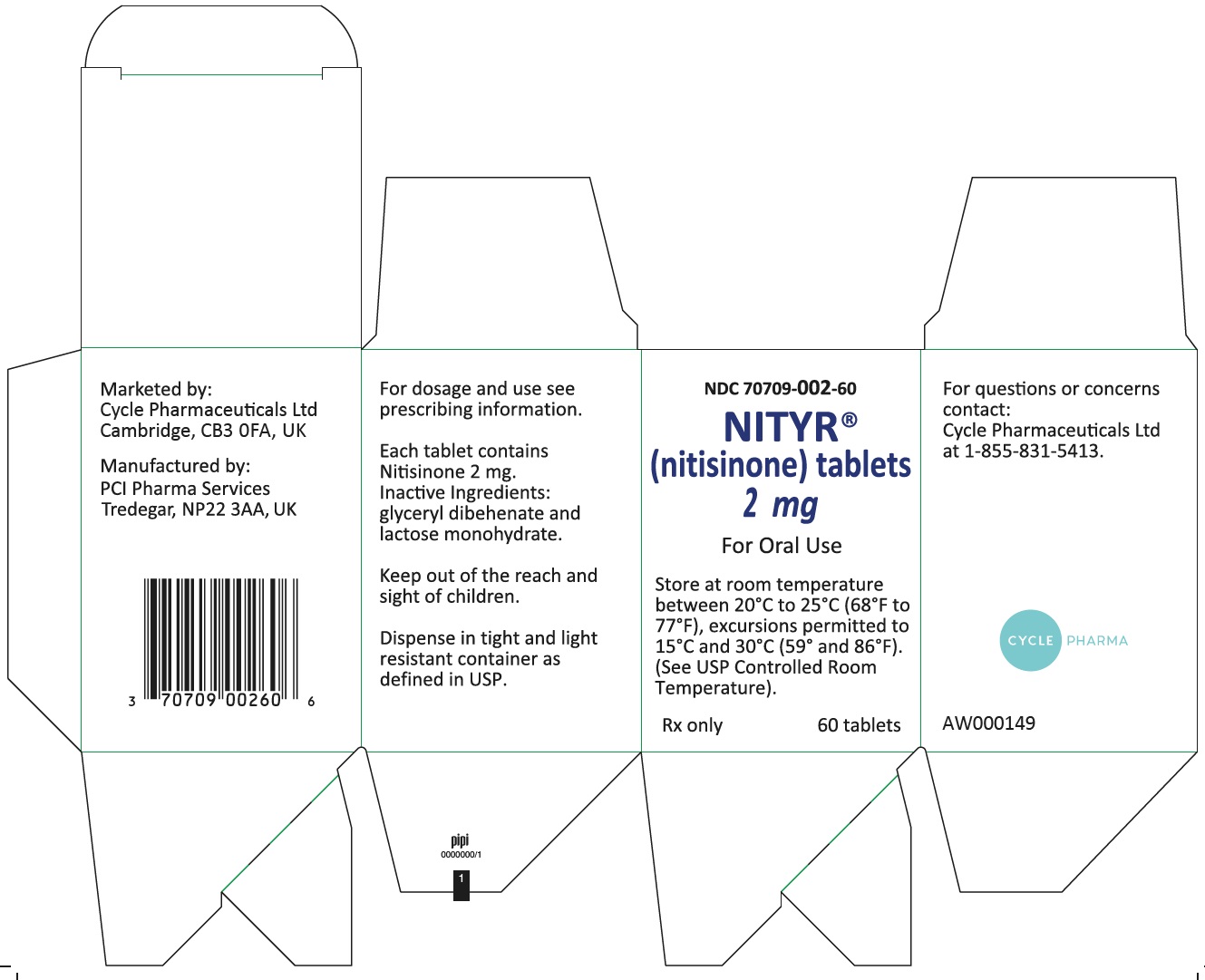
Principal Display Panel (2 mg Carton)
Principal Display Panel - Bottle Label
NDC 70709-002-60
NITYRTM
(nitisinone) tablets
2 mg
For Oral Use
Store at room temperature between 20°C to 25°C (68°F to 77°F).
Rx only CYCLE PHARMA 60 tablets
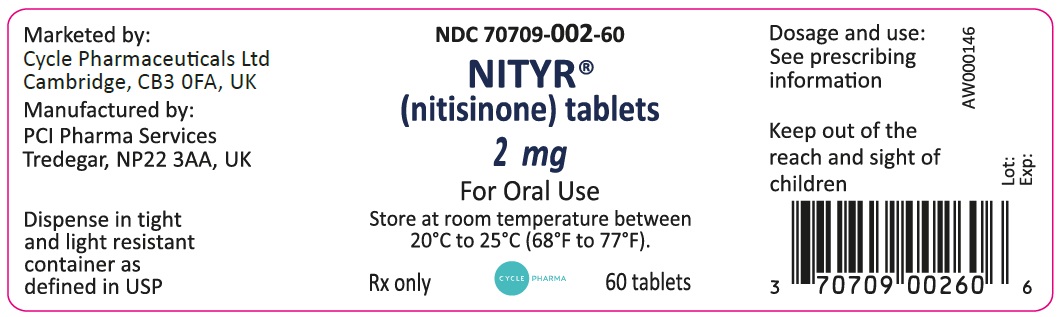
Principal Display Panel (Bottle Label)
Principal Display Panel - 5 mg Carton
NDC 70709-005-60
NITYRTM
(nitisinone) tablets
5 mg
For Oral Use
Store at room temperature between 20°C to 25°C (68°F to 77°F), excursions permitted to 15°C and 30°C (59° and 86°F). (See USP Controlled Room Temperature).
Rx only 60 tablets
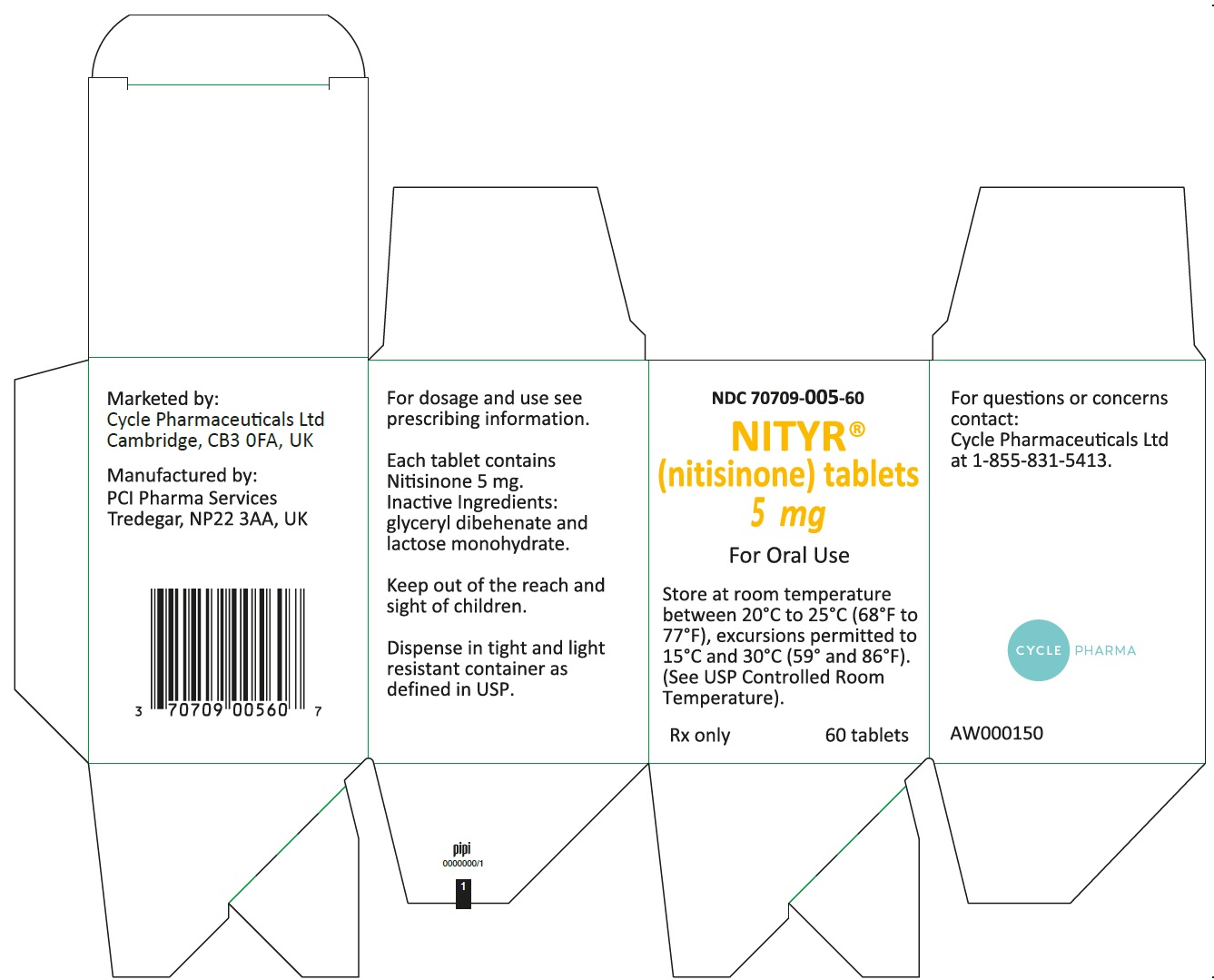
Principal Display Panel (5 mg Carton)
Principal Display Panel - Bottle Label
NDC 70709-005-60
NITYRTM
(nitisinone) tablets
5 mg
For Oral Use
Store at room temperature between 20°C to 25°C (68°F to 77°F).
Rx only CYCLE PHARMA 60 tablets
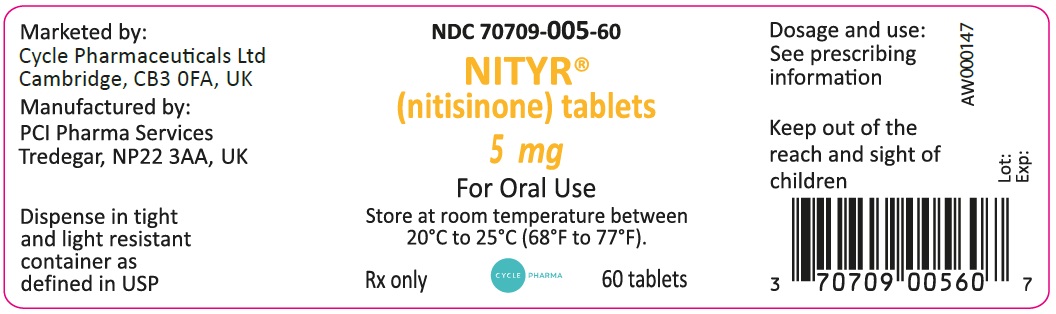
Principal Display Panel (10 mg Bottle Label)
Principal Display Panel - 10 mg Carton
NDC 70709-000-60
NITYRTM
(nitisinone) tablets
10 mg
For Oral Use
Store at room temperature between 20°C to 25°C (68°F to 77°F), excursions permitted to 15°C and 30°C (59° and 86°F). (See USP Controlled Room Temperature).
Rx only 60 tablets
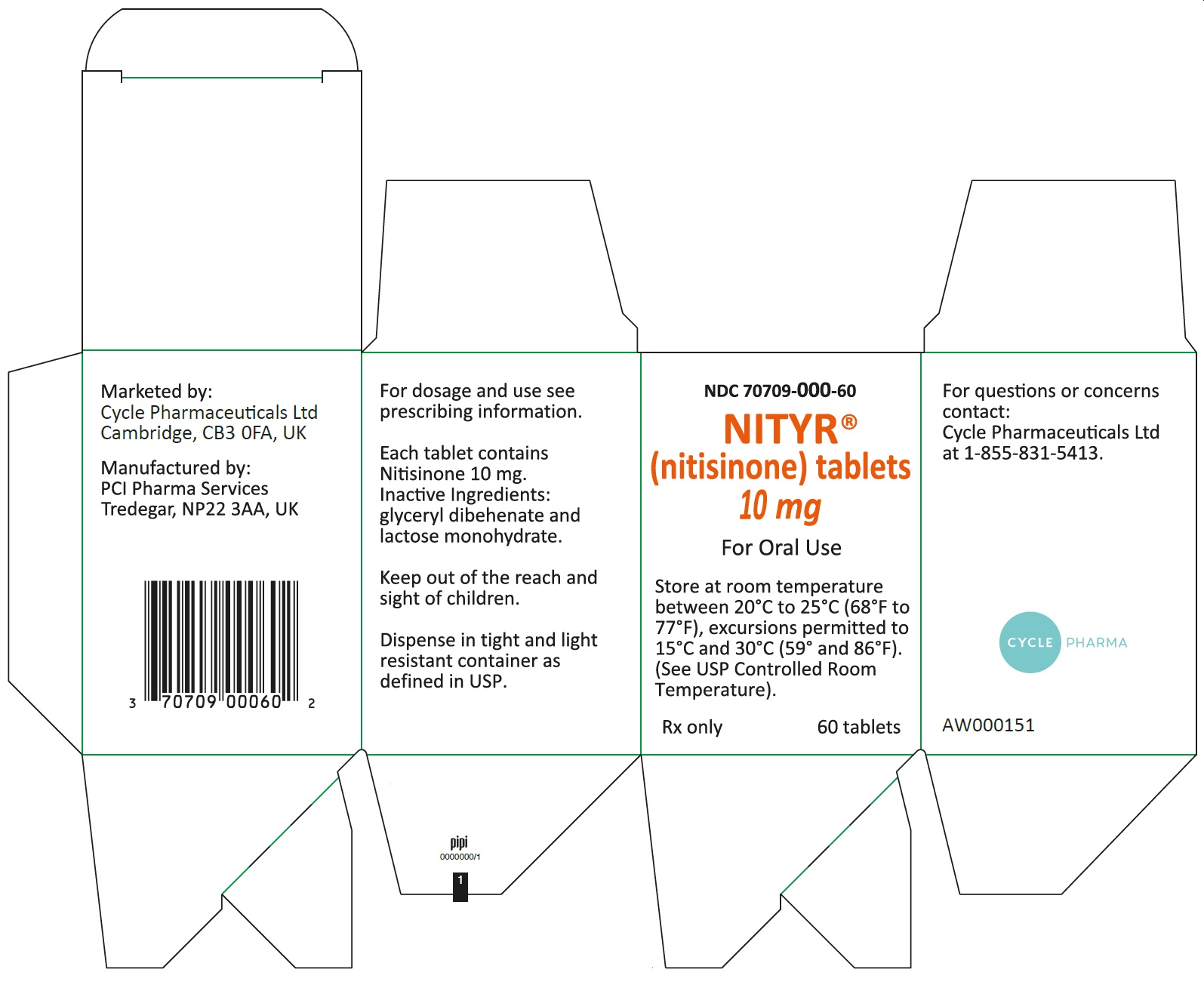
Principal Display Panel (10 mg Carton)
Principal Display Panel - Bottle Label
NDC 70709-000-60
NITYRTM
(nitisinone) tablets
10 mg
For Oral Use
Store at room temperature between 20°C to 25°C (68°F to 77°F).
Rx only CYCLE PHARMA 60 tablets

Principal Display Panel (Bottle Label)
* Please review the disclaimer below.
