Other
Cyproheptadine hydrochloride, USP is an antihistaminic and antiserotonergic agent.
Cyproheptadine hydrochloride, USP is a white to slightly yellow, odorless or practically odorless, crystalline powder, with a molecular weight of 350.89, which is slightly soluble in water, freely soluble in methanol, soluble in chloroform, sparingly soluble in alcohol, practically insoluble in ether. It is the sesquihydrate of 4-(5H-dibenzo [a, d] cyclohepten-5-ylidene)-1-methylpiperidine hydrochloride. The molecular formula of the anhydrous salt is C21H21N•HCl and the structural formula of the anhydrous salt is:

Cyproheptadine HCl Tablet (62391eed A284 4c9c 90db 8e1ddb28b3ff 01)
Molecular Formula: C21H21N• HCl
Molecular Weight: 350.89
Cyproheptadine hydrochloride, USP is available for oral administration in 4 mg tablets. Inactive ingredients include: lactose monohydrate, magnesium stearate, microcrystalline cellulose, and sodium starch glycolate (botanical source: potato).
Cyproheptadine is a serotonin and histamine antagonist with anticholinergic and sedative effects. Antiserotonin and antihistamine drugs appear to compete with serotonin and histamine, respectively, for receptor sites.
Perennial and seasonal allergic rhinitis
Vasomotor rhinitis
Allergic conjunctivitis due to inhalant allergens and foods
Mild, uncomplicated allergic skin manifestations of urticaria and angioedema
Amelioration of allergic reactions to blood or plasma
Cold urticaria
Dermatographism
As therapy for anaphylactic reactions adjunctive to epinephrine and other standard measures after the cute manifestations have been controlled.
Adverse reactions which have been reported with the use of antihistamines are as follows:
Central Nervous System
Sedation and sleepiness (often transient), dizziness, disturbed coordination, confusion, restlessness, excitation, nervousness, tremor, irritability, insomnia, paresthesias, neuritis, convulsions, euphoria, hallucinations, hysteria, faintness.
Integumentary
Allergic manifestation of rash and edema, excessive perspiration, urticaria, photo sensitivity.
Special Senses
Acute labyrinthitis, blurred vision, diplopia, vertigo, tinnitus.
Cardio vascular
Hypotension, palpitation, tachycardia, extrasystoles, anaphylactic shock.
Hematologic
Hemolytic anemia, leukopenia, agranulocytosis, thrombocytopenia.
Digestive System
Cholestasis, hepatic failure, hepatitis, hepatic function abnormality, dryness of mouth, epigastric distress, anorexia, nausea, vomiting, diarrhea, constipation, jaundice.
Genitourinary
Urinary frequency, difficult urination, urinary retention, early menses.
Respiratory
Dryness of nose and throat, thickening of bronchial secretions, tightness of chest and wheezing, nasal stuffiness.
Miscellaneous
Fatigue, chills, headache, increased appetite/weight gain.
Antihistamine overdosage reactions may vary from central nervous system depression to stimulation especially in pediatric patients. Also, atropine-like signs and symptoms (dry mouth; fixed, dilated pupils; flushing, etc.) as well as gastrointestinal symptoms may occur.
If vomiting has not occurred spontaneously, the patient should be induced to vomit with syrup of ipecac.
If patient is unable to vomit, perform gastric lavage followed by activated charcoal. Isotonic or ½ isotonic saline is the lavage of choice. Precautions against aspiration must be taken especially in infants and children.
When life threatening CNS signs and symptoms are present, intravenous physostigmine salicylate may be considered. Dosage and frequency of administration are dependent on age, clinical response, and recurrence after response (See package circulars for physostigmine products.)
Saline cathartics, as milk of magnesia, by osmosis draw water into the bowel and, therefore, are valuable for their action in rapid dilution of bowel content.
Stimulants should not be used.
Vasopressors may be used to treat hypotension.
The oral LD50 of cyproheptadine is 123 mg/kg, and 295 mg/kg in the mouse and rat, respectively.
DOSAGE SHOULD BE INDIVIDUALIZED ACCORDING TO THE NEEDS AND THE RESPONSE OF THE PATIENT.
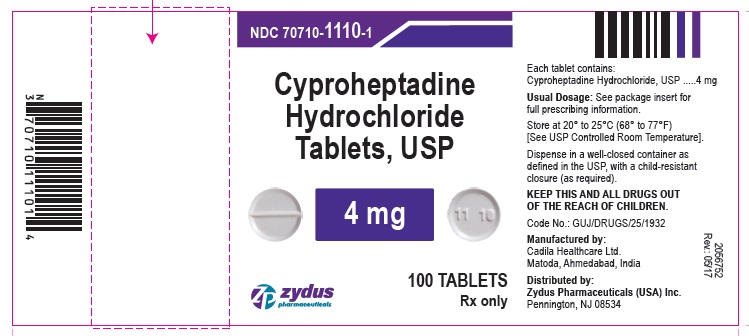
Each tablet contains 4 mg of cyproheptadine hydrochloride.
Cyproheptadine Hydrochloride Tablets USP, 4 mg are available as white, round, flat-faced, beveled- edged tablets, bisected on one side and debossed with "11 10" on the other side, and are supplied as:
NDC 70710-1110-1 in bottle of 100 tablets
NDC 70710-1110-0 in bottle of 1,000 tablets
PHARMACIST: Dispense in a well-closed container as defined in the USP, with a child-resistant closure (as required).
Storage
Store at 20° to 25°C (68° to 77°F) [See USP Controlled Room Temperature].
Call your doctor for medical advice about side effects. You may report side effects to FDA at 1-800-FDA-1088.
Please address medical inquiries to, ([email protected]) Tel.: 1-877-993-8779.
Manufactured by:
Cadila Healthcare Limited
Matoda, Ahmedabad, India.
Distributed by:
Zydus Pharmaceuticals (USA) Inc.
Pennington, NJ 08534
Rev.: 05/17