Following oral administration of pitolisant 35.6 mg once daily, the steady state Cmax and AUC are 73 ng/mL (range: 49.2 to 126 ng/mL) and 812 ng*hr/mL (range: 518 to 1468 ng*hr/mL), respectively. Pitolisant exposure (Cmax and AUC) increases proportionally with dose and steady state is reached by day 7.
Absorption
The median time to maximum plasma concentration (Tmax) of pitolisant is 3.5 hours (2 to 5 hours). The oral absorption of pitolisant tablets is around 90 %.
Food Effect
No clinically significant differences in the pharmacokinetics of pitolisant were observed following administration with a high-fat meal (approximately 950 calories, 62% fat).
Distribution
The apparent volume of distribution of pitolisant is approximately 700 L (5 to 10 L/kg). Serum protein binding is approximately 91 % to 96 %. The blood to plasma ratio of pitolisant is 0.55 to 0.89.
Elimination
After a single dose of 35.6 mg, the median half-life of pitolisant is approximately 20 hours (7.5 to 24.2 hours). The apparent oral clearance (CL/F) of pitolisant is 43.9 L/hr and renal clearance accounts for <2 % of the total clearance of pitolisant.
Metabolism
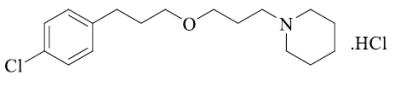
Pitolisant is primarily metabolized by CYP2D6 and to a lesser extent by CYP3A4; these metabolites are further metabolized or conjugated with glycine or glucuronic acid. None of these metabolites are pharmacologically active.
Excretion
After a single oral radiolabeled pitolisant 17.8 mg dose, approximately 90 % of the dose was excreted in urine (<2 % unchanged) and 2.3 % in feces.
Specific Populations
No clinically significant differences in the pharmacokinetics of pitolisant were observed based on age (18 to 82 years old), sex, race/ethnicity (Caucasians or Blacks), or body weight (48 to 103 kg). The effects of end-stage renal disease and severe hepatic impairment on the pharmacokinetics of pitolisant are unknown.
Patients with Hepatic Impairment:
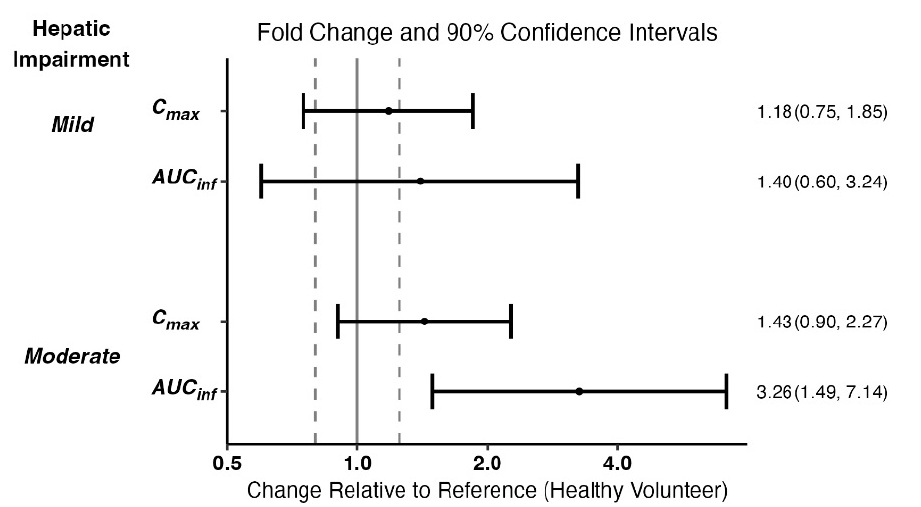
Six subjects with mild hepatic impairment (Child-Pugh Class A), 6 subjects with moderate hepatic impairment (Child-Pugh Class B), and 12 healthy subjects matched for age, sex, body mass index and ethnicity received a single dose of pitolisant tablets 17.8 mg to assess the pharmacokinetics of pitolisant tablets in patients with hepatic impairment. Exposure of pitolisant in patients with mild or moderate hepatic impairment is summarized in Figure 1. No studies have been conducted in patients with severe hepatic impairment.
Figure 1: Effect of Hepatic Impairment on Pitolisant Pharmacokinetics
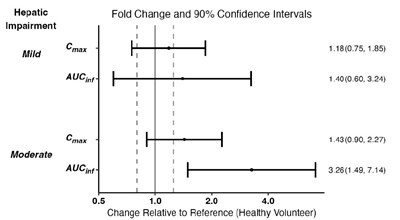
Image (E46eef01 594a 49ca A453 0b680e4ee730 02)
Dots = Geometric least squares mean ratios,
Error bars = 90 % CI;
reference dashed lines are 0.8 and 1.25.
AUCinf = area under the curve from time 0 to time infinity;
Cmax = maximum plasma concentration.
Patients with Renal Impairment:
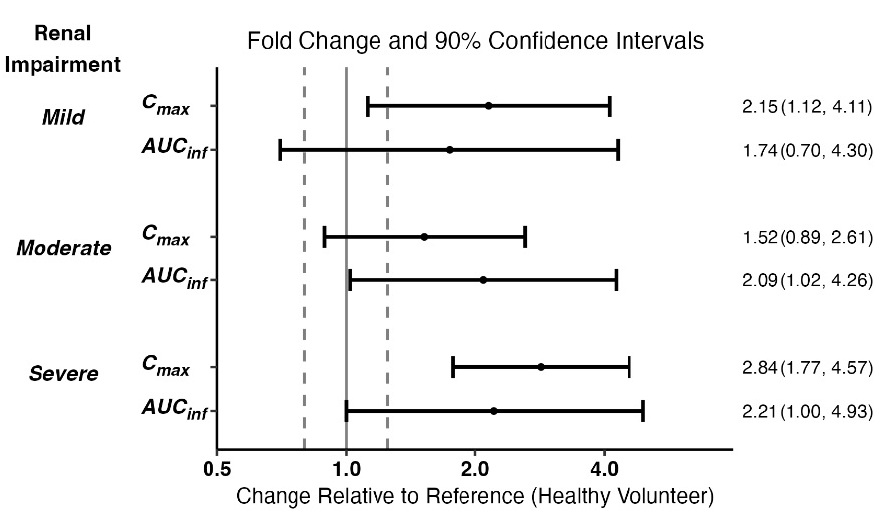
A single dose of pitolisant tablets 17.8 mg was administered to 4 subjects with mild renal impairment (eGFR of 60 to 89 mL/min/1.73 m2), 4 subjects with moderate renal impairment (eGFR of 30 to 59 mL/min/1.73 m2), 4 subjects with severe renal impairment (eGFR of 15 to 29 mL/min/1.73 m2), and 12 subjects with normal renal function (i.e., eGFR >90 mL/min/1.73 m2) to assess the pharmacokinetics of pitolisant tablets in patients with renal impairment. Exposure of pitolisant in patients with mild, moderate, and severe renal impairment is summarized in Figure 2. No studies have been conducted in patients with ESRD.
Figure 2: Effect of Renal Impairment on Pitolisant Pharmacokinetics
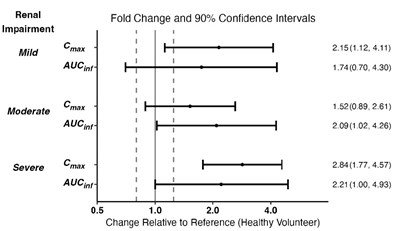
Image (E46eef01 594a 49ca A453 0b680e4ee730 03)
Dots = Geometric least squares mean ratios,
Error bars = 90 % CI;
reference dashed lines are 0.8 and 1.25.
AUCinf = area under the curve from time 0 to time infinity;
Cmax = maximum plasma concentration.
Drug-Drug Interactions
Effect of Other Drugs on the Pharmacokinetics of Pitolisant Tablets:
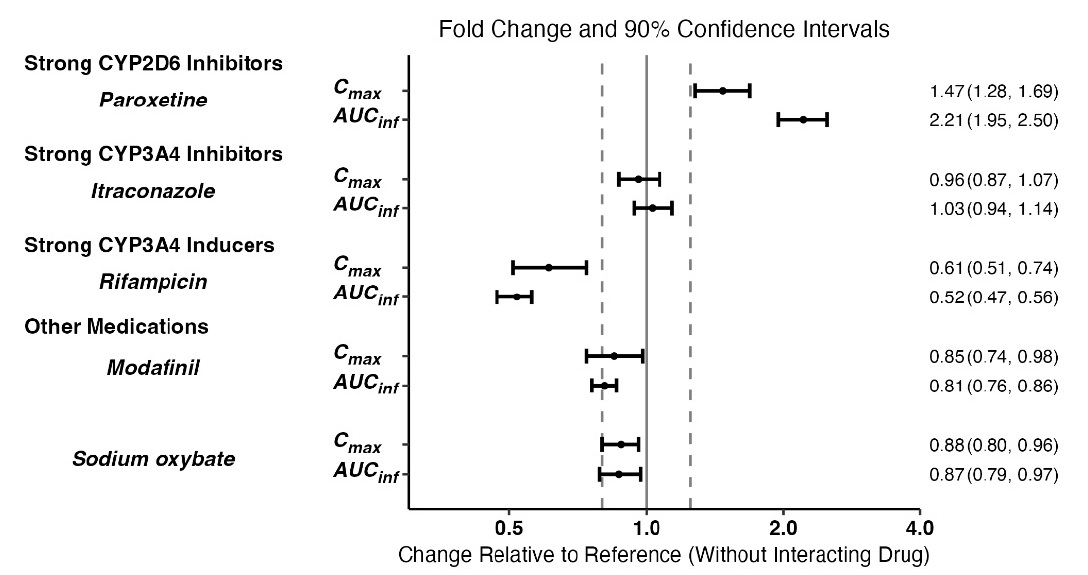
The effect of other drugs on the pharmacokinetics of pitolisant is presented in Figure 3 [see Dosage and Administration (2.6), Drug Interactions (7.1)].
Figure 3: Effect of Concomitant Medications on Pitolisant
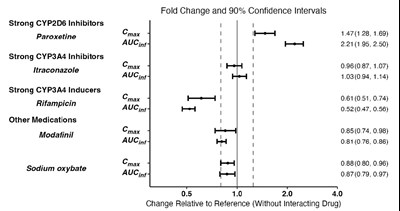
Image (E46eef01 594a 49ca A453 0b680e4ee730 04)
Dots = Geometric least squares mean ratios,
Error bars = 90% CI; reference dashed lines are 0.8 and 1.25.
AUCinf = area under the curve from time 0 to time infinity;
Cmax = maximum plasma concentration.
Effect of Pitolisant Tablets on the Pharmacokinetics of Other Drugs:
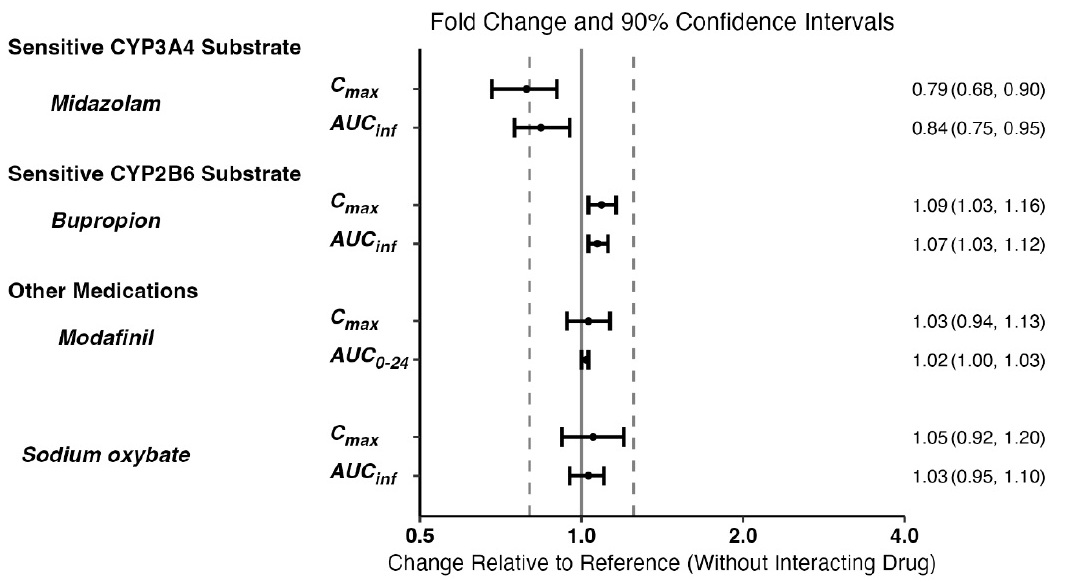
The effect of pitolisant on the pharmacokinetics of other drugs is presented in Figure 4 [see Drug Interactions (7.1) Use in Specific Populations (8.3)].
Figure 4: Effect of Pitolisant on Concomitant Medications
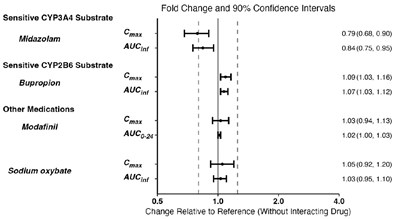
Image (E46eef01 594a 49ca A453 0b680e4ee730 05)
Dots = Geometric least squares mean ratios,
Error bars = 90 % CI; reference dashed lines are 0.8 and 1.25.
AUCinf = area under the curve from time 0 to time infinity;
AUC0 to 24 = area under the curve from time 0 to 24 hours;
Cmax = maximum plasma concentration.
Pediatric use information is approved for Harmony Biosciences Management Inc.'s WAKIX (pitolisant) tablets. However, due to Harmony Biosciences Management Inc.'s marketing exclusivity rights, this drug product is not labeled with that information.