1 Indications And Usage
Phenylephrine Hydrochloride Ophthalmic Solution 2.5%, is indicated to dilate the pupil.
The following Structured Product Label (SPL) was submitted to the FDA by Lifestar Pharma Llc for the product Phenylephrine Hydrochloride (NDC 70756-676). This document serves as the official prescribing information, containing essential scientific data and clinical materials required for healthcare providers and patients.
This specific version of the label includes detailed information regarding 1 indications and usage, 2.1 general dosing recommendations, 2.2 dosing in pediatric patients less than 1 year of age, 3 dosage forms and strengths, 4.1 cardiac and endocrine disease, 4.2 pediatric patients less than 1 year of age, 5.1 topical ophthalmic use only, 5.2 cardiovascular reactions, and other regulatory disclosures. Use the navigation below to review specific sections of the FDA submission.
Phenylephrine Hydrochloride Ophthalmic Solution 2.5%, is indicated to dilate the pupil.
In patients 1 year of age or greater, apply one drop of phenylephrine hydrochloride ophthalmic solution 2.5% every 3 to 5 minutes to the conjunctival fornix as required up to a maximum of 3 drops per eye per day.
In order to obtain a greater degree of mydriasis, phenylephrine hydrochloride ophthalmic solution 10% may be needed.
In pediatric patients less than 1 year of age, one drop of phenylephrine hydrochloride ophthalmic solution 2.5% should be instilled at 3 to 5 minute intervals up to a maximum of 3 drops per eye.
Phenylephrine hydrochloride ophthalmic solution, USP 2.5% is a clear, colorless to yellow colored sterile topical ophthalmic solution containing phenylephrine hydrochloride 2.5%.: each mL contains 25 mg of phenylephrine hydrochloride, USP.
Phenylephrine hydrochloride ophthalmic solution 10% is contraindicated in patients with hypertension or thyrotoxicosis. Phenylephrine hydrochloride ophthalmic solution 2.5% should be used in these patients.
Phenylephrine hydrochloride ophthalmic solution 10% is contraindicated in pediatric patients less than 1 year of age due to the increased risk of systemic toxicity. Phenylephrine hydrochloride ophthalmic solution 2.5% should be used in these patients [See Dosage and Administration (2.2)].
Phenylephrine hydrochloride ophthalmic solution 2.5% is not indicated for injection.
There have been reports of serious cardiovascular reactions, including ventricular arrhythmias and myocardial infarctions, in patients using phenylephrine 10%. These episodes, some fatal, have usually occurred in patients with pre-existing cardiovascular diseases. Phenylephrine Hydrochloride Ophthalmic Solution 2.5% should be used in these patients.
A significant elevation in blood pressure is not common but has been reported following conjunctival instillation of recommended doses of phenylephrine 10%. The risk is less with phenylephrine 2.5%. Caution should be exercised with the use of phenylephrine 10% in pediatric patients less than 5 years of age and patients with hyperthyroidism, or cardiovascular disease. The post-treatment blood pressure of patients with cardiac and endocrine diseases and any patients who develop symptoms should be carefully monitored.
Rebound miosis has been reported one day after receiving phenylephrine hydrochloride ophthalmic solution, and re-instillation of the drug produced a lesser mydriatic effect.
The following serious adverse reactions are described below and elsewhere in the labeling:
The following adverse reactions have been identified following use of phenylephrine hydrochloride ophthalmic solution. Because these reactions are reported voluntarily from a population of uncertain size, it is not always possible to reliably estimate their frequency or establish a causal relationship to drug exposure.
Eye pain and stinging on instillation, temporary blurred vision and photophobia, and conjunctival sensitization may occur.
A marked increase in blood pressure has been reported particularly, but not limited to low weight premature neonates, infants and hypertensive patients.
Cardiovascular effects which have been seen primarily in hypertensive patients following topical ocular use of phenylephrine hydrochloride ophthalmic solution 10% include marked increase in blood pressure, syncope, myocardial infarction, tachycardia, arrhythmia and subarachnoid hemorrhage [See Warnings and Precautions (5.2 and 5.3)].
Concomitant use of phenylephrine and atropine may enhance the pressor effects and induce tachycardia in some patients. Phenylephrine may potentiate the cardiovascular depressant effects of some inhalation anesthetic agents.
Animal reproduction studies have not been conducted with topical phenylephrine. It is also not known whether phenylephrine can cause fetal harm when administered to a pregnant woman or can affect reproduction capacity. Phenylephrine hydrochloride should be given to a pregnant woman only if clearly needed.
It is not known whether this drug is excreted in human breast milk. Because many drugs are excreted in human milk, caution should be exercised when phenylephrine hydrochloride ophthalmic solution 2.5% is administered to a nursing woman.
Phenylephrine hydrochloride ophthalmic solution 10% is contraindicated in pediatric patients less than 1 year of age [See Contraindications (4.2)].
No overall differences in safety and effectiveness have been observed between elderly and younger adult patients.
Overdosage of phenylephrine may cause a rapid rise in blood pressure. It may also cause headache, anxiety, nausea, and vomiting, and ventricular arrhythmias. Prompt injection of a rapidly acting alpha-adrenergic blocking agent such as phentolamine has been recommended.
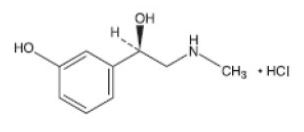
Phenylephrine Hydrochloride Ophthalmic Solution, USP is a sterile, clear, colorless to yellow color solution, topical α -adrenergic agonist for ophthalmic use. The active ingredient is represented by the chemical structure:
Structure (9ae3a58c 1069 4d91 B637 65d0aee9a13d 01)
Chemical Name: (R)-3-hydroxy-α[(methylamino)methyl]benzenemethanol hydrochloride.
Molecular Formula: C9H13NO2.HCl
Molecular Weight: 203.67 g/mol
Each mL of Phenylephrine Hydrochloride Ophthalmic Solution, USP 2.5% contains: ACTIVE: Phenylephrine Hydrochloride, USP 25 mg (2.5%); INACTIVES: Sodium Phosphate Monobasic, Sodium Phosphate Dibasic, Water for Injection. Phosphoric Acid and/or Sodium Hydroxide may be added to adjust pH (4.0 to 7.5). The solution has a tonicity of 340 mOsm/kg; PRESERVATIVE: Benzalkonium Chloride 0.1 mg (0.01%).
Phenylephrine hydrochloride is an α-1 adrenergic agonist drug that is used in ophthalmology mainly for its mydriatic effect. After topical application to the conjunctiva, phenylephrine acts directly on α-adrenergic receptors in the eye, producing contraction of the dilator muscle of the pupil and constriction of the arterioles in the conjunctiva.
Maximal mydriasis occurs in 20 to 90 minutes with recovery after 3 to 8 hours.
Systemic absorption of sufficient quantities of phenylephrine may lead to systemic α-adrenergic effects, such as rise in blood pressure which may be accompanied by a reflex atropine-sensitive bradycardia.
The systemic exposure following topical administration of phenylephrine hydrochloride ophthalmic solution has not been studied. A higher systemic absorption is expected for the 10% solution than the 2.5% solution and when the corneal barrier function is compromised.
Pupillary dilation following topical administration of phenylephrine hydrochloride ophthalmic solution has been demonstrated in controlled clinical studies in adults and pediatric patients with different levels of iris pigmentation. Pupil movement is generally seen within 15 minutes, maximal mydriasis between 20 to 90 minutes and recovery after 3 to 8 hours. Darker irides tend to dilate slower than lighter irides.
Phenylephrine hydrochloride ophthalmic solution, USP 2.5% is supplied as a clear, colorless to yellow colored sterile, aqueous, topical ophthalmic solution in an opaque, white low density polyethylene (LDPE) bottle with a natural LDPE dropper tip and red cap in the following sizes:
NDC 70756-629-25 2 mL in 5 mL bottle
After opening, Phenylephrine Hydrochloride Ophthalmic Solution, USP can be use until the expiration date on the bottle.
Storage: Store at 20° to 25°C (68° to 77°F). [See USP Controlled Room Temperature]. Keep container tightly closed. Protect from light and excessive heat.
Do not use if solution is brown or contains precipitate.
Advise patients not to touch the dropper tip to any surface as this may contaminate the solution. Inform patients that they may experience sensitivity to light and should protect their eyes in bright illumination while their pupils are dilated.
Manufactured for:
Lifestar Pharma LLC
1200 MacArthur Blvd.
Mahwah, NJ 07430 USA
Made in India
Revised: August 2022, V-02
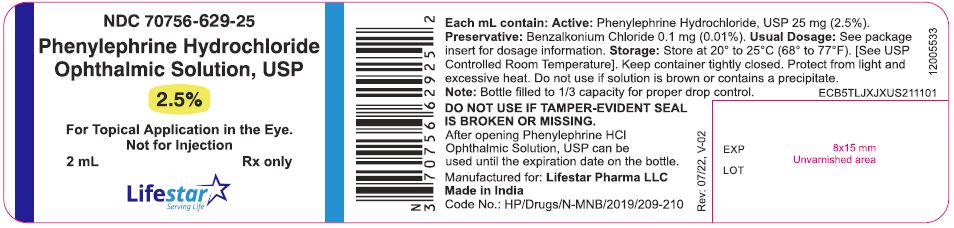
NDC 70756-629-25
Phenylephrine Hydrochloride Ophthalmic Solution, USP
2.5%
For Topical Application in the Eye. Not for Injection
2 mL
Rx only
2ml Label (9ae3a58c 1069 4d91 B637 65d0aee9a13d 02)
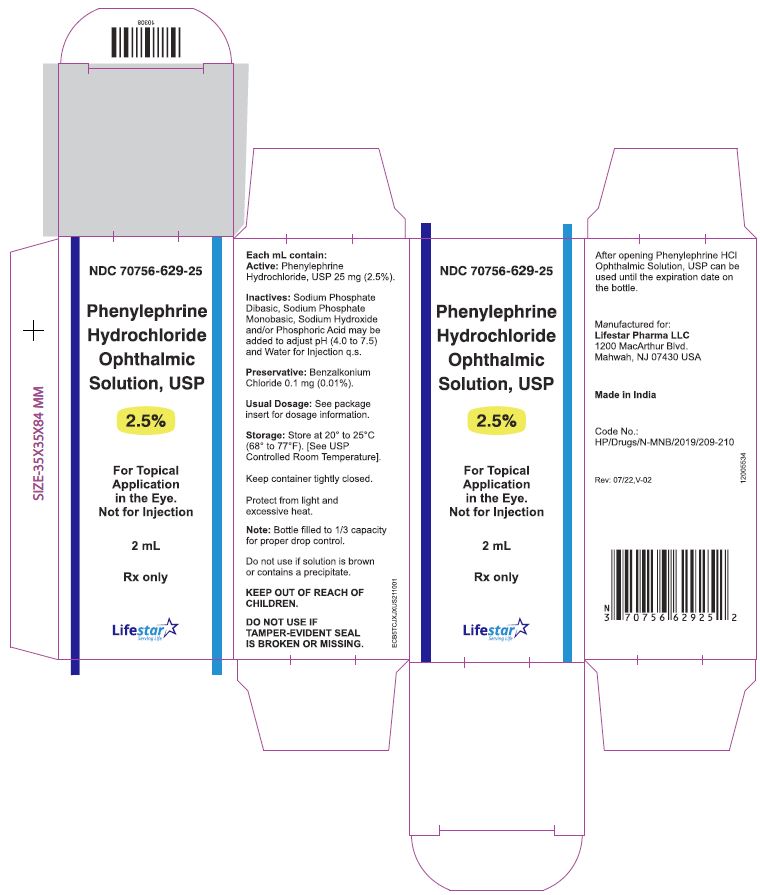
NDC 70756-629-25
Phenylephrine Hydrochloride Ophthalmic Solution, USP
2.5%
For Topical Application in the Eye. Not for Injection
2 mL
Rx only
2ml Carton (9ae3a58c 1069 4d91 B637 65d0aee9a13d 03)
* Please review the disclaimer below.
