- 3.Aseptically transfer the required volume of BAXDELA reconstituted solution from the vial to an intravenous bag to achieve a 250 mL volume of infusion solution. Discard any unused portion of the reconstituted solution.
- 4.Parenteral drug products should be inspected visually for particulate matter and discoloration prior to administration, whenever solution and container permit.
Storage of the Reconstituted and Diluted Solutions
Reconstituted vials, as described above, may be stored either refrigerated at 2°C to 8°C (36°F to 46°F), or at controlled room temperature 20°C to 25°C (68°F to 77°F) for up to 24 hours. Do not freeze.
Once diluted into the intravenous bag, as described above, BAXDELA may be stored either refrigerated at 2°C to 8°C (36°F to 46°F) or at a controlled room temperature of 20°C to 25°C (68°F to 77°F) for up to 24 hours. Do not freeze.
Administration
After reconstitution and dilution, administer BAXDELA by intravenous infusion, using a total infusion time of 60 minutes [see Dosage and Administration (2.1)].
The compatibility of reconstituted BAXDELA with intravenous medications, additives, or substances other than D5W or 0.9% Sodium Chloride Injection has not been established. If a common intravenous line is being used to administer other drugs in addition to BAXDELA the line should be flushed before and after each BAXDELA infusion with 0.9% Sodium Chloride Injection or D5W.
BAXDELA for Injection: A sterile, lyophilized powder containing 300 mg delafloxacin (equivalent to 433 mg delafloxacin meglumine) in a single-dose vial which must be reconstituted and further diluted prior to intravenous infusion. The lyophilized powder is a light yellow to tan cake, which may exhibit cracking and shrinkage and slight variation in texture and color.
BAXDELA Tablets: Modified capsule shaped tablets in beige to mottled beige color with RX3341 debossed on one side containing 450 mg delafloxacin (equivalent to 649 mg delafloxacin meglumine).
Serious Adverse Reactions and Adverse Reactions Leading to Discontinuation
Serious adverse reactions occurred in 3/741 (0.4%) of patients treated with BAXDELA and in 6/751 (0.8%) of patients treated with the comparator.
BAXDELA was discontinued due to an adverse reaction in 7/741 (0.9%) patients and the comparator was discontinued due to an adverse reaction in 21/751 (2.8%) patients. The most commonly reported adverse reactions leading to study discontinuation in the BAXDELA arm included urticaria (2/741; 0.3%) and hypersensitivity (2/741; 0.3%); whereas, the most commonly reported adverse reactions leading to study discontinuation in the comparator arm included urticaria (5/751; 0.7%), rash (4/751; 0.5%), hypersensitivity and infusion site extravasation (2/751; 0.3%).
Most Common Adverse Reactions
The most common adverse reactions in patients treated with BAXDELA were nausea (8%), diarrhea (8%), headache (3%), transaminase elevations (3%), and vomiting (2%). Table 3 lists selected adverse reactions occurring in ≥ 2 % of patients receiving BAXDELA in the pooled adult Phase 3 clinical trials.
Table 3 Selected Adverse Reactions Occurring in ≥ 2% of Patients Receiving BAXDELA in the Pooled Adult Phase 3 ABSSSI Clinical Trials| Adverse Reactions | BAXDELA
N = 741 (%) | Vancomycin/aztreonam
N = 751 (%) |
|---|
| Nausea | 8% | 6% |
| Diarrhea | 8% | 3% |
| Headache The data are not an adequate basis for comparison of rates between the study drug and the active control. | 3% | 6% |
| Transaminase Elevations Pooled reports include hypertransaminasaemia, increased transaminases, and increased ALT and AST. | 3% | 4% |
| Vomiting | 2% | 2% |
Adverse Reactions Occurring in Less Than 2% of Patients Receiving BAXDELA in Phase 3 Clinical Trials
The following selected adverse reactions were reported in BAXDELA-treated patients at a rate of less than 2% in these clinical trials.
Cardiac Disorders: sinus tachycardia, palpitations, bradycardia
Ear and Labyrinth Disorders: tinnitus, vertigo
Eye Disorders: vision blurred
General disorders and administration site conditions: infusion site extravasation, infusion site bruise, discomfort, edema, erythema, irritation, pain, phlebitis, swelling, or thrombosis
Gastrointestinal Disorders: abdominal pain, dyspepsia
Immune System Disorders: hypersensitivity
Infections and Infestations: Clostridium difficile infection, fungal infection, oral candidiasis, vulvovaginal candidiasis
Laboratory Investigations: blood alkaline phosphatase increased, blood creatinine increased, blood creatine phosphokinase increased
Metabolism and Nutrition Disorders: hyperglycemia, hypoglycemia
Musculoskeletal and Connective Tissue Disorders: myalgia
Nervous System Disorders: dizziness, hypoesthesia, paraesthesia, dysgeusia, presyncope, syncope
Psychiatric Disorders: anxiety, insomnia, abnormal dreams
Renal and Urinary: renal impairment, renal failure
Skin and Subcutaneous Tissue Disorders: pruritus, urticaria, dermatitis, rash
Vascular Disorders: flushing, hypotension, hypertension, phlebitis
Risk Summary
The limited available data with BAXDELA use in pregnant women are insufficient to inform a drug-associated risk of major birth defects and miscarriages. When delafloxacin (as the N-methyl glucamine salt) was administered orally to rats during the period of organogenesis, no malformations or fetal death were observed at up to 7 times the estimated clinical exposure based on AUC. When rats were dosed intravenously in late pregnancy and through lactation, there were no adverse effects on offspring at exposures approximating the clinical intravenous (IV) exposure based on AUC [see Data].
The background risk of major birth defects and miscarriage for the indicated population is unknown. In the U.S. general population, the estimated background risk of major birth defects and miscarriage in clinically recognized pregnancies is 2–4% and 15–20%, respectively.
Data
Animal Data
In embryo-fetal studies, oral administration of delafloxacin to pregnant rats during the period of major organogenesis resulted in maternal toxicity and reduced fetal body weights at the highest dose (1600 mg/kg/day) and fetal ossification delays at all doses. No malformations were reported up to the highest dose tested (approximately 7 times the estimated human plasma exposure based on AUC). The lowest dose, 200 mg/kg/day (approximately 2.5 times the estimated human plasma exposure based on AUC), was still toxic to the fetus, based on ossification delays. In rabbits, a species known to be extremely sensitive to maternal toxicity of antibacterial drugs, no embryo-fetal developmental toxicity was observed up to the highest dose which induced maternal toxicity (1.6 mg/kg/day, or approximately 0.01 times the estimated human plasma exposure based on AUC). In a pre-postnatal study in rats of IV administered delafloxacin, dams at the highest dose tested (120 mg/kg/day) exhibited slightly lower body weights and slightly longer gestation length than control animals. Exposure at that dose was estimated to be approximately 5 times human plasma exposure based on AUC, as determined in a separate shorter term study at an earlier stage of pregnancy. Effects on pups at that dose included increased mortality during lactation, small stature, and lower body weights, but no changes in learning and memory, sensory function, locomotor activity, developmental landmarks, or reproductive performance were reported. The No Adverse Effect Level (NOAEL) for maternal toxicity pup development in that study was 60 mg/kg/day (approximately 580 mg/day IV for a 60 kg patient, or just below the clinical IV dose).
Risk Summary
There are no data available on the presence of delafloxacin in human milk, the effects on the breast-fed infant, or the effects on milk production. Delafloxacin is excreted in the breast milk of rats [see Data]. The developmental and health benefits of breastfeeding should be considered along with the mother's clinical need for BAXDELA and any potential adverse effects on the breast-fed child from BAXDELA or from the underlying maternal condition.
Data
After single oral dose of 20 mg/kg (approximately 194 mg for a 60 kg patient) 14C labeled delafloxacin on post-natal day 11, the radioactivity was transferred into the milk of lactating rats. The mean milk/plasma radioactivity concentration ratios in dams at 4 and 8 hours after dosing were 8.5 and 4.0, respectively, and essentially background by 24 hours. The rate of elimination of radioactivity was similar in milk and plasma. Absorption of radioactive drug by rat pups following nursing was observed.
BAXDELA for Injection
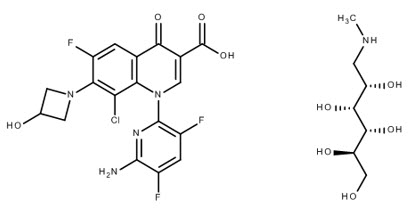
Each vial of BAXDELA for Injection, 300 mg, is a sterile lyophilized powder that contains 300 mg delafloxacin (equivalent to 433 mg delafloxacin meglumine) and the following inactive ingredients: Edetate disodium (EDTA), (3.4 mg); meglumine (59 mg); sulfobutylether-β-cyclodextrin (2400 mg).
BAXDELA Tablets
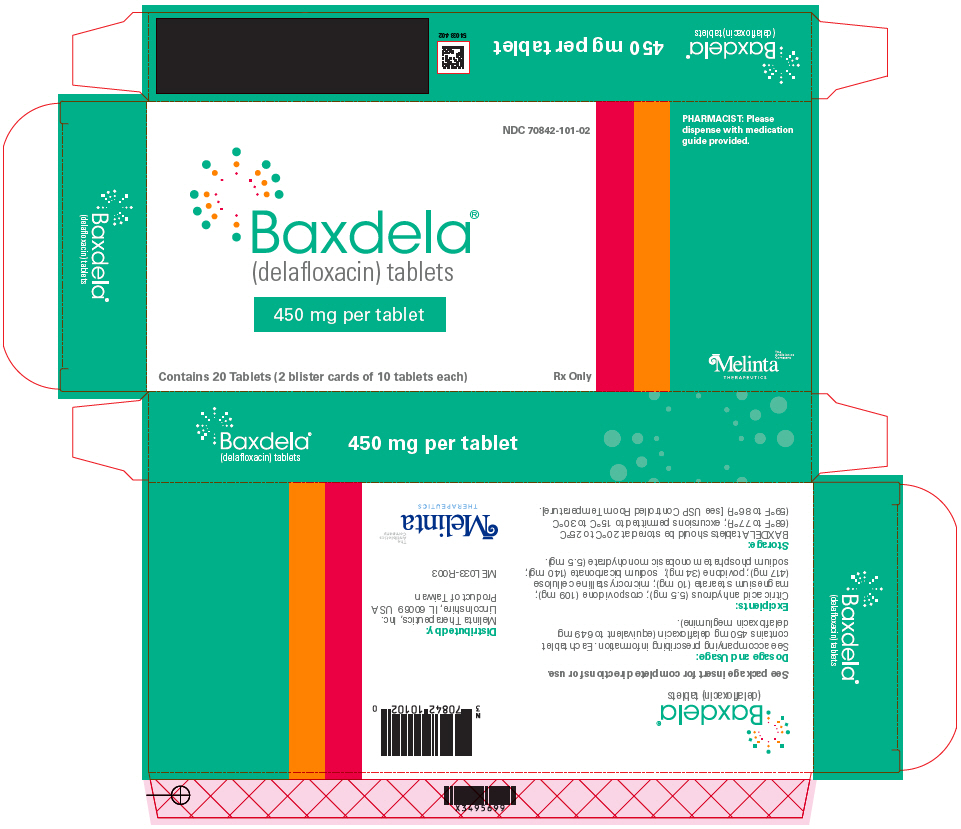
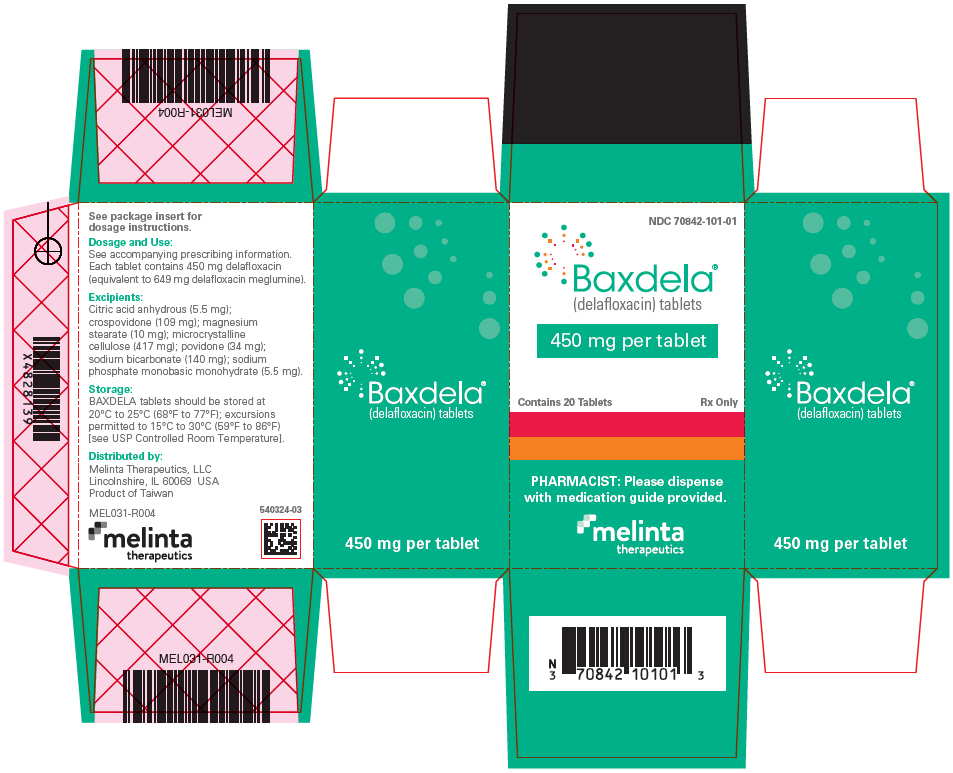
Each BAXDELA tablet for oral use contains 450 mg delafloxacin (equivalent to 649 mg delafloxacin meglumine) and the following inactive ingredients: Citric acid anhydrous (5.5 mg); crospovidone (109 mg); magnesium stearate (10 mg); microcrystalline cellulose (417 mg); povidone (34 mg); sodium bicarbonate (140 mg); sodium phosphate monobasic monohydrate (5.5 mg).
Cardiac Electrophysiology
In a randomized, positive- and placebo-controlled, thorough QT/QTc study, 51 healthy subjects received BAXDELA 300 mg IV, BAXDELA 900 mg IV, oral moxifloxacin 400 mg, or placebo. Neither BAXDELA 300 mg nor BAXDELA 900 mg (three times the intravenous therapeutic dose) had any clinically relevant adverse effect on cardiac repolarization.
Photosensitivity Potential
A study of photosensitizing potential to ultraviolet (UVA and UVB) and visible radiation was conducted in 52 healthy volunteers (originally 13 subjects per treatment group). BAXDELA, at 200 mg/day and 400 mg/day (0.22 and 0.44 times the approved recommended daily oral dosage, respectively) for 7 days, and placebo did not demonstrate clinically significant phototoxic potential at any wavelengths tested (295 nm to 430 nm), including solar simulation. The active comparator (lomefloxacin) demonstrated a moderate degree of phototoxicity at UVA 335 nm and 365 nm and solar simulation wavelengths.
Absorption
The absolute bioavailability for BAXDELA 450 mg oral tablet administered as a single dose was 58.8%. The AUC of delafloxacin following administration of a single 450 mg oral (tablet) dose was comparable to that following a single 300 mg intravenous dose. The Cmax of delafloxacin was achieved within about 1 hour after oral administration under fasting condition. Food (kcal:917, Fat: 58.5%, Protein: 15.4%, Carbohydrate: 26.2%). did not affect the bioavailability of delafloxacin [see Dosage and Administration (2.1)].
Distribution
The steady state volume of distribution of delafloxacin is 30–48 L which approximates total body water. The plasma protein binding of delafloxacin is approximately 84%; delafloxacin primarily binds to albumin. Plasma protein binding of delafloxacin is not significantly affected by renal impairment.
Elimination
In a mass balance study, the mean half-life for delafloxacin was 3.7 hours (SD 0.7 hour) after a single dose intravenous administration. The mean half-life values for delafloxacin ranged from 4.2 to 8.5 hours following multiple oral administrations. Following administration of a single 300 mg intravenous dose of BAXDELA, the mean clearance (CL) of delafloxacin was 16.3 L/h (SD 3.7 L/h), and the renal clearance (CLr) of delafloxacin accounts for 35-45% of the total clearance.
Metabolism
Glucuronidation of delafloxacin is the primary metabolic pathway with oxidative metabolism representing about 1% of an administered dose. The glucuronidation of delafloxacin is mediated mainly by UGT1A1, UGT1A3, and UGT2B15. Unchanged parent drug is the predominant component in plasma. There are no significant circulating metabolites in humans.
Excretion
After single intravenous dose of 14C-labeled delafloxacin, 65% of the radioactivity was excreted in urine as unchanged delafloxacin and glucuronide metabolites and 28% was excreted in feces as unchanged delafloxacin. Following a single oral dose of 14C-labeled delafloxacin, 50% of the radioactivity was excreted in urine as unchanged delafloxacin and glucuronide metabolites and 48% was excreted in feces as unchanged delafloxacin.
Specific Populations
Based on a population pharmacokinetic analysis, the pharmacokinetics of delafloxacin were not significantly impacted by age, sex, race, weight, body mass index, and disease state (ABSSSI).
Patients with Hepatic Impairment
No clinically meaningful changes in delafloxacin Cmax and AUC were observed, following administration of a single 300-mg intravenous dose of BAXDELA to patients with mild, moderate or severe hepatic impairment (Child-Pugh Class A, B, and C) compared to matched healthy control subjects.
Patients with Renal Impairment
Following a single intravenous (300 mg) administration of delafloxacin to subjects with mild (eGFR = 51-80 mL/min/1.73 m2), moderate (eGFR = 31–50 mL/min/1.73 m2), severe (eGFR = 15-29 mL/min/1.73 m2) renal impairment, and ESRD on hemodialysis receiving intravenous delafloxacin within 1 hour before and 1 hour after hemodialysis, mean total exposure (AUCt) of delafloxacin was 1.3, 1.6, 1.8, 2.1, and 2.6-fold higher, respectively than that for matched normal control subjects. The mean dialysate clearance (CLd) of delafloxacin was 4.21 L/h (SD 1.56 L/h). After about 4 hours of hemodialysis, the mean fraction of administered delafloxacin recovered in the dialysate was about 19% [see Use in Specific Populations (8.7)].
Following a single oral (400 mg) administration of delafloxacin to subjects with mild (eGFR = 51-80 mL/min/1.73 m2), moderate (eGFR = 31-50mL/min/1.73m2), or severe (eGFR = 15-29 mL/min/1.73m2) renal impairment, the mean total exposure (AUCt) of delafloxacin was about 1.5-fold higher for subjects with moderate and severe renal impairment compared with healthy subjects, whereas total systemic exposures of delafloxacin in subjects with mild renal impairment were comparable with healthy subjects.
In patients with moderate (eGFR = 31–50 mL/min/1.73 m2), or severe (eGFR = 15–29 mL/min/1.73 m2) renal impairment or ESRD on hemodialysis, accumulation of the intravenous vehicle SBECD occurs. The mean systemic exposure (AUC) increased 2-fold, 5-fold, 7.5-fold, and 27-fold for patients with moderate impairment, severe impairment, ESRD on hemodialysis receiving intravenous delafloxacin within 1 hour before, and 1 hour after hemodialysis respectively, compared to the healthy control group. In subjects with ESRD undergoing hemodialysis, SBECD is dialyzed with a clearance of 4.74 L/h. When hemodialysis occurred 1 hour after the BAXDELA infusion in subjects with ESRD, the mean fraction of SBECD recovered in the dialysate was 56.1% over approximately 4 hours.
Geriatric Patients
Following single oral administration of 250 mg delafloxacin (approximately 0.6 times the approved recommended oral dose), the mean delafloxacin Cmax and AUC∞ values in elderly subjects (≥ 65 years) were about 35% higher compared to values obtained in young adults (18 to 40 years). This difference is not considered clinically relevant. A population pharmacokinetic analysis of patients with ABSSSI showed no significant impact of age on delafloxacin pharmacokinetics.
Male and Female Patients
Following single oral administration of 250 mg delafloxacin (approximately 0.6 times the approved recommended oral dose), the mean delafloxacin Cmax and AUC∞ values in male subjects were comparable to female subjects. Results from a population pharmacokinetic analysis showed that females have a 24% lower AUC than males. This difference is not considered clinically relevant.
Drug Interaction Studies
Drug Metabolizing Enzymes
Delafloxacin at clinically relevant concentrations does not inhibit the cytochrome P450 isoforms CYP1A2, CYP2A6, CYP2B6, CYP2C8, CYP2C9, CYP2C19, CYP2D6, CYP2E1 and CYP3A4/5 in vitro in human liver microsomes. At a delafloxacin concentration (500 µM) well above clinically relevant exposures, the activity of CYP2E1was increased.
In human hepatocytes, delafloxacin showed no potential for in vitro induction of CYP1A2, 2B6, 2C19, or 2C8 but was a mild inducer of CYP2C9 at a concentration of 100 µM and CYP3A4 at a clinically relevant concentration. Administration of BAXDELA 450 mg every 12 hours for 5 days to healthy male and female subjects (n = 22) prior to and on Day 6 with a single oral 5-mg dose of midazolam (a sensitive CYP3A substrate), did not affect the Cmax and AUC values for midazolam or 1-hydroxy midazolam compared to administration of midazolam alone.
Transporters
Delafloxacin was not an inhibitor of the following hepatic and renal transporters in vitro at clinically relevant concentrations: MDR1, BCRP, OAT1, OAT3, OATP1B1, OATP1B3, BSEP, OCT1 and OCT2. Delafloxacin was not a substrate of OAT1, OAT3, OCT1, OCT2, OATP1B1 or OATP. Delafloxacin was shown to be a substrate of P-gp and BCRP in vitro. The clinical relevance of co-administration of delafloxacin and P-gp and/or BCRP inhibitors is unknown.
Resistance
Resistance to fluoroquinolones, including delafloxacin, can occur due to mutations in defined regions of the target bacterial enzymes topoisomerase IV and DNA gyrase referred to as Quinolone-Resistance Determining Regions (QRDRs), or through altered efflux.
Fluoroquinolones, including delafloxacin, have a different chemical structure and mechanism of action relative to other classes of antibacterial compounds (e.g. aminoglycosides, macrolides, β-lactams, glycopeptides, tetracyclines and oxazolidinones).
In vitro resistance to delafloxacin develops by multiple step mutations in the QRDRs of gram-positive and gram-negative bacteria. Delafloxacin-resistant mutants were selected in vitro at a frequency of <10-9.
Although cross-resistance between delafloxacin and other fluoroquinolone-class antibacterial agents has been observed, some isolates resistant to other fluoroquinolone-class antibacterial agents may be susceptible to BAXDELA.
Interaction With Other Antimicrobials
In vitro drug combination studies with delafloxacin and aztreonam, ceftazidime, colistin, daptomycin, linezolid, meropenem, tigecycline, trimethoprim/sulfamethoxazole and vancomycin demonstrated neither synergy nor antagonism.
Antimicrobial Activity
BAXDELA has been shown to be active against most isolates of the following microorganisms, both in vitro and in clinical infections, [see Indications and Usage (1)].
Aerobic bacteria
Gram-positive bacteria
Staphylococcus aureus (including methicillin-resistant and methicillin-sensitive strains)
Staphylococcus haemolyticus
Staphylococcus lugdunensis
Streptococcus pyogenes
Streptococcus agalactiae
Streptococcus anginosus Group (including S. anginosus, S. intermedius, and S. constellatus)
Enterococcus faecalis
Gram-negative bacteria
Escherichia coli
Klebsiella pneumoniae
Enterobacter cloacae
Pseudomonas aeruginosa
The following in vitro data are available, but their clinical significance is unknown. At least 90 percent of the following bacteria exhibit an in vitro minimum inhibitory concentration (MIC) less than or equal to the susceptible breakpoint of delafloxacin against isolates of similar genus or organism group. However, the efficacy of BAXDELA in treating clinical infections caused by these bacteria has not been established in adequate and well-controlled clinical trials.
Aerobic bacteria
Gram-positive bacteria
Streptococcus dysgalactiae
Gram-negative bacteria
Enterobacter aerogenes
Haemophilus parainfluenzae
Klebsiella oxytoca
Proteus mirabilis
Susceptibility Test Methods
When available, the clinical microbiology laboratory should provide cumulative reports of in vitro susceptibility test results for antimicrobial drugs used in local hospitals and practice areas as periodic reports that describe the susceptibility profile of nosocomial and community-acquired pathogens. These reports should aid in the selection of an appropriate antibacterial drug for treatment.
Dilution Techniques
Quantitative methods are used to determine MICs. These MICs provide estimates of the susceptibility of bacteria to antimicrobial compounds. The MICs should be determined using a standardized test method 1,3 (broth and/or agar). The MIC values should be interpreted according to criteria provided in Table 5.
Diffusion Techniques
Quantitative methods that require measurement of zone diameters can also provide reproducible estimates of the susceptibility of bacteria to antimicrobial compounds. The zone size should be determined using a standardized test method 2,3. This procedure uses paper disks impregnated with 5 mcg of delafloxacin to test the susceptibility of bacteria to delafloxacin. The disk diffusion breakpoints are provided in Table 5.
Table 5 Susceptibility Test Interpretive Criteria for delafloxacin | Minimum Inhibitory Concentrations (mcg/mL) | Disk Diffusion (Zone Diameter in mm) |
|---|
| Pathogen | S | I | R | S | I | R |
|---|
| S = susceptible; I = intermediate; R = resistant |
| Staphylococcus aureus (methicillin-resistant and methicillin-susceptible isolates) | ≤ 0.25 | 0.5 | ≥ 1 | ≥ 23 | 20-22 | ≤ 19 |
| Staphylococcus haemolyticus | ≤ 0.25 | 0.5 | ≥ 1 | ≥ 24 | 21-23 | ≤ 20 |
| Streptococcus pyogenes The current absence of resistant isolates precludes defining any results other than "Susceptible". Isolates yielding MIC results other than "Susceptible" should be submitted to a reference laboratory for further testing. | ≤ 0.06 | - | - | ≥ 20 | - | - |
| Streptococcus agalactiae | ≤ 0.06 | 0.12 | ≥ 0.25 | | - | |
| Streptococcus anginosus Group, includes: S. anginosus, S. constellatus and S. intermedius | ≤ 0.06 | - | - | ≥ 25 | - | - |
| Enterococcus faecalis | ≤ 0.12 | 0.25 | ≥ 0.5 | ≥ 21 | 19-20 | ≤ 18 |
| Enterobacteriaceae E. coli, K. pneumoniae, and E. cloacae only. | ≤ 0.25 | 0.5 | ≥ 1 | ≥22 | 19-21 | ≤ 18 |
| Pseudomonas aeruginosa | ≤ 0.5 | 1 | ≥ 2 | ≥23 | 20-22 | ≤ 19 |
A report of Susceptible (S) indicates that the antimicrobial drug is likely to inhibit growth of the pathogen if the antimicrobial drug reaches the concentration usually achievable at the site of infection. A report of Intermediate (I) indicates that the result should be considered equivocal, and if the microorganism is not fully susceptible to alternative clinically feasible drugs, the test should be repeated. This category implies possible clinical applicability in body sites where the drug is physiologically concentrated or in situations where a high dosage of the drug can be used. This category also provides a buffer zone that prevents small uncontrolled technical factors from causing major discrepancies in interpretation. A report of Resistant (R) indicates that the antimicrobial drug is not likely to inhibit growth of the pathogen if the antimicrobial drug reaches the concentration usually achievable at the infection site; other therapy should be selected.
Quality Control
Standardized susceptibility test procedures require the use of laboratory controls to monitor and ensure the accuracy and precision of supplies and reagents used in the assay, and the techniques of the individuals performing the test 1,2,3. Standard delafloxacin powder should provide the following range of MIC values noted in Table 5. For the diffusion technique using the 5 mcg delafloxacin disk, the criteria in Table 6 should be achieved.
Table 6 Acceptable Quality Control Ranges for Delafloxacin | Minimum Inhibitory Concentrations (mcg/mL) | Disk Diffusion
(zone diameters in mm) |
|---|
| ATCC = American Type Culture Collection |
| Staphylococcus aureus ATCC 29213 | 0.001–0.008 | Not applicable |
| Staphylococcus aureus ATCC 25923 | Not applicable | 32–40 |
| Enterococcus faecalis ATCC 29212 | 0.015–0.12 | Not applicable |
| Streptococcus pneumoniae ATCC 49619 | 0.004–0.015 | 29–36 |
| Escherichia coli ATCC 25922 | 0.008–0.03 | 28–35 |
| Pseudomonas aeruginosa ATCC 27853 | 0.12–0.5 | 23–29 |
| Haemophilus influenzae ATCC 49427 | 0.00025–0.001 | 40–51 |
Acute Bacterial Skin and Skin Structure Infections
A total of 1510 adults with acute bacterial skin and skin structure infections (ABSSSI) were randomized in 2 multicenter, multinational, double-blind, double-dummy, non-inferiority trials. Trial 1 compared BAXDELA 300 mg via intravenous infusion every 12 hours to comparator. In Trial 2, patients received BAXDELA 300 mg via intravenous infusion every12 hours for 6 doses then made a mandatory switch to oral BAXDELA 450 mg every 12 hours. In both studies, the comparator was the intravenous combination of vancomycin 15 mg/kg actual body weight and aztreonam. Aztreonam therapy was discontinued if no gram-negative pathogens were identified in the baseline cultures.
In Trial 1, 331 patients with ABSSSI were randomized to BAXDELA and 329 patients were randomized to vancomycin plus aztreonam. Patients in this trial had the following infections: cellulitis (39%), wound infection (35%), major cutaneous abscess (25%), and burn infection (1%). The overall mean surface area of the infected lesion as measured by digital planimetry was 307 cm2. The average age of patients was 46 years (range 18 to 94 years). Patients were predominately male (63%) and White (91%); 32% had BMI ≥ 30 kg/m2. The population studied in Trial 1 included a distribution of patients with associated comorbidities such as hypertension (21%), diabetes (9%), and renal impairment (16%; 0.2% with severe renal impairment or ESRD). Current or recent history of drug abuse, including IV drug abuse, was reported by 55% of patients. Bacteremia was documented at baseline in 2% of patients.
In Trial 2, 423 patients were randomized to BAXDELA and 427 patients were randomized to vancomycin plus aztreonam. Patients in this trial had the following infections: cellulitis (48%), wound infection (26%), major cutaneous abscess (25%), and burn infection (1%). The overall mean surface area of the infected lesion, as measured by digital planimetry, was 353 cm2. The average age of patients was 51 years (range 18 to 93 years). Patients were predominately male (63%) and White (83%); 50 % had a BMI ≥ 30 kg/m2. The population studied in Trial 2 included a distribution of patients with associated comorbidities such as hypertension (31%), diabetes (13%) and renal impairment (16%; 0.2% with severe renal impairment or ESRD). Current or recent history of drug abuse, including IV drug abuse, was reported by 30% of patients. Bacteremia was documented at baseline in 2% of patients.
In both trials, objective clinical response at 48 to 72 hours post initiation of treatment was defined as a 20% or greater decrease in lesion size as determined by digital planimetry of the leading edge of erythema. Table 7 summarizes the objective clinical response rates in both of these trials.
Table 7 Clinical Response at 48–72 hoursObjective clinical response was defined as a 20% or greater decrease in lesion size as determined by digital planimetry of the leading edge of erythema at 48 to 72 hours after initiation of treatment without any reasons for failure (less than 20% reduction in lesion size, administration of rescue antibacterial therapy, use of another antibacterial or surgical procedure to treat for lack of efficacy, or death). Missing patients were treated as failures.
in the ITT Population with ABSSSI in Trial 1 and Trial 2| Trial | BAXDELA
(300 mg IV) | Vancomycin 15 mg/kg + Aztreonam | Treatment Difference Treatment difference, expressed as percentage, and CI based on Miettinen and Nuriminen method without stratification.
(2-sided 95% CI) |
|---|
| CI = Confidence Interval; ITT = Intent to Treat and includes all randomized patients |
| Trial 1 |
Total n
Responder, n (%) | 331
259 (78.2%) | 329
266 (80.9%) | -2.6 (-8.8, 3.6) |
| BAXDELA
(300 mg IV and 450 mg oral) | Vancomycin 15 mg/kg + Aztreonam | |
| Trial 2 |
Total N
Responder, n/N (%) | 423
354 (83.7%) | 427
344 (80.6%) | 3.1 (-2.0, 8.3) |
In both trials, an investigator assessment of response was made at Follow-up (Day 14 ± 1) in the ITT and CE populations. Success was defined as "cure + improved," where patients had complete or near resolution of signs and symptoms, with no further antibacterial needed. The success rates in the ITT and CE populations are shown in Table 8.
Table 8 Investigator- Assessed Success at the Follow-up Visit in ABSSSI —ITT Population and CE Population in Trial 1 and 2| Trial | BAXDELA
(300 mg IV) | Vancomycin 15 mg/kg + Aztreonam | Treatment Difference Treatment difference, expressed as percentage, and CI based on Miettinen and Nuriminen method without stratification.
(2-sided 95% CI) |
|---|
| CI = confidence interval; ITT = intent to treat and includes all randomized patients; CE = clinically evaluable consisted of all ITT patients who had a diagnosis of ABSSSI, received at least 80% of expected doses of study drug, did not have any protocol deviations that would affect the assessment of efficacy and had investigator assessment at the Follow-Up Visit. |
| Trial 1 | | | |
| Success Success was cure + improved where patients had complete or near resolution of signs and symptoms with no further antibacterial needed. , n/N (%) ITT | 270/331 (81.6%) | 274/329 (83.3%) | -1.7 (-7.6, 4.1) |
| Success, n/N (%) CE | 232/240 (96.7%) | 238/244 (97.5%) | -0.9 (-4.3, 2.4) |
| BAXDELA
(300 mg IV and 450 mg Oral) | Vancomycin 15 mg/kg + Aztreonam | |
| Trial 2 | | | |
| Success, n/N (%) ITT | 369/423 (87.2%) | 362/427 (84.8%) | 2.5 (-2.2, 7.2) |
| Success, n/N (%) CE | 339/353 (96.0%) | 319/329 (97.0%) | -0.9 (-3.9, 2.0) |
Six delafloxacin patients had baseline S. aureus bacteremia with ABSSSI. Five of these 6 patients (83.3%) were clinical responders at 48 to 72 hours and 5/6 (83.3%) were considered clinical success for ABSSSI at Day 14 ± 1. Two delafloxacin patients had baseline Gram-negative bacteremia (K. pneumoniae and P. aeruginosa), and both were clinical responders and successes.
The investigator assessments of clinical success rates were also similar between treatment groups at Late Follow-up (LFU, day 21-28).
Objective clinical response and investigator-assessed success by baseline pathogens from the primary infection site or blood cultures for the microbiological ITT (MITT) patient population pooled across Trial 1 and Trial 2 are presented in Table 9.
Table 9 Outcomes by Baseline Pathogen (Pooled across Trial 1 and Trial 2; MITTMicrobiological ITT (MITT) consists of all randomized patients who had a baseline pathogen identified that is known to cause ABSSSI.
Population) | Clinical Response Objective clinical response was defined as a 20% or greater decrease in lesion size as determined by digital planimetry of the leading edge of erythema at 48 to 72 hours after initiation of treatment. at 48–72 hours | Investigator-Assessed Success Investigator-assessed success was defined as complete or near resolution of signs and symptoms, with no further antibacterial needed at Follow-up Visit (Day14±1). at Follow-up |
|---|
| BAXDELA | Comparator | BAXDELA | Comparator |
|---|
| Pathogen | n/N (%) | n/N (%) | n/N (%) | n/N (%) |
|---|
| Staphylococcus aureus | 271/319 (85.0) | 269/324 (83.0) | 275/319 (86.2) | 269/324 (83.0) |
| Methicillin-susceptible Discrepancy in the total numbers is due to the multiple subjects having both MRSA and MSSA isolates. | 149/177 (84.2) | 148/183 (80.9) | 154/177 (87.0) | 153/183 (83.6) |
| Methicillin-resistant | 125/144 (86.8) | 121/141 (85.8) | 122/144 (84.7) | 116/141 (82.3) |
| Streptococcus pyogenes | 17/23 (73.9) | 9/18 (50.0) | 21/23 (91.3) | 16/18 (88.9) |
| Staphylococcus haemolyticus | 11/15 (73.3) | 7/8 (87.5) | 13/15 (86.7) | 7/8 (87.5) |
| Streptococcus agalactiae | 10/14 (71.4) | 9/12 (75.0) | 12/14 (85.7) | 11/12 (91.7) |
| Streptococcus anginosus Group | 59/64 (92.2) | 55/61 (90.2) | 54/64 (84.4) | 47/61 (77.0) |
| Staphylococcus lugdunensis | 8/11 (72.7) | 6/9 (66.7) | 10/11 (90.9) | 8/9 (88.9) |
| Enterococcus faecalis | 11/11 (100.0) | 12/16 (75.0) | 9/11 (81.8) | 14/16 (87.5) |
| Escherichia coli | 12/14 (85.7) | 16/20 (80.0) | 12/14 (85.7) | 18/20 (90.0) |
| Enterobacter cloacae | 10/14 (71.4) | 8/11 (72.7) | 12/14 (85.7) | 10/11 (90.9) |
| Klebsiella pneumoniae | 19/22 (86.4) | 22/23 (95.7) | 20/22 (90.9) | 21/23 (91.3) |
| Pseudomonas aeruginosa | 9/11 (81.8) | 11/12 (91.7) | 11/11 (100.0) | 12/12 (100.0) |
Serious Adverse Reactions
Advise patients to stop taking BAXDELA if they experience an adverse reaction and to call their healthcare provider for advice on completing the full course of treatment with another antibacterial drug.
Inform patients of the following serious adverse reactions that have been associated with BAXDELA or other fluoroquinolone use: