Clopidogrel Bisulfate
Product Images NDC 70934-797

10 FDA label images from Denton Pharma, Inc. Dba Northwind Pharmaceuticals · Packaging, Regulatory Labels, and Product Appearance

Product Visual Gallery

This gallery contains 10 technical images submitted to the FDA as part of the official labeling for Clopidogrel Bisulfate (NDC 70934-797). Unlike standard consumer photos, these assets often include clinical data figures, molecular chemical structures, and official manufacturer packaging layouts.

As provided by Denton Pharma, Inc. Dba Northwind Pharmaceuticals, these visuals offer a comprehensive scientific overview of the product's physical and chemical identity, aiding pharmacists and researchers in product verification and study.

FDA Label Image

70934 797 30 Master Bottle Label Approval Rev A 03 21
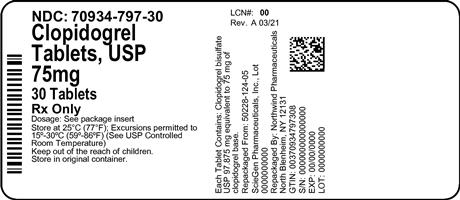
70934 797 30 Master Bottle Label Approval   Rev A 03 21
Label for Clopidogrel Tablets USP 75 mg, containing 30 tablets. The label indicates prescription use, storage instructions, manufacturer as Denton Pharma, Inc. DBA Northwind Pharmaceuticals, and includes the NDC 70934-797-30. Dosage and other usage information directs to the package insert.*
FDA Label Image

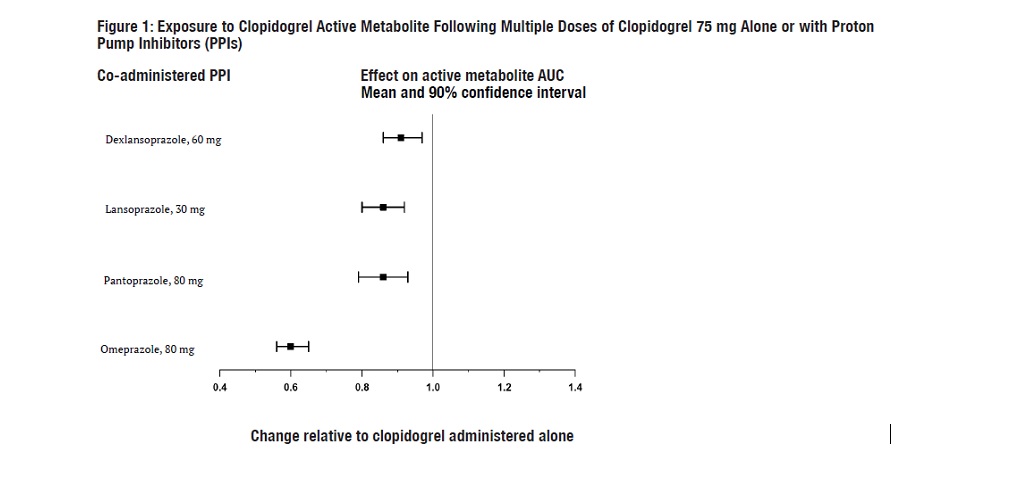
Figure1 (Clopidogrel Fig)

Figure1 (Clopidogrel Fig)
A horizontal bar chart titled 'Exposure to Clopidogrel Active Metabolite Following Multiple Doses of Clopidogrel 75 mg Alone or with Proton Pump Inhibitors (PPIs)' showing the effect of various PPIs (Dexlansoprazole 60 mg, Lansoprazole 30 mg, Pantoprazole 80 mg, Omeprazole 80 mg) on clopidogrel active metabolite AUC. The x-axis represents change relative to clopidogrel administered alone, ranging from 0.4 to 1.4 with mean and 90% confidence intervals displayed for each PPI.*
FDA Label Image

Figure3 (Clopidogrel Fig2)

Figure3 (Clopidogrel Fig2)
A line graph titled 'Cardiovascular Death, Myocardial Infarction, Stroke' showing cumulative event rate (%) on the vertical axis versus months of follow-up (0 to 12) on the horizontal axis. Two lines compare Placebo (+ aspirin) and Clopidogrel (+ aspirin), with the Clopidogrel line consistently lower, indicating fewer events over time. The graph includes a note that other standard therapies were used as appropriate and reports a p-value of 0.00009 indicating statistical significance.*
FDA Label Image

Figure3 (Clopidogrel Fig3)

Figure3 (Clopidogrel Fig3)
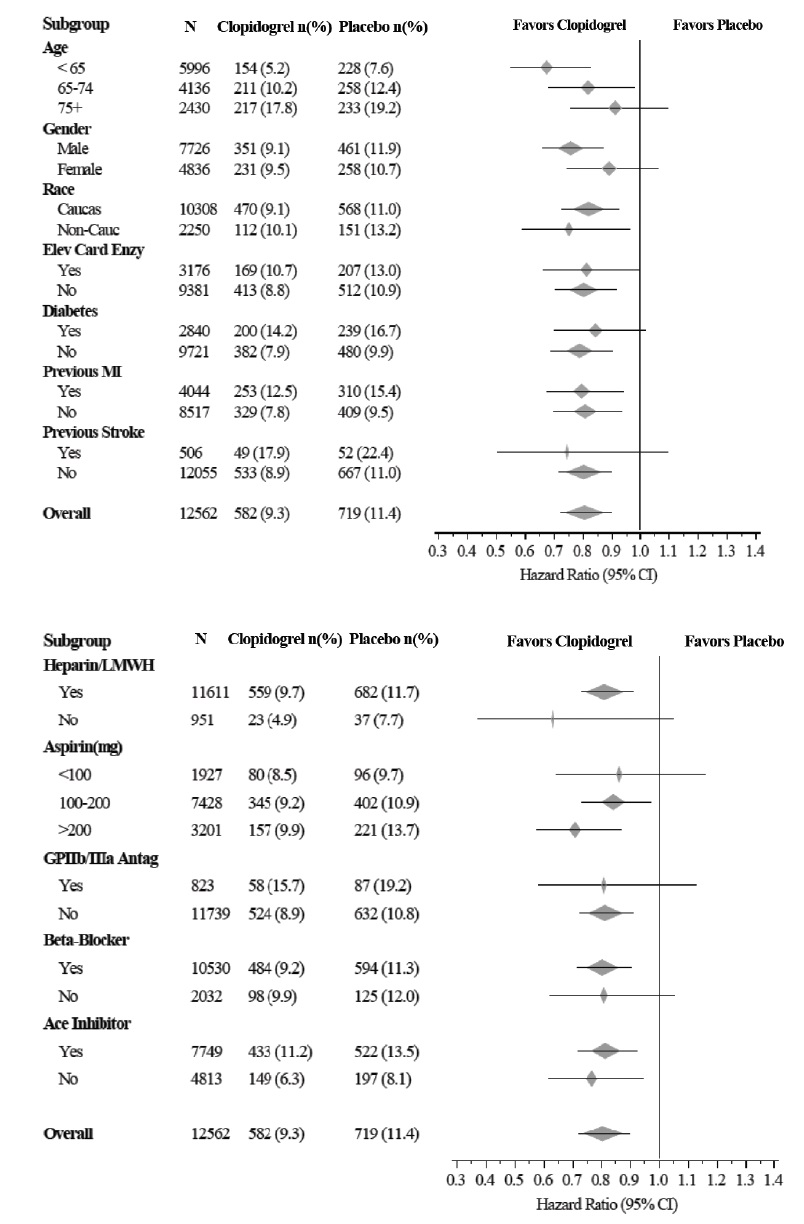
A forest plot chart showing hazard ratios with 95% confidence intervals for Clopidogrel versus placebo across various patient subgroups. Subgroups include age, gender, race, elevated cardiac enzymes, diabetes, previous myocardial infarction, previous stroke, use of heparin/LMWH, aspirin dosage, GP IIb/IIIa antagonist use, beta-blocker use, and ACE inhibitor use. The chart compares event rates (n and %) between Clopidogrel and placebo groups, visually indicating which treatment is favored within each subgroup.*
FDA Label Image

Figure4 (Clopidogrel Fig4)

Figure4 (Clopidogrel Fig4)
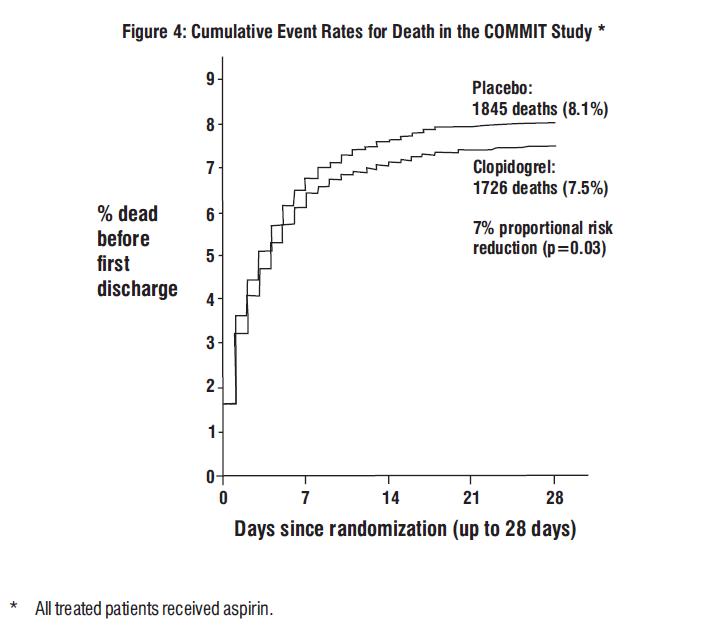
A cumulative event rate line graph illustrating the percentage of deaths before first discharge over 28 days since randomization, comparing Clopidogrel and placebo groups in the COMMIT study. The graph shows Clopidogrel with 7.5% deaths (1726) and placebo with 8.1% deaths (1845), indicating a 7% proportional risk reduction. A note states all treated patients received aspirin.*
FDA Label Image

Figure5 (Clopidogrel Fig5)

Figure5 (Clopidogrel Fig5)
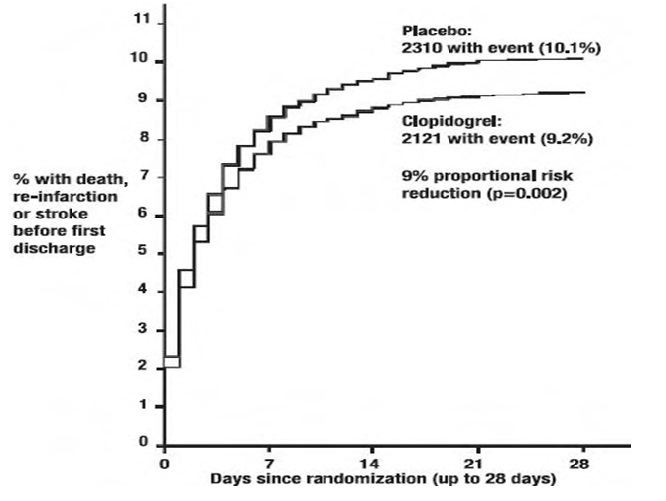
A line graph comparing the percentage of patients with death, reinfarction, or stroke before first discharge over 28 days between placebo and Clopidogrel groups. The x-axis shows days since randomization (0 to 28), and the y-axis shows the percentage (0 to 11%). Data annotations show 10.1% events in placebo and 9.2% in Clopidogrel, with a 9% proportional risk reduction (p=0.002).*
FDA Label Image

Figure6 (Clopidogrel Fig6)

Figure6 (Clopidogrel Fig6)
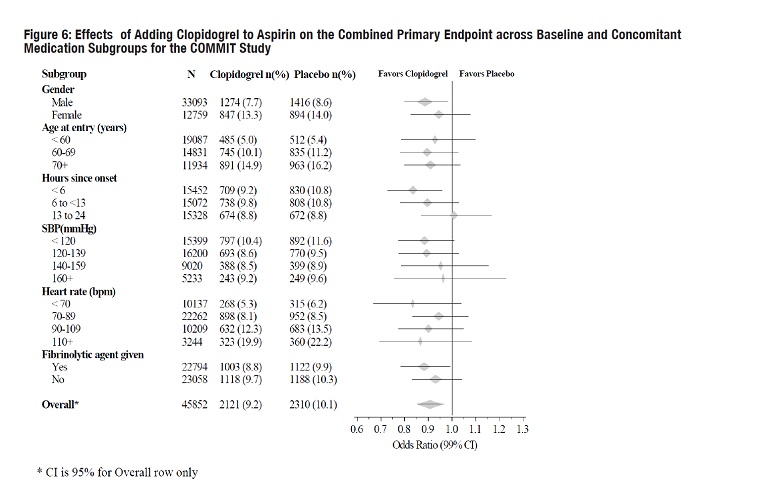
A forest plot figure depicting effects of adding Clopidogrel to Aspirin on combined primary endpoints across subgroups in the COMMIT study, showing odds ratios with 99% confidence intervals for various categories like gender, age, hours since onset, systolic blood pressure ranges, heart rate, and fibrinolytic agent use, comparing Clopidogrel versus placebo.*
FDA Label Image

Figure7 (Clopidogrel Fig7)

Figure7 (Clopidogrel Fig7)
A line graph titled 'Fatal or Non-Fatal Vascular Events' showing cumulative event rate (%) on the y-axis and months of follow-up on the x-axis. Two lines represent event rates over time for Aspirin and Clopidogrel, with Clopidogrel generally showing a slightly lower event rate. A P-value of 0.045 is noted on the graph.*
FDA Label Image

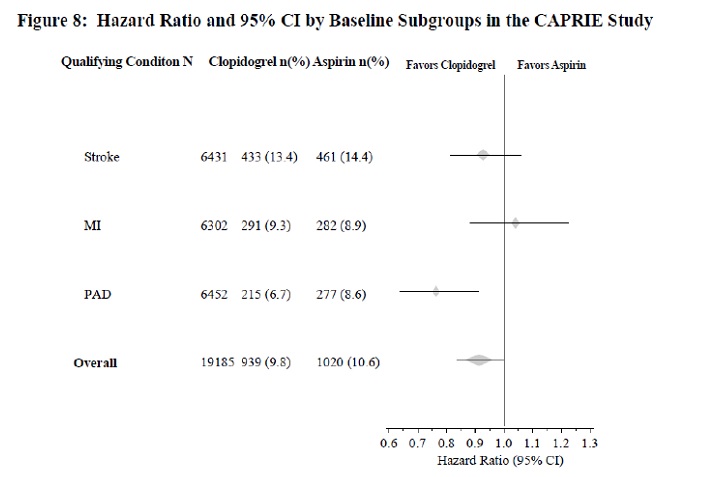
Figure8 (Clopidogrel Fig8)

Figure8 (Clopidogrel Fig8)
A forest plot titled 'Hazard Ratio and 95% CI by Baseline Subgroups in the CAPRIE Study,' showing the hazard ratios with 95% confidence intervals for Clopidogrel versus Aspirin across subgroups: Stroke, MI, PAD, and Overall. The x-axis represents the hazard ratio from 0.6 to 1.3, indicating favoring Clopidogrel or Aspirin outcomes.*
FDA Label Image

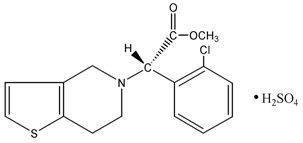
Structure (Clopidogrel Str)

Structure (Clopidogrel Str)
Chemical structure of Clopidogrel bisulfate, showing its molecular arrangement including a thiophene ring, a piperidine ring, a chlorophenyl group, and a sulfate moiety (H2SO4).*

* About these descriptions: Image descriptions on this page are generated by automated AI analysis of the product label images from the manufacturer's FDA label submission (SPL). They are provided for reference only and may contain errors or omissions. Always rely on the printed label itself and the official FDA labeling, and consult a pharmacist or healthcare professional with any questions about this product.