Dapagliflozin Tablet, Film Coated
Product Images NDC 70954-856

View Photos of Packaging, Regulatory Labels, and Product Appearance

Product Visual Gallery

This gallery contains 10 technical images submitted to the FDA as part of the official labeling for Dapagliflozin (NDC 70954-856). Unlike standard consumer photos, these assets often include clinical data figures, molecular chemical structures, and official manufacturer packaging layouts.

As provided by Ani Pharmaceuticals, Inc., these visuals offer a comprehensive scientific overview of the product's physical and chemical identity, aiding pharmacists and researchers in product verification and study.

FDA Label Image

Container-10mg-30count (Container Label 10mg 30ct)
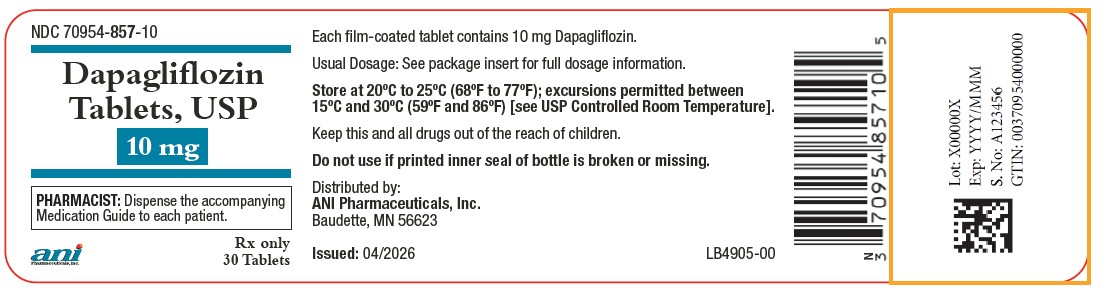
Container-10mg-30count (Container Label 10mg 30ct)
This is a label for Dapagliflozin tablets, which are used to treat certain conditions like type 2 diabetes. The tablets contain 10 mg of Dapagliflozin. It provides instructions for pharmacists to dispense a Medication Guide to each patient. The label also includes storage instructions, dosage information, and a note to keep the medication out of reach of children. The product is distributed by ANI Pharmaceuticals, Inc.*
FDA Label Image

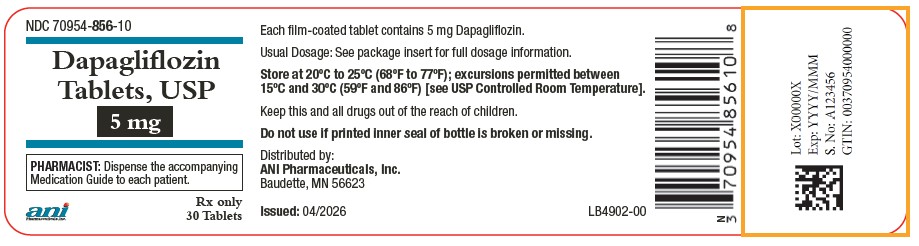
Container-5mg-30count (Container Label 5mg 30ct)

Container-5mg-30count (Container Label 5mg 30ct)
This text provides information about Dapagliflozin tablets, USP. Each film-coated tablet contains 5 mg Dapagliflozin. The recommended dosage instructions are available in the package insert. The tablets should be stored at 20°C to 25°C (68°F to 77°F) with excursions permitted between 15°C and 30°C (59°F and 86°F). The medication should be kept out of reach of children. It should not be used if the printed inner seal of the bottle is broken or missing. The tablets are to be dispensed by a pharmacist along with the accompanying Medication Guide for each patient. Distributed by ANI Pharmaceuticals, Inc. in Baudette, MN 56623. Issue date: 04/2026. This text also includes various codes and numbers for reference.*
FDA Label Image

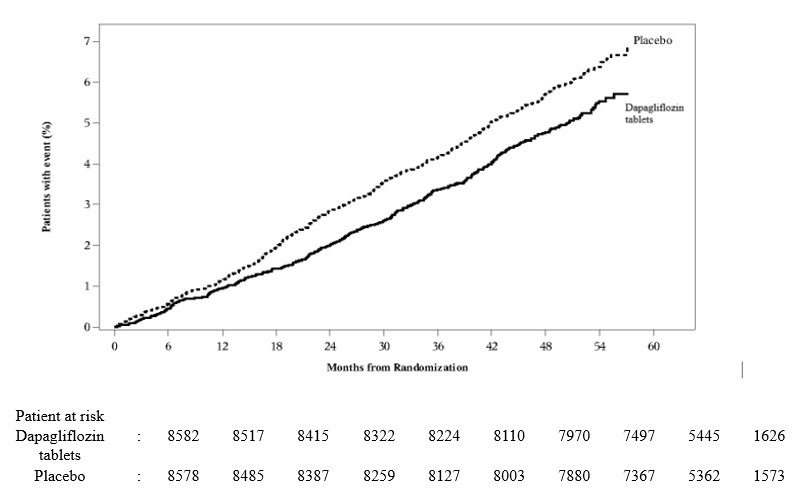
Figure Five (Figure Five)

FDA Label Image

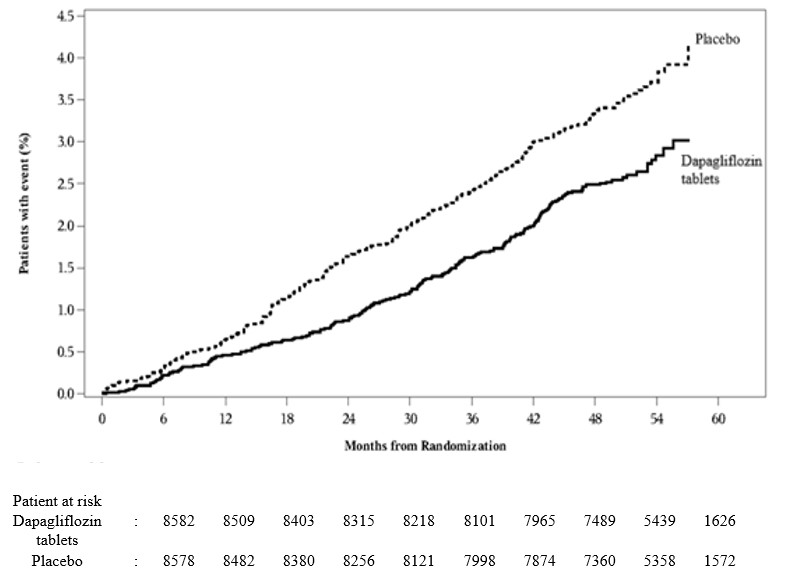
Figure Four (Figure Four)

Figure Four (Figure Four)
This is a data table showing the event percentages for patients taking Dapagliflozin versus Placebo over several months from randomization. It includes the number of patients at risk and the number of tablets used. The data provides insights into the efficacy and progression of the treatment options over time.*
FDA Label Image

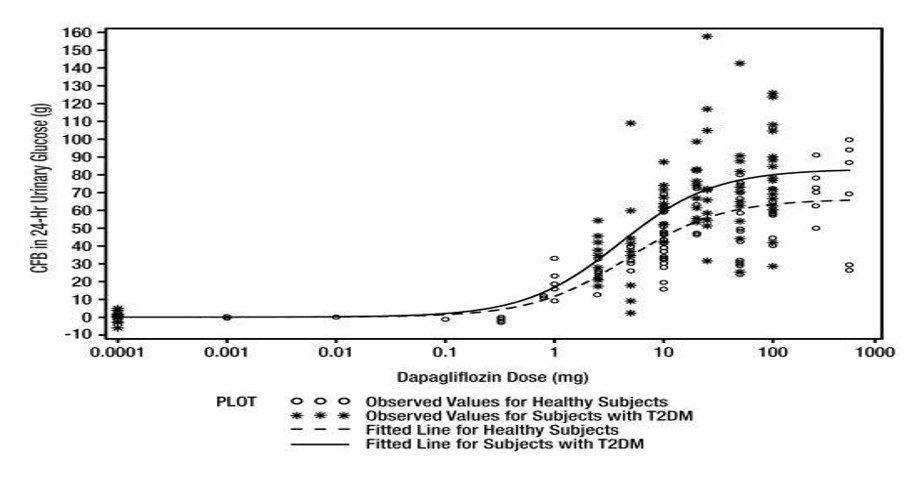
Figure One (Figure One)

Figure One (Figure One)
This text provides information on the observed values for healthy subjects and individuals with type 2 diabetes mellitus (T2DM) in relation to 24-hour urinary glucose levels and dapagliflozin dosage in milligrams. It also shows the fitted lines for both healthy subjects and those with T2DM.*
FDA Label Image

Figure Three (Figure Three)

Figure Three (Figure Three)
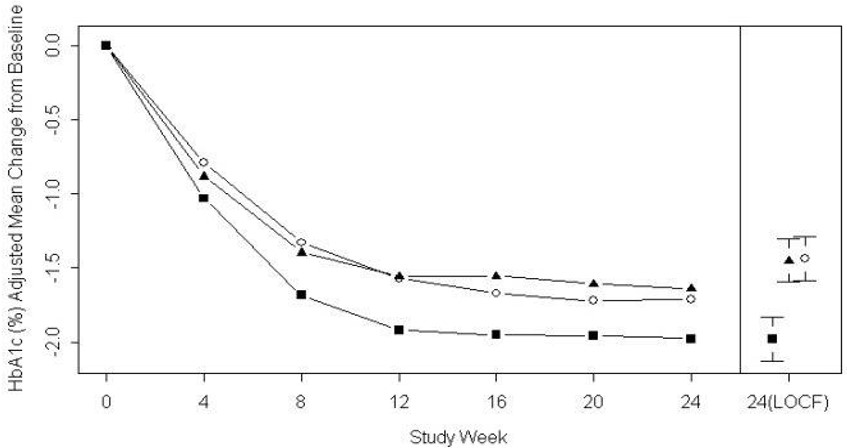
This is a timetable showing different time slots marked with T, O, and L. The text also mentions a study week and some numerical values in parentheses. It appears to be related to scheduling or organizing tasks during a specific period.*
FDA Label Image

Figure Two (Figure Two)

Figure Two (Figure Two)
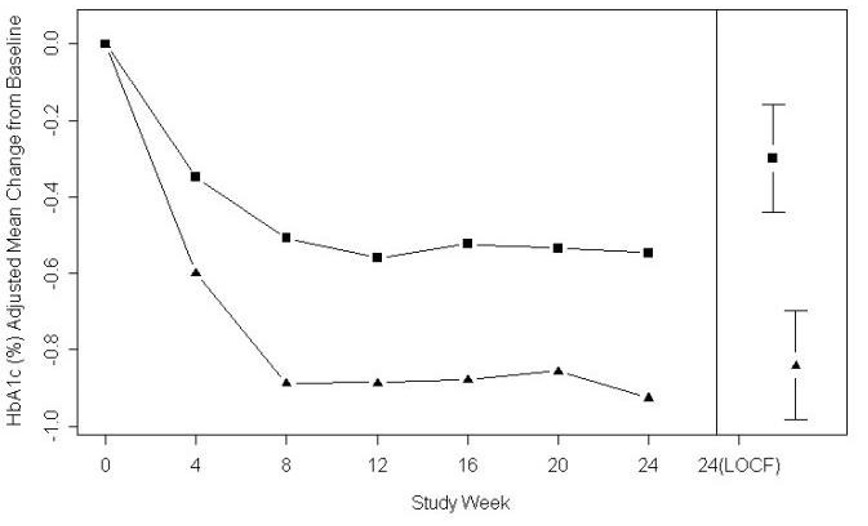
This is a schedule or document showing different time slots labeled as "TTTTT" alongside numerical values such as "00, 50, 20, 24, 24". Additionally, there is a reference to "Study Week" and a percentage calculation "9L vaH" mentioned in the text.*
FDA Label Image

Med Guide Two (Med Guide Two)

Med Guide Two (Med Guide Two)
This text lists common symptoms of low blood sugar, also known as hypoglycemia. These symptoms include headache, drowsiness, weakness, confusion, dizziness, sweating, hunger, fast heartbeat, irritability, and shaking or feeling jittery. These signs indicate a potential need for quick action to raise blood sugar levels.*
FDA Label Image

Med Guide One (Med Guide)

Med Guide One (Med Guide)
This text lists common symptoms related to potential health issues, such as nausea, tiredness, vomiting, trouble breathing, abdominal pain, and ketones in urine or blood. Paying attention to and seeking medical advice for these symptoms may be crucial for proper diagnosis and treatment.*
FDA Label Image

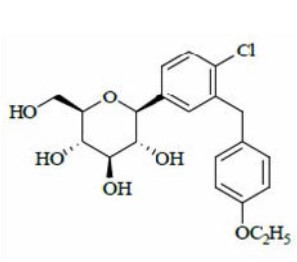
Structure (Structure)

* These product label images have been analyzed using experimental machine learning. Please verify findings with the primary label text.