Duloxetine Capsule, Delayed Release
Product Images NDC 70954-860

View Photos of Packaging, Regulatory Labels, and Product Appearance

Product Visual Gallery

This gallery contains 15 technical images submitted to the FDA as part of the official labeling for Duloxetine (NDC 70954-860). Unlike standard consumer photos, these assets often include clinical data figures, molecular chemical structures, and official manufacturer packaging layouts.

As provided by Ani Pharmaceuticals, Inc., these visuals offer a comprehensive scientific overview of the product's physical and chemical identity, aiding pharmacists and researchers in product verification and study.

FDA Label Image

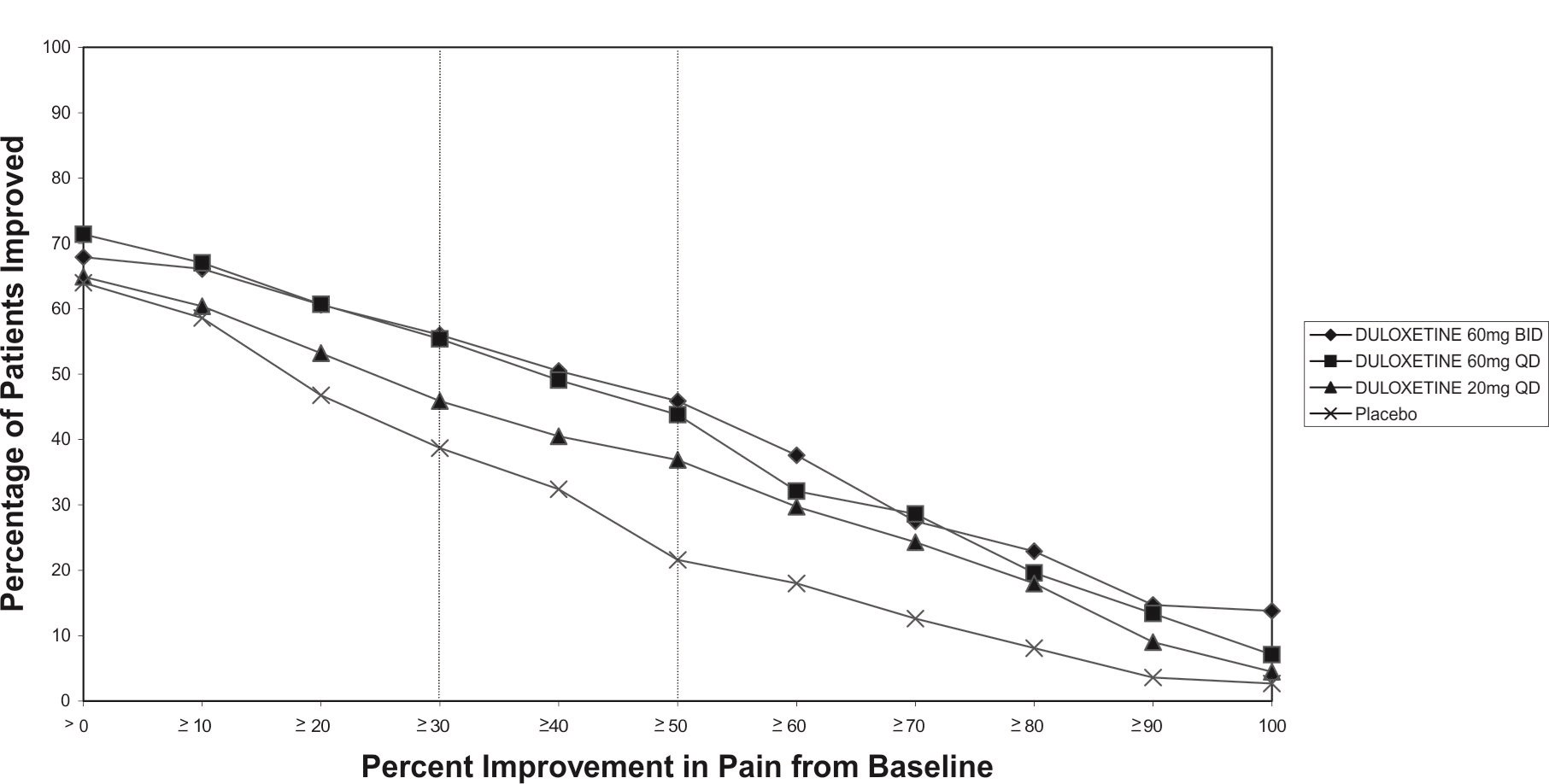
Fig-3 (Fig 3)

Fig-3 (Fig 3)
A line graph depicting the percentage of patients improved versus percent improvement in pain from baseline. It compares four groups: Duloxetine 60 mg BID, Duloxetine 60 mg QD, Duloxetine 20 mg QD, and placebo. The graph uses different symbols to represent each group and shows higher improvement percentages for Duloxetine groups compared to placebo across varying thresholds of pain improvement.*
FDA Label Image

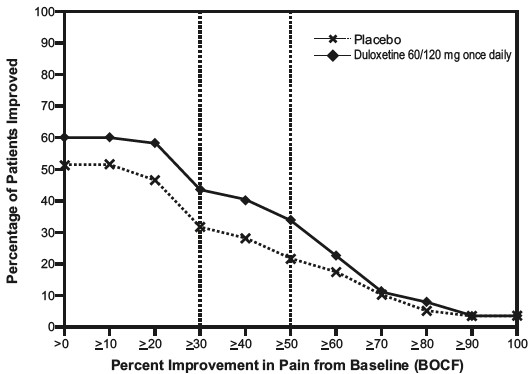
Figure-8 (Figure Eight)

Figure-8 (Figure Eight)
A line graph comparing the percentage of patients improved against percent improvement in pain from baseline (BOCF). It contrasts two groups: one receiving Duloxetine 60/120 mg once daily and the other a placebo, showing generally higher improvement percentages for Duloxetine across the pain improvement scale.*
FDA Label Image

Figure-5 (Figure Five)

Figure-5 (Figure Five)
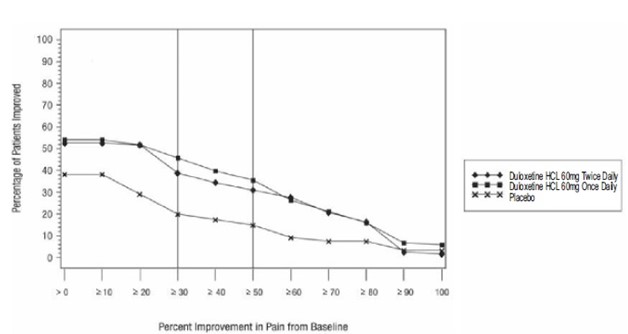
A line chart showing percentage of patients improved plotted against percent improvement in pain from baseline. The chart compares Duloxetine HCl 60 mg administered twice daily, Duloxetine HCl 60 mg once daily, and placebo groups, illustrating the trend of patient improvement at various pain reduction thresholds.*
FDA Label Image

Figure-4 (Figure Four)

Figure-4 (Figure Four)
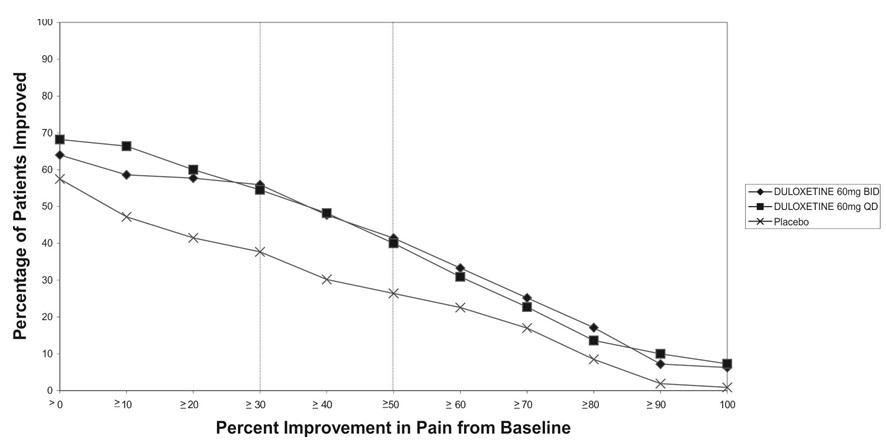
A line graph showing the percentage of patients improved versus percent improvement in pain from baseline. It compares Duloxetine 60 mg taken twice daily (BID), Duloxetine 60 mg once daily (QD), and placebo. The graph illustrates patient responses across various pain improvement levels, with Duloxetine groups showing higher improvement percentages than placebo.*
FDA Label Image

Figure-9 (Figure Nine)

Figure-9 (Figure Nine)
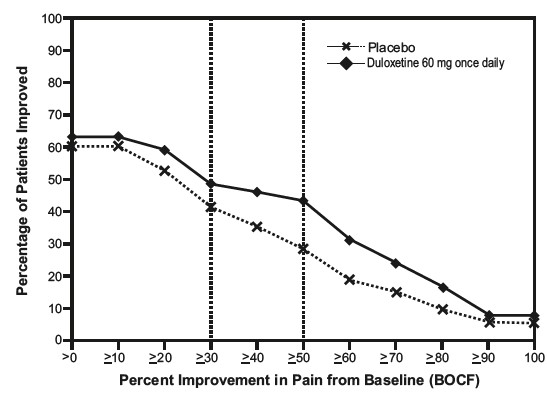
A line graph comparing the percentage of patients improved versus the percent improvement in pain from baseline (BOCF) for Duloxetine 60 mg once daily and placebo. The graph shows percentages on the vertical axis and percent improvement in pain on the horizontal axis, illustrating trends in patient improvement for both groups across various pain improvement thresholds.*
FDA Label Image

Figure-1 (Figure One)

Figure-1 (Figure One)
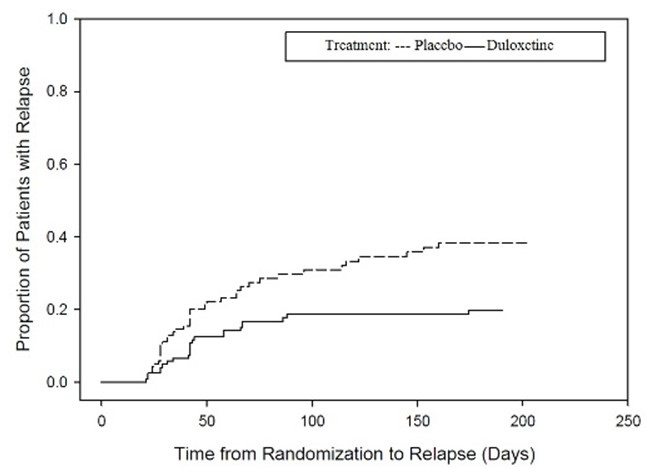
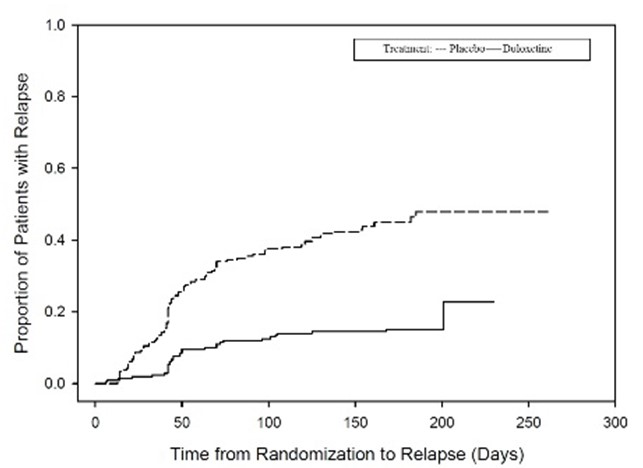
A Kaplan-Meier plot showing the proportion of patients with relapse over time from randomization in days. The graph compares two treatment groups: placebo and duloxetine, with the placebo group showing a higher proportion of relapse over the observation period compared to the duloxetine group.*
FDA Label Image

Figure-7 (Figure Seven)

Figure-7 (Figure Seven)
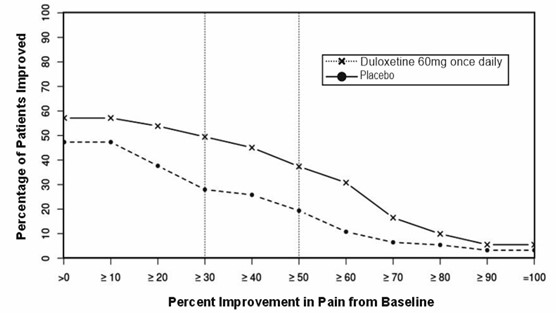
A line graph showing the percentage of patients improved by pain level improvement from baseline comparing Duloxetine 60 mg once daily and placebo. The x-axis represents the percent improvement in pain, ranging from 0 to 100%, while the y-axis shows the percentage of patients improved, ranging from 0 to 100%. Duloxetine shows higher patient improvement percentages than placebo across most pain improvement levels.*
FDA Label Image

Figure-6 (Figure Six)

Figure-6 (Figure Six)
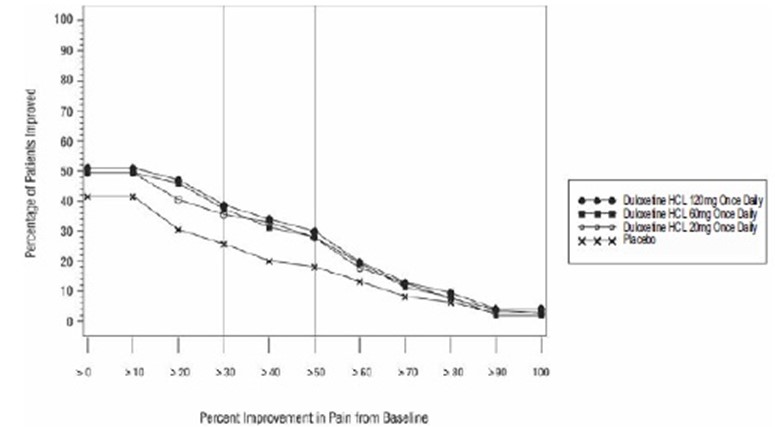
A line graph depicting the percentage of patients improved versus the percent improvement in pain from baseline. It compares Duloxetine HCL taken once daily at doses of 120 mg, 60 mg, and 20 mg against a placebo group. Each treatment group and the placebo are represented with distinct marker styles, showing trends in patient improvement across increasing pain improvement intervals.*
FDA Label Image

Figure-10 (Figure Ten)

Figure-10 (Figure Ten)
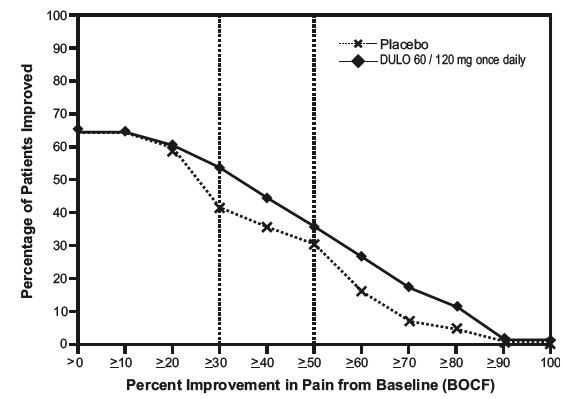
A line graph comparing the percentage of patients improved by the percent improvement in pain from baseline, showing two groups: placebo and DULO 60/120 mg once daily. The x-axis quantifies percent improvement in pain, and the y-axis indicates the percentage of patients improved. The graph includes vertical dashed lines at 30% and 50% improvement thresholds.*
FDA Label Image

Figure-2 (Figure Two)

Figure-2 (Figure Two)
Kaplan-Meier curve depicting the proportion of patients with relapse over time (days) from randomization, comparing Duloxetine treatment to placebo. The graph shows relapse proportion on the y-axis and time from randomization to relapse on the x-axis, illustrating differences between Duloxetine and placebo groups.*
FDA Label Image

Imprint (Imprint)

Imprint (Imprint)
Duloxetine delayed-release capsule, 60 mg strength, displayed with the capsule positioned vertically on a white background. The capsule is imprinted with the number "71." The labeler shown is ANI Pharmaceuticals, Inc.*
FDA Label Image

Label-1 (Label 1)

Label-1 (Label 1)
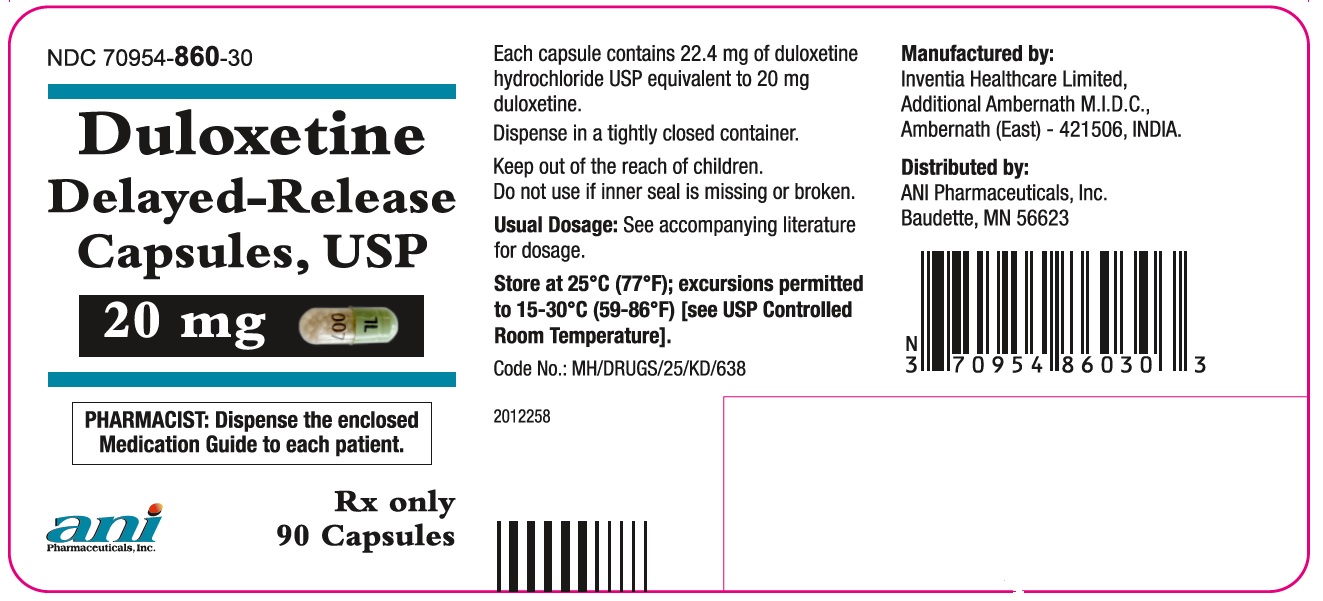
Label for Duloxetine Delayed-Release Capsules, USP 20 mg, showing an image of the capsule. The label indicates a 90-count prescription package manufactured by Inventia Healthcare Limited and distributed by ANI Pharmaceuticals, Inc. Storage and dispensing instructions are included, along with two barcodes and the NDC 70954-860-30.*
FDA Label Image

Label-2 (Label 2)

Label-2 (Label 2)
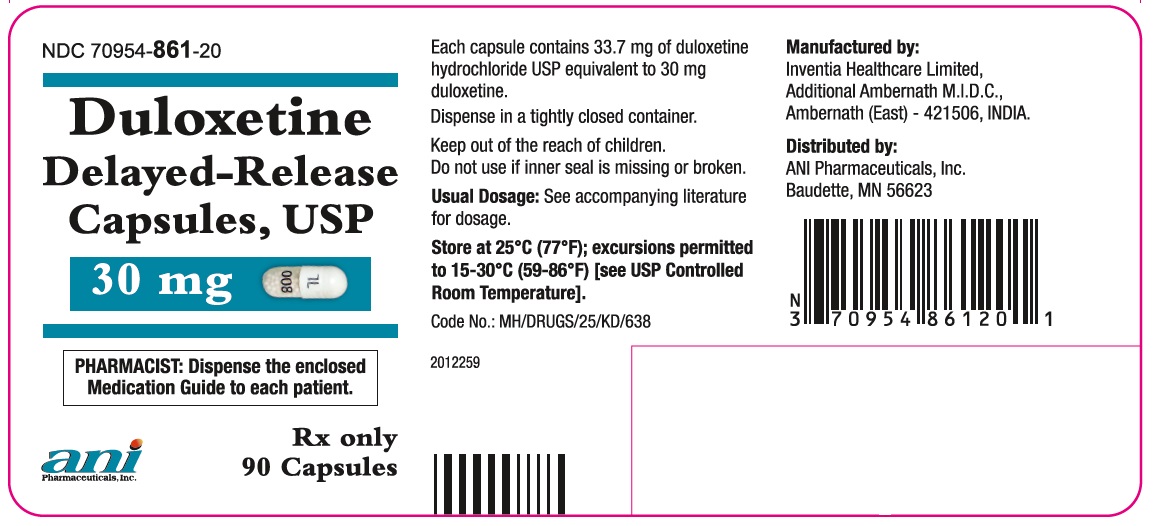
Label for Duloxetine Delayed-Release Capsules, USP 30 mg by ANI Pharmaceuticals, Inc. The label shows a white and opaque capsule, specifies 90 capsules in the package, and includes storage instructions and manufacturer information. The label states the capsules contain duloxetine hydrochloride equivalent to 30 mg duloxetine.*
FDA Label Image

Label-3 (Label 3)

Label-3 (Label 3)
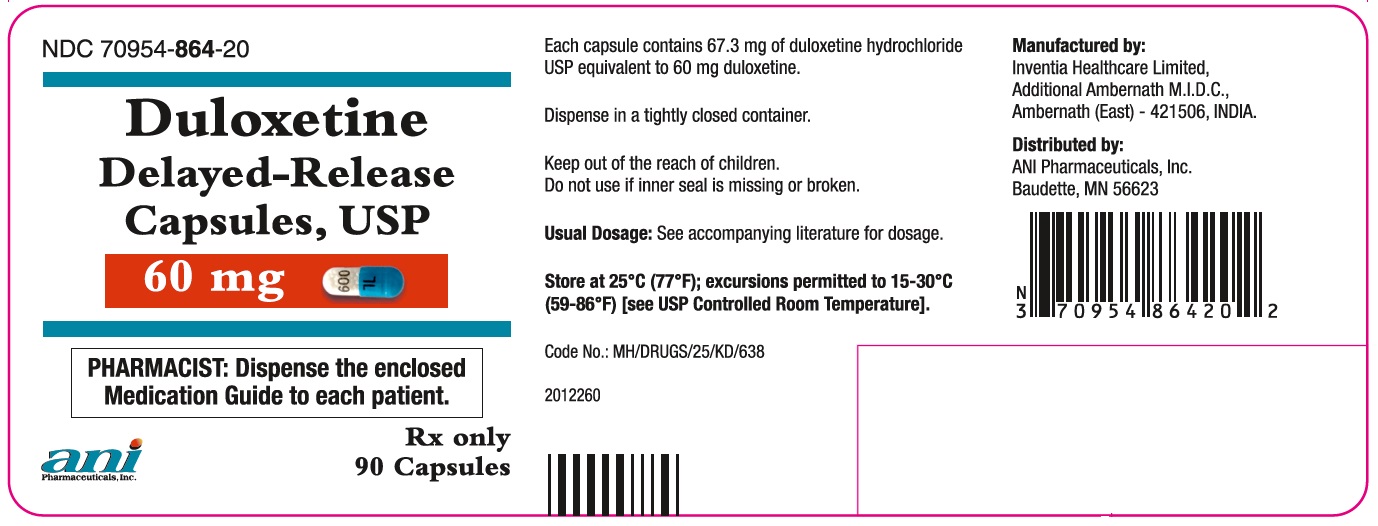
Label for Duloxetine Delayed-Release Capsules USP 60 mg by ANI Pharmaceuticals, Inc. The label indicates each capsule contains duloxetine hydrochloride equivalent to 60 mg duloxetine. The package contains 90 capsules and is designated Rx only. Storage and dispensing instructions, manufacturer and distributor information, and barcodes are also visible.*
FDA Label Image

Structure (Structure)

Structure (Structure)
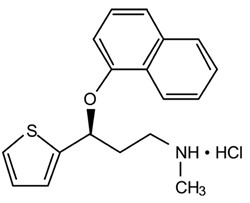
Chemical structure of Duloxetine shown as a line drawing with aromatic rings, a thiophene ring, and an amine hydrochloride group.*

* About these descriptions: Image descriptions on this page are generated by automated AI analysis of the product label images from the manufacturer's FDA label submission (SPL). They are provided for reference only and may contain errors or omissions. Always rely on the printed label itself and the official FDA labeling, and consult a pharmacist or healthcare professional with any questions about this product.