Cellskin Clean Pine
Product Images NDC 71080-0021

View Photos of Packaging, Regulatory Labels, and Product Appearance

Product Visual Gallery

This gallery contains 2 technical images submitted to the FDA as part of the official labeling for Cellskin Clean Pine (NDC 71080-0021). Unlike standard consumer photos, these assets often include clinical data figures, molecular chemical structures, and official manufacturer packaging layouts.

As provided by Gtg Wellness Co., Ltd., these visuals offer a comprehensive scientific overview of the product's physical and chemical identity, aiding pharmacists and researchers in product verification and study.

FDA Label Image

Image Of Container (Black Container)
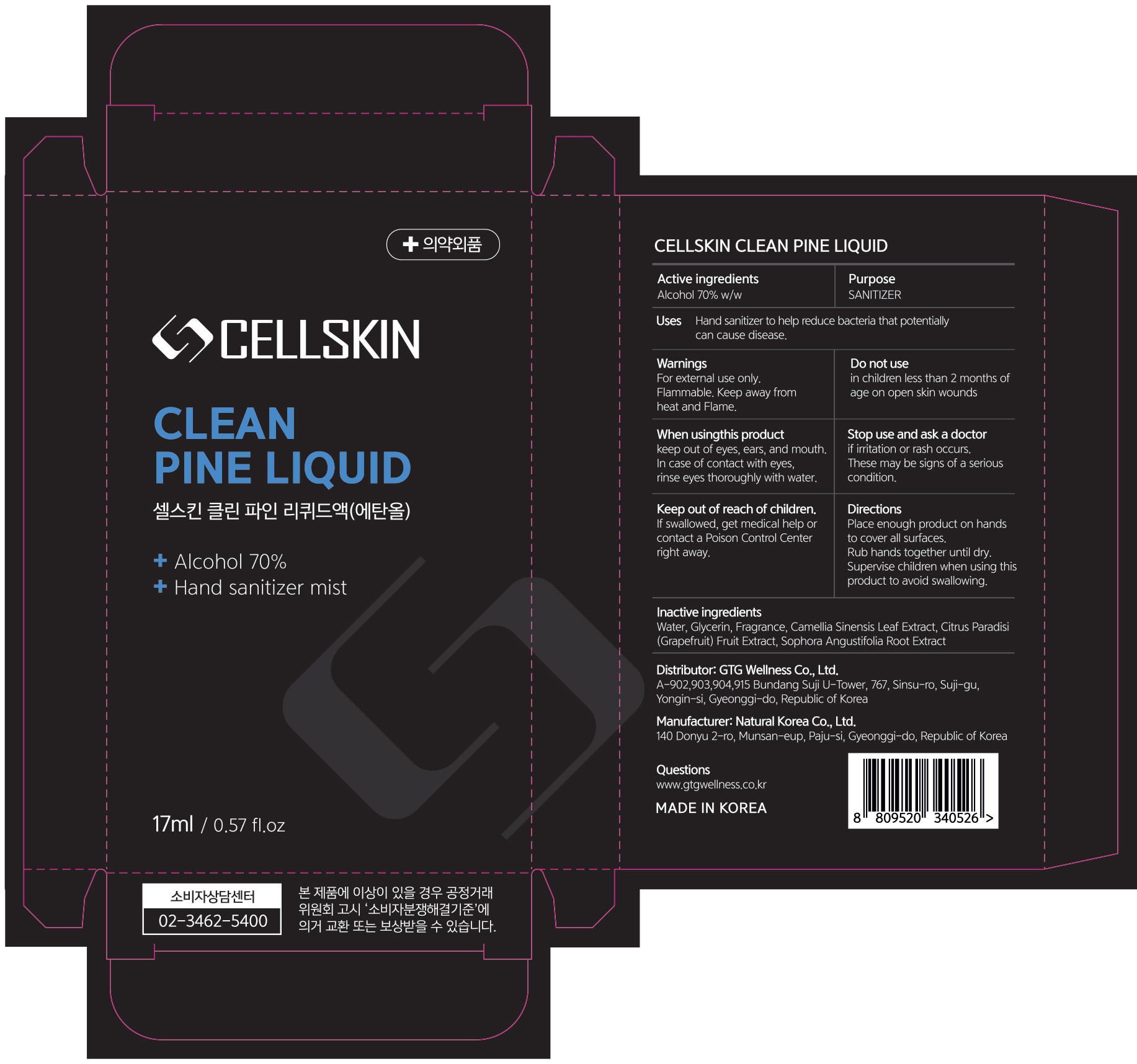
Image Of Container (Black Container)
This is a 70% alcohol-based hand sanitizer mist that comes in a 17ml / 0.57 fl.oz bottle manufactured and distributed by GTG Wellness, a company based in South Korea. Its active ingredient is alcohol, which can help reduce bacteria that can cause diseases, and it is intended for external use only. The product contains some inactive ingredients like water, glycerin, fragrance, and leaf extracts. The label also includes warnings not to use on open skin wounds or in children younger than two months. It suggests keeping the product out of eyes, ears, or mouth, and in case of contact, rinse eyes thoroughly with water. If swallowed, it recommends contacting a Poison Control Center right away.*
FDA Label Image

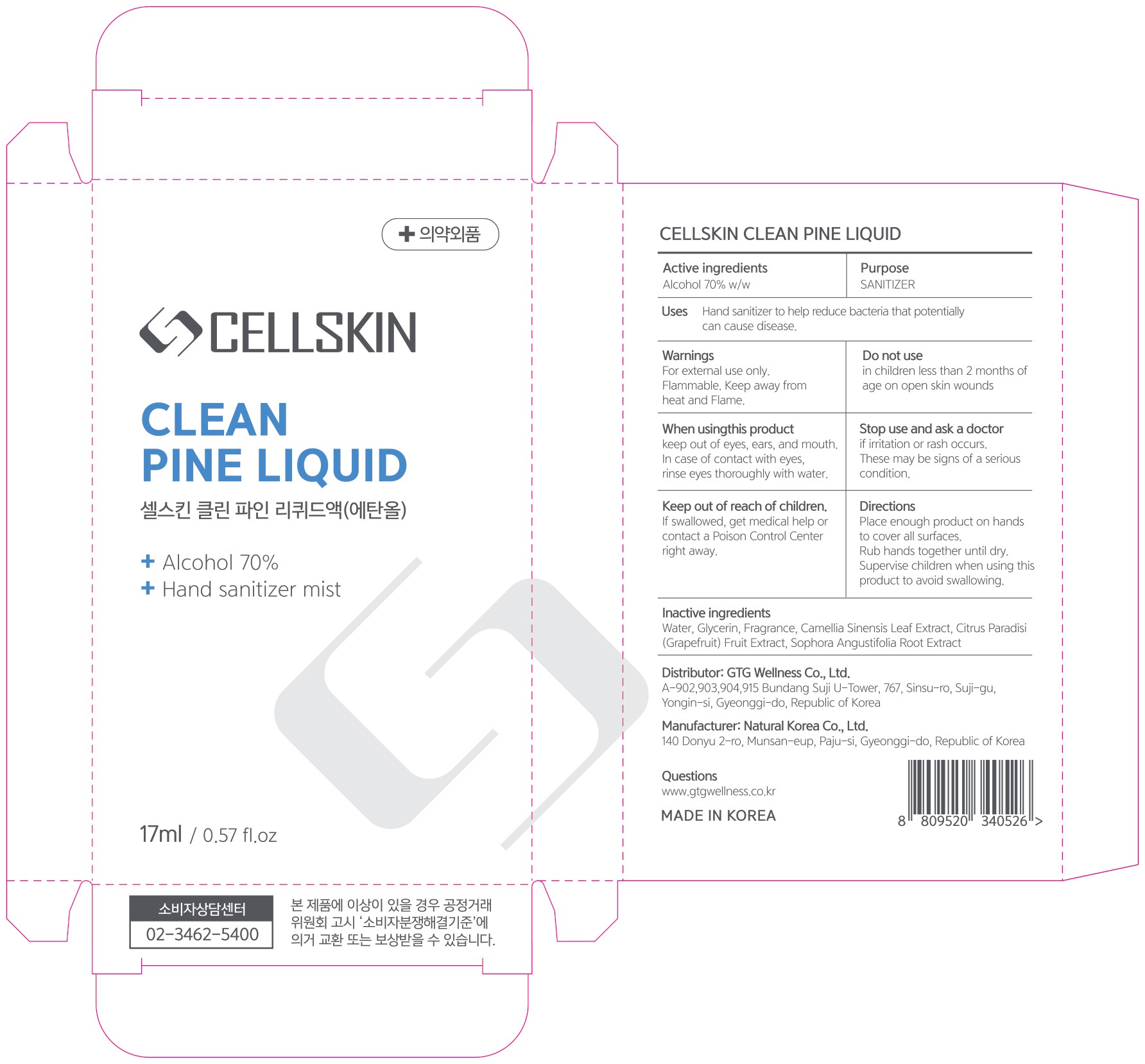
Image Of Container (White Container)

Image Of Container (White Container)
This text provides information about Cellskin Clean Pine Liquid, a hand sanitizer mist that helps reduce bacteria that can cause disease. The product contains 70% w/w alcohol and is flammable, so it should be kept away from heat and flame. It should not be used on children under two months of age or on open skin wounds. In case of eye contact, rinse thoroughly with water. The product is manufactured in Korea by Natural Korea Co., Ltd. and distributed by GTG Wellness Co., Ltd.*

* These product label images have been analyzed using experimental machine learning. Please verify findings with the primary label text.