Five studies that compared breast cancer risk between ever-users (current or past use) of COCs and never-users of COCs reported no association between ever use of COCs and breast cancer risk, with effect estimates ranging from 0.90 to 1.12 (Figure 1).
Three studies compared breast cancer risk between current or recent COC users (<6 months since last use) and never users of COCs (Figure 1). One of these studies reported no association between breast cancer risk and COC use. The other two studies found an increased relative risk of 1.19 to 1.33 with current or recent use. Both of these studies found an increased risk of breast cancer with current use of longer duration, with relative risks ranging from 1.03 with less than one year of COC use to approximately 1.4 with more than 8 to 10 years of COC use.
Figure 1: Risk of Breast Cancer with Combined Oral Contraceptive Use
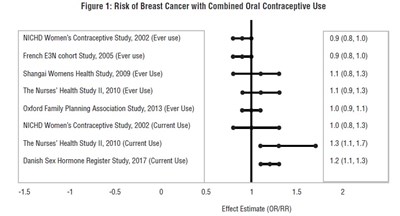
Figure (Norgestimate Fig3)
RR = relative risk; OR = odds ratio; HR = hazard ratio. “ever COC” are females with current or past COC use; “never COC use” are females that never used COCs.
The following additional adverse drug reactions have been reported from worldwide postmarketing experience with norgestimate/ethinyl estradiol. Because these reactions are reported voluntarily from a population of uncertain size, it is not always possible to reliably estimate their frequency or establish a causal relationship to drug exposure.
Infections and Infestations: Urinary tract infection
Neoplasms Benign, Malignant and Unspecified (Including Cysts and Polyps): Breast cancer, benign breast neoplasm, hepatic adenoma, focal nodular hyperplasia, breast cyst
Immune System Disorders: Hypersensitivity
Metabolism and Nutrition Disorders: Dyslipidemia
Psychiatric Disorders: Anxiety, insomnia
Nervous System Disorders: Syncope, convulsion, paresthesia, dizziness
Eye Disorders: Visual impairment, dry eye, contact lens intolerance
Ear and Labyrinth Disorders: Vertigo
Cardiac Disorders: Tachycardia, palpitations
Vascular Events: Deep vein thrombosis, pulmonary embolism, retinal vascular thrombosis, hot flush
Arterial Events: Arterial thromboembolism, myocardial infarction, cerebrovascular accident
Respiratory, Thoracic and Mediastinal Disorders: Dyspnea
Gastrointestinal Disorders: Pancreatitis, abdominal distension, diarrhea, constipation
Hepatobiliary Disorders: Hepatitis
Skin and Subcutaneous Tissue Disorders: Angioedema, erythema nodosum, hirsutism, night sweats, hyperhidrosis, photosensitivity reaction, urticaria, pruritus, acne
Musculoskeletal, Connective Tissue, and Bone Disorders: Muscle spasms, pain in extremity, myalgia, back pain
Reproductive System and Breast Disorders: Ovarian cyst, suppressed lactation, vulvovaginal dryness
General Disorders and Administration Site Conditions: Chest pain, asthenic conditions.